Today was a little weird. Last night we created and hosted a dinner for 10 of us, so with cooking and cleanup, neither of us were interested in cooking much today. Around 3 PM I was getting hungry for pasta, so I decided to do vegan mac and cheese.
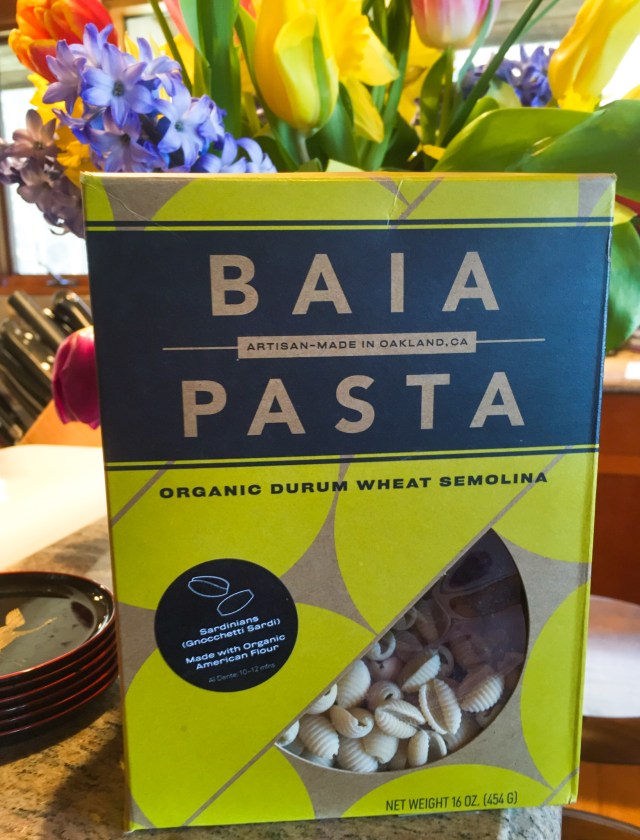
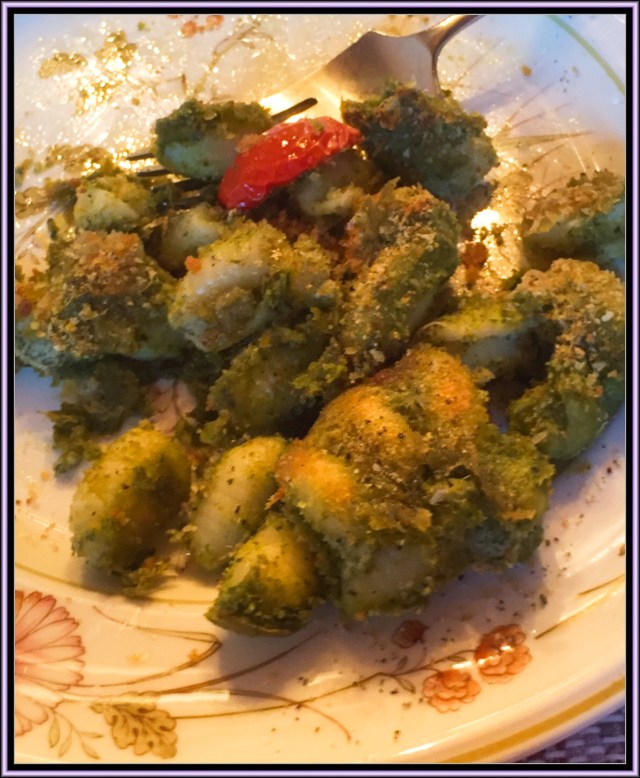
At Formaggio I had found some superb California-made organic pastas, brand name Baia. The little Sardinian-like gnocchetti shape appealed to me, so I chose that for my base and cooked them until al dente. I had one more container of Kite Hill Vegan Ricotta, so I whipped it up in a small food processor, adding Ligurian olive oil, a little leftover cooked spinach, and salt and pepper.
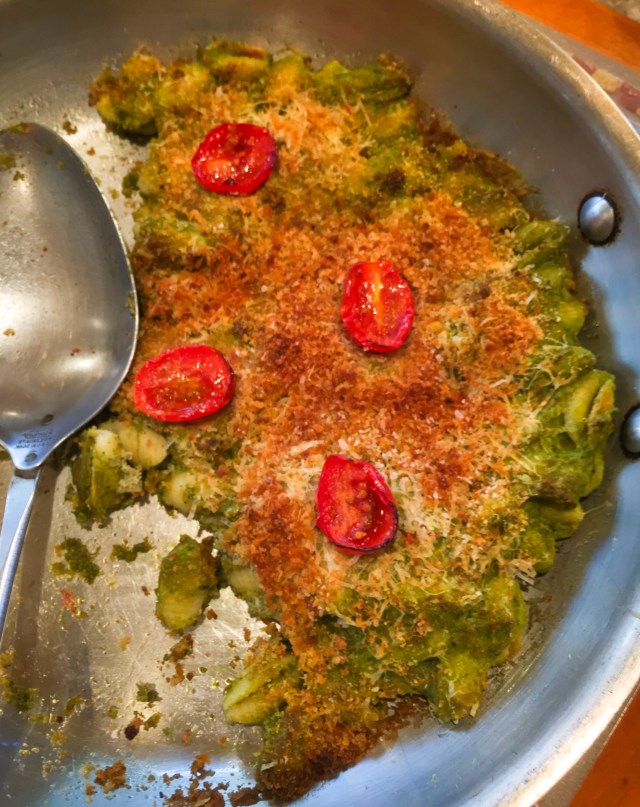
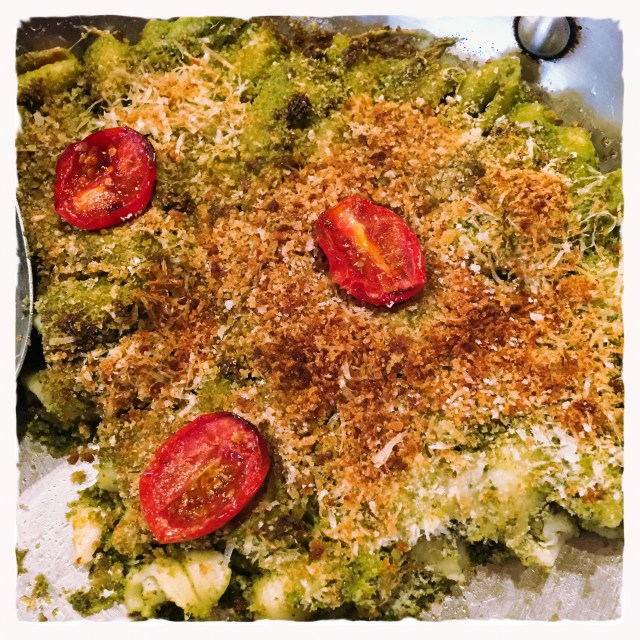
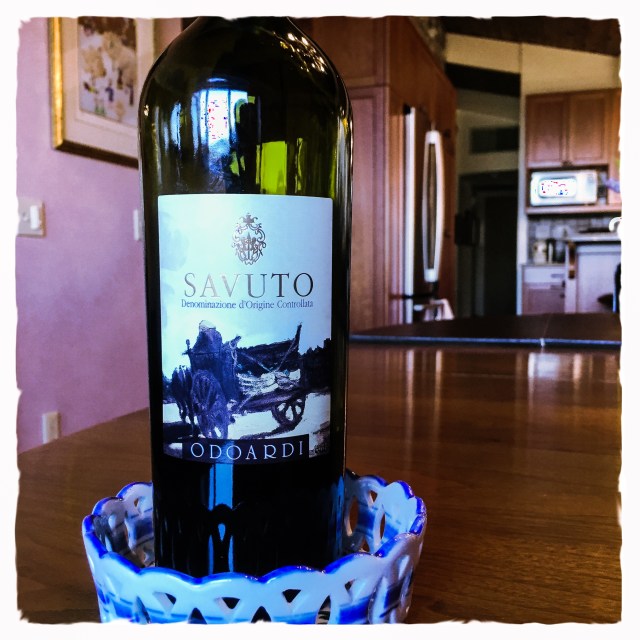
I was in a cheesy mood, so I took the few bits of good remaining Pecorino I had saved (I told you it’s almost-vegan), and grated it into a bowl. I added the cooked pasta, the vegan cheese-spinach mixture, the Pecorino, olive oil, salt and pepper — and mixed them all together. That mixture was spread into a small gratin pan, sprinkled with toasted bread crumbs and a little more oil, and baked in a 425º F. oven until toasty brown on top. I restrained myself to only 3 helpings (each smaller than its predecessor), accompanied by a couple of glasses of Calabrian wine — Savuto from Odoardi.


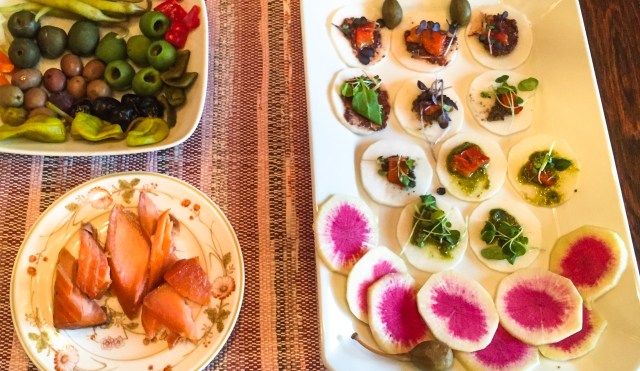
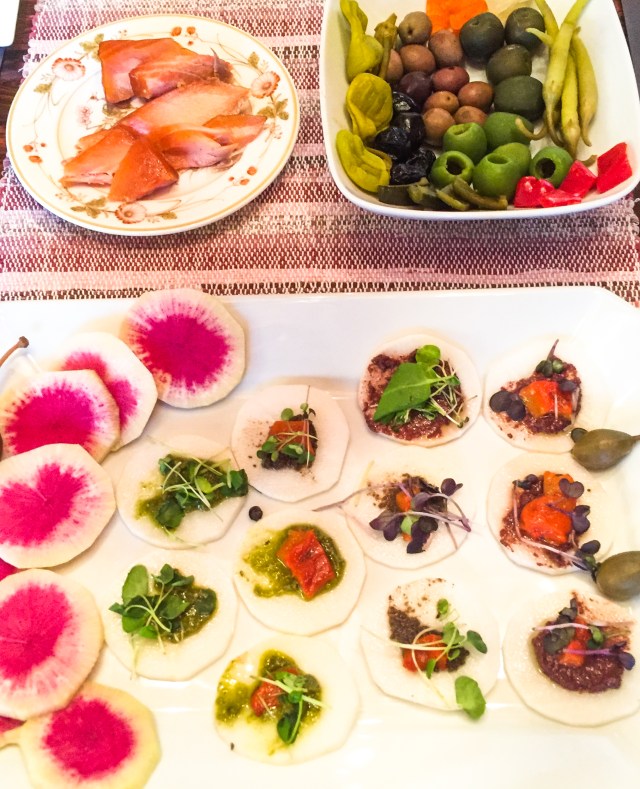
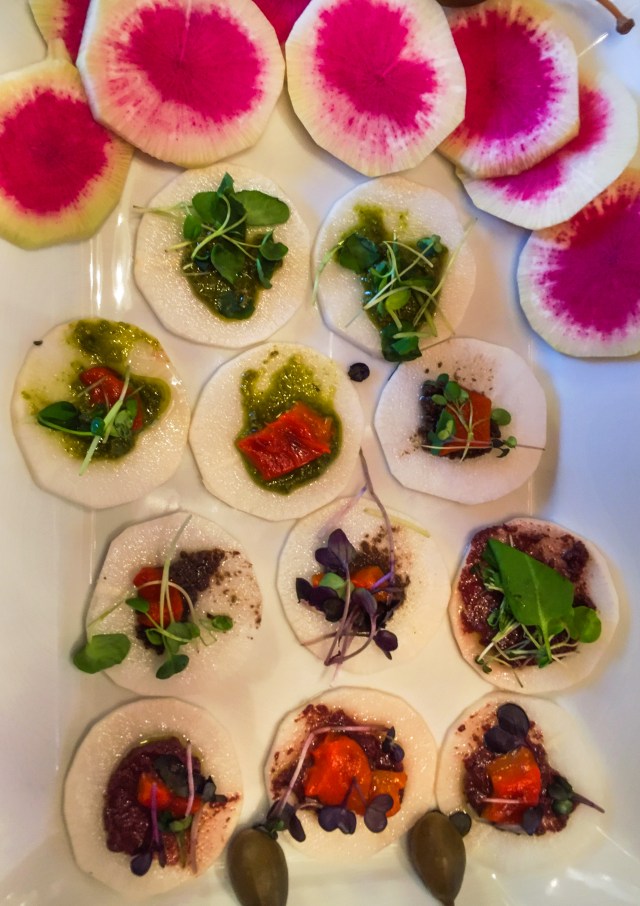

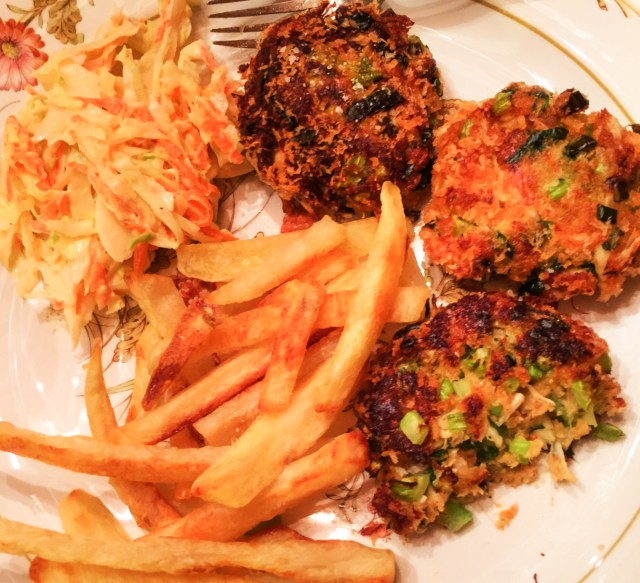




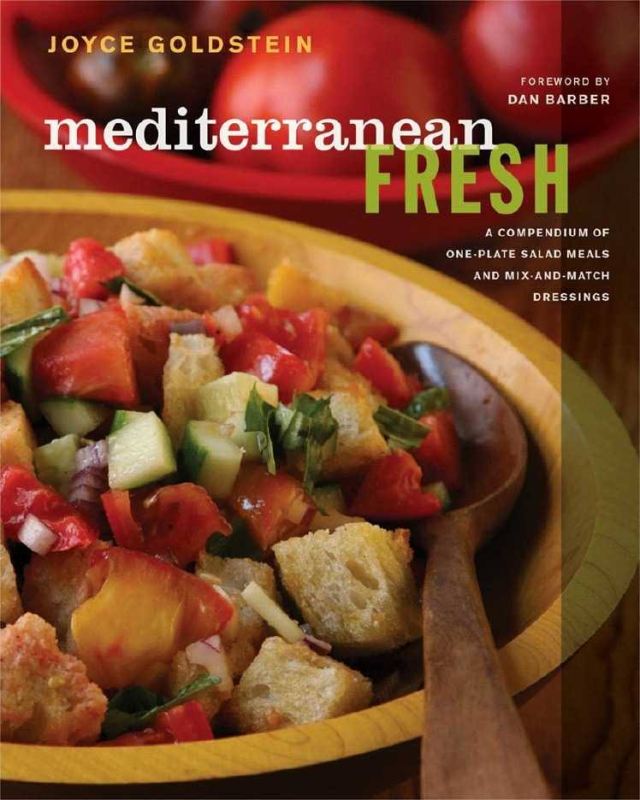
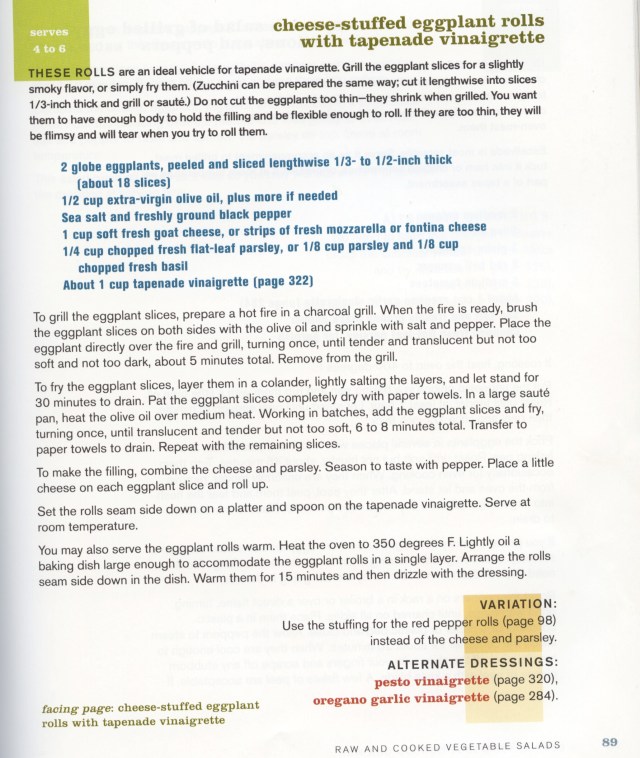
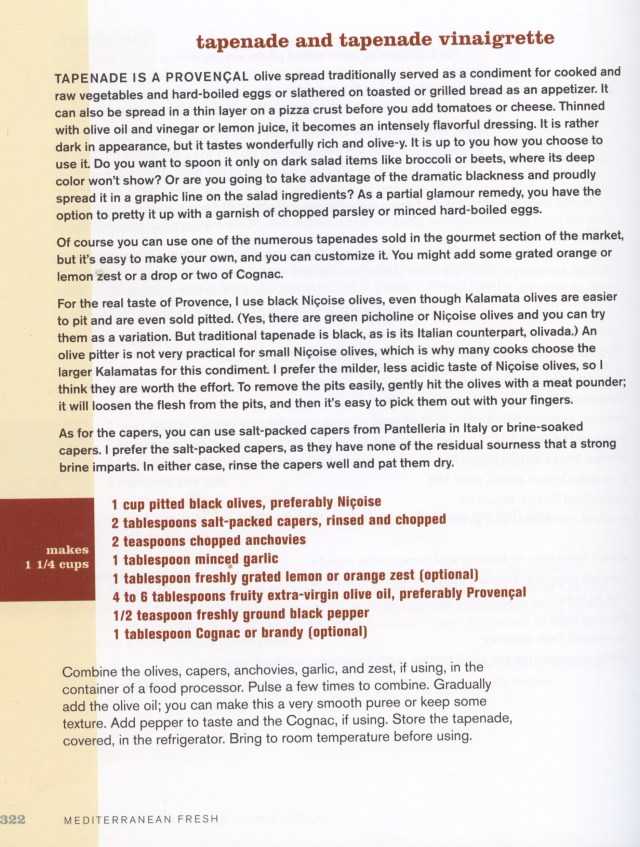
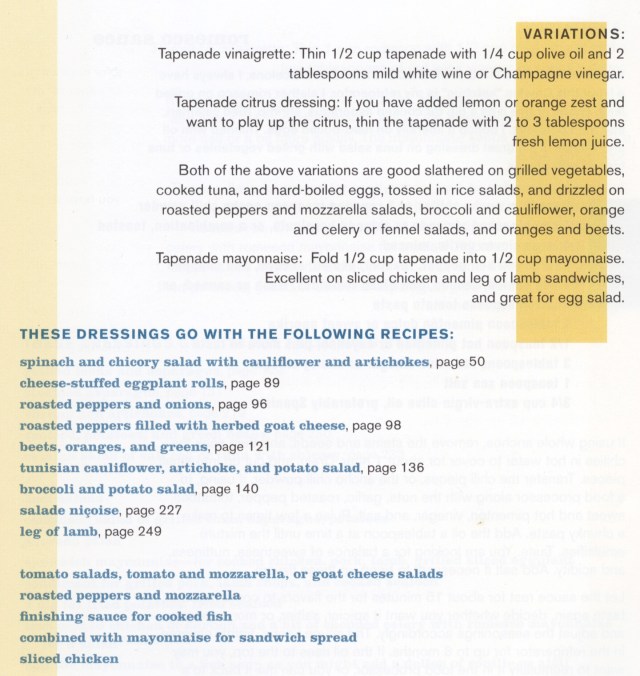
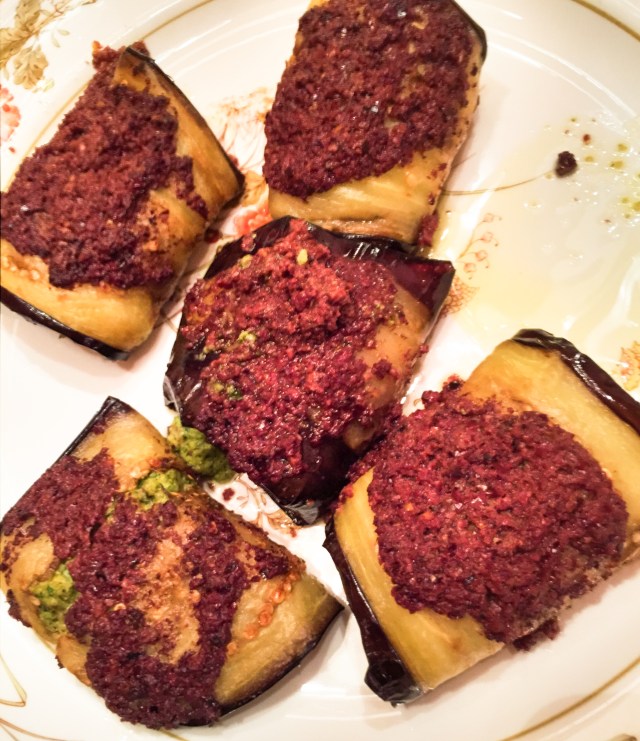
 With Barbara’s help we managed to make a fine dinner. I made some changes in the eggplant roll recipe. Instead of goat cheese, I made a purée of steamed broccoli leftovers, the almond ricotta and cream cheeses, and olive oil. The other adjustment was inadvertent: Barbara forgot to add the olive oil when she made the Catalan vinaigrette. Here is what it looked like.
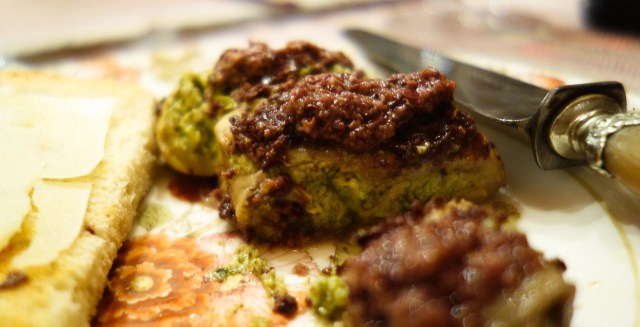
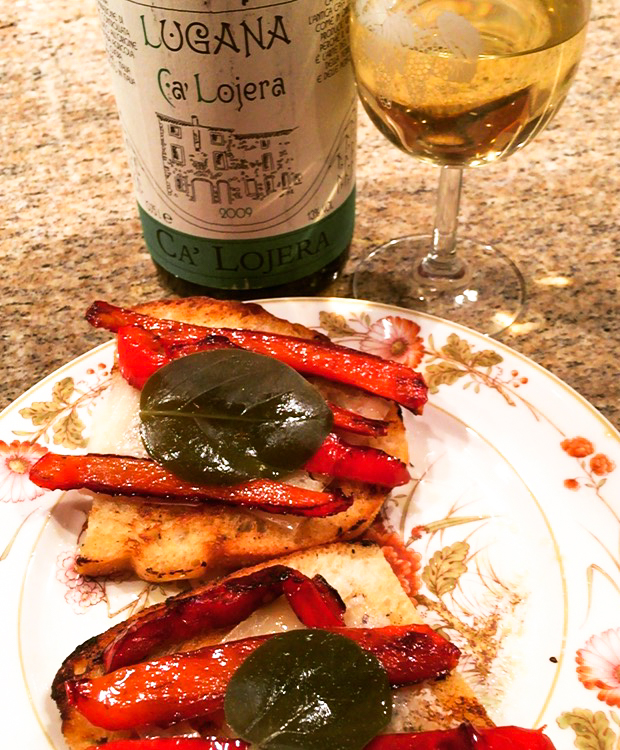
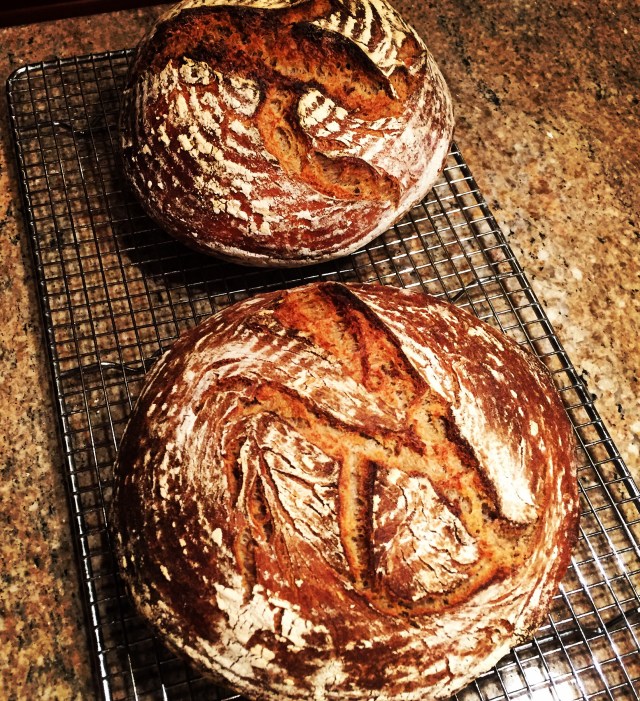
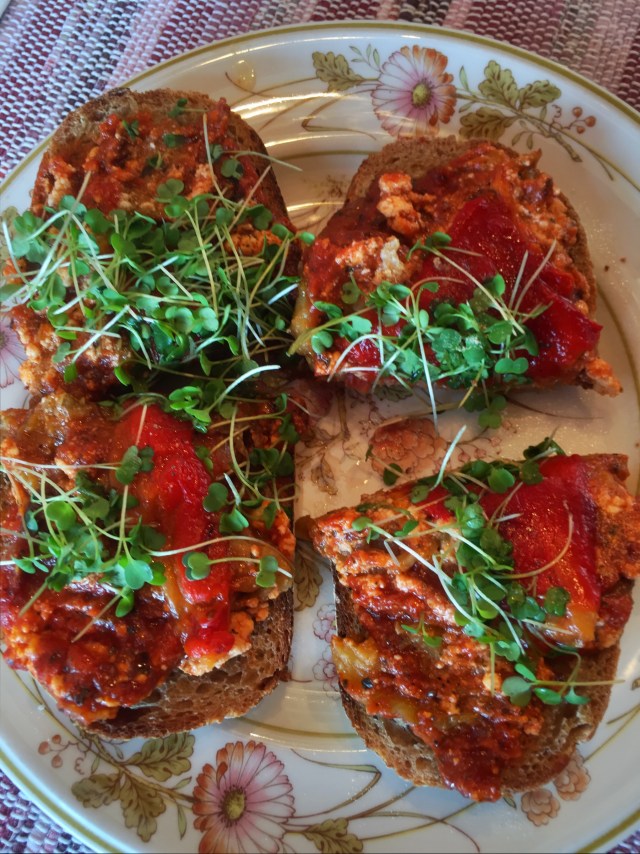
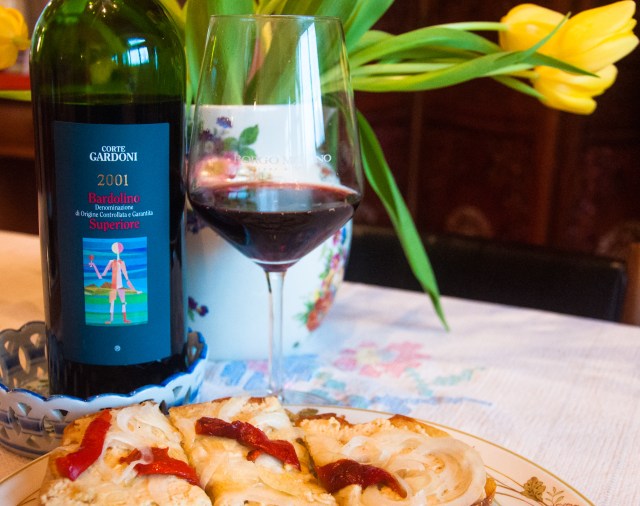
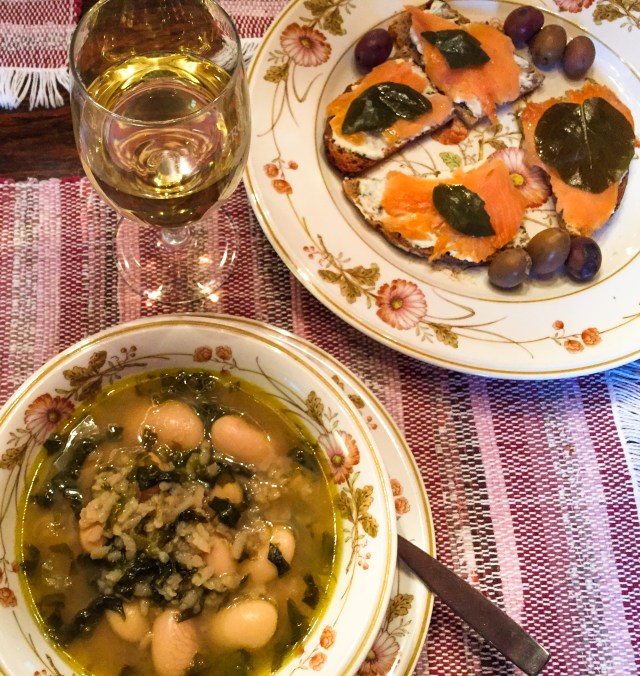 But it raised an important question in my mind: what’s the difference between Crostini and Bruschetta? While I doubt you have lost any sleep over that question, it intrigued me. A bit of research led me to conclude that the definitions are not that precise. It seems that Bruschetta are made with thick slices of a coarse country bread, grilled (at best over a wood fine), then rubbed with garlic clove, drizzled with olive oil, and consumed as is — or perhaps with a topping like chopped tomatoes, or bean purée with greens, etc. The focus is mostly about the bread, whereas Crostini are more about the toppings. Also crostini are usually made with a fine grain bread, more typically white flour, and cut thin — like a diagonal slice of a baguette. They, too, are crisp, usually done in the oven or a toaster.
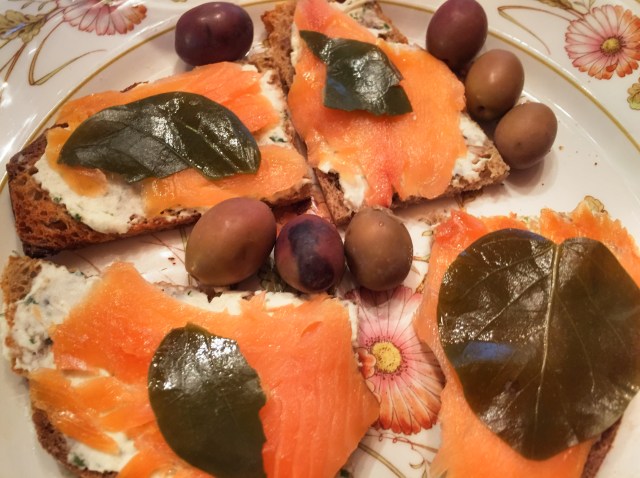 So the photo above seems on the boundary; it is whole-grain bread, but it is sliced thinly, not grilled but toasted, and topped with three items on a large slice. For purposes of this post, I choose to say “Crostini”.