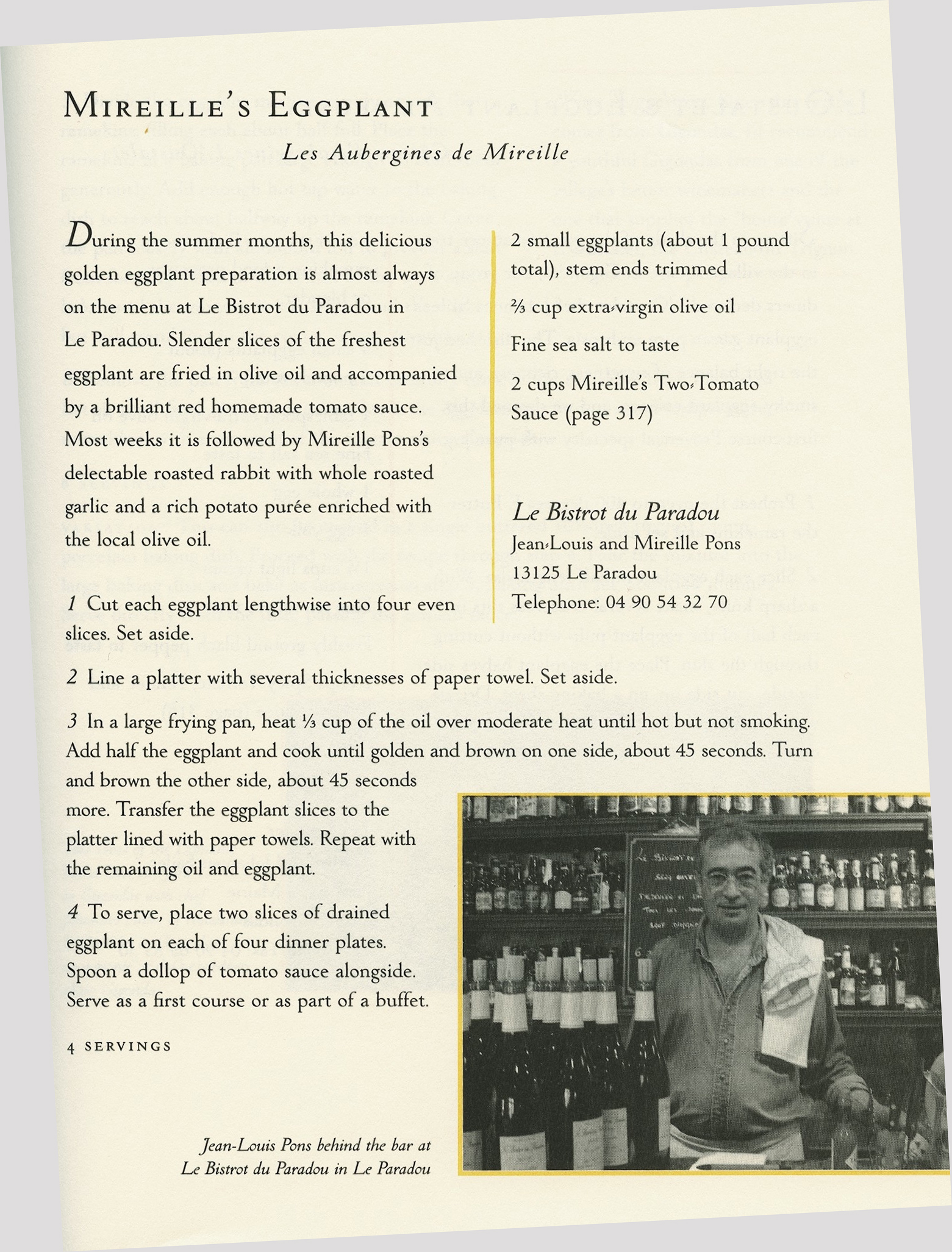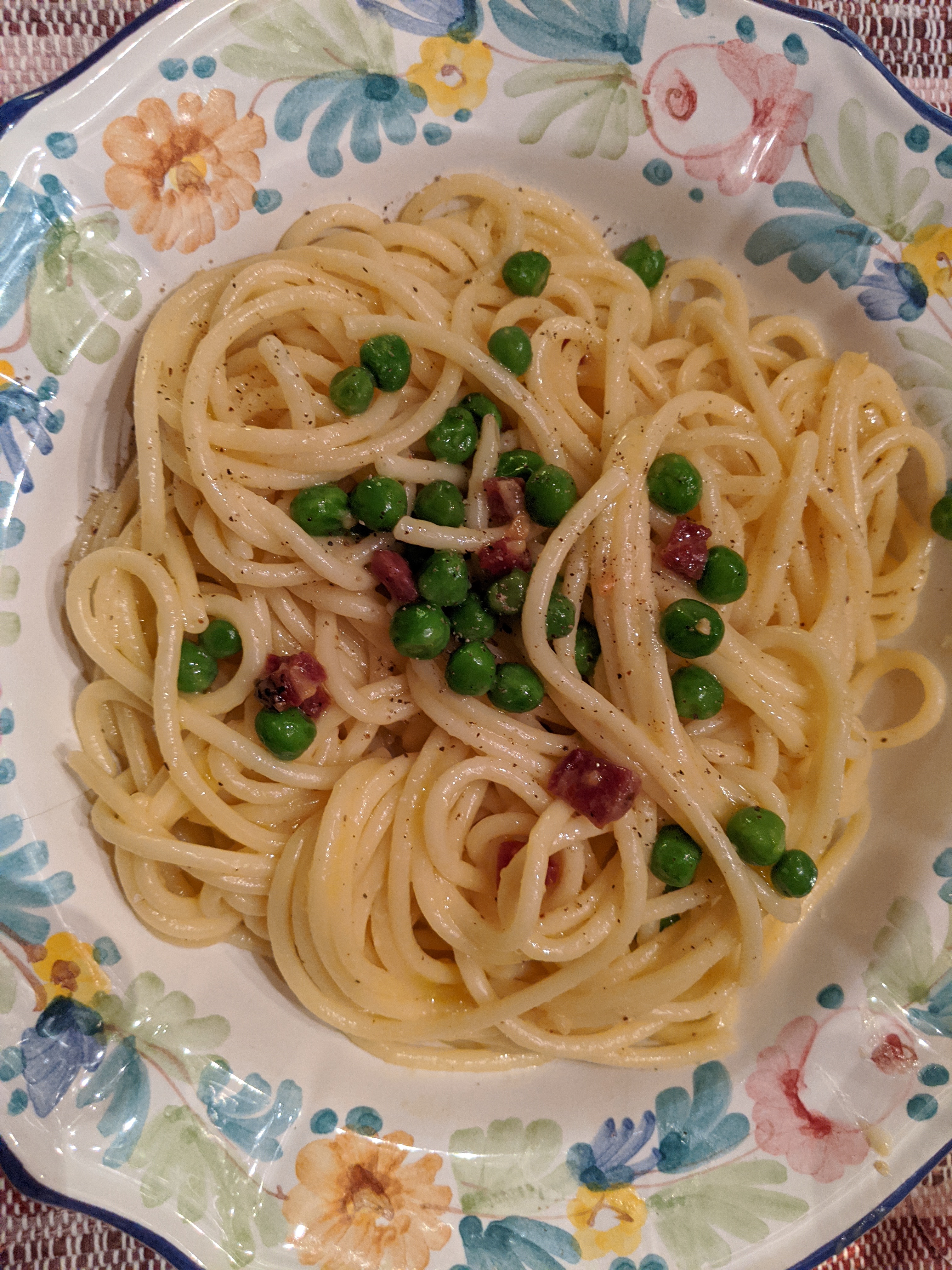
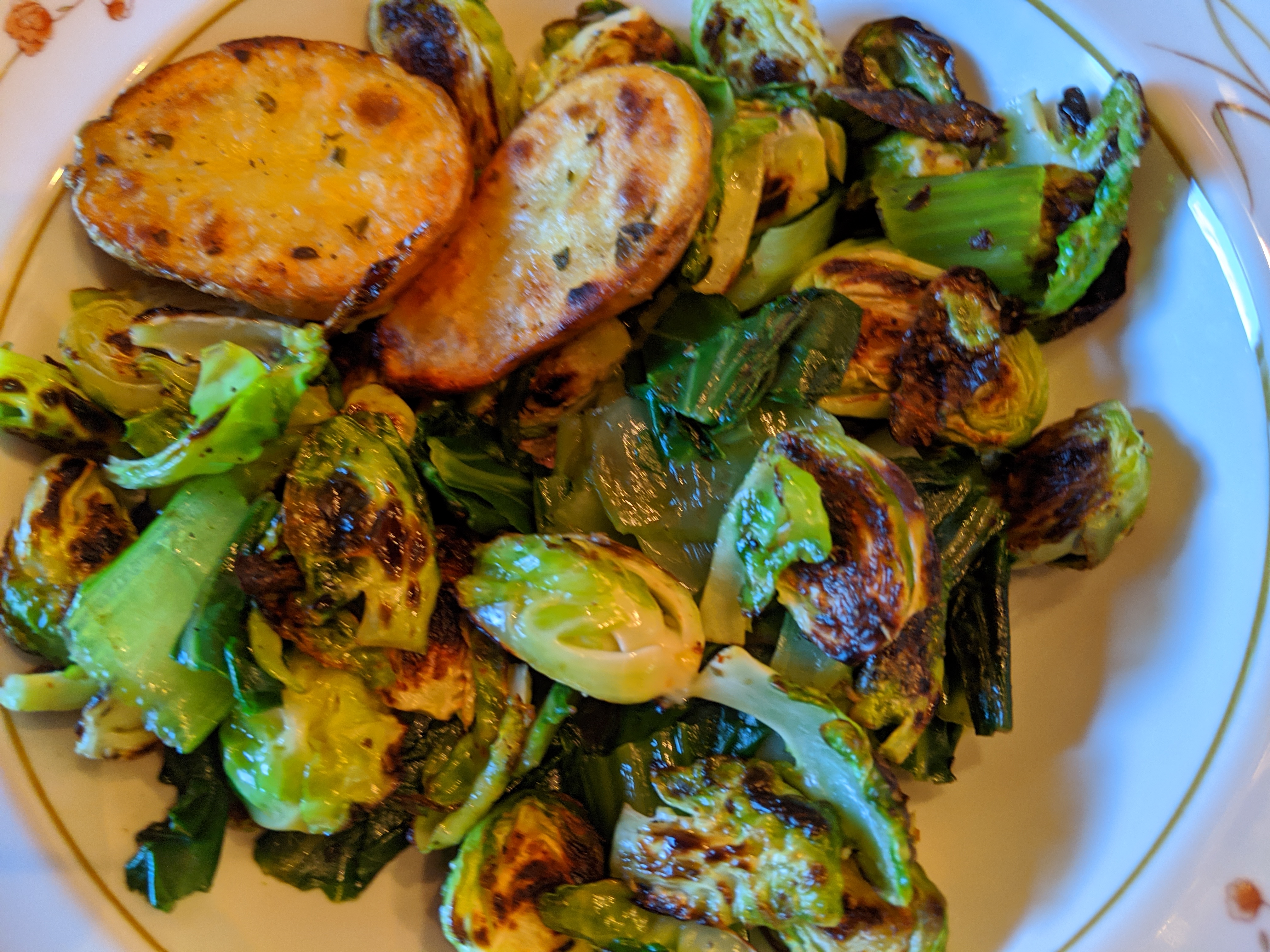
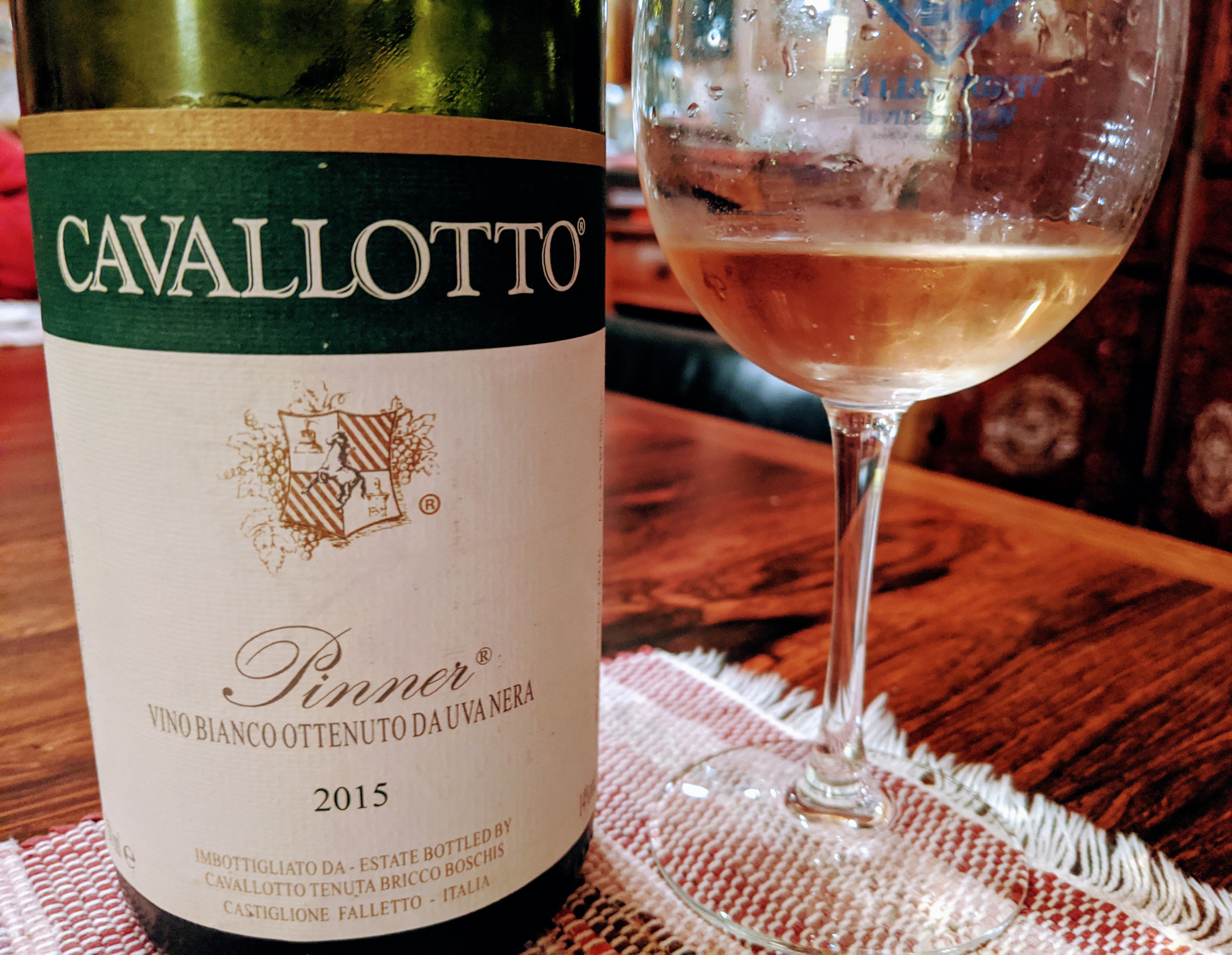
One night last week I was in the mood for vegetables with a French accent. Mireille’s eggplant with Tomato Sauce, Grilled Zucchini with Balsamic and sautéed shallots, and some brown rice made an unassuming and delicious dinner.

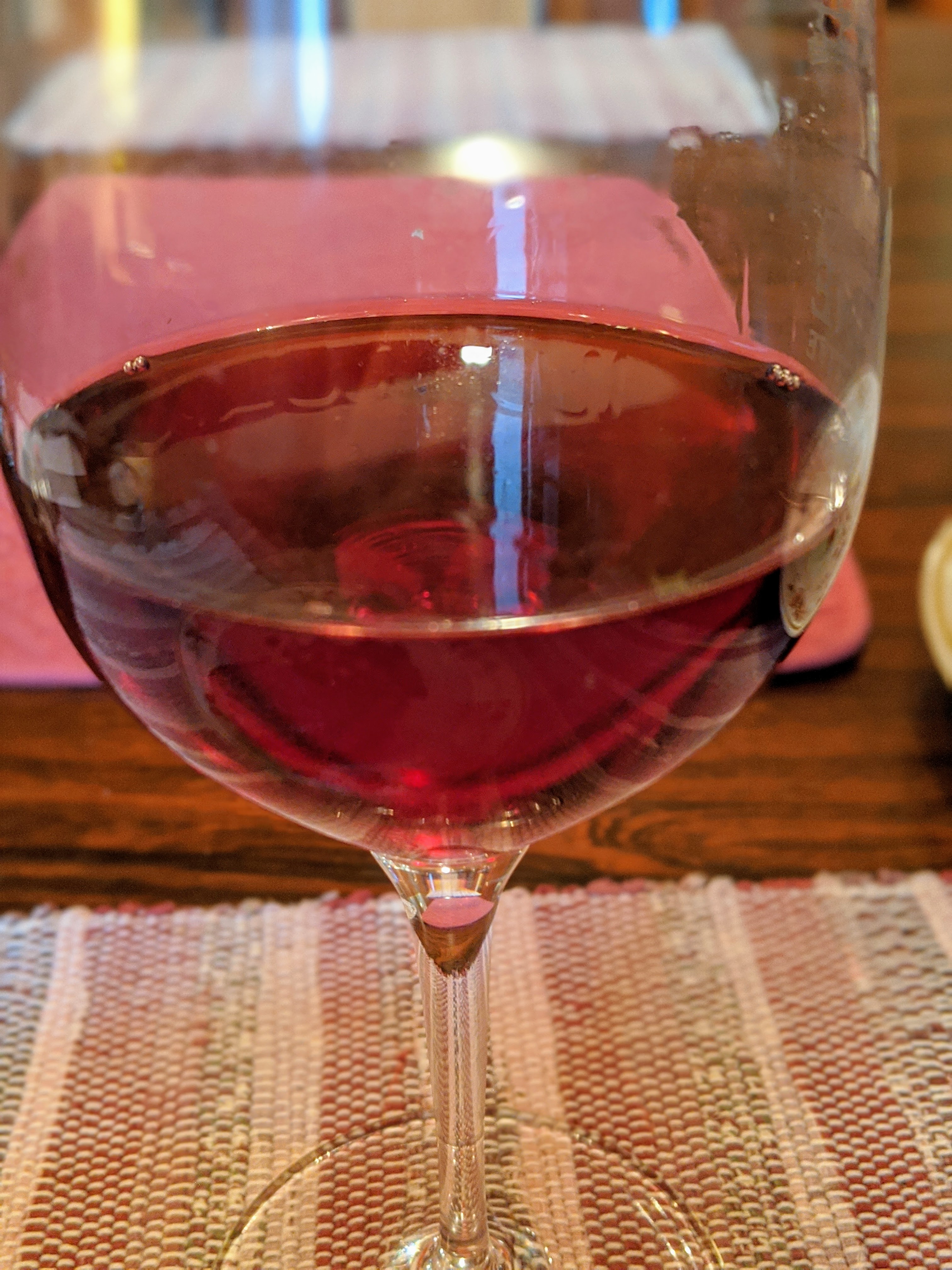
The wine was a charming “sleeper”, a Cinsault from Chile.


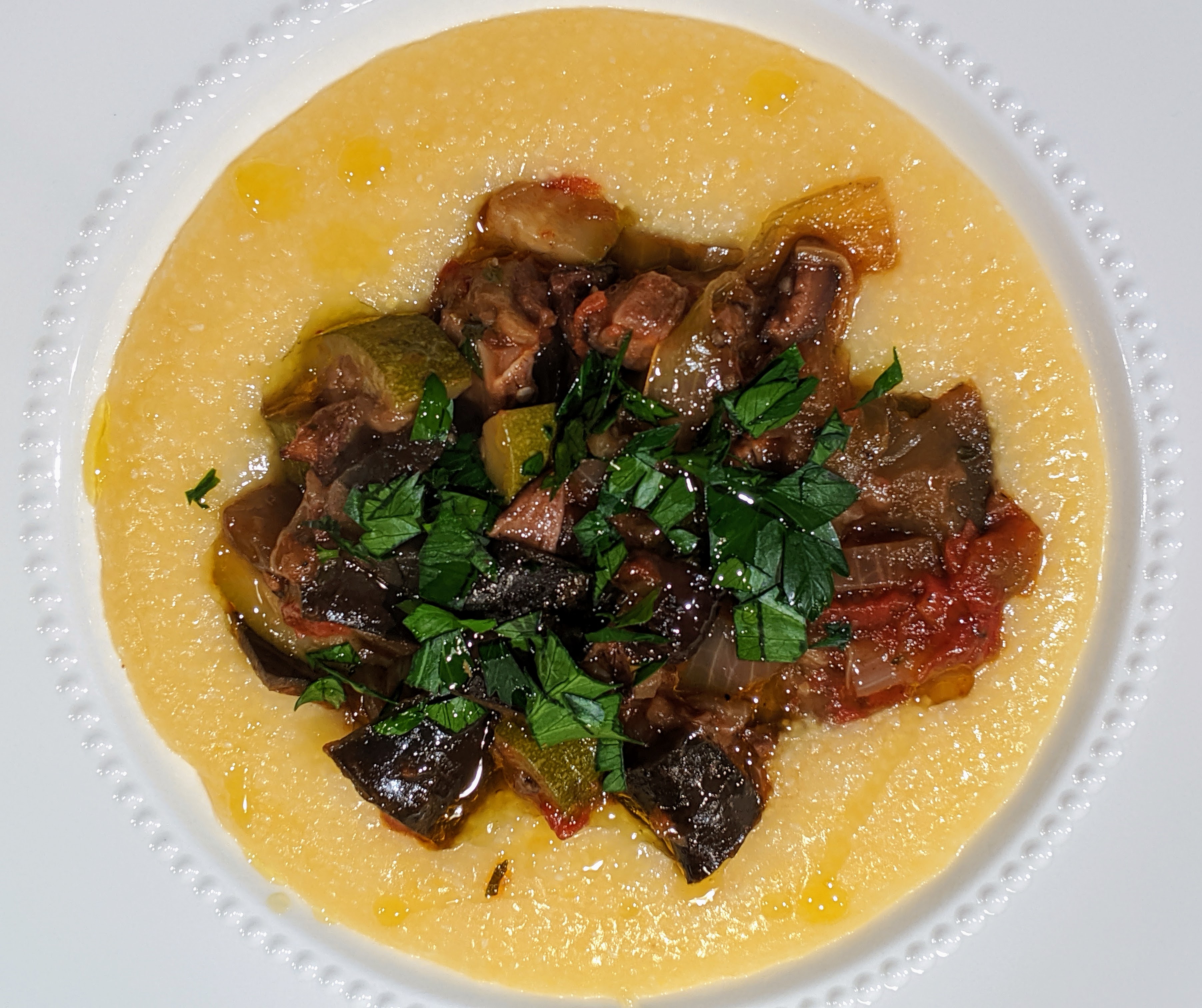
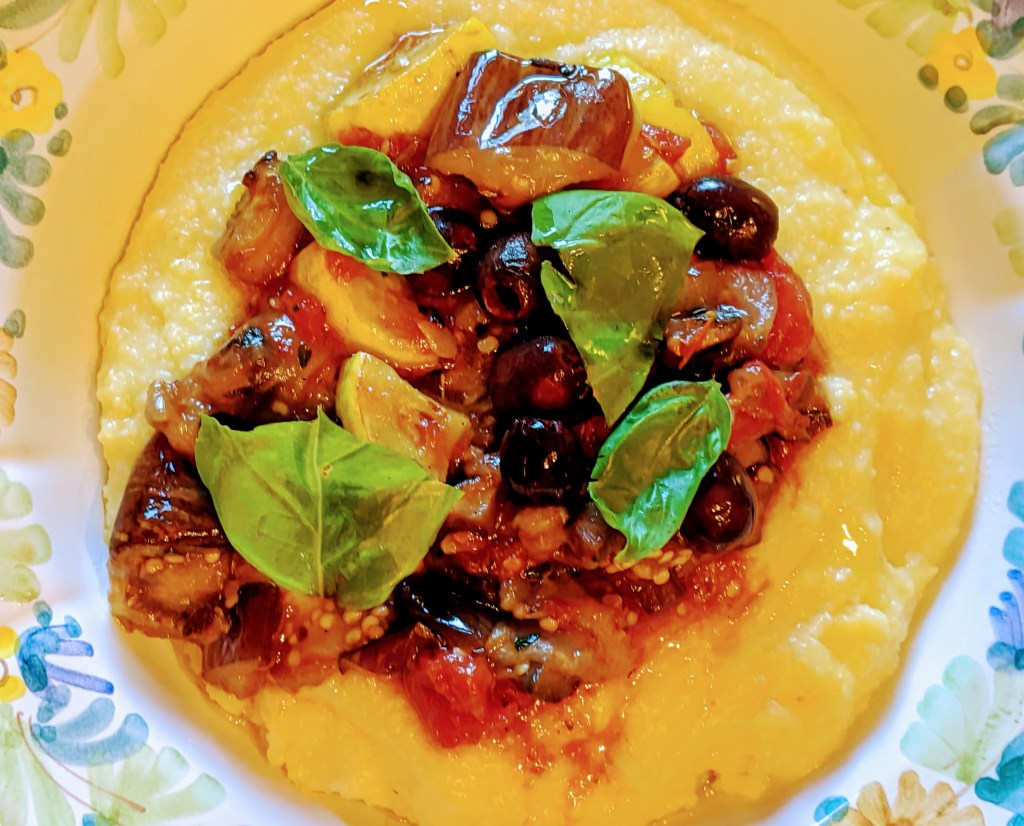
It also went well with the dinner Barbara made the next night: comforting Polenta with a rich Ratatouille, supplemented with Mushroom Ragout.
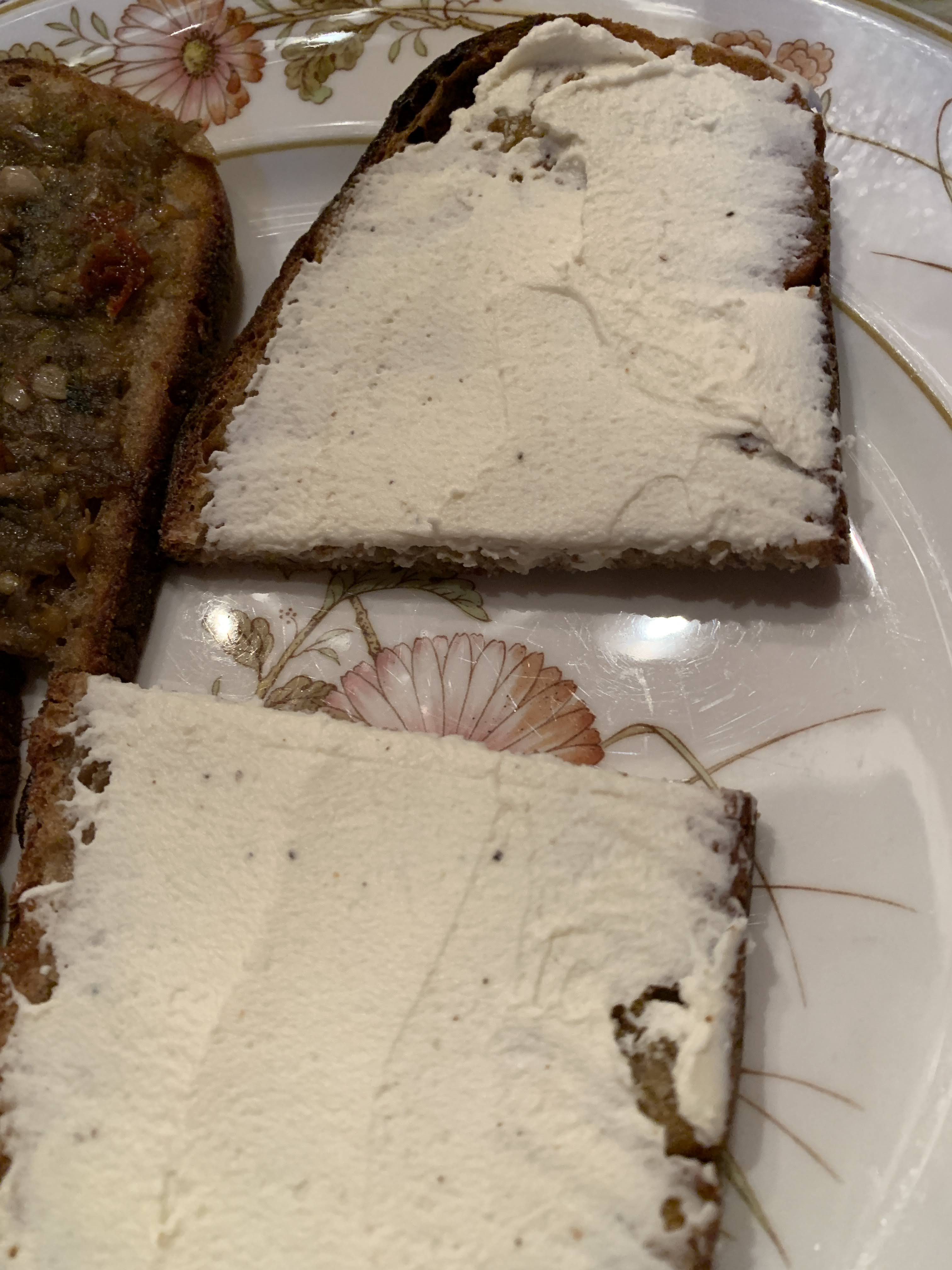
Lunch in-between featured my sourdough bruschetta, one with a roasted eggplant purée, the other with whipped almond milk and feta cheese.

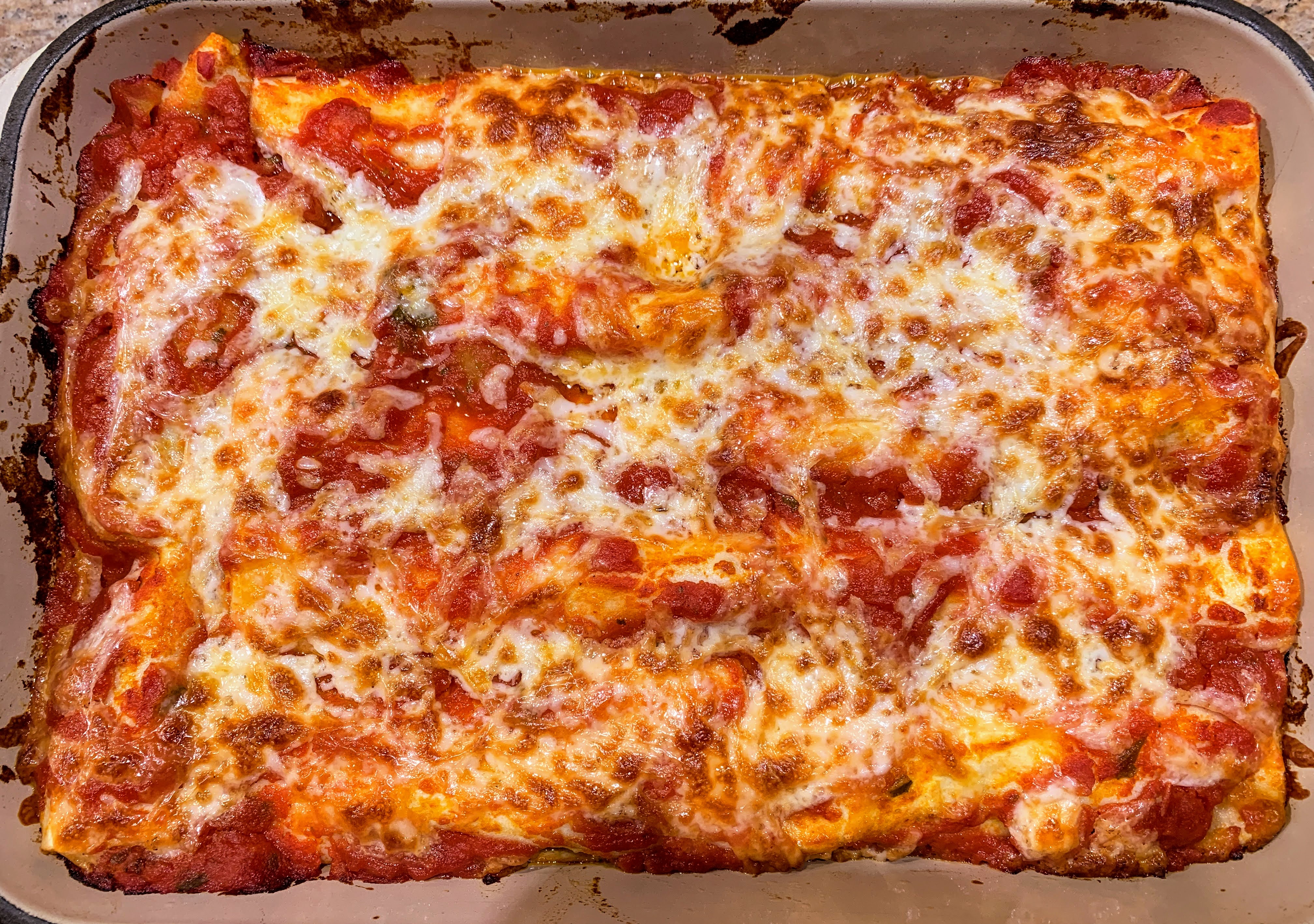
Another night was really good homemade cannelloni, stuffed with a purée of fresh spinach and the whipped cheese mixture, plus Parmesan. These were sauced with tomato and baked with mozzarella.
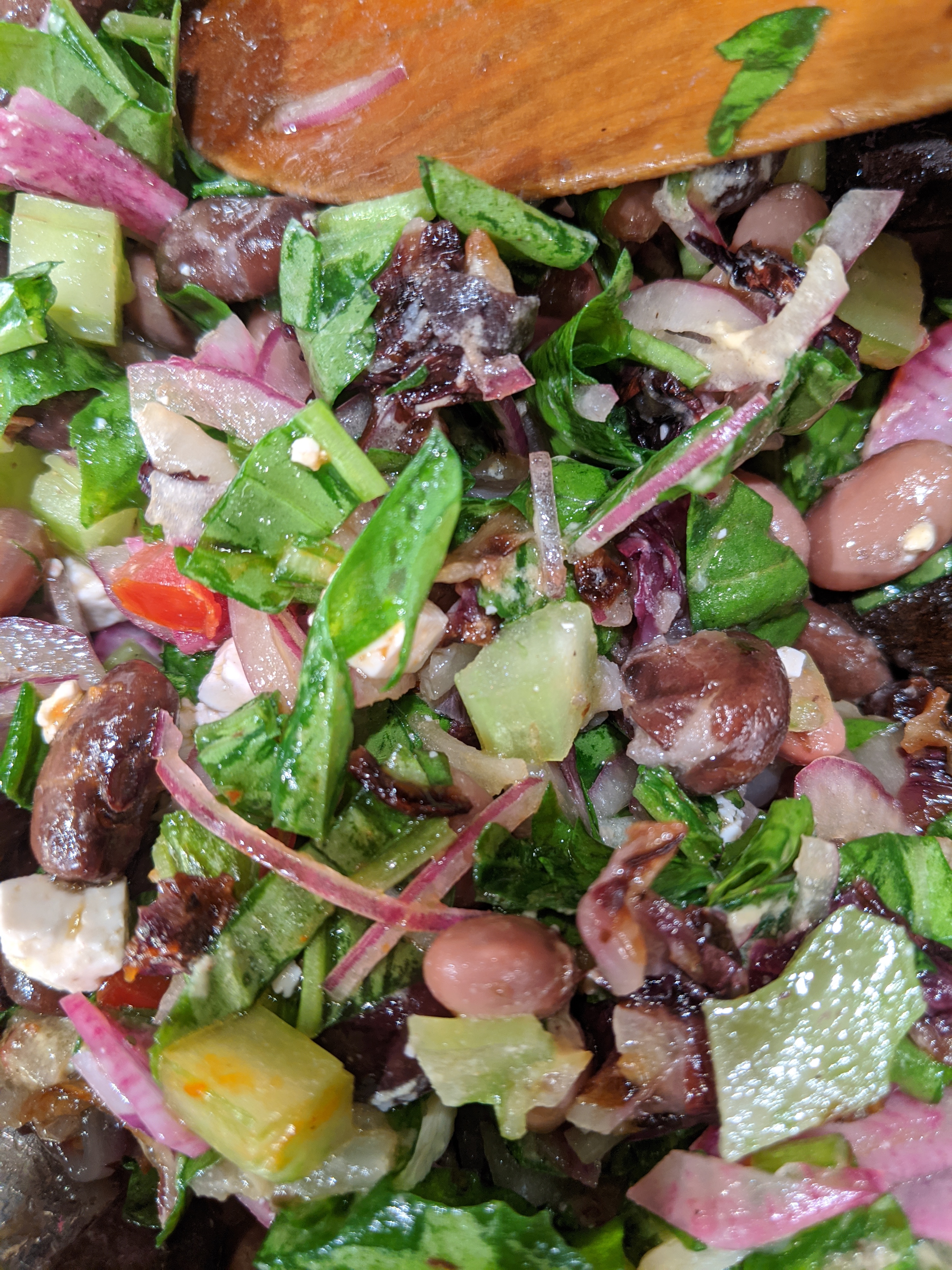
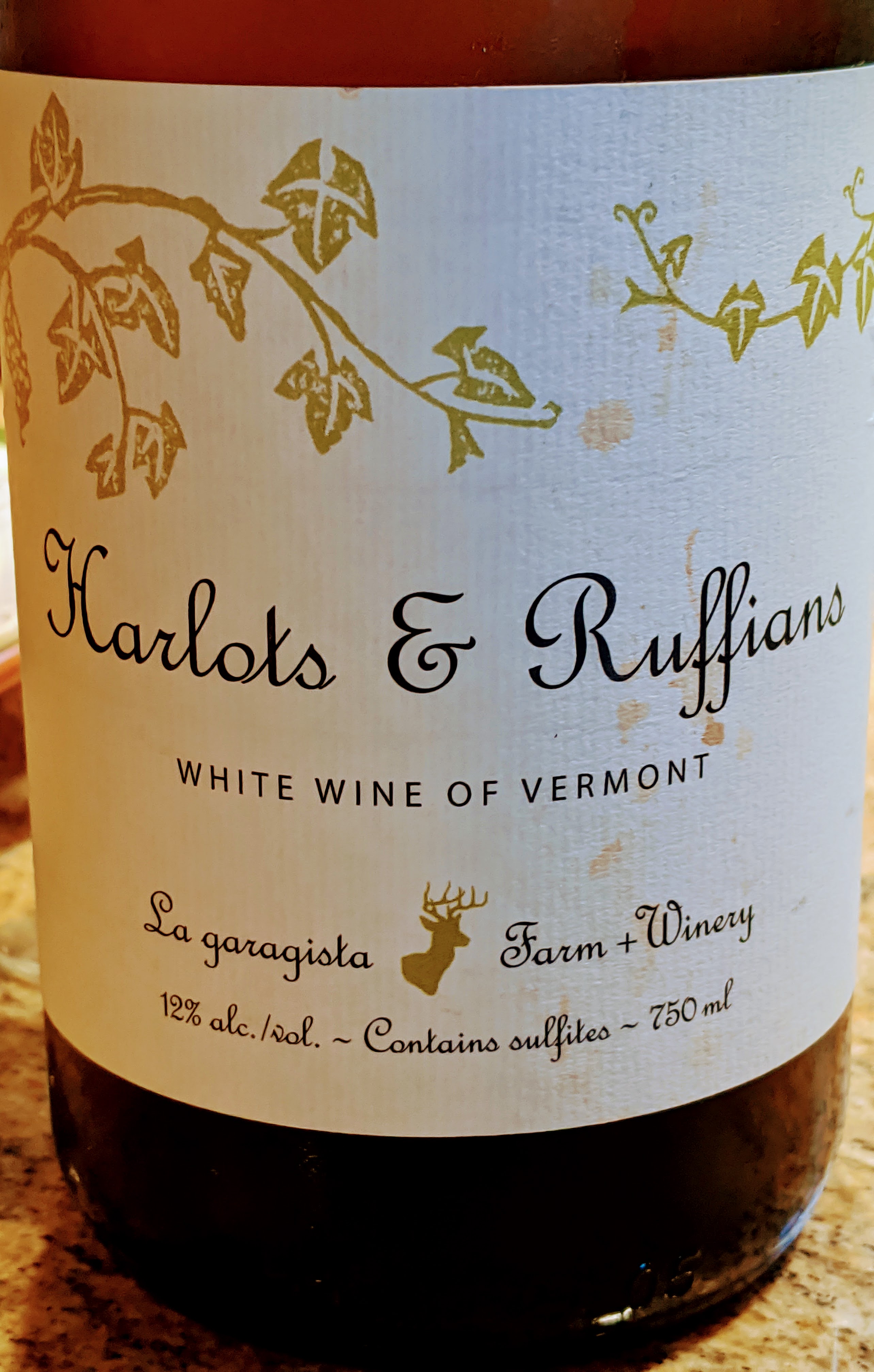
Another lunch featured a salad with arugula, two kinds of beans, red onion, celery, purple daikon radish, Dijon mustard, and the best oil and vinegar I could find. Of course, some fried sourdough enriched the meal. The wine was Deirdre Heekin’s Harlots and Ruffians, from Vermont, a lovely counterpoint.


I enjoy blogging, and I’ve plenty of food and wine to share with you. However, my inertia gets in the way: too much setup time. Select episodes. Choose the photos, and edit them. Find room on my desktop to add them to the blog. Copy or create a recipe, then take a photo of it so I can post a jpeg….and on and on. Excuses, excuses.
So, since I want to dedicate these to my friend, Jan, here are my mini-posts for October.
Black Bean Risotto with Grilled Vegetables
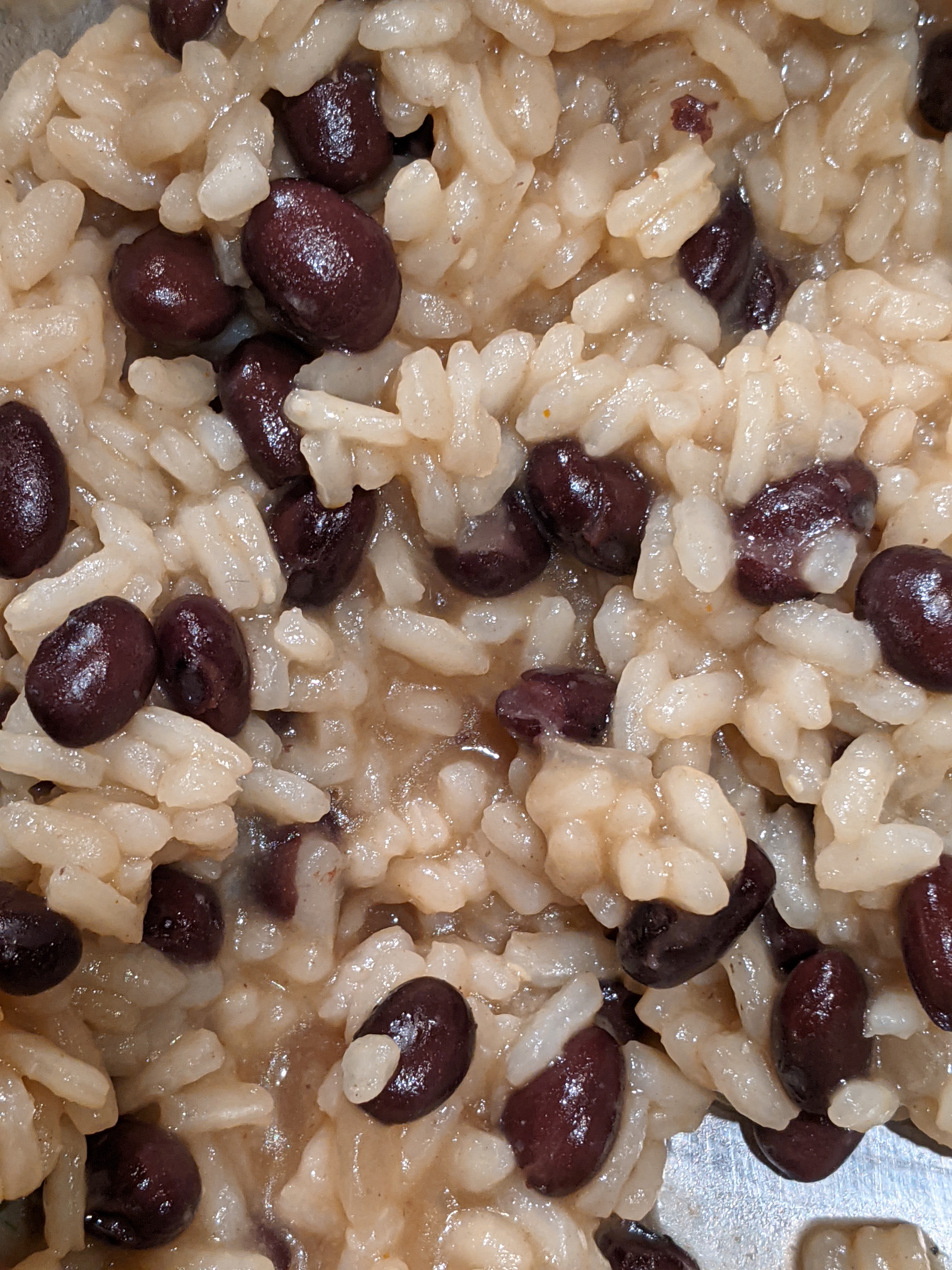


This is a recipe from a former chef in Miami, and it features Caribbean flavors. I’ll provide the recipe from Judith Barrett’s Risotto, Risotti, if anyone wants it. Jan’s wine was a great match.

Pizza Night with Friends
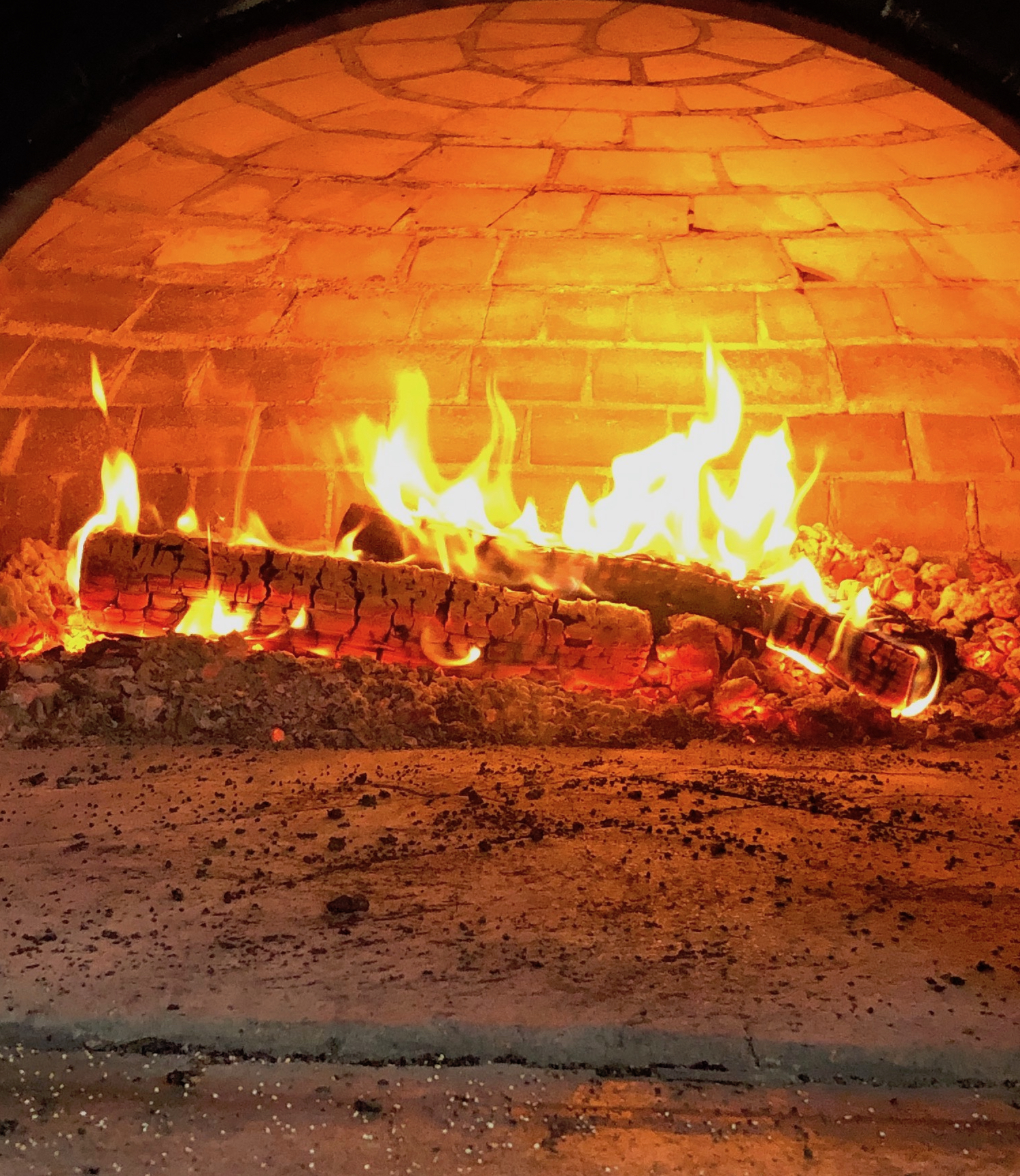
Saturday afternoon was a perfect day for the pizza oven. Not hot or humid. Few bugs around. Not windy. Dave and Lynn joined us outside.
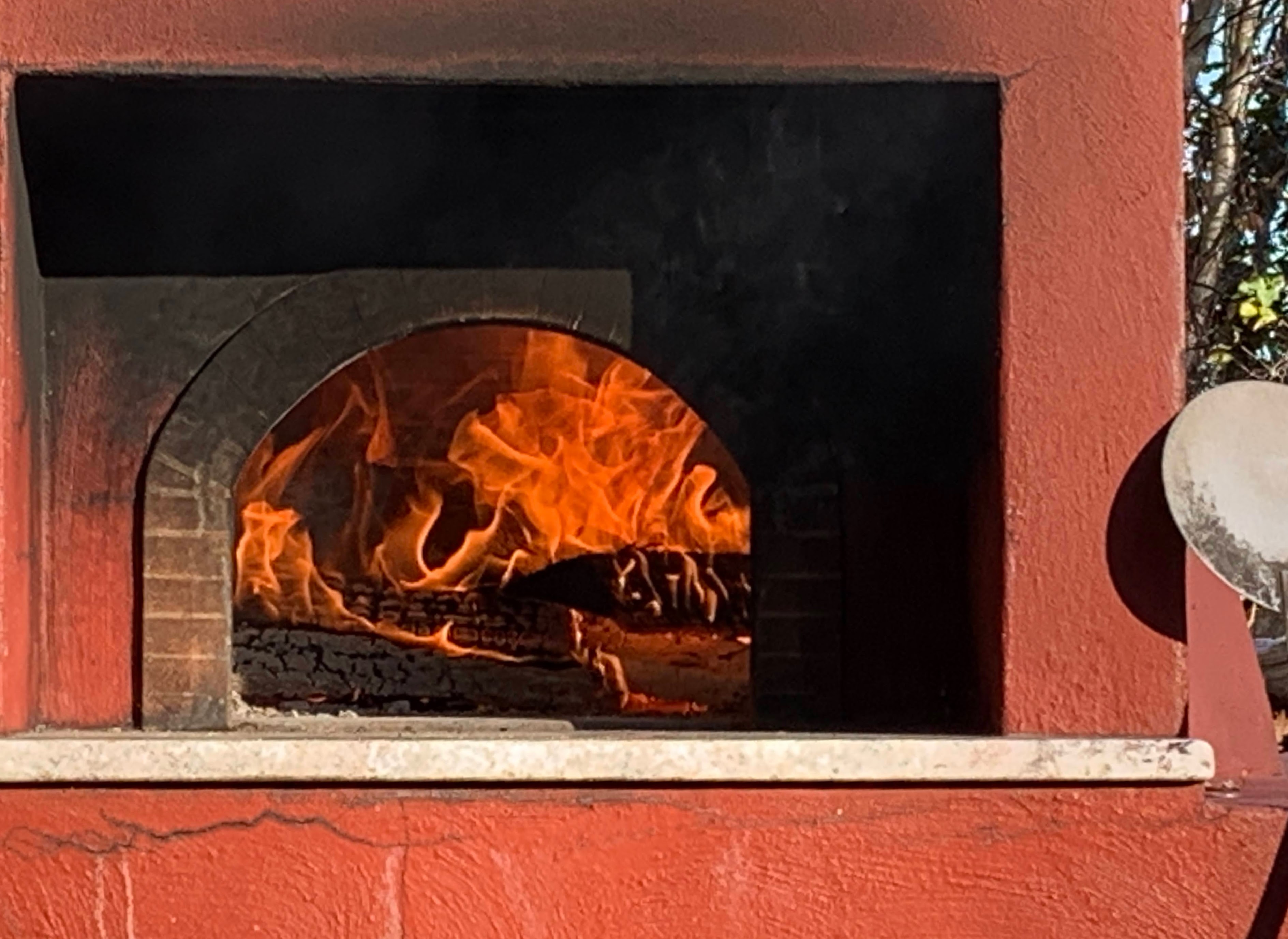
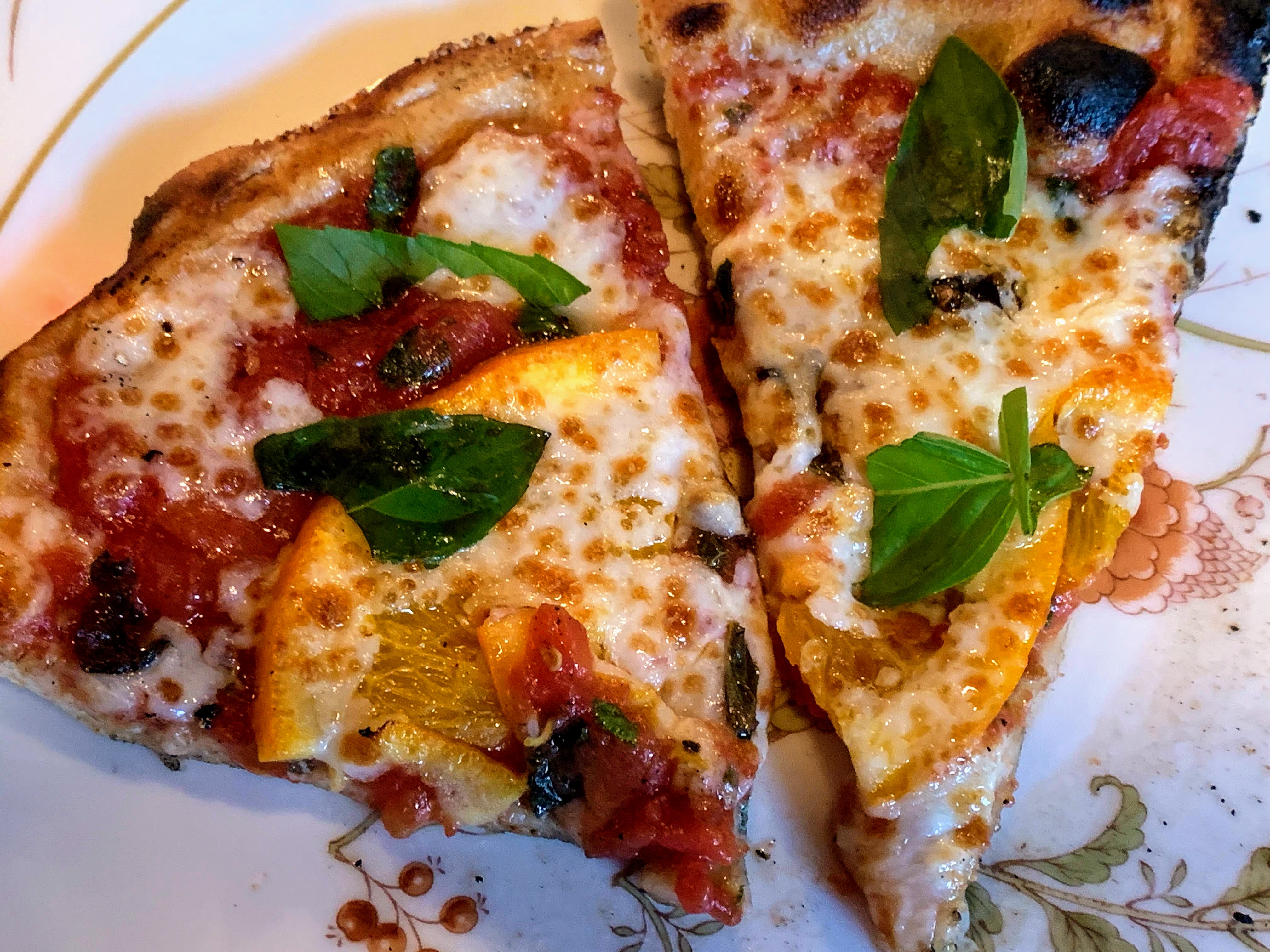
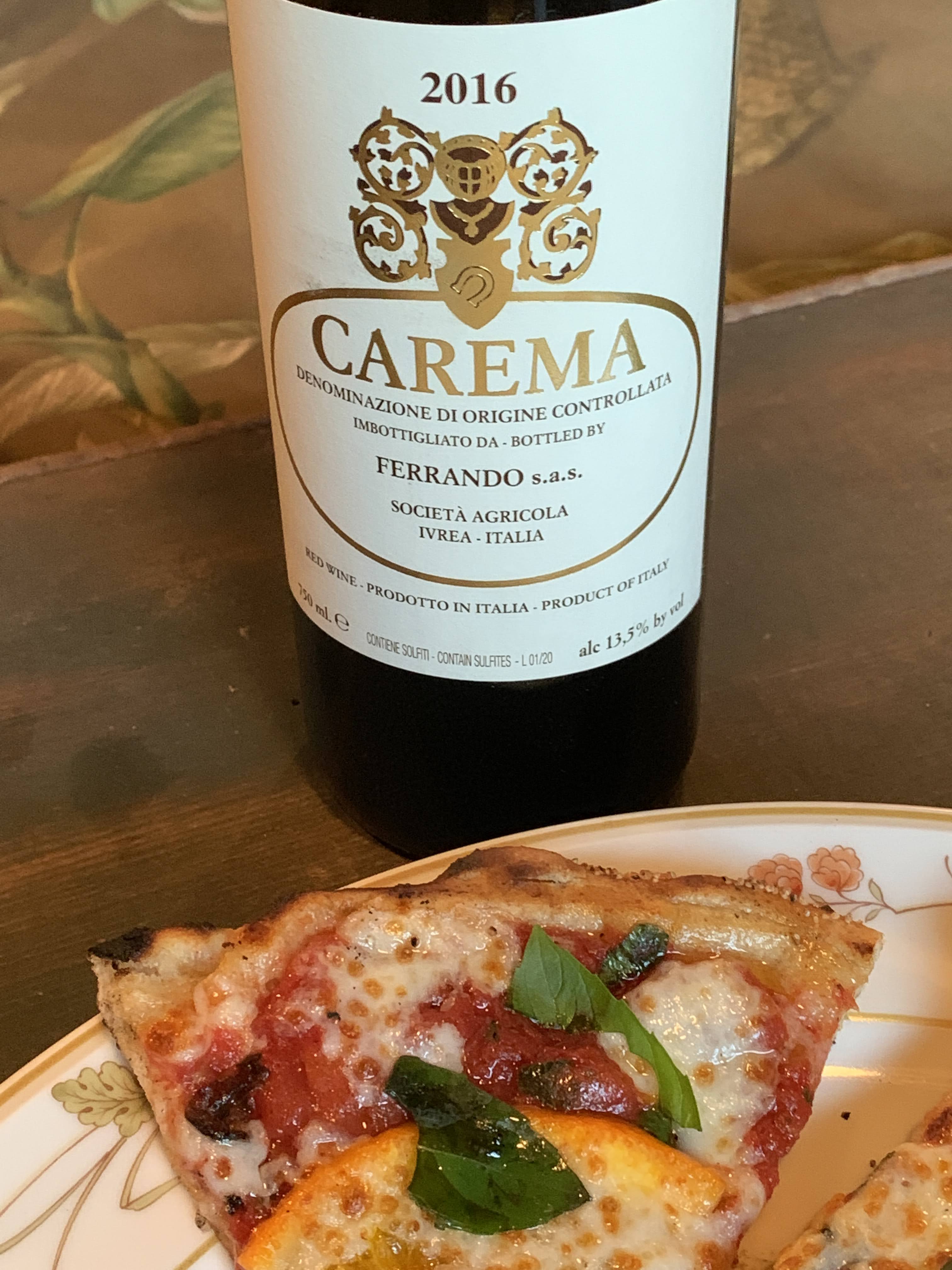
Here are some of Lynn’s photos:
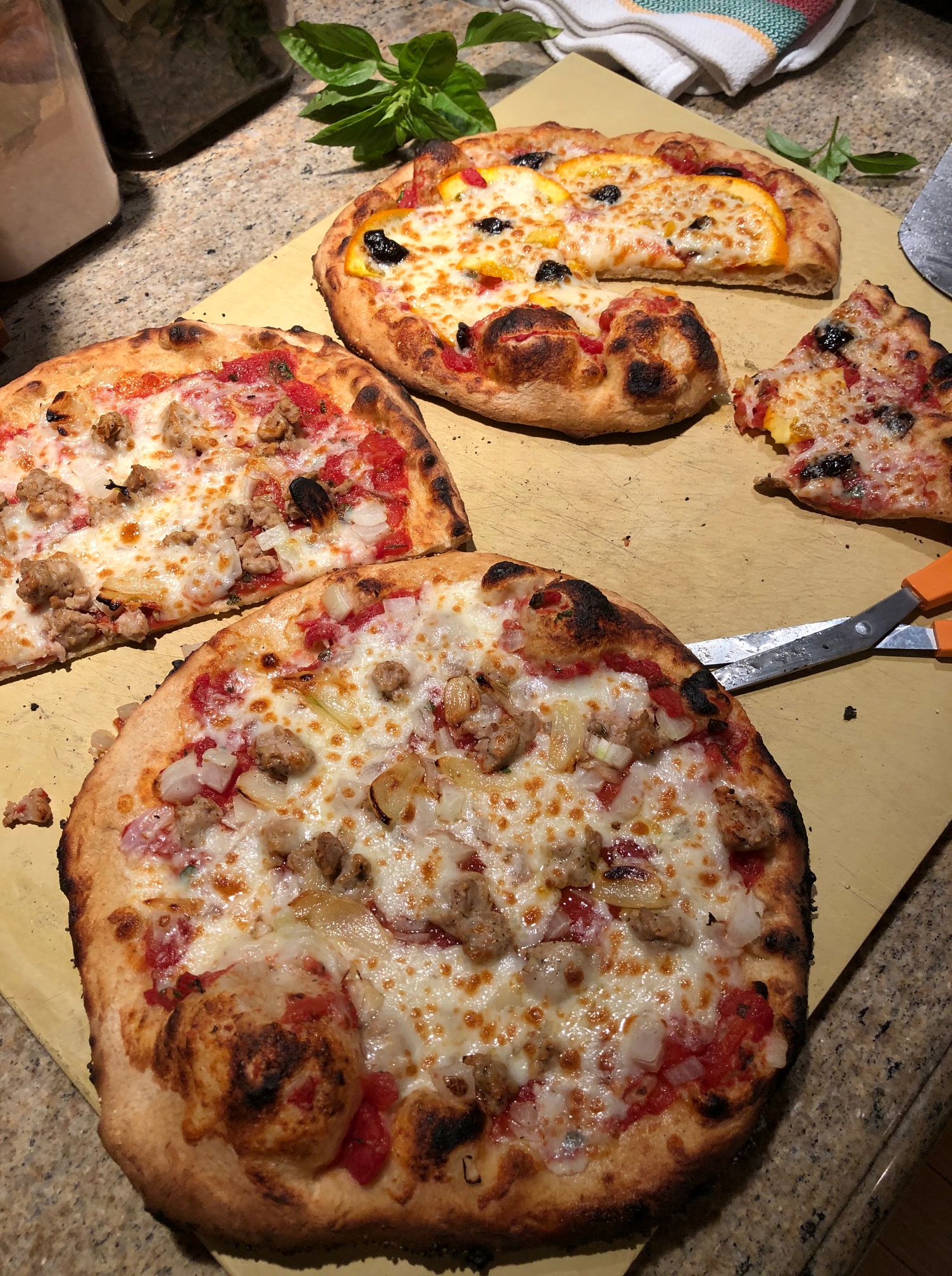
As you can see, I didn’t enjoy it much…

One of the joys of semi-retirement is the freedom to enjoy the natural rhythms in the world, especially those related to food. Today’s small lunch provides an object lesson.
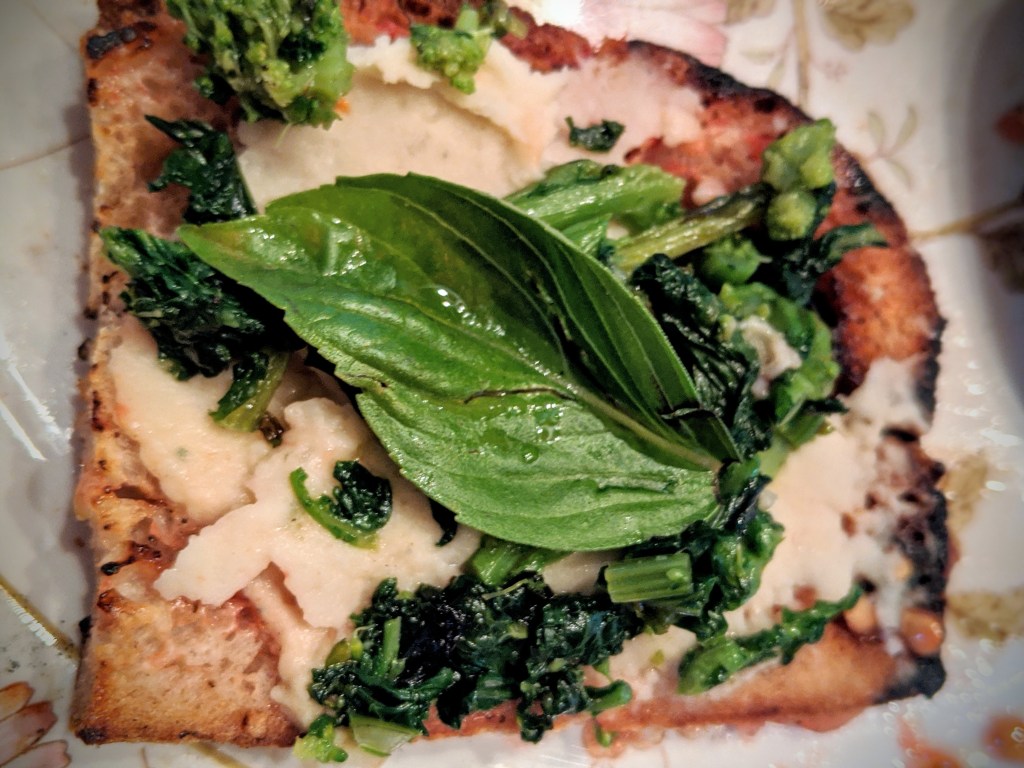
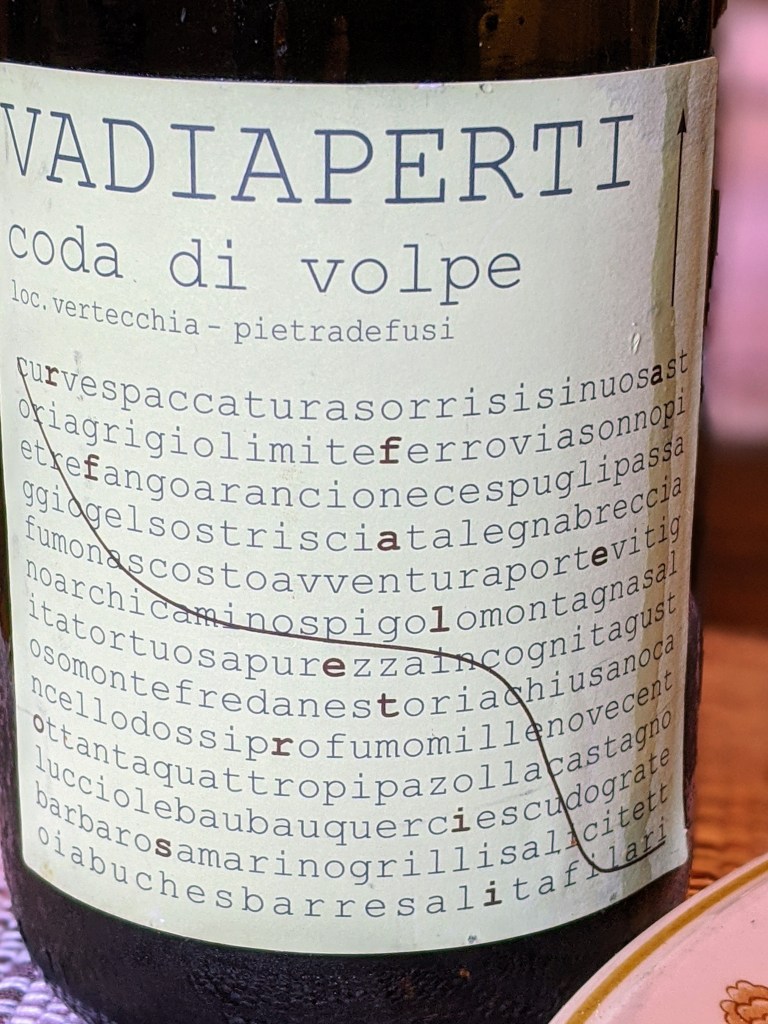

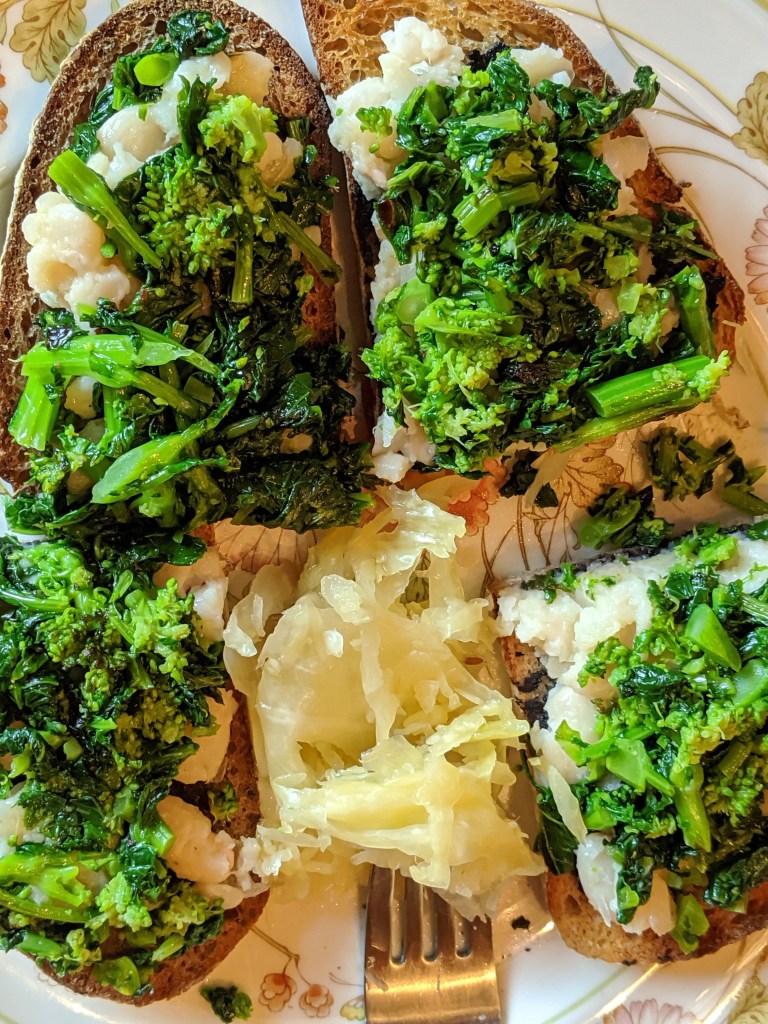
At first appearances it is a simple meal: several slices of grilled bread, topped with a white bean purée, a fresh basil leaf, and chopped broccoli rabe, accompanied by a glass of an Italian white wine — Vadiaperti’s Coda di Volpe. However, there is a lot more to the story. The fact that this meal was five days in the making will illustrate what I mean by “the natural rhythms”.
This is my first post in two months. Even in semi-retirement, there are periods of intense activity for work. The past six weeks have been very busy, teaching two graduate school courses completely online for the first time. Finally, this week one course was completed, so I’ve had a chance to indulge my passion for cooking. Here’s how the elements came together over a five-day sequence.
Day 1 — mix the levain as the first step in making sourdough bread. Let it sit on the kitchen counter overnight to ferment.
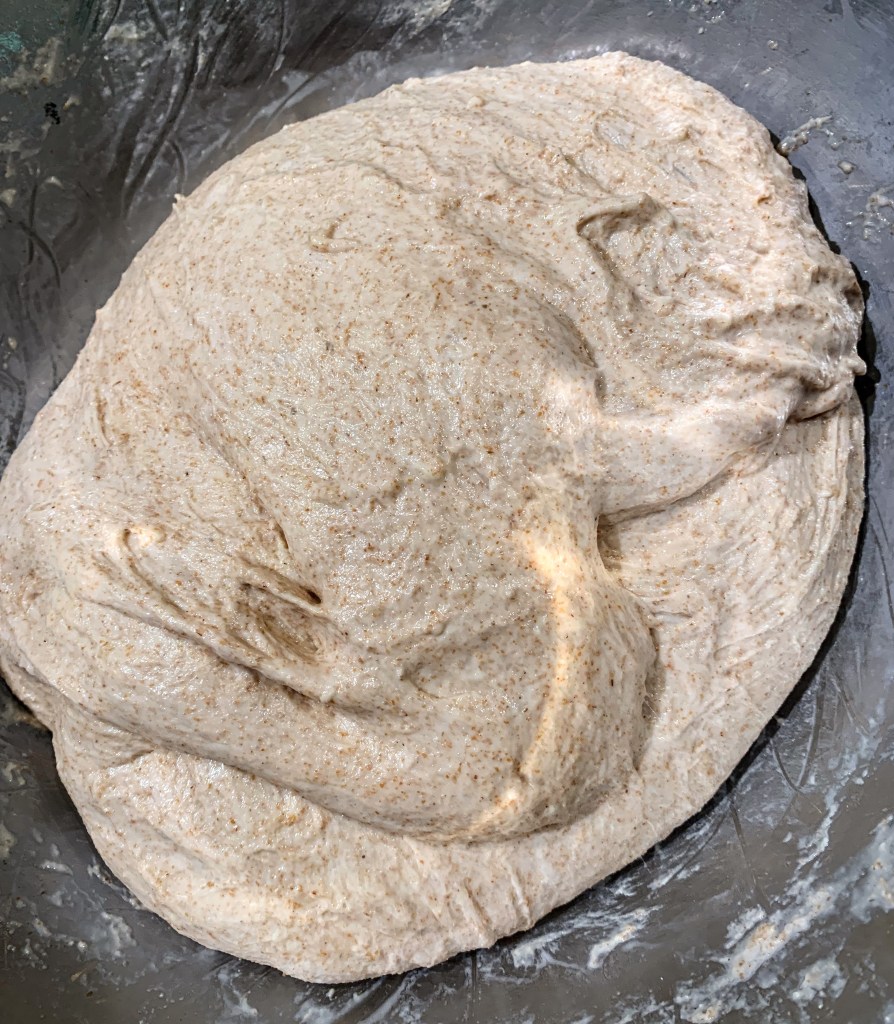
Day 2 — mix the bread dough, incorporating the levain, and let it develop slowly, all day long, stretching it every half hour or so. Retard the development by placing the loaves in the refrigerator overnight.
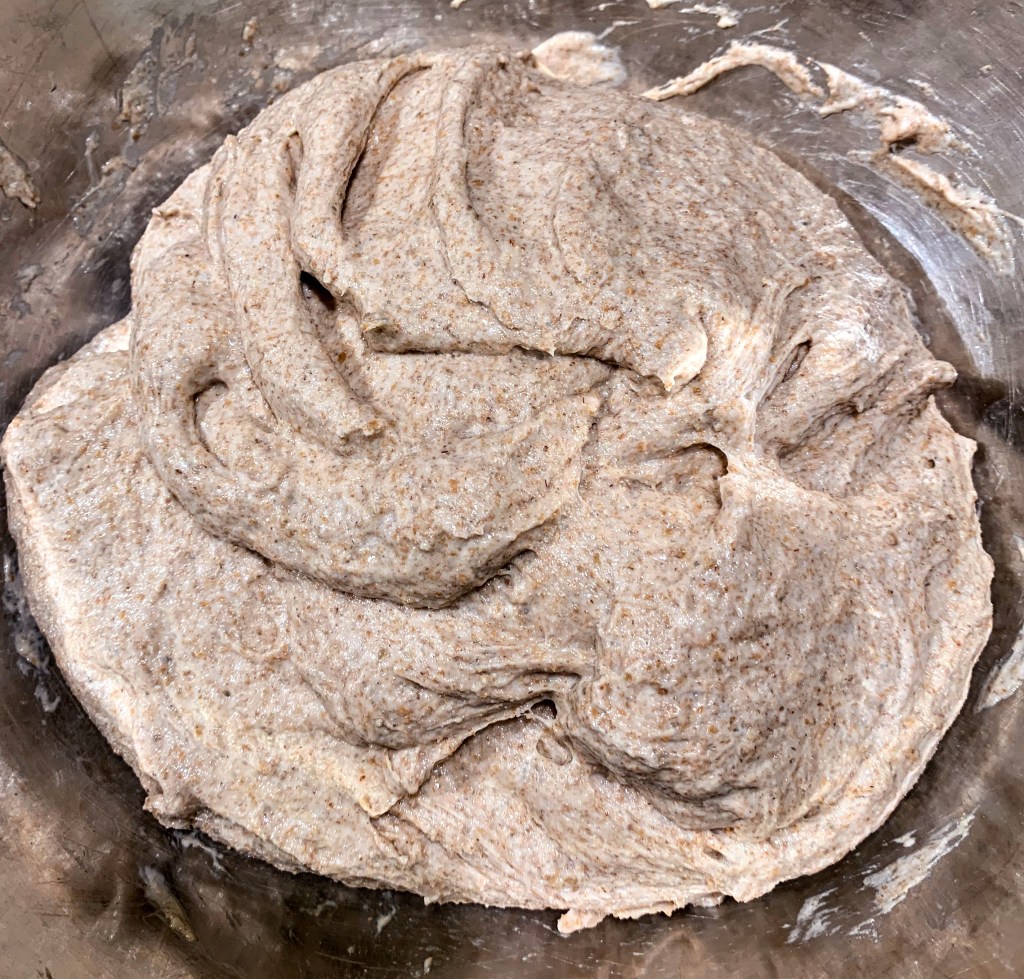
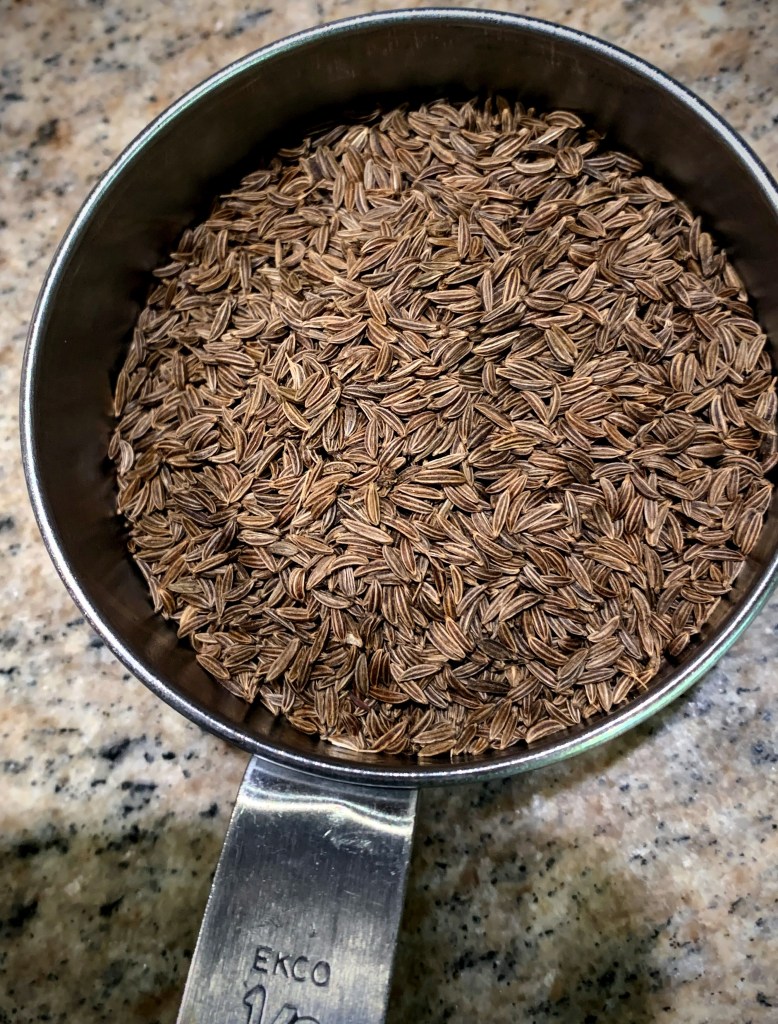
Day 3 — bake the breads (four loaves this time, instead of the usual two). I hate to throw out unused levain, so I made one recipe of Tartine-style whole wheat, and one recipe of a rye bread with caraway seeds, providing two loaves for each. In the afternoon begin soaking a batch of dried cannellini beans and let them soak overnight.
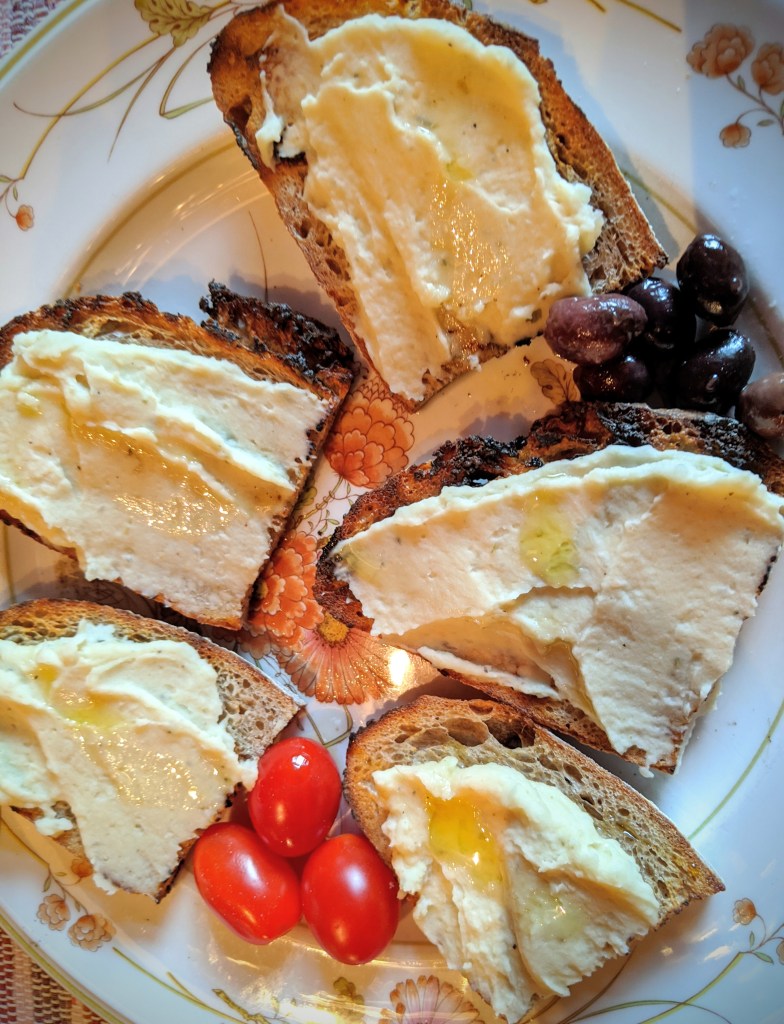
Day 4 — cook the beans, then make the purée, including slow-cooked, chopped onion and garlic, plus some olive oil, then sautéed with the beans. Trim a bunch of broccoli rabe, parboil it to remove some of the bitterness and tenderize a bit. When the vegetable was cooled and dried, flash fry it with olive oil in a very hot wok. Chop and eat some for lunch, setting the rest in the refrigerator overnight.
Today, Day 5 — slice and grill the bread. Rub raw garlic and a ripe tomato on the toast. Pick the basil from our garden. Top the bread with the purée and the broccoli rabe and basil. Pour the wine, relax and enjoy lunch.
So, what’s all this stuff about “natural rhythms”? Well, my observation is that most of our professional and personal lives involve ways to do things quickly. I could buy pre-made bread, and a container of puréed beans. Or, I could even bake my own bread with instant yeast, slice it and make a meal the same day. I could use a can of pretty good cannellini beans, and it might cost $0.99 and be ready in the 30 seconds required to open the can.
These are all practical options, and they have often given us healthy and convenient meals. But I also have learned that, when I have the time, the breads I make from milling my own flour, using a levain from my own sourdough starter, and allowing the dough to develop over two days before I bake it — those breads have more flavor, satisfying textures, and last on the counter far longer without spoiling than anything I buy or make with instant yeast. To me, the natural rhythms of fermentation and breadmaking can be enjoyed to the fullest, when one has the luxury to do so.
The prosaic white beans tell a similar story. The flavor and texture of Rancho Gordo dry cannellini beans, named “Marcella” in honor of Marcella Hazan, allow me to savor a purée as if I were in the kitchen of my favorite Italian food writer, while I conversed with Victor Hazan about the glories of Coda di Volpe, the grapes from Campania, so named because the grape clusters hang down on the vines as if they were ‘the tail of the wolf’.
Another dividend of this whole, drawn-out process is that I get to enjoy some of the elements in other dishes over the five-day period. Here are the photos along the way.
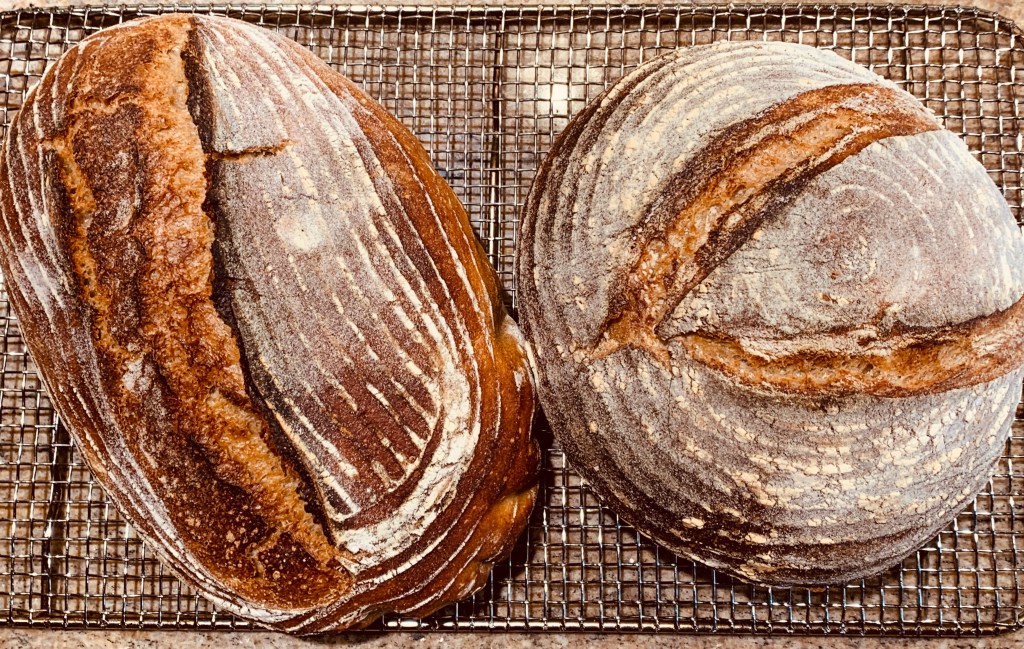
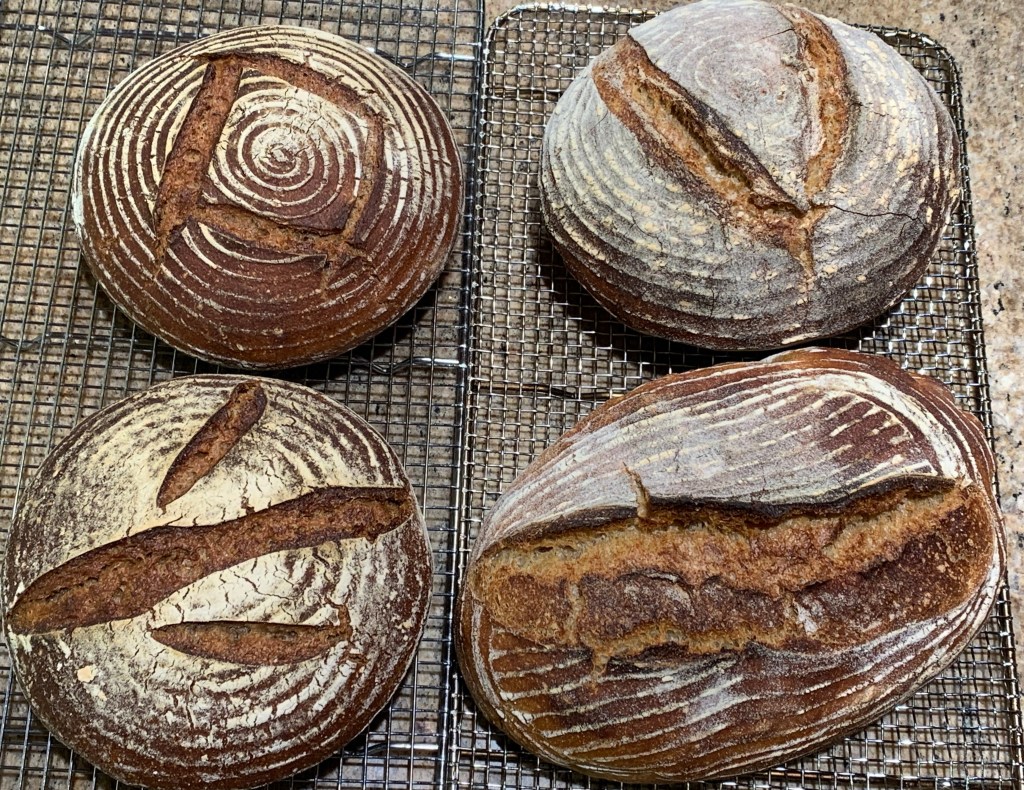
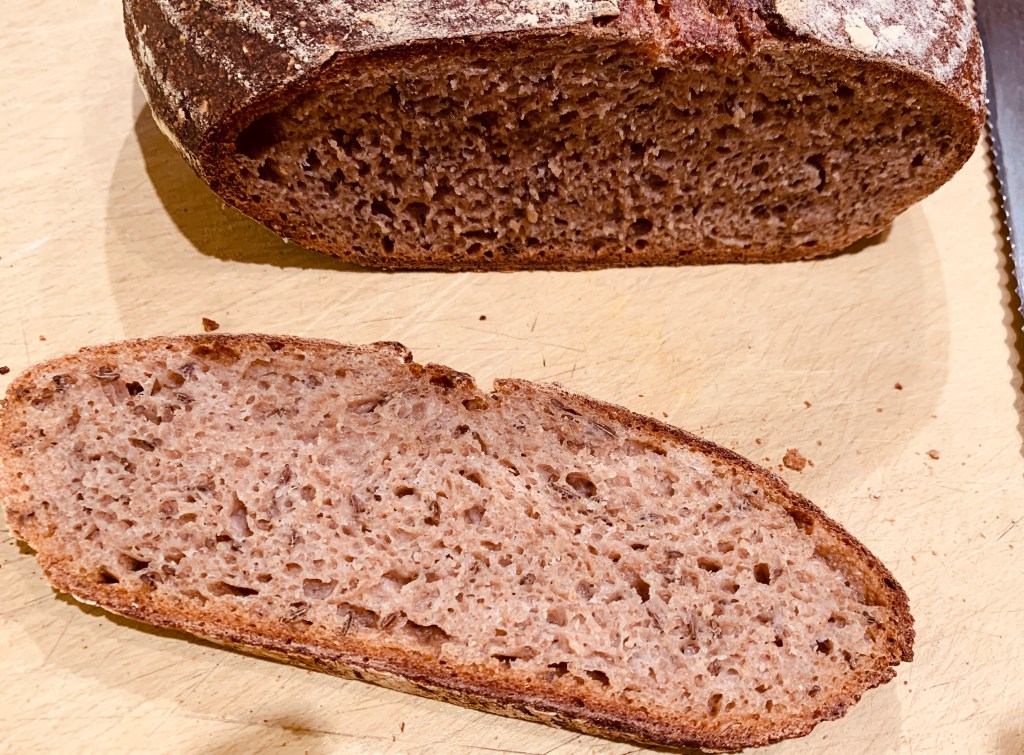
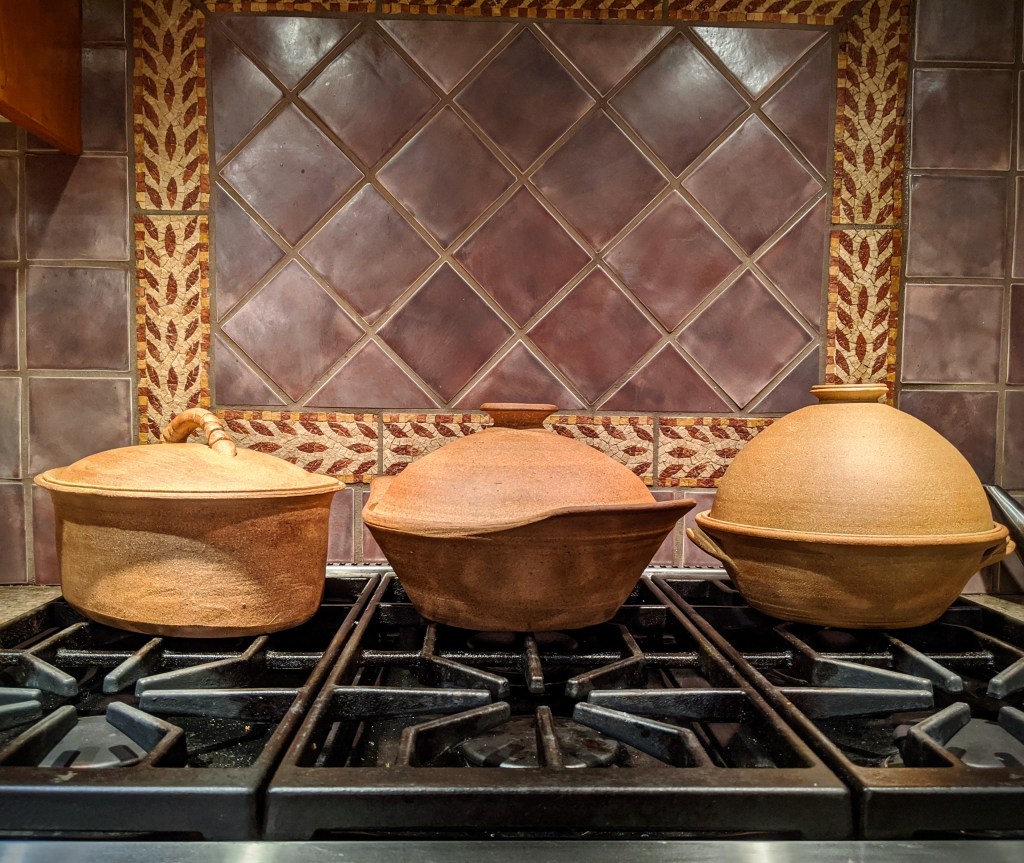

Four breads, baked in three different custom-made Breadpots by Judith Motzkin, providing delicious, healthy, vegan meals.
Okay, now that we’ve shown in the previous post how to roast and peel sweet peppers, the question is, “what do we do with them?”
Fortunately, I felt a need for a late night snack tonight, and I am happy to share my answer to the question. Here’s the photo, followed by the narrative.
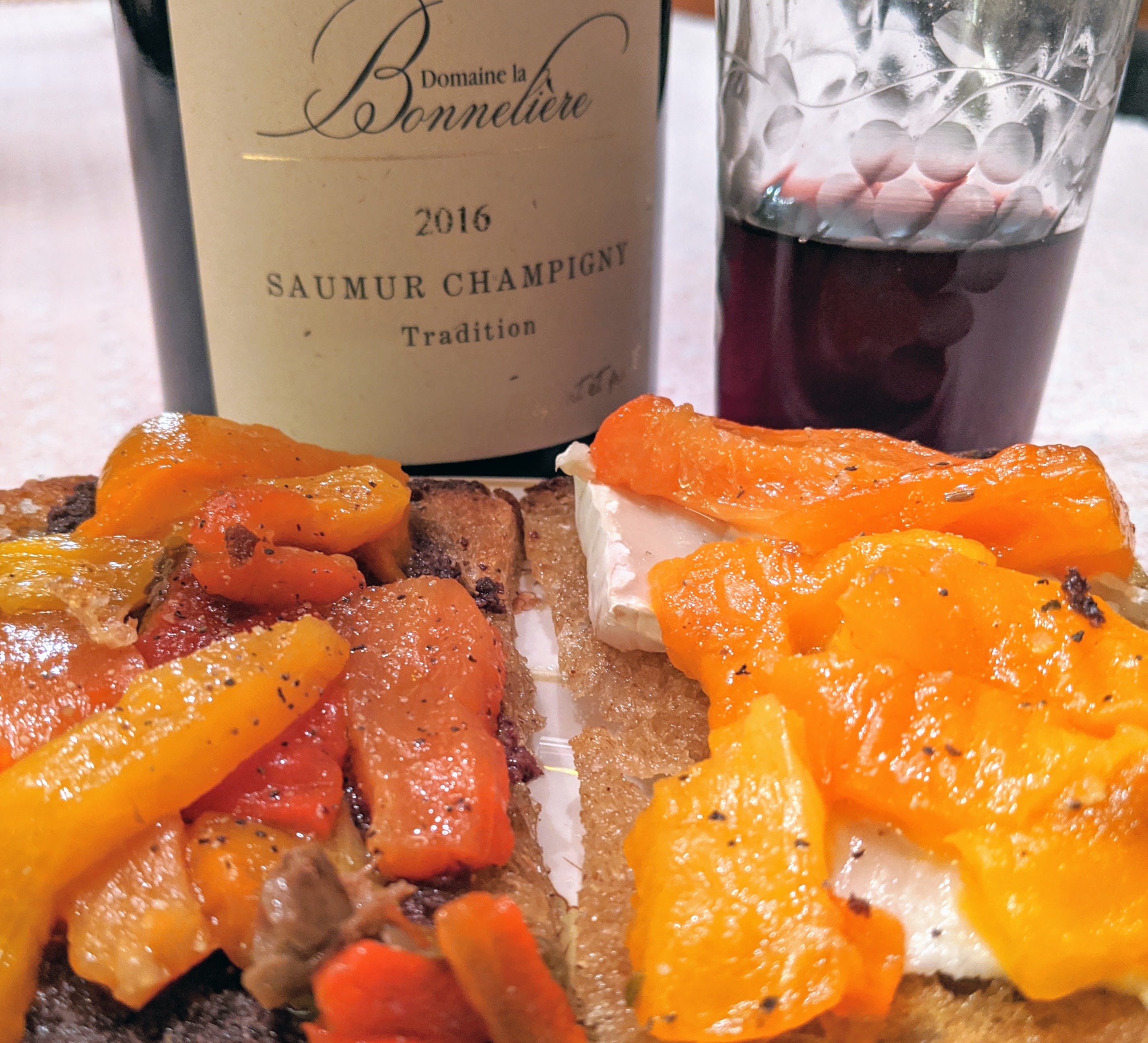
I was at the tail end of the last sourdough bread loaf from last week, so I trimmed the harder crusts and sliced 4 pieces of bread. These were sautéed in olive oil on both sides. When nice and crisp, I topped two of them with slices of Trader Joe’s Goat Milk Brie cheese, and then added the sliced sweet peppers with capers. Next, I topped the other two slices with a Ligurian olive paste, made from Taggiasche olives, and then added the rest of the sliced peppers. A generous sprinkling of sea salt crystals from Ibiza and freshly-ground black pepper from Costa Rica completed the dish.
Now for the finale. The last few weeks have been unusual in that I’ve been drinking less wine, and even enjoying it less when I do drink. Still, I had an open bottle of a 2016 Saumur Champigny Rouge — a Loire Valley Cab Franc, so I poured some into one of my favorite French glasses. The results were marvelous. Just hit the spot. The only thing missing, I think, was to have rubbed a little raw garlic on the toast, before the toppings. Next time. There’s always room for improvement.
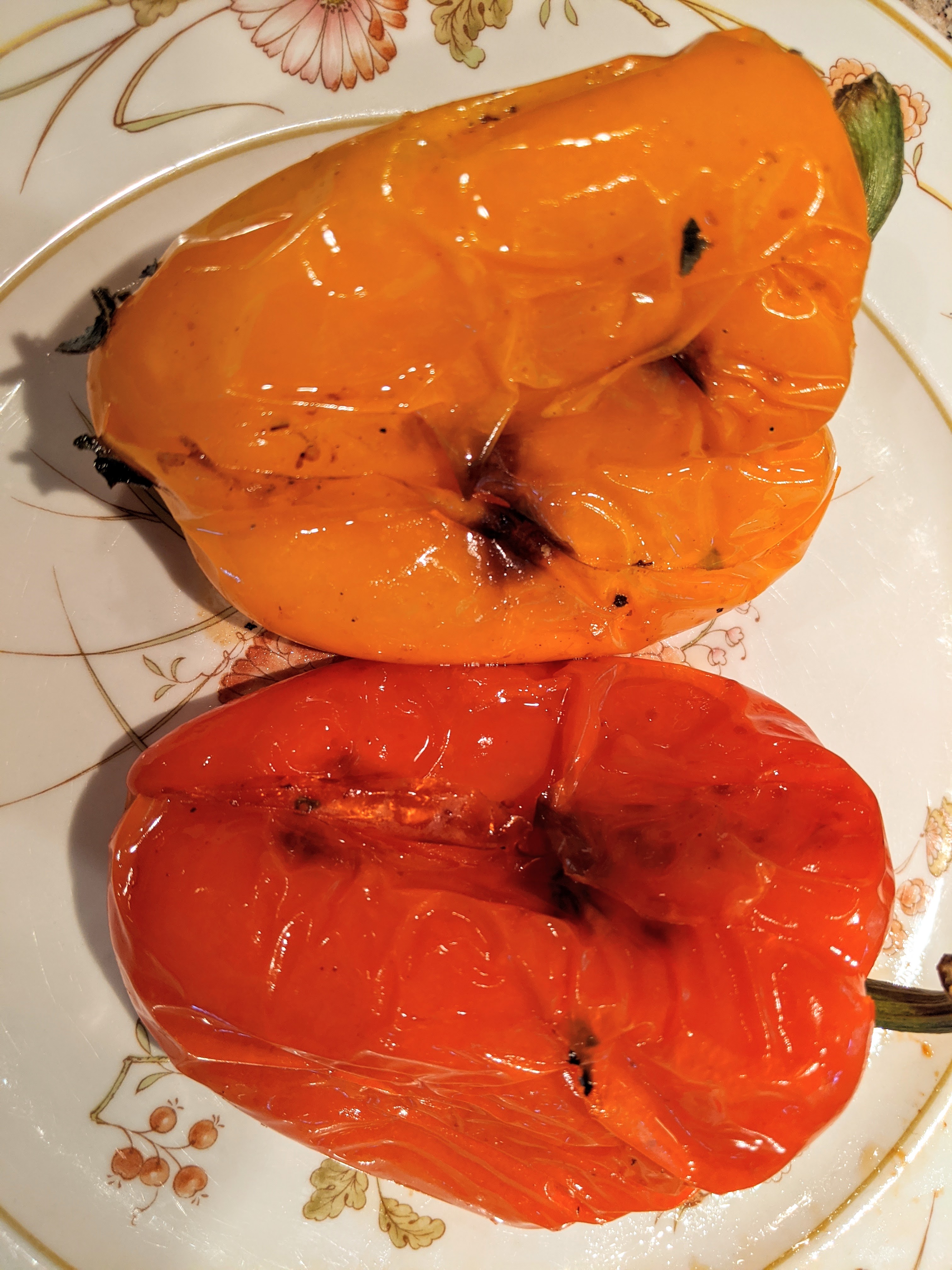
I’ve been roasting and peeling sweet peppers for at least 40 years in my cooking career, so I thought I had the methodologies down pat. They included grilling them until well-charred on the gas grill, roasting them whole or cut in half vertically in a very hot oven, or broiling them on high heat in a similar manner. In all of these, the peppers are washed and dried and cooked with oil, so the skins will char and peel easily. Ha! Think again — there is another way, and I found I really like the results.
I was perusing one of my seldom-used cookbooks the other night (Lidia Bastianich’s Lidia Cooks from the Heart of Italy), and I was intrigued by the Farro and Roasted Pepper Sauce recipe. Here’s her technique:
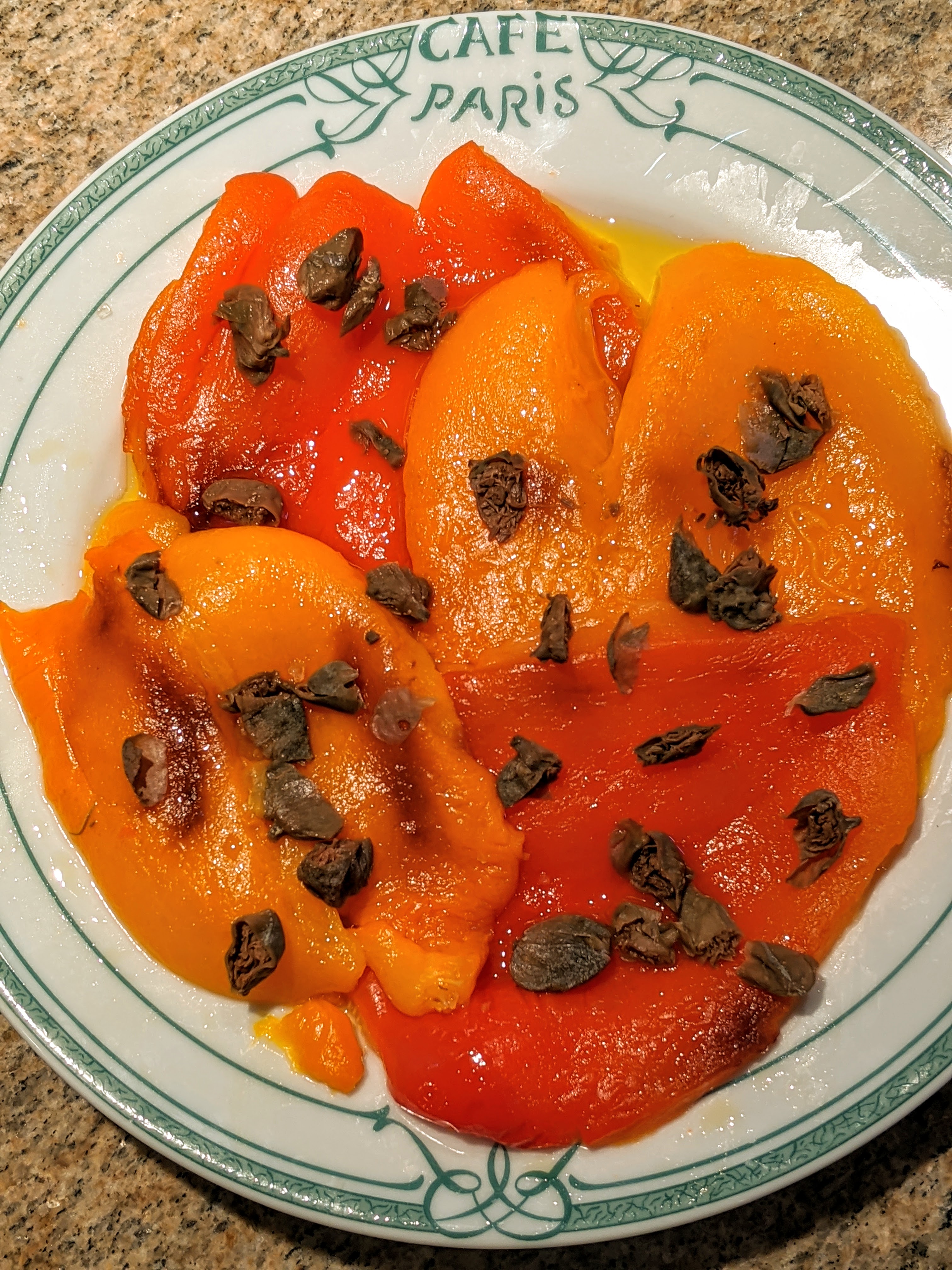
“Preheat the oven to 350º F. Rub the peppers all over with 2 tablespoons olive oil, season with 1/2 teaspoon of salt, and place on the parchment-lined baking sheet. Roast for 30 minutes or so, turning the peppers occasionally, until their skins are wrinkled and slightly charred. Let the peppers cool completely….. Peel the skin off the cooled peppers, and then slice (as desired)”
It worked beautifully. The peppers peeled much more easily than with other methods. No small pieces of charred skin on everything. No wads of paper towels used in the skinning process. And perfectly tender texture in the finished peppers.
Live, experiment, and learn!
I love eggplants. When done properly, they are extremely satisfying. We cook them often, so I am always on the lookout for new favorites to add to our repertoire. Yesterday, I tried a Moroccan Eggplant-Olive Tagine that made the grade.
As I’m sure you know, Tagine is both a clay pot and the name of dishes made in those pots, as well. We do have a small tagine, which is rarely used. I found it on a shelf under the stairs in our house, and that inspired me to try this recipe.
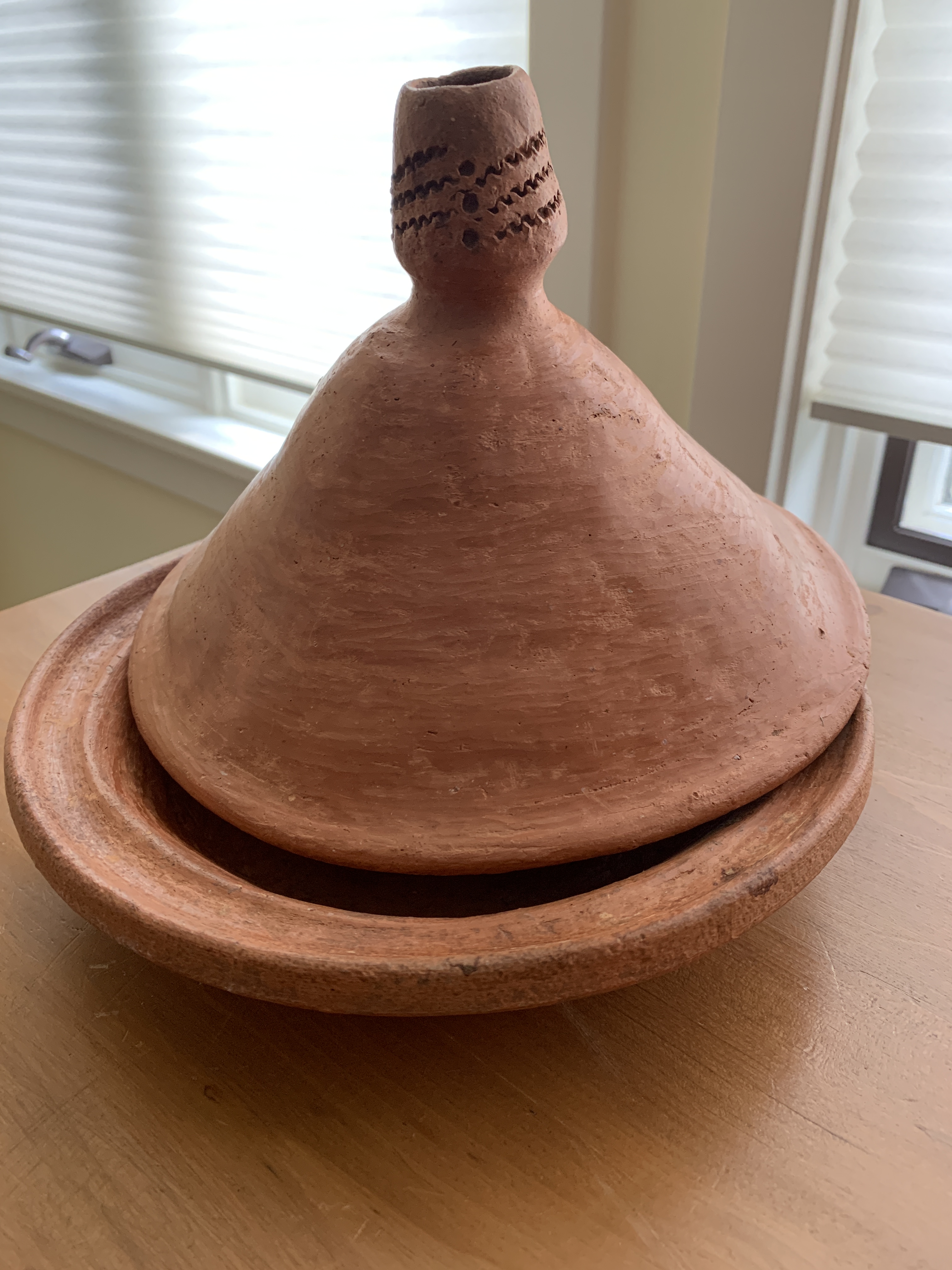
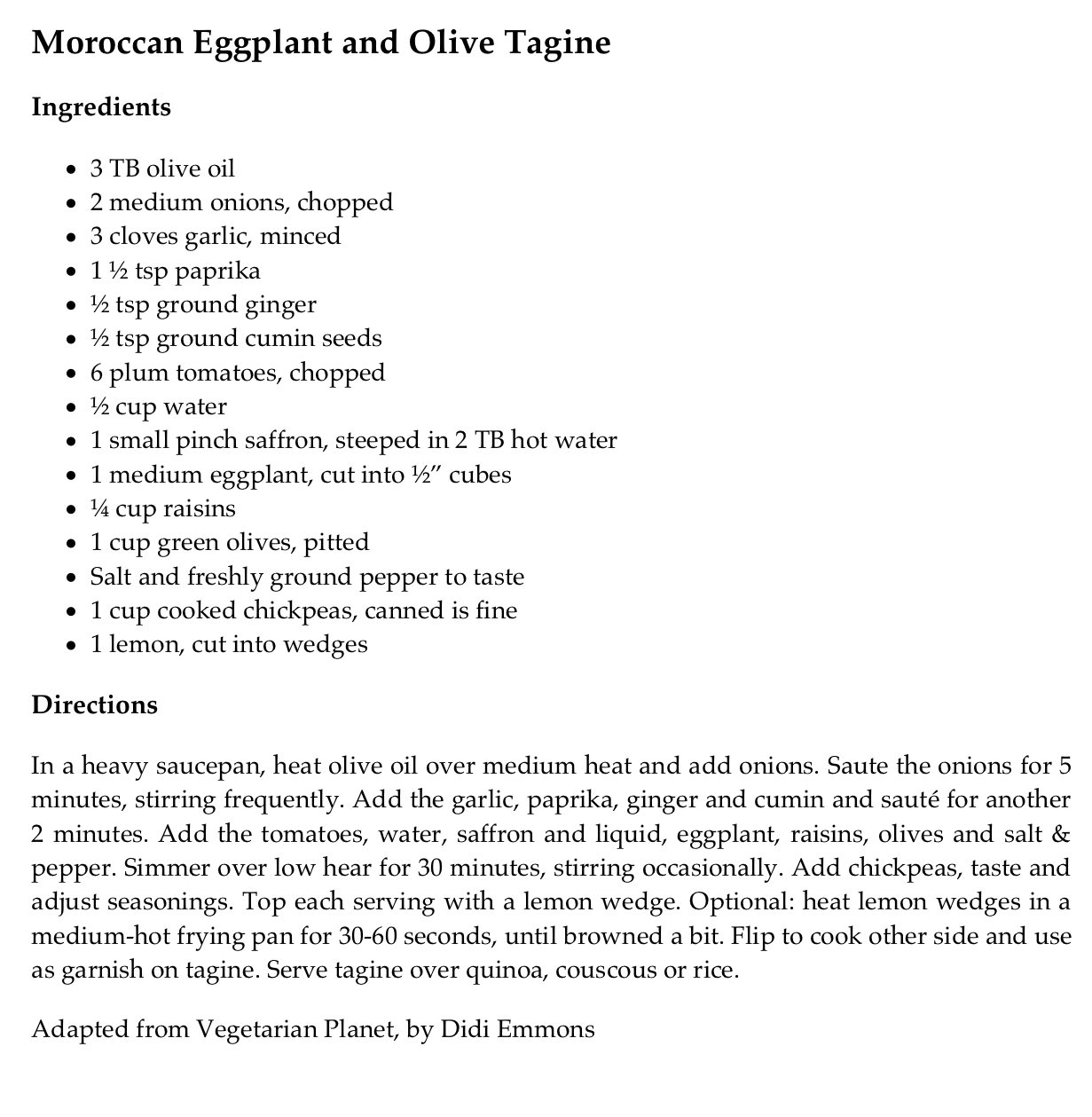
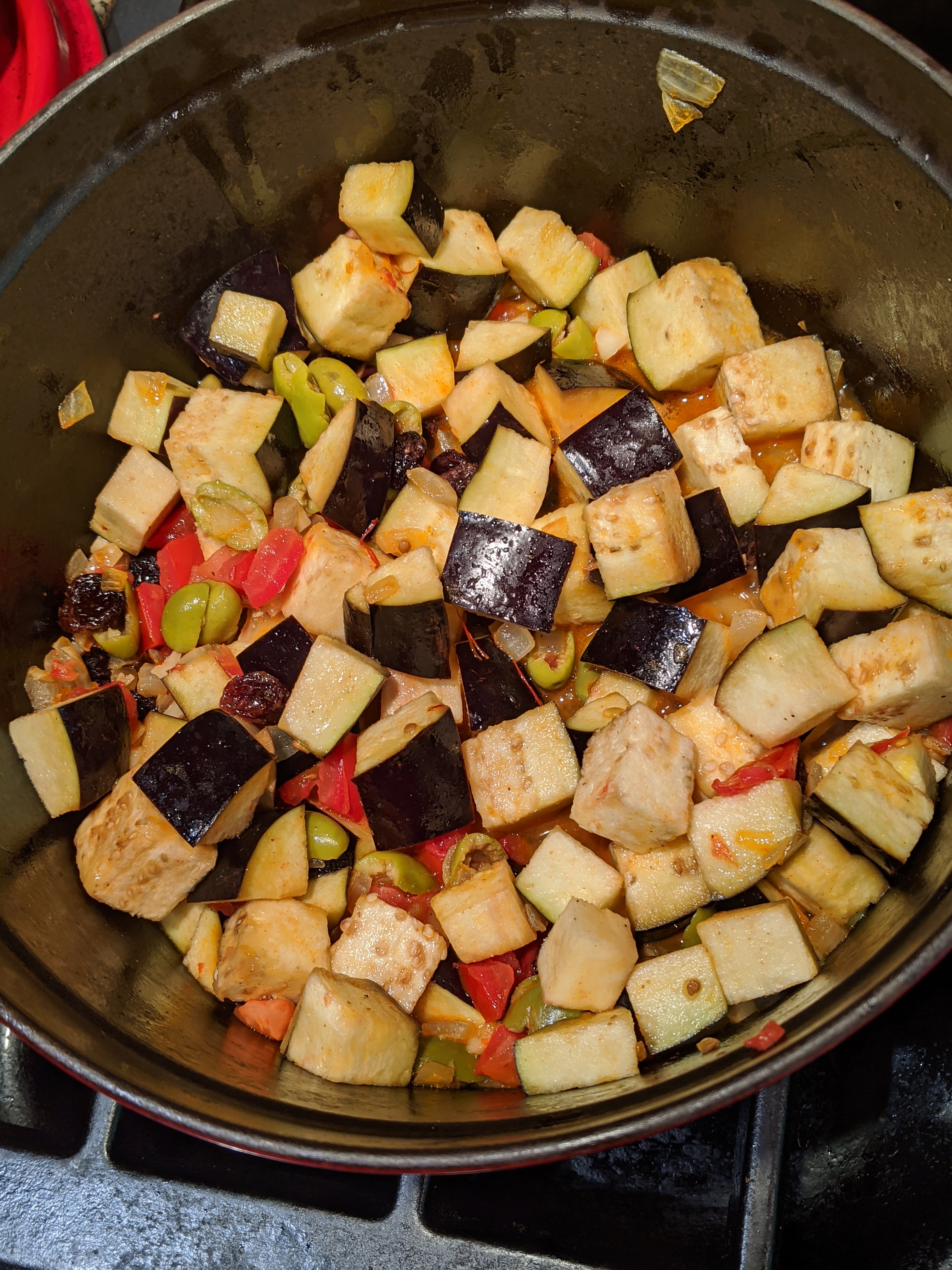
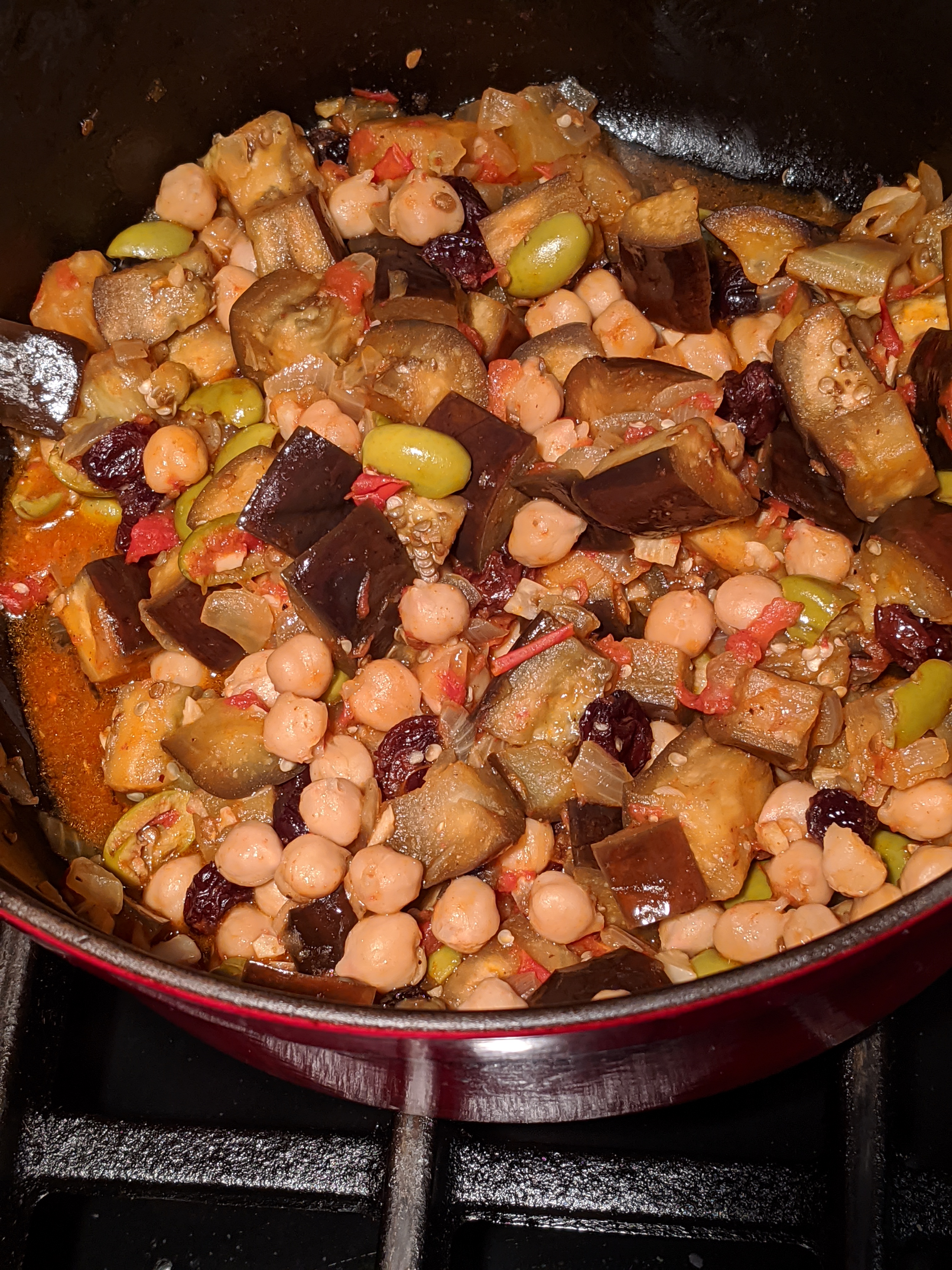
After assembling all the ingredients and doing the prep work, I agonized over the question of whether or not to use my tagine, or to make it in another saucepan. Authenticity suggested the tagine, but its small size and the fact that I was unable to locate the heat diffuser we used to have to ensure that the pot did not crack when placed directly over our gas burner — these drawbacks convinced me not to risk it. I will not recover the 27 minutes I spent looking for the diffuser all over the house, but c’est la guerre.
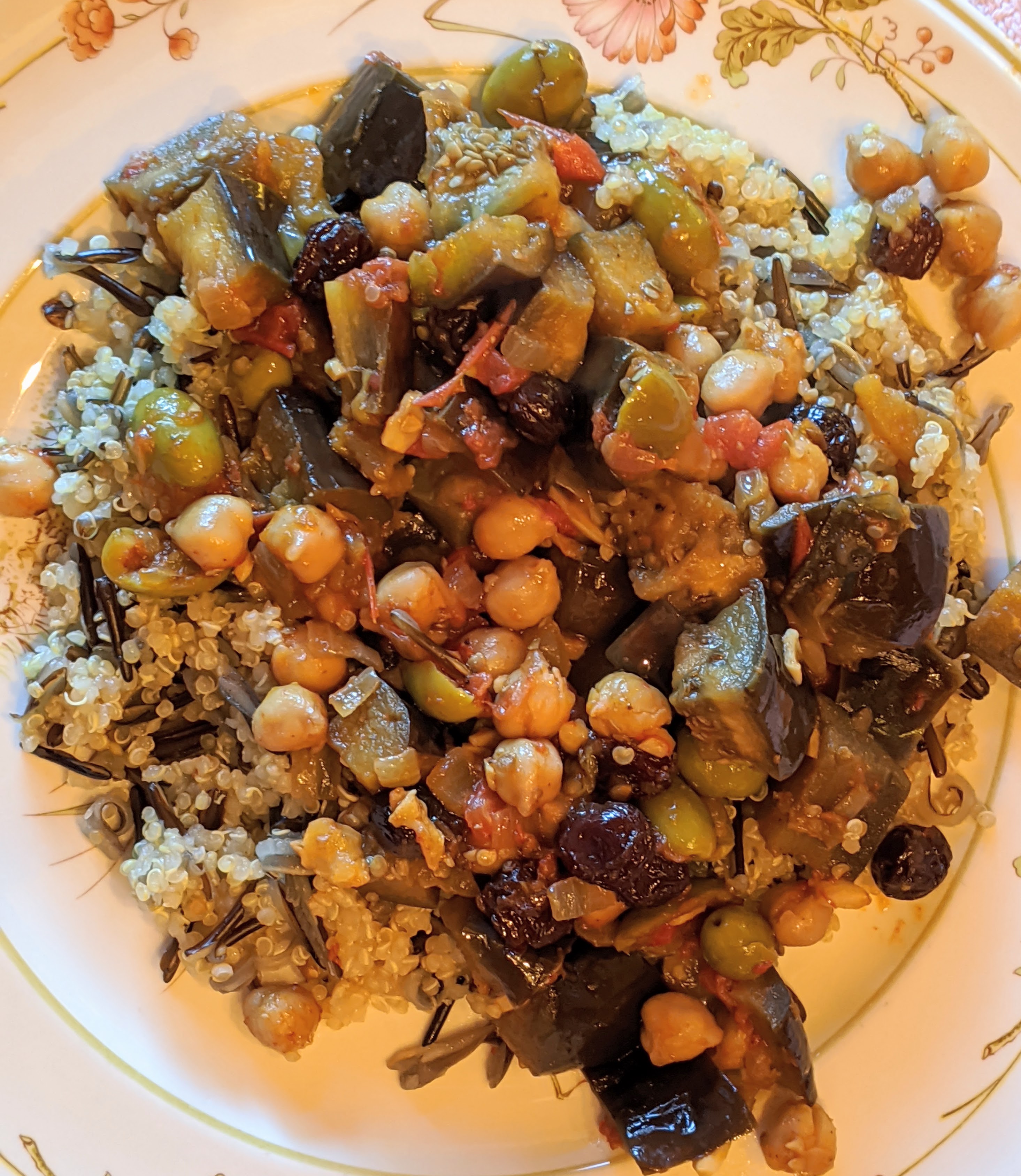
It all came together smoothly, and it was ready to eat in less than 45 minutes. I chose to serve it with quinoa (as recommended above), which I enriched with wild rice I had cooked earlier in the day. We now have a new favorite eggplant dish.
The dishes I will remember most from July include:
Sourdough
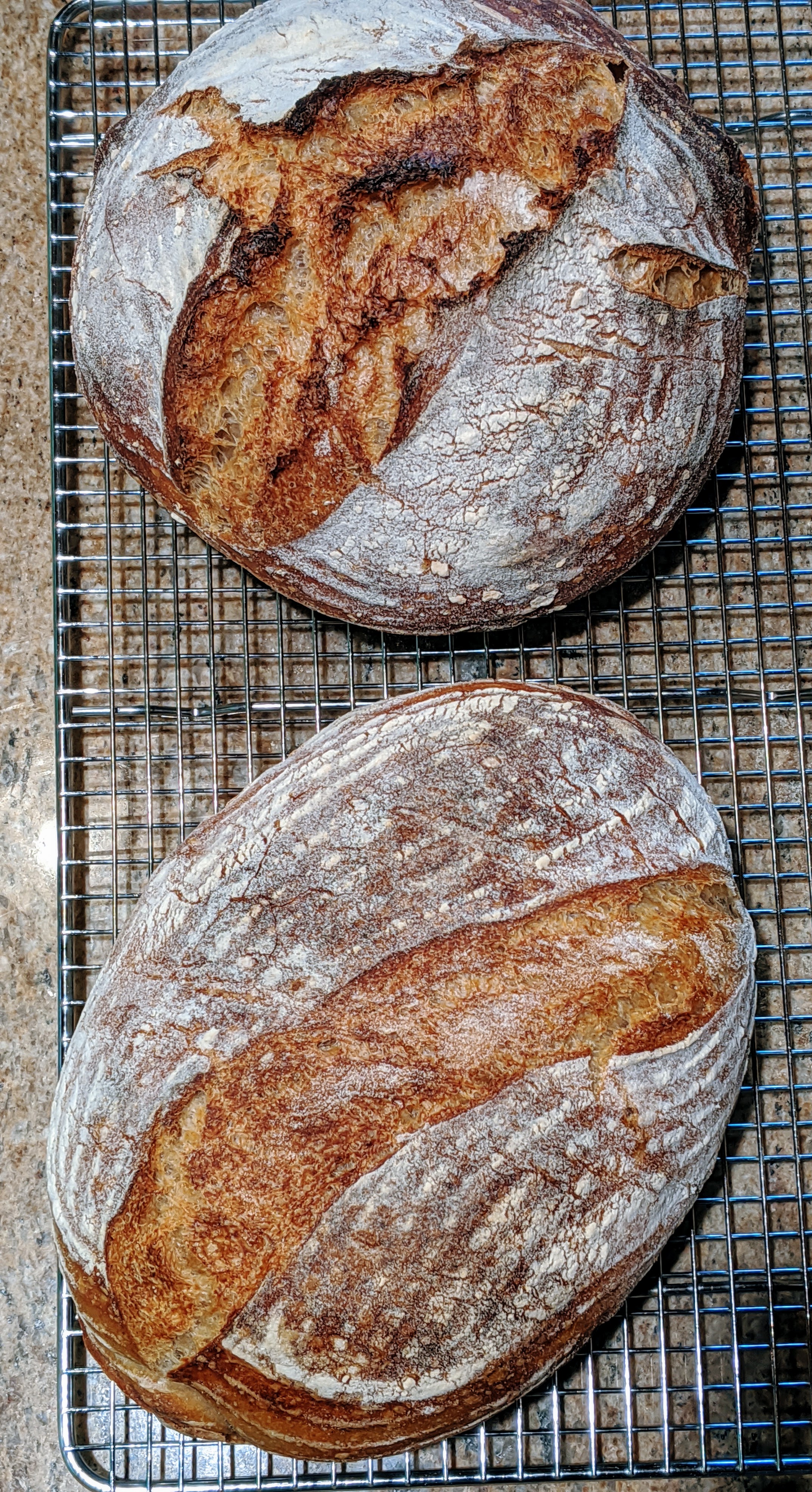
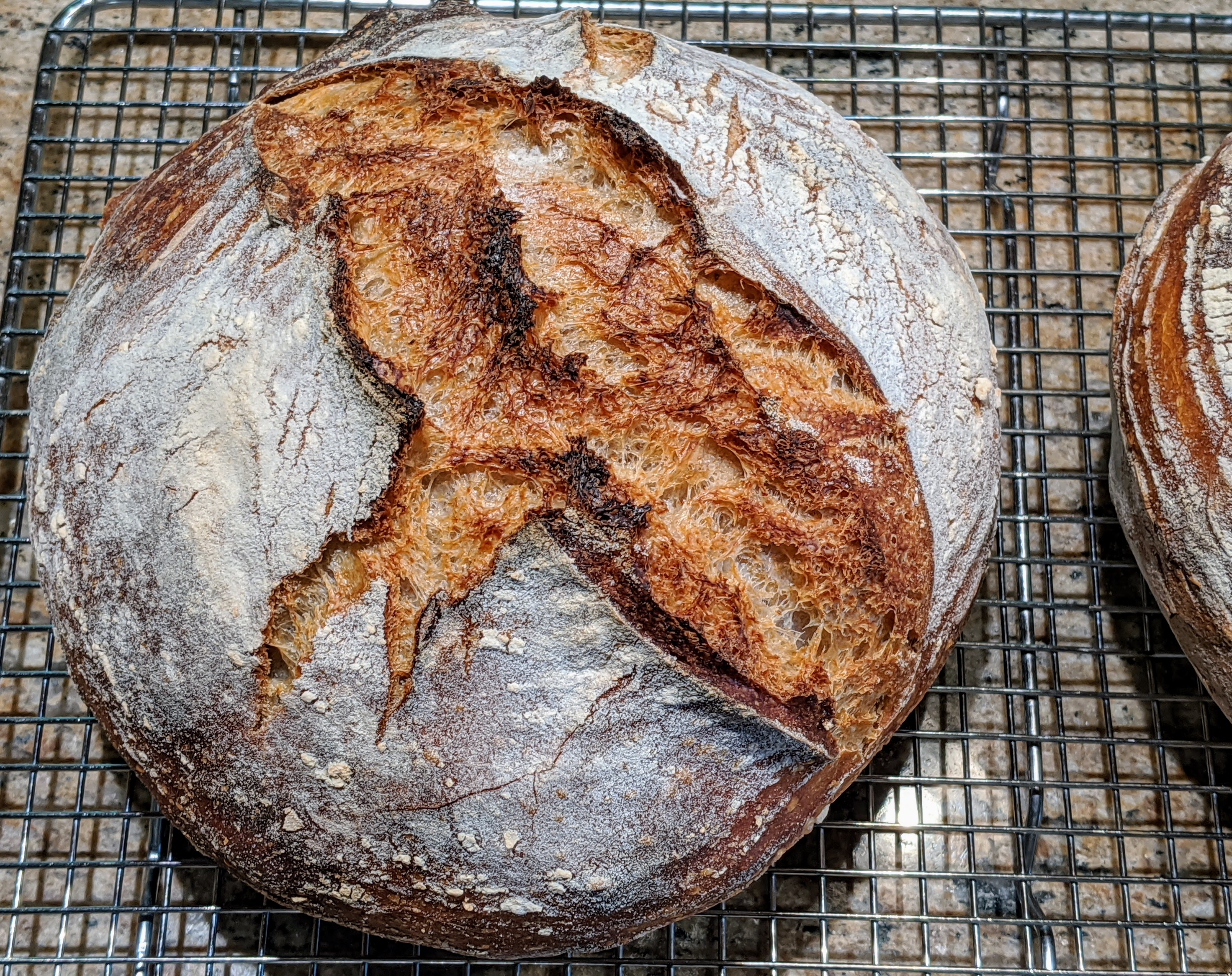
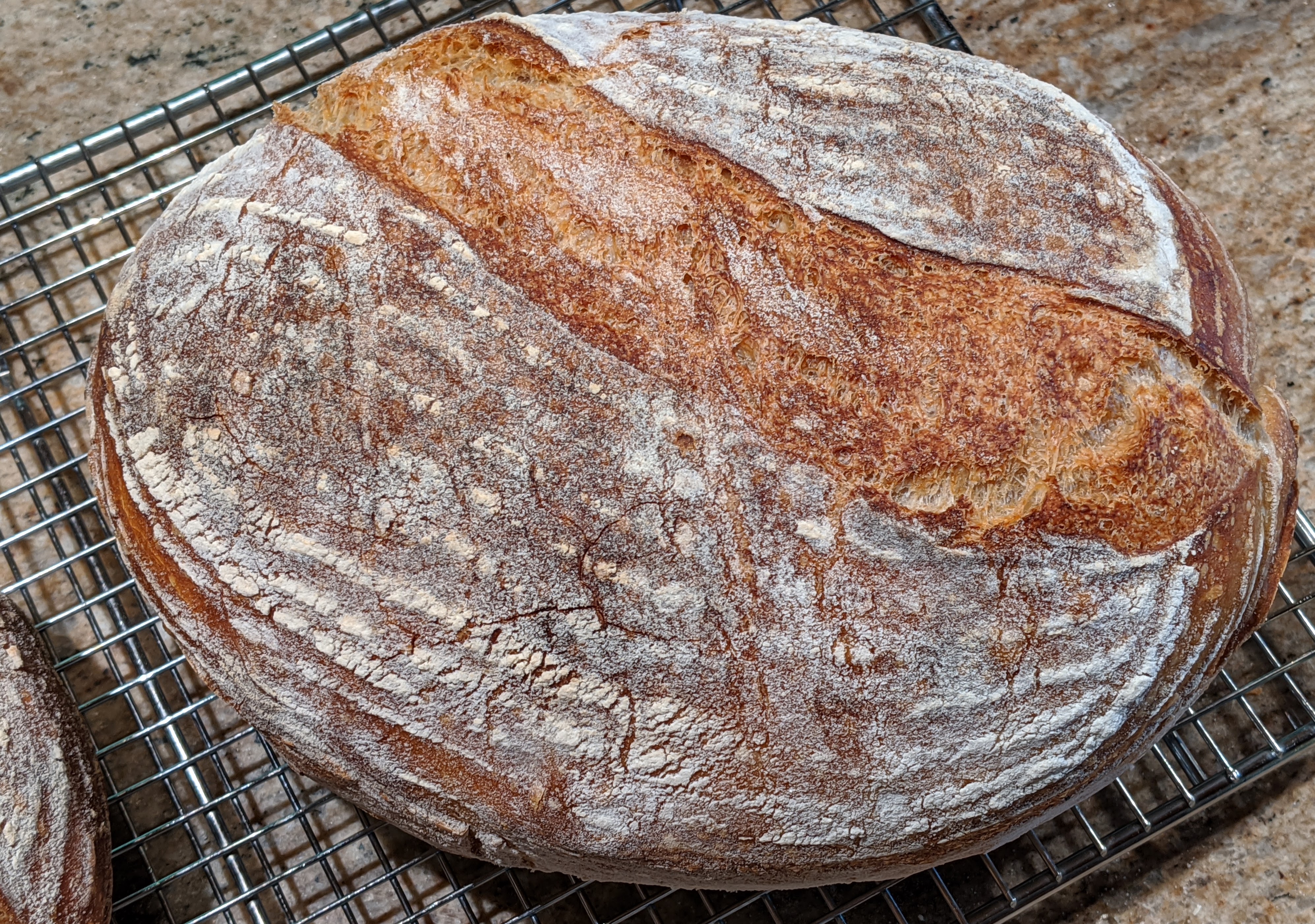
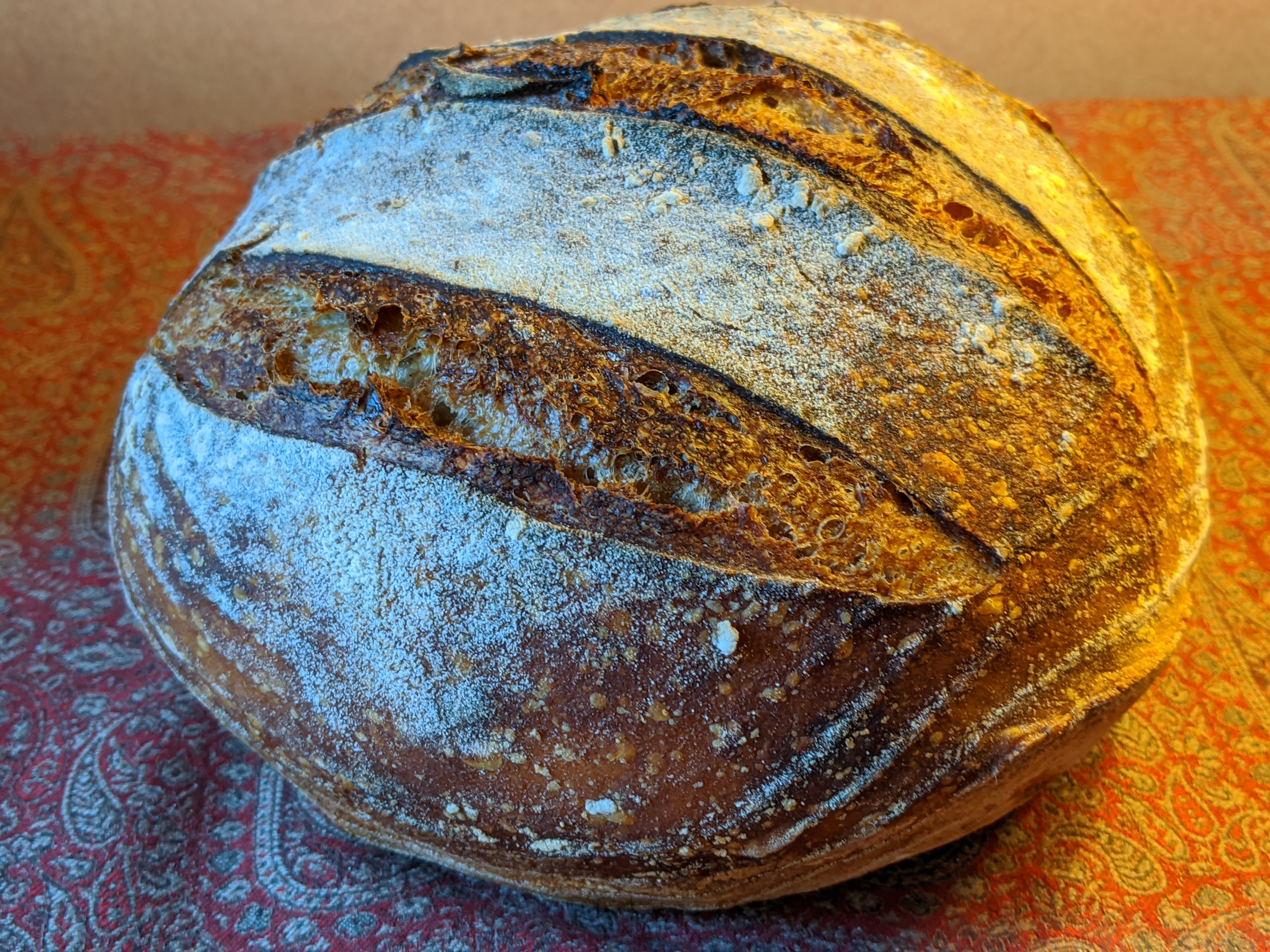
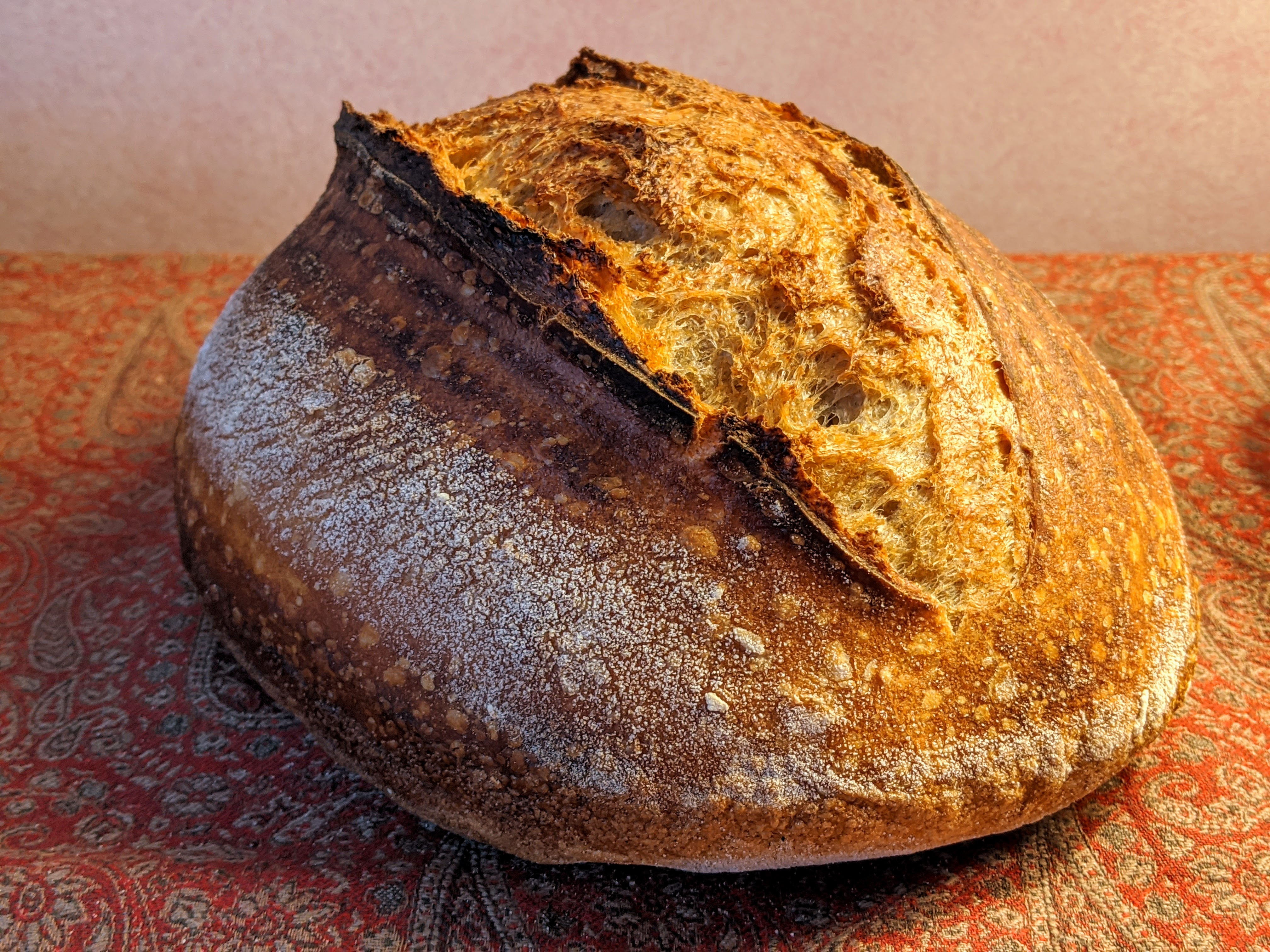
Recently my Tartine-style breads have been quite good, and I’ve settled on a recipe for the dough which is now 20% whole wheat. Also, small amounts of Spelt in the mix seems to add considerable ‘extensibility’ to the dough, making it much easier to do ‘stretching and folding’ during the development phase. The result is a well-formed loaf when it’s baked.
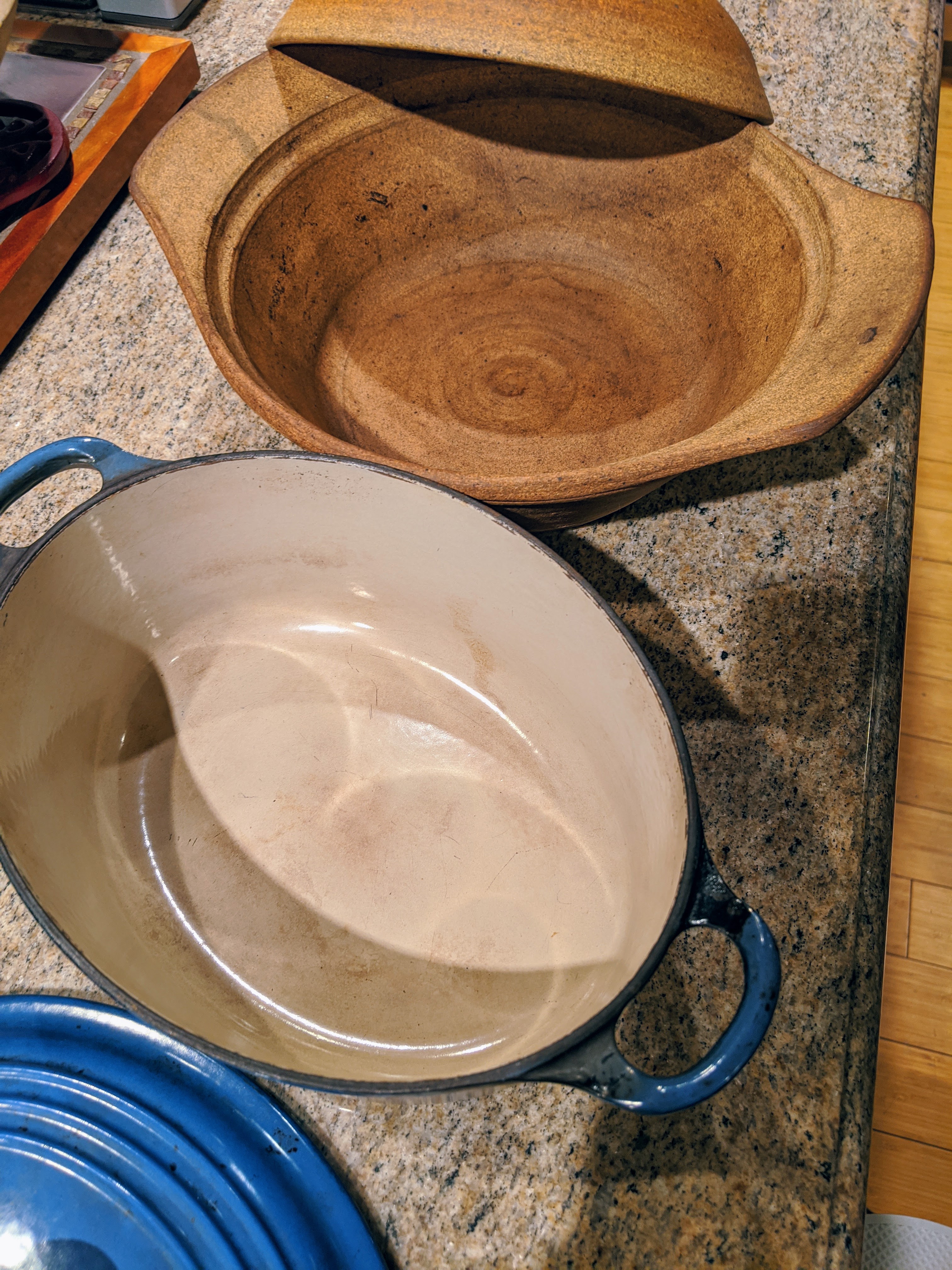
I now make one boule and one batard, giving me some variation in shapes each time. Rather than split the dough 50/50, I make the batard with ~40% of the dough and the boule with 60%. That way the batard fits better in my oval Le Creuset Dutch oven, and my custom-made ceramic breadpot from Judy Motzkin easily handles the large boule.
Octopus
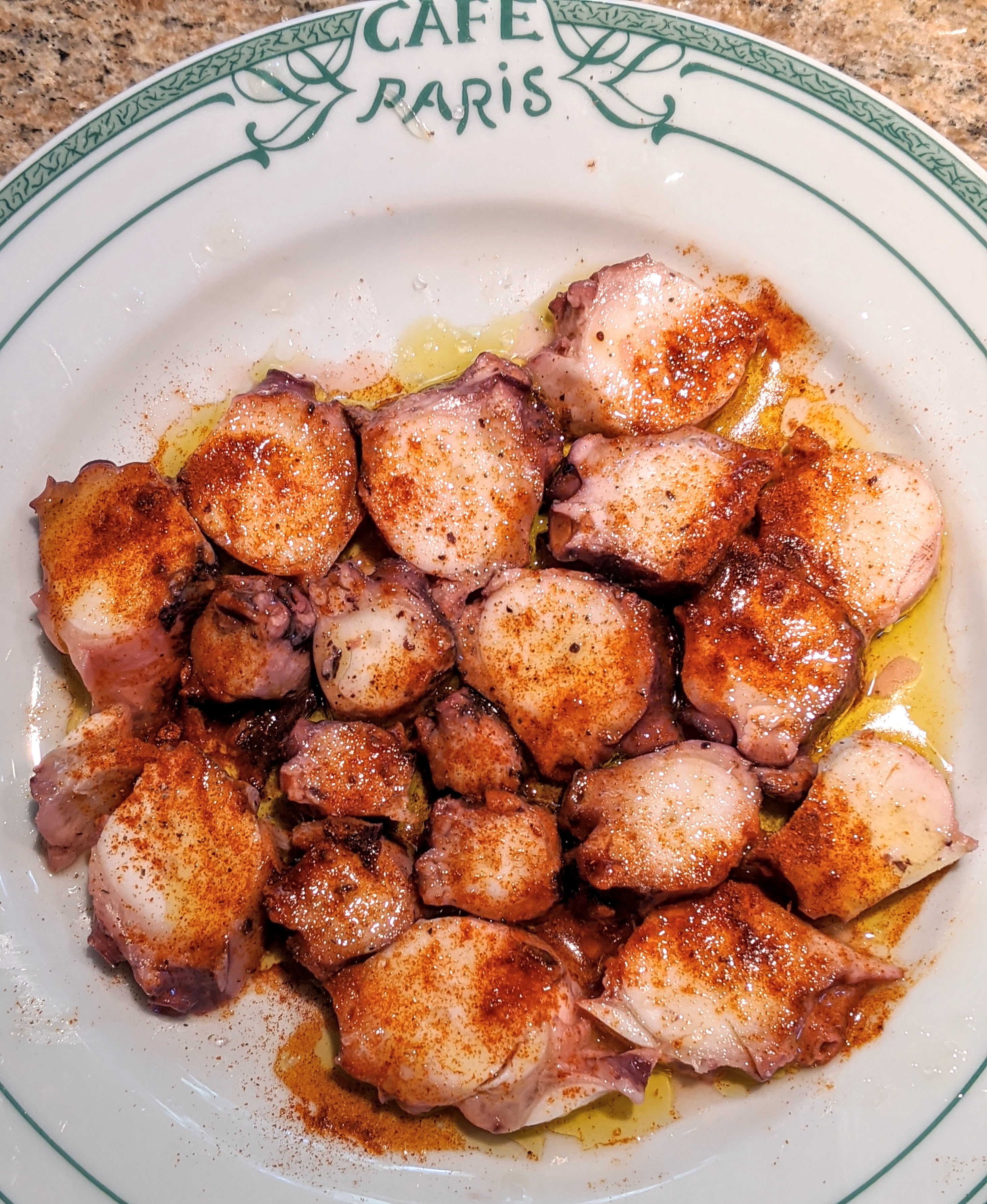
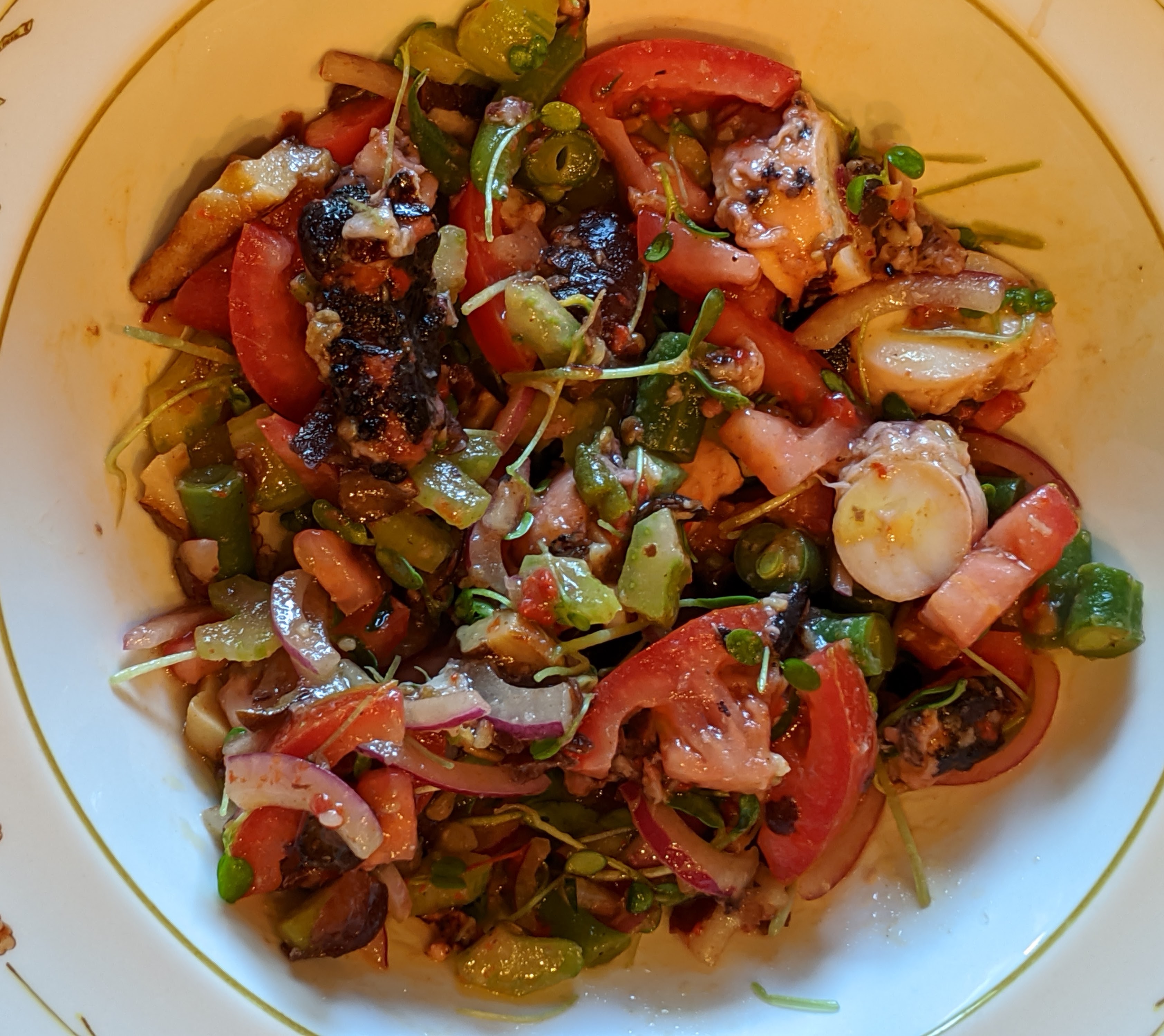
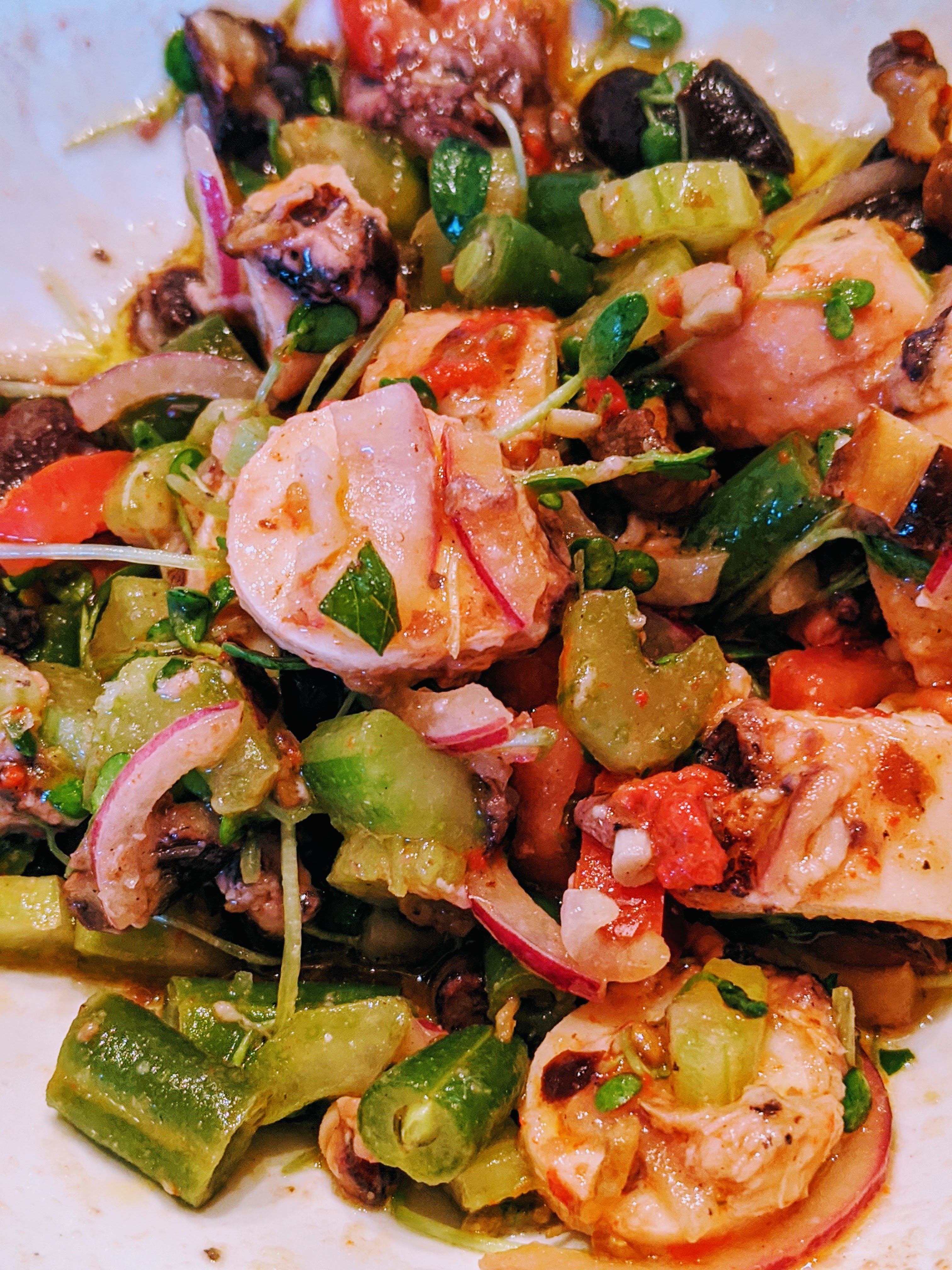
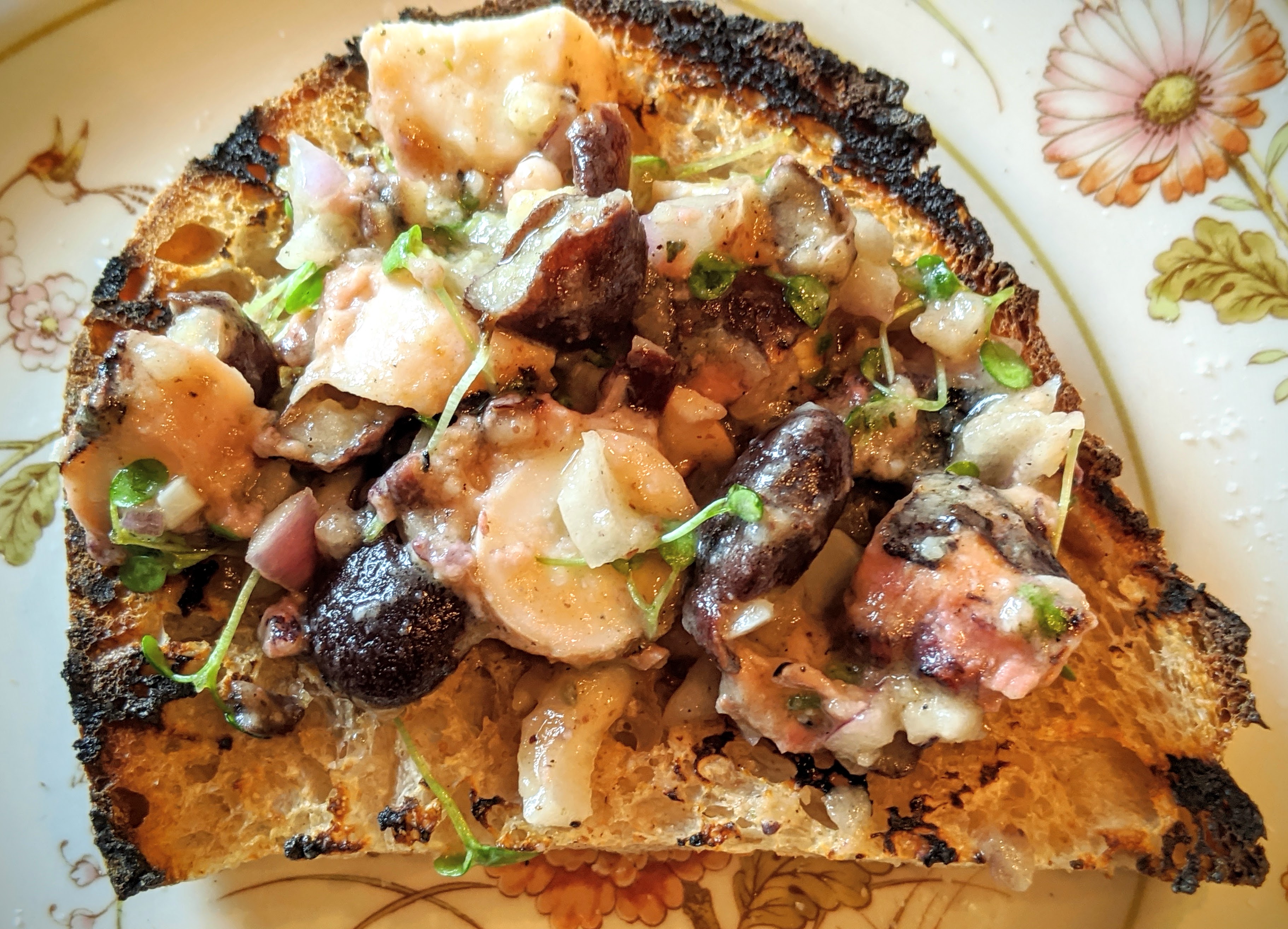
Now that Harold McGee taught me how to cook octopus simply, I can enjoy it when I want, and in small quantities, too, because my fish market will sell me as many or as few tentacles as I want. Last week I did just 3 tentacles from a 4-lb. octopus, and it provided several excellent dishes — pulpo al la gallega, and a variety of octopus salads, for example.
Ventresca
Another of my seafood passions is Ventresca tuna. According to Google: “often considered ‘foie gras of tuna fish’, Ventresca, also known as Belly Tuna, is a tender and flavorful hand cut fillet that is packed by hand in easy to open cans.”
Last summer when I was in Porto, Portugal, I bought a can that was incredibly good — and reasonably priced, as well. Here is a photo of that can:
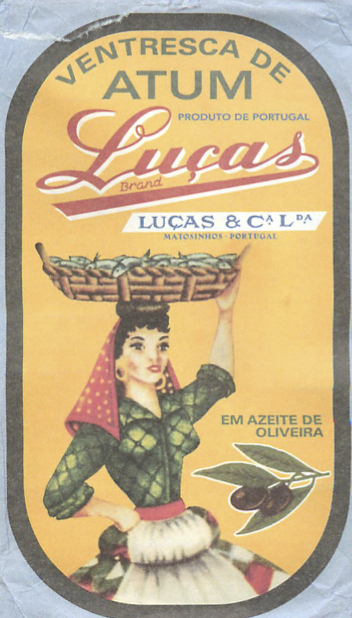
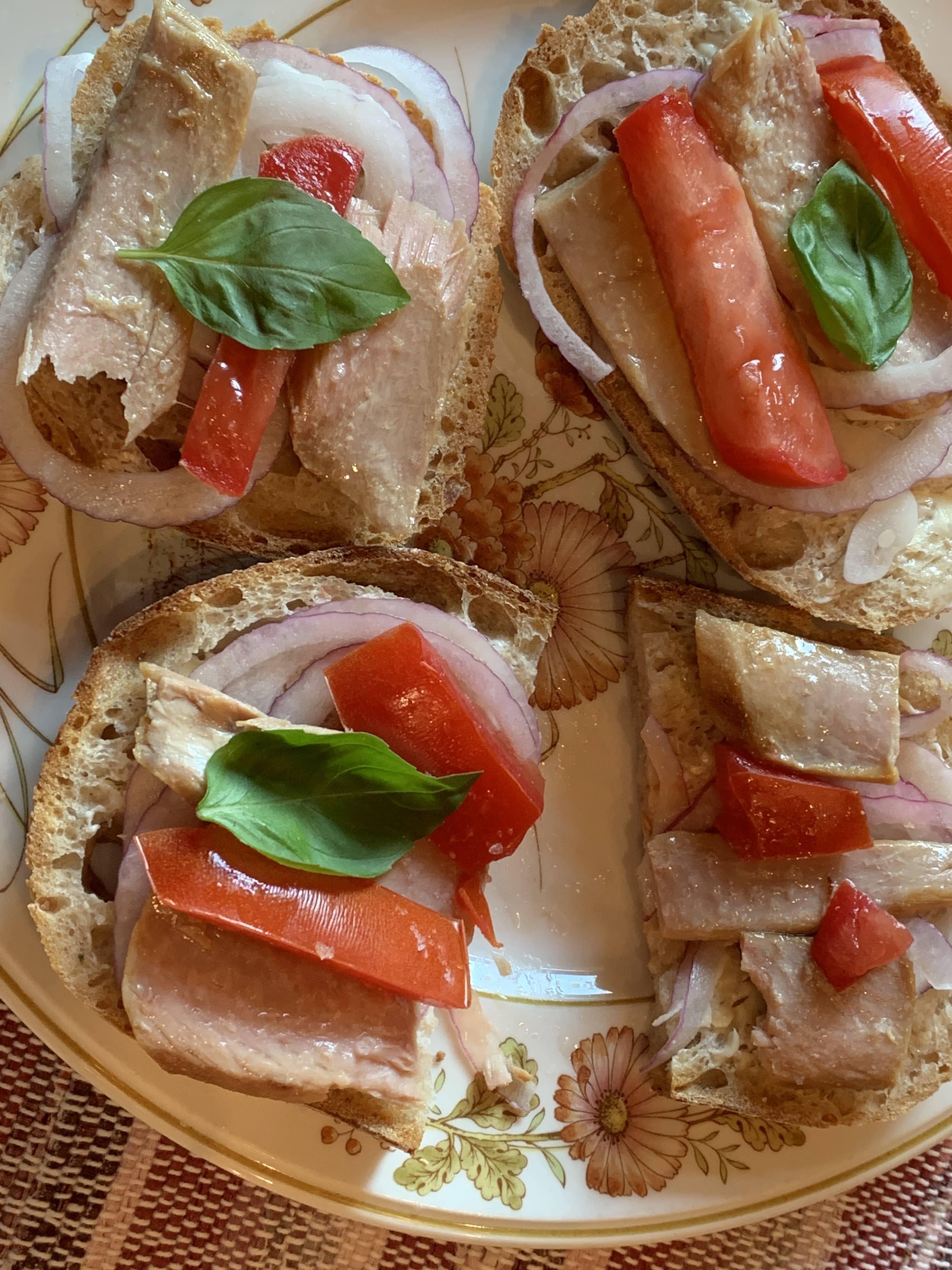
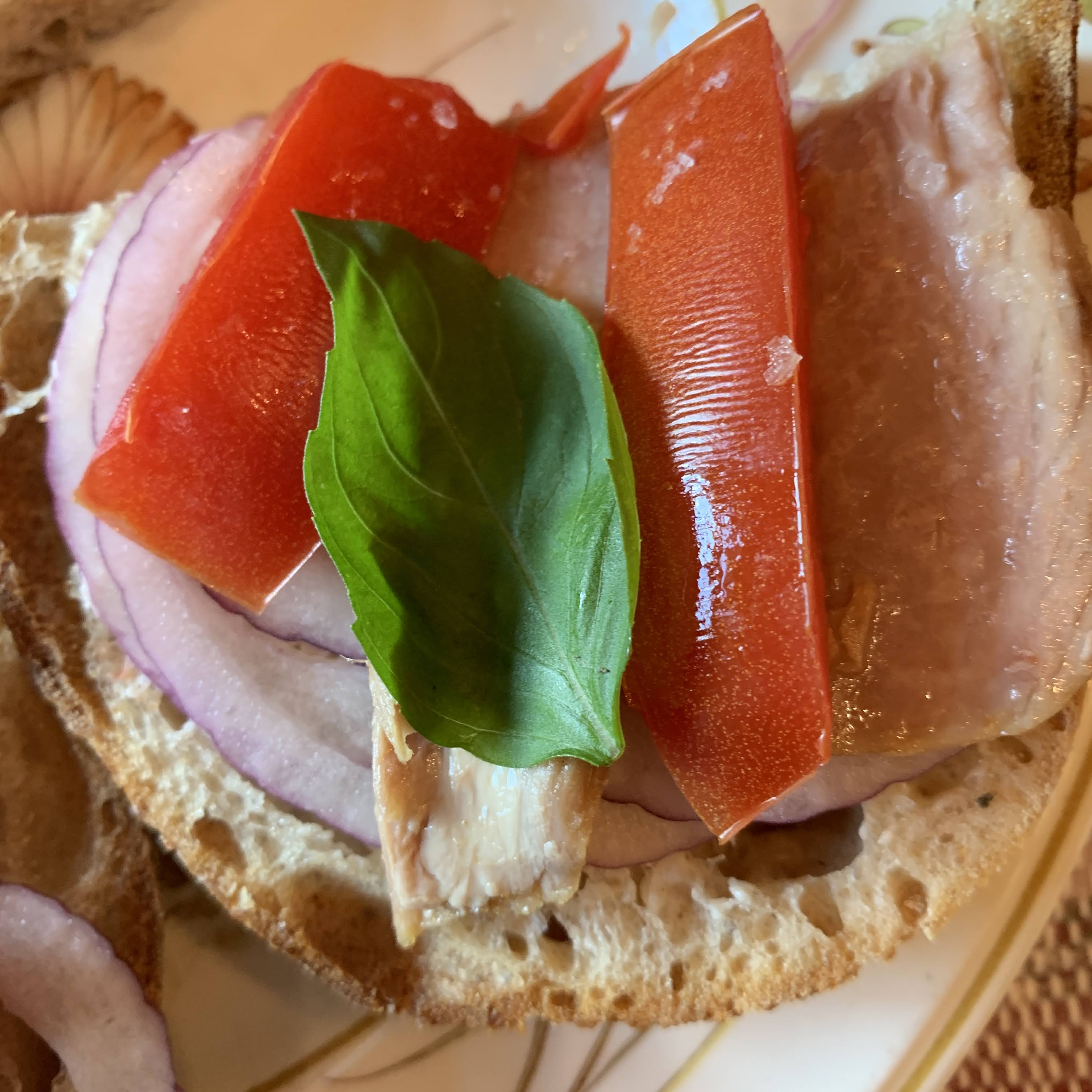
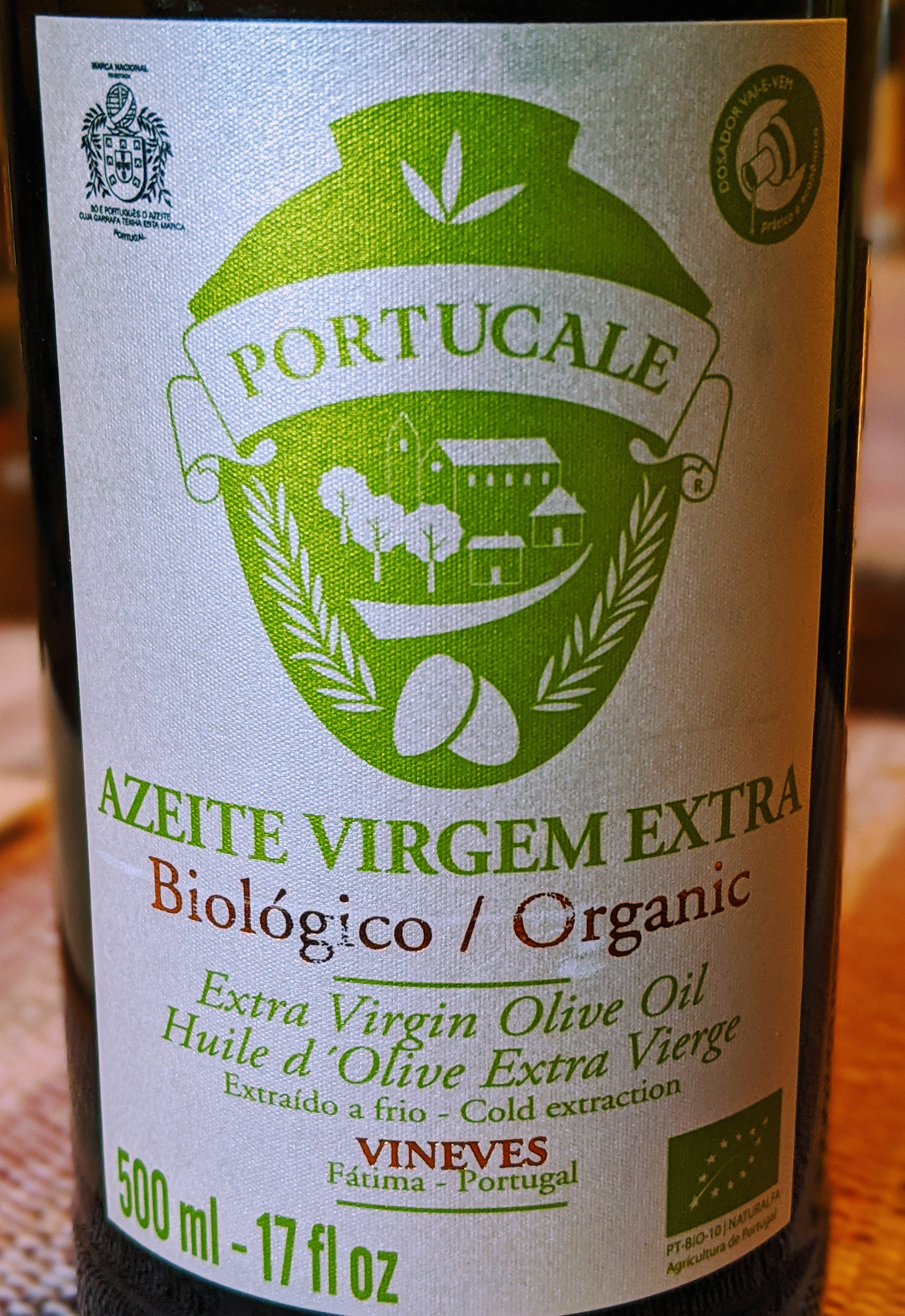
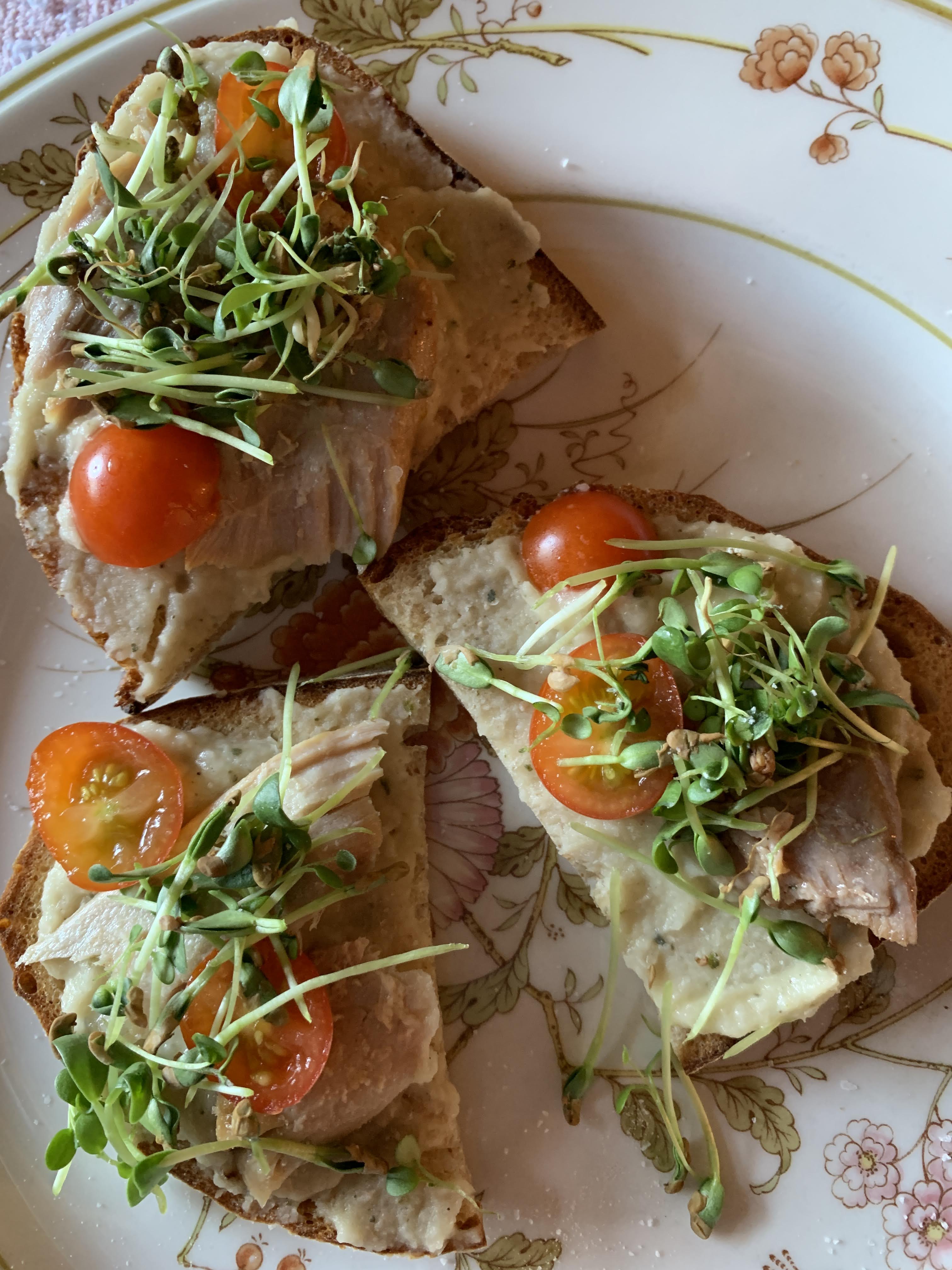
I searched high and low on the internet to buy more of it, but was unable to locate any. Then I decided to explore it with the management of Portugalia, a market with all things Portuguese, less than 2 hours’ drive from my home. It took a few months, but they were able to import it, and they delivered! I recently placed two large orders, and now am ready for a meal with delicious tuna on a moment’s notice. With some of my bread grilled, sliced lightly-pickled red onions, plum tomato fillets, fresh basil from the garden and several glugs of smooth Portuguese olive oil, lunch is on the table in 10 minutes.
Vegetables
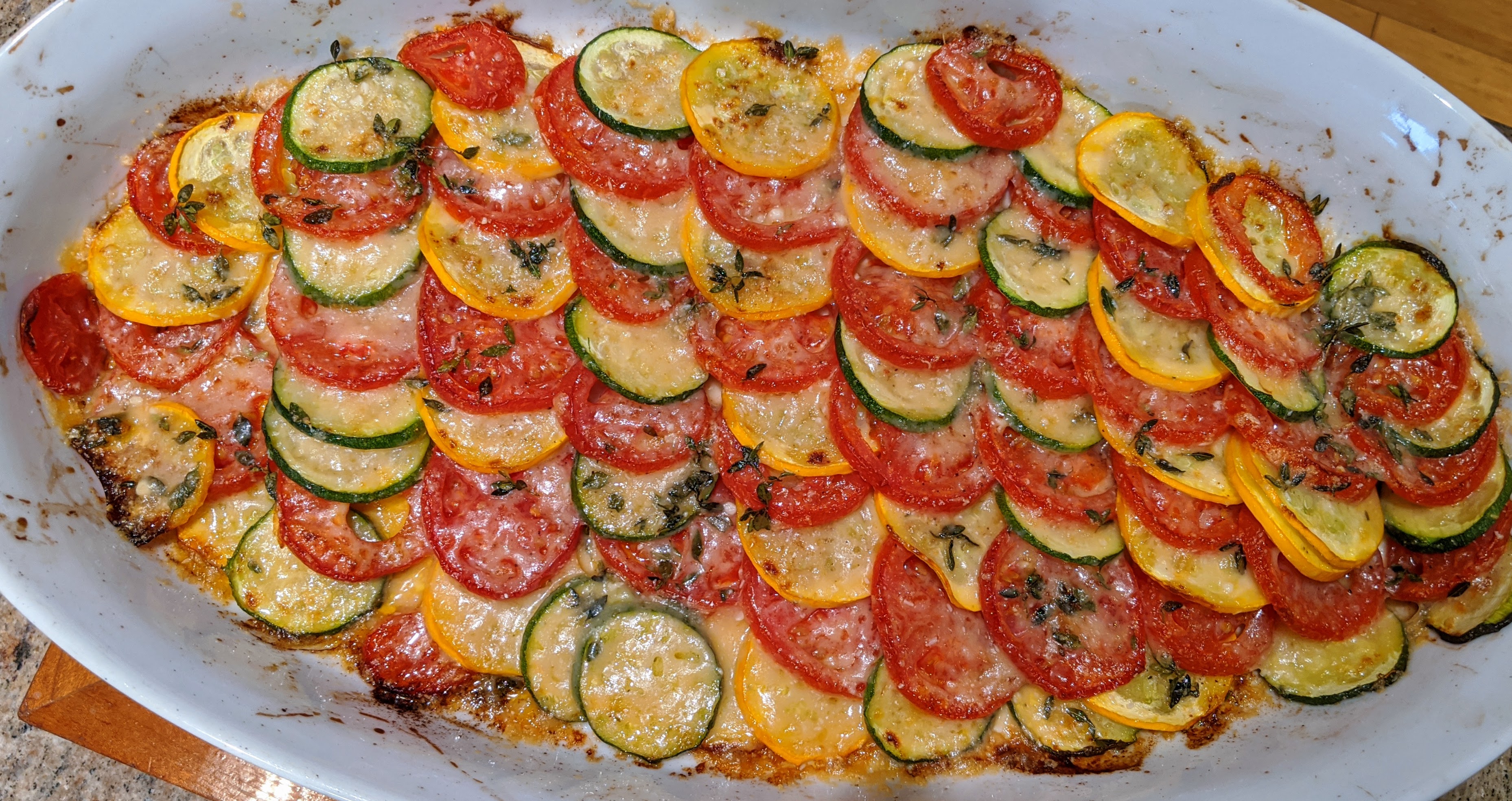
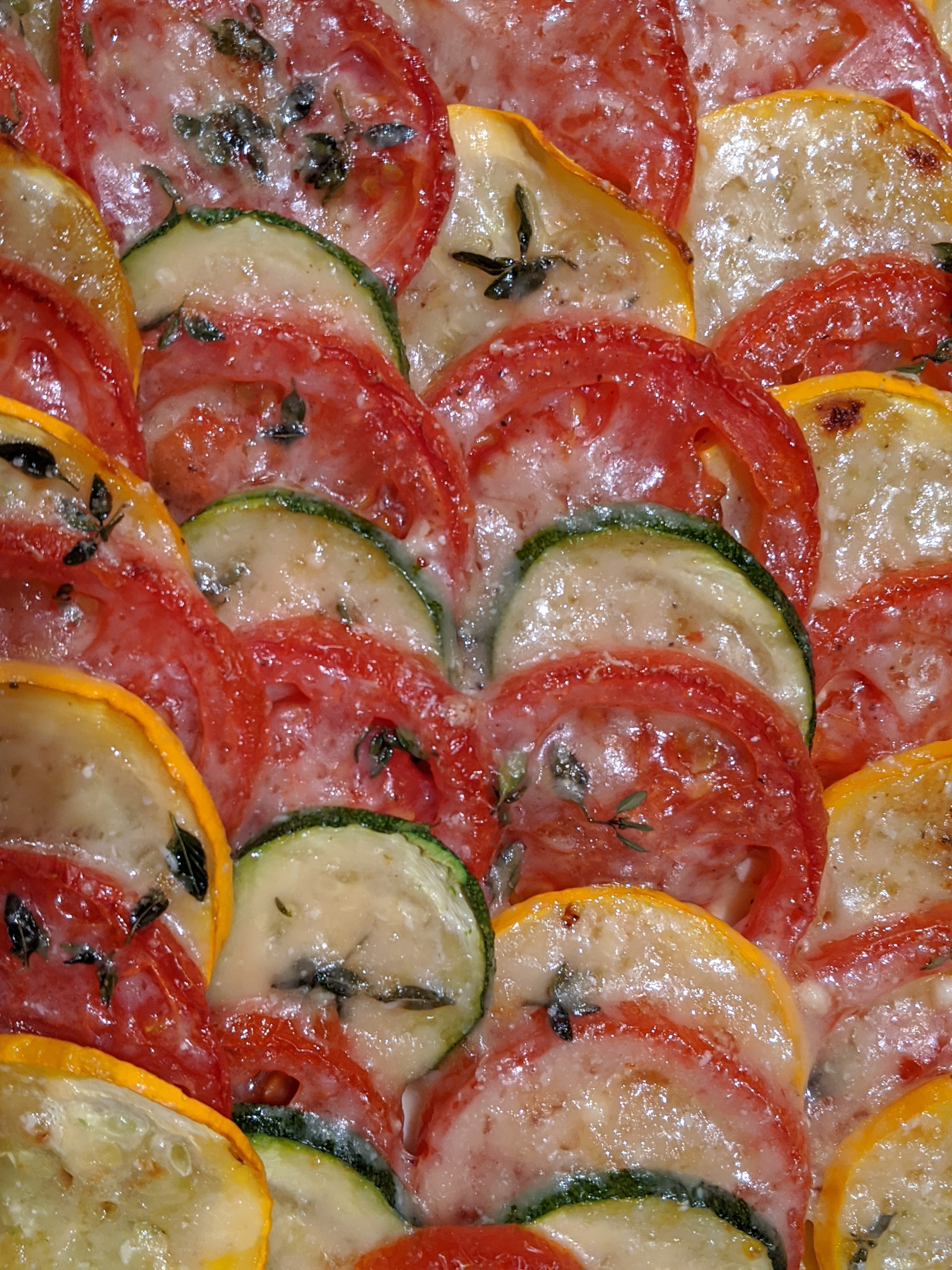
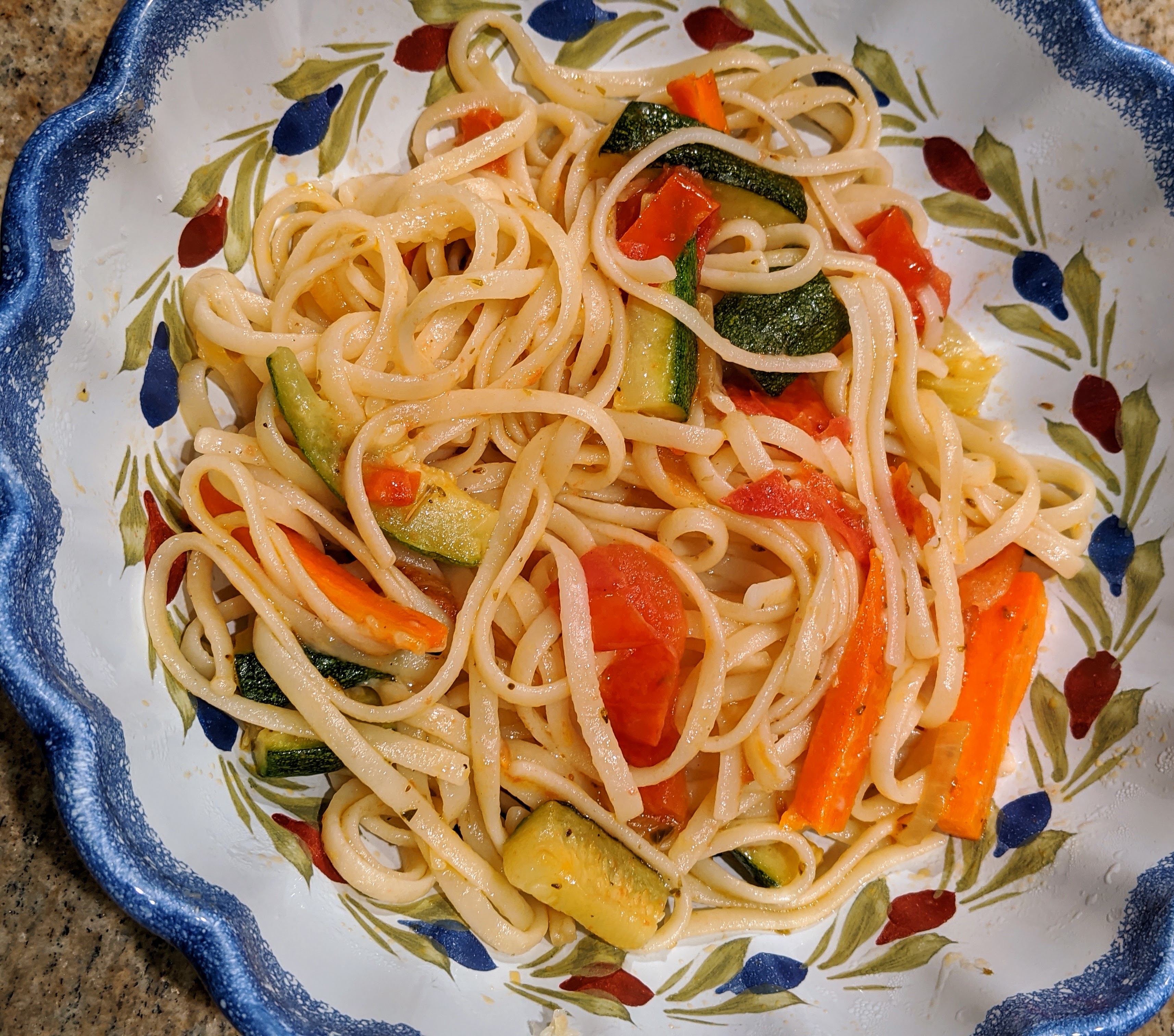
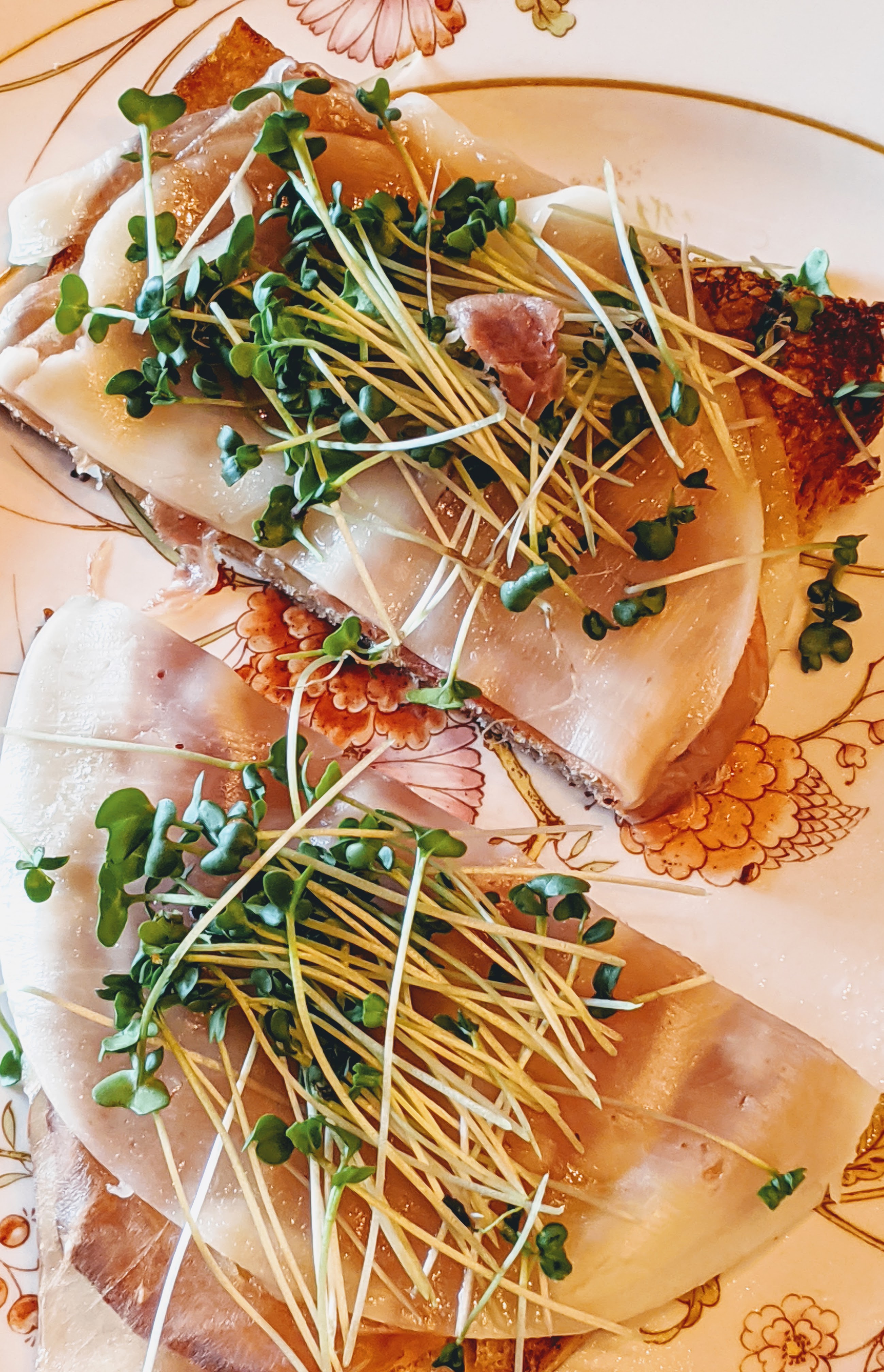
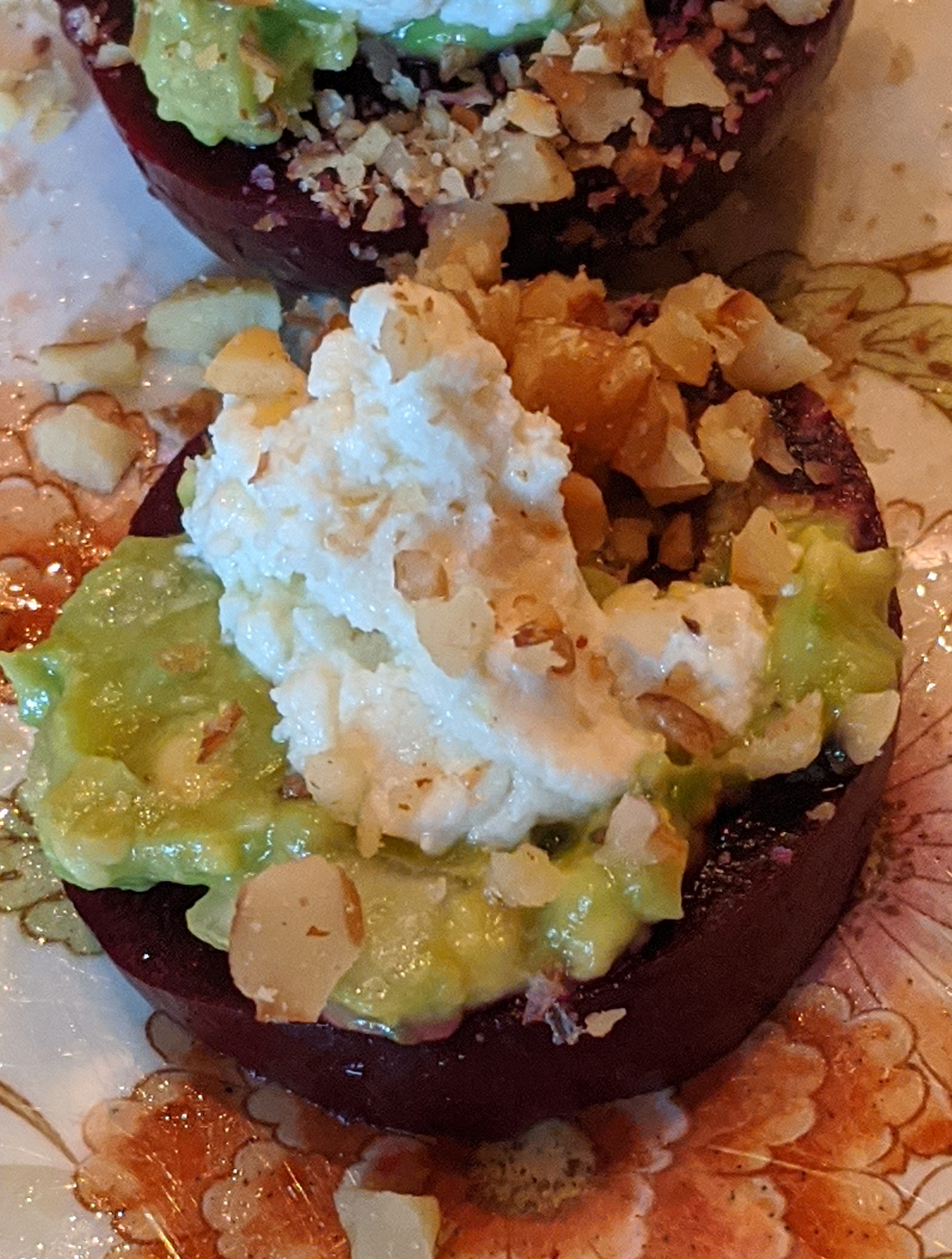
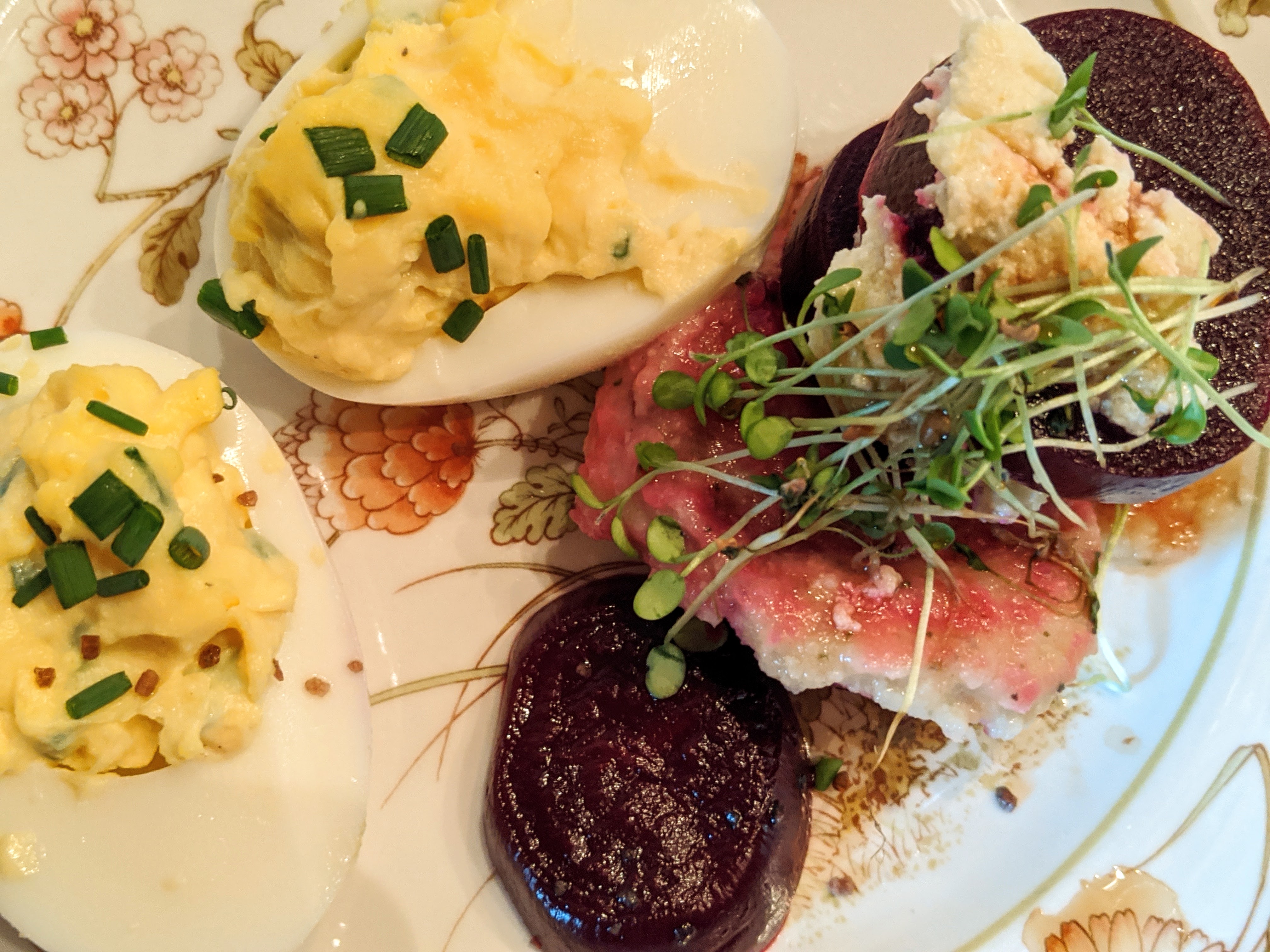
Vegetables are still the main elements in our food. July highlights included a Zucchini-Tomato Gratin from Patricia Wells, homegrown microgreens from Hamama, flavorful plates featuring beets, and a pasta dish with zucchini, carrots and tomatoes.
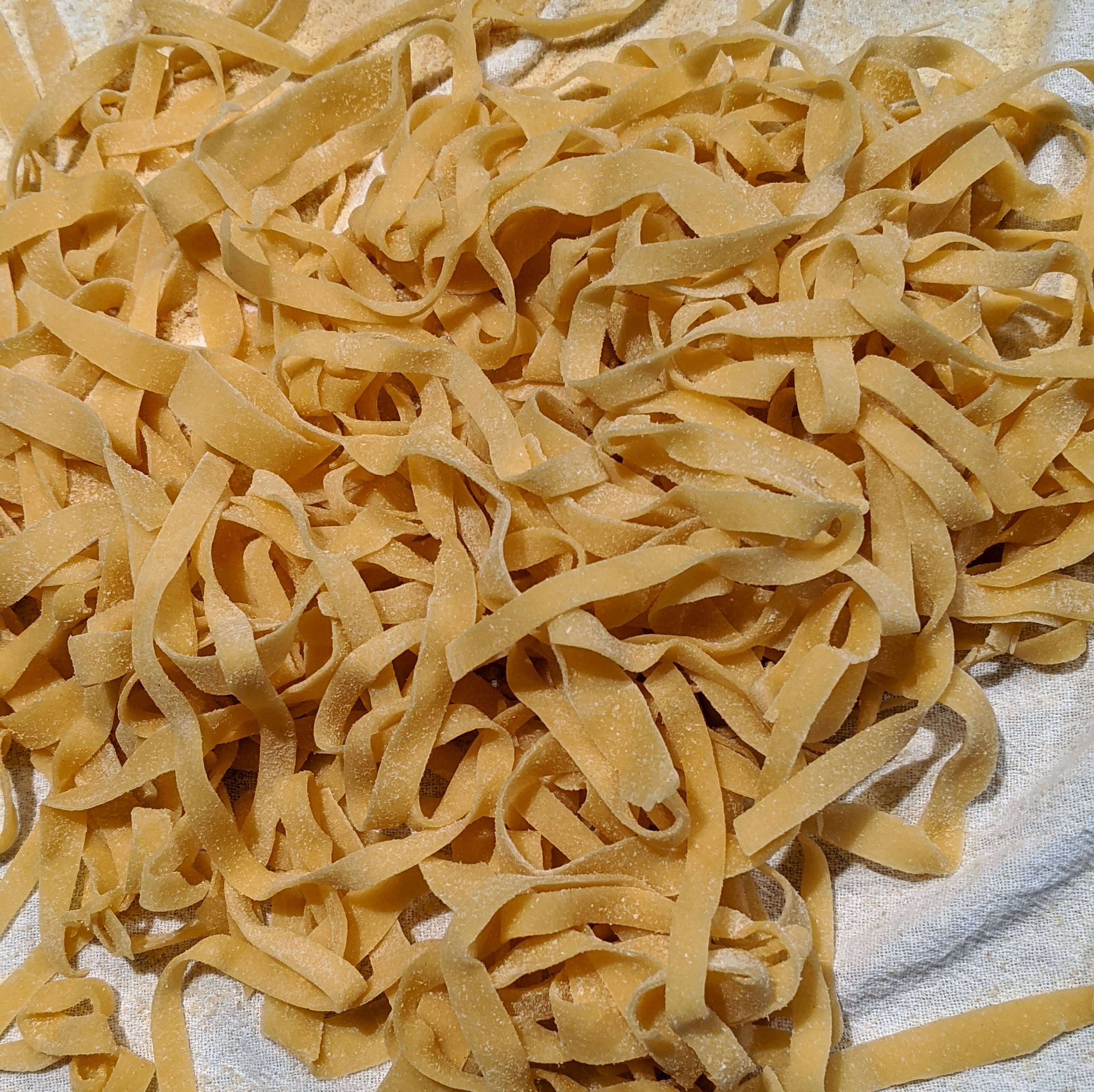
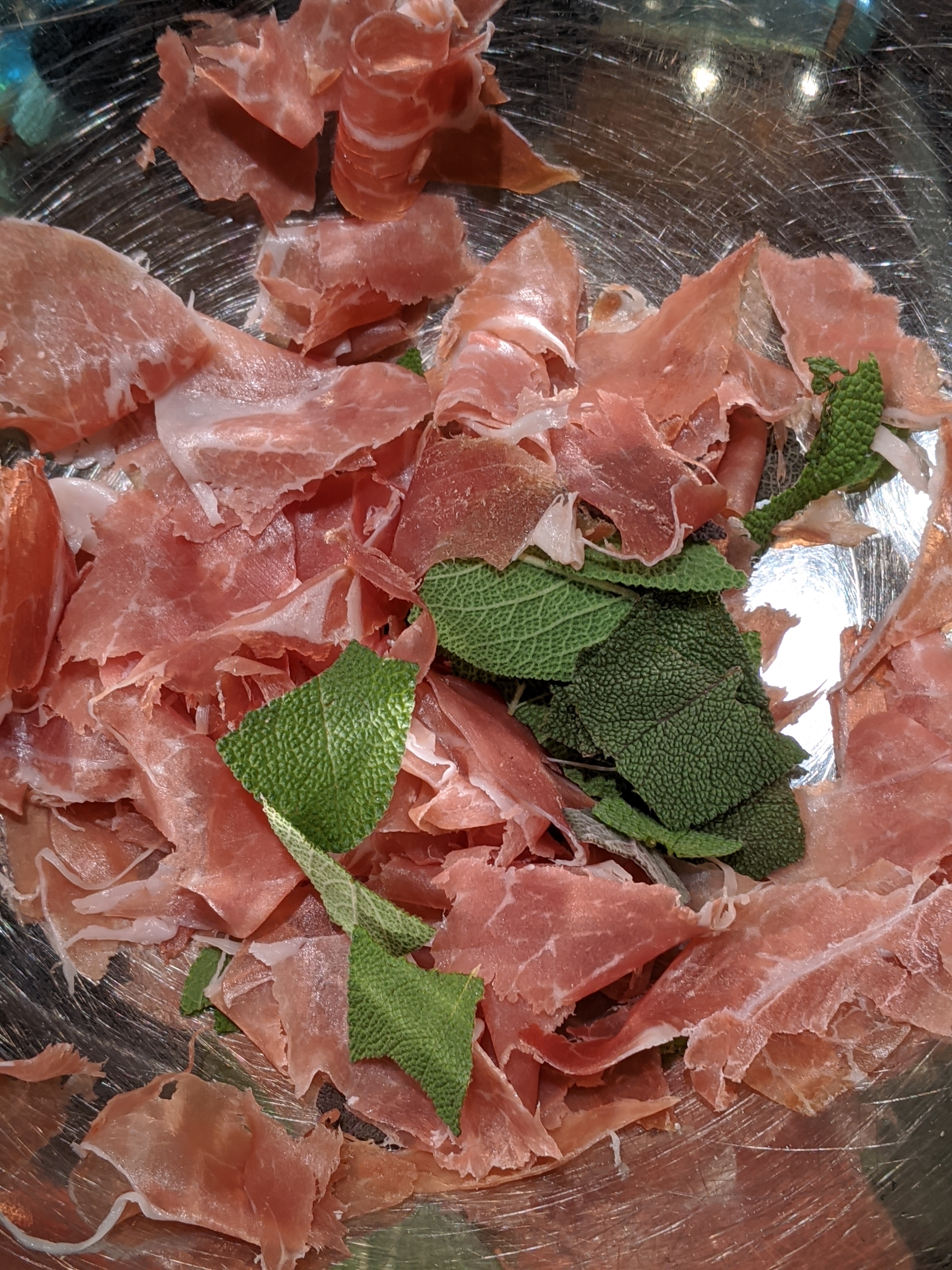
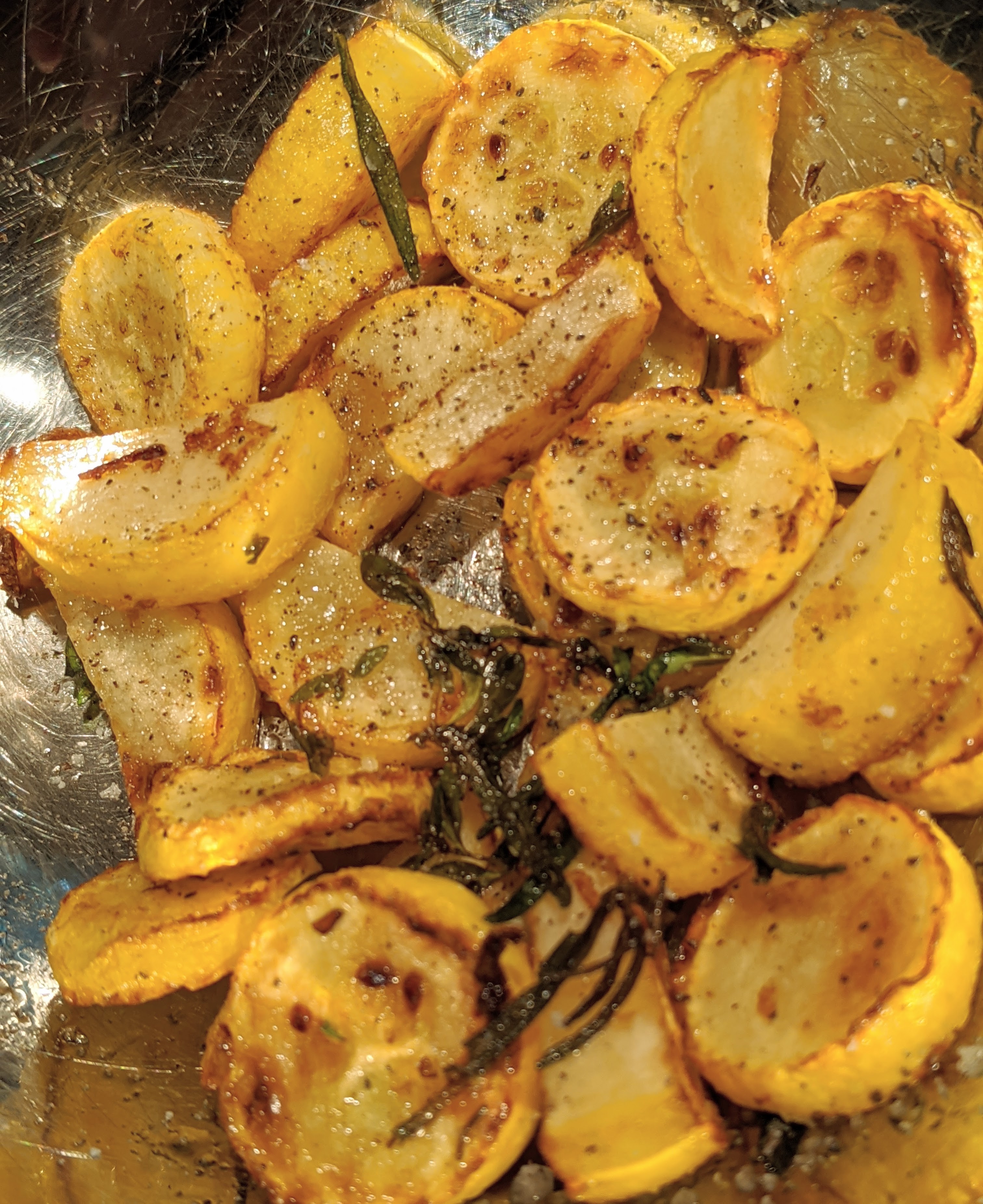
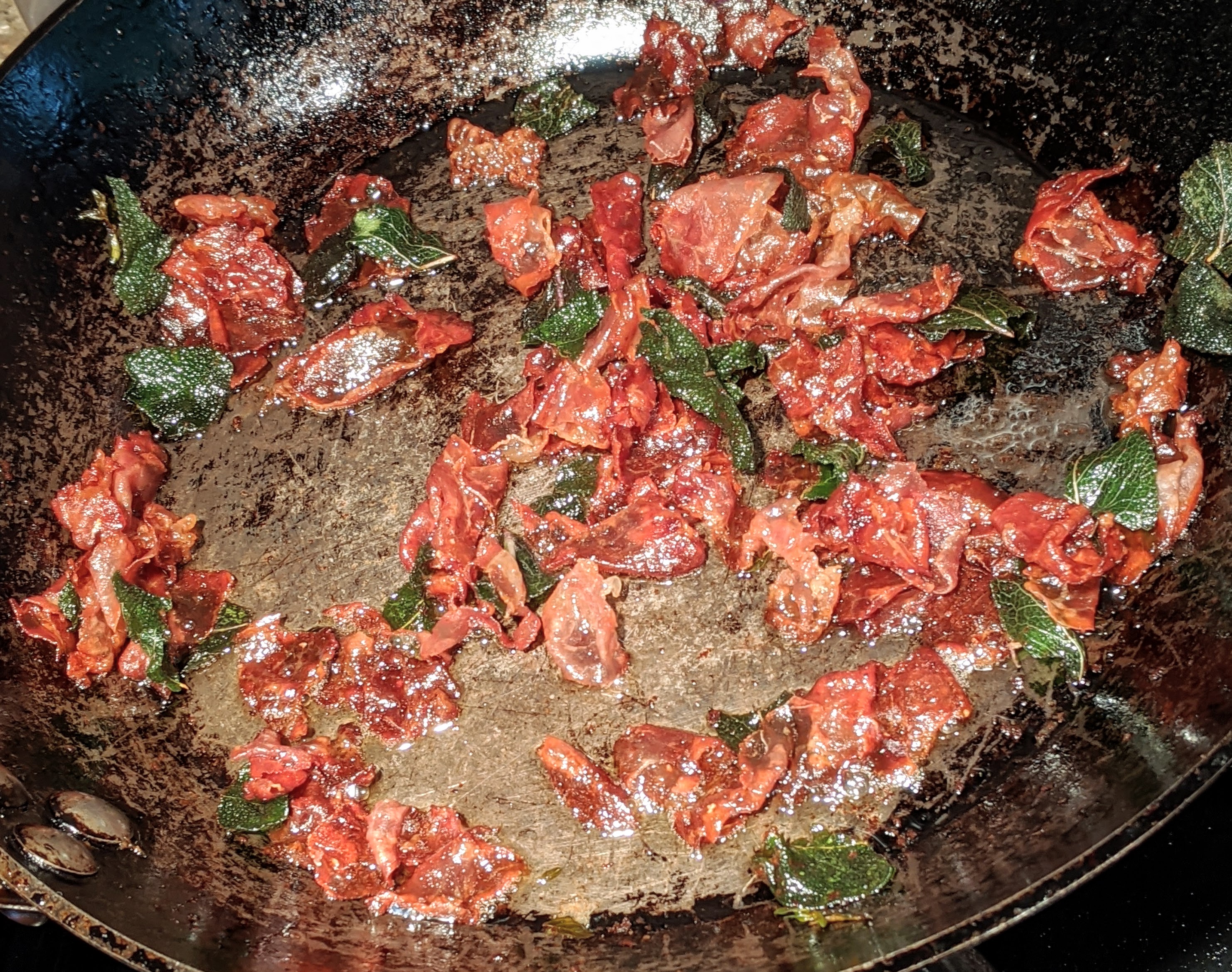
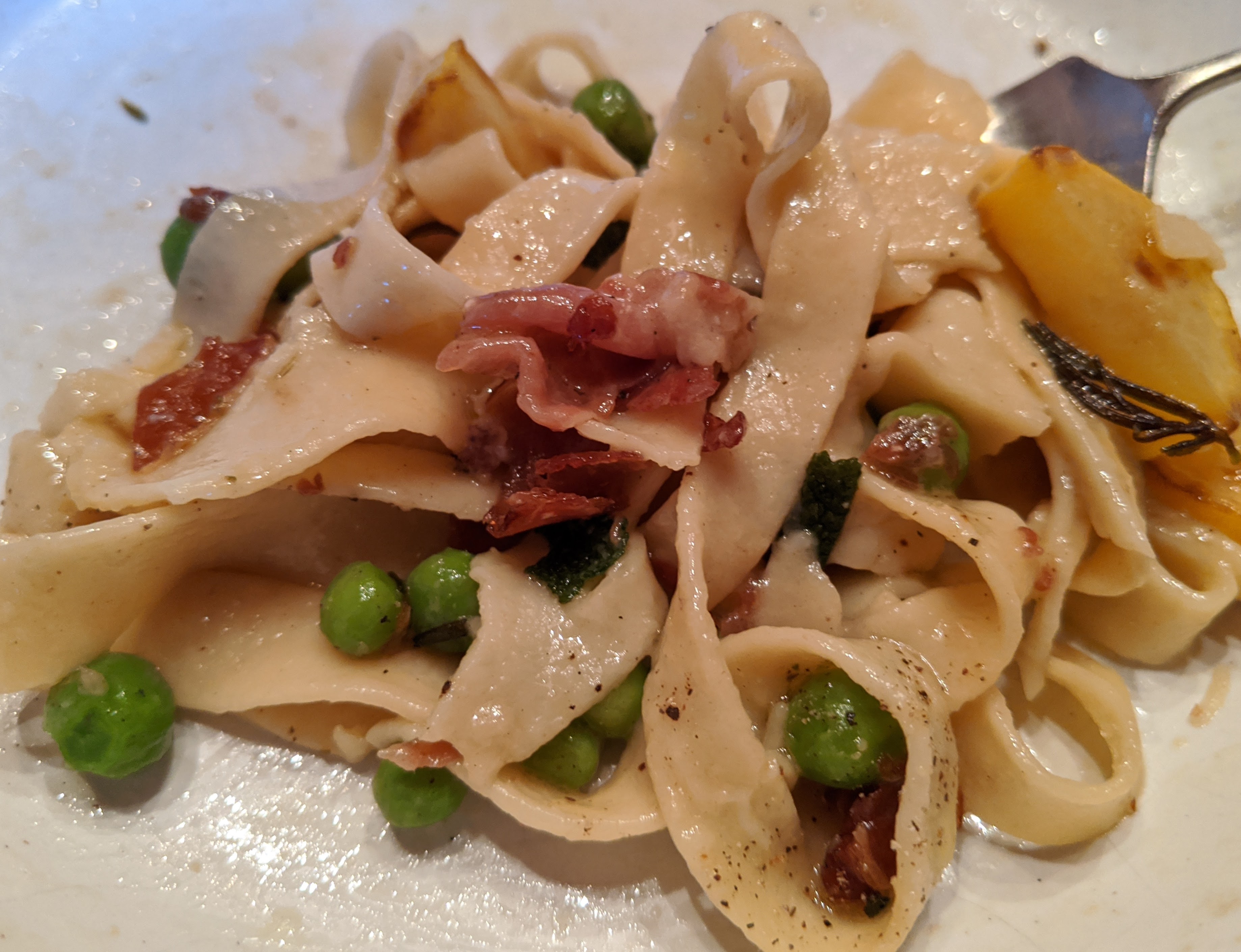
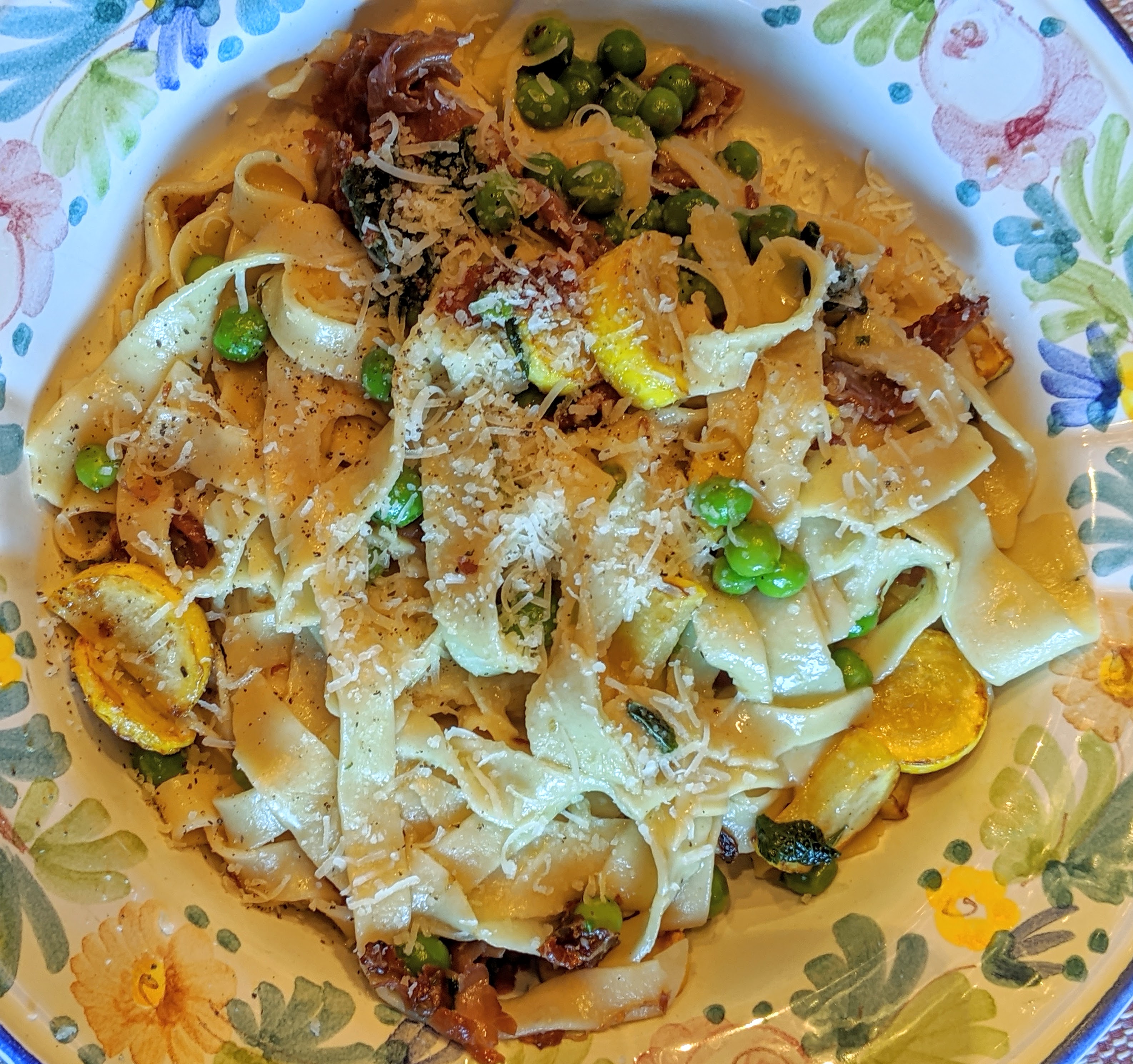
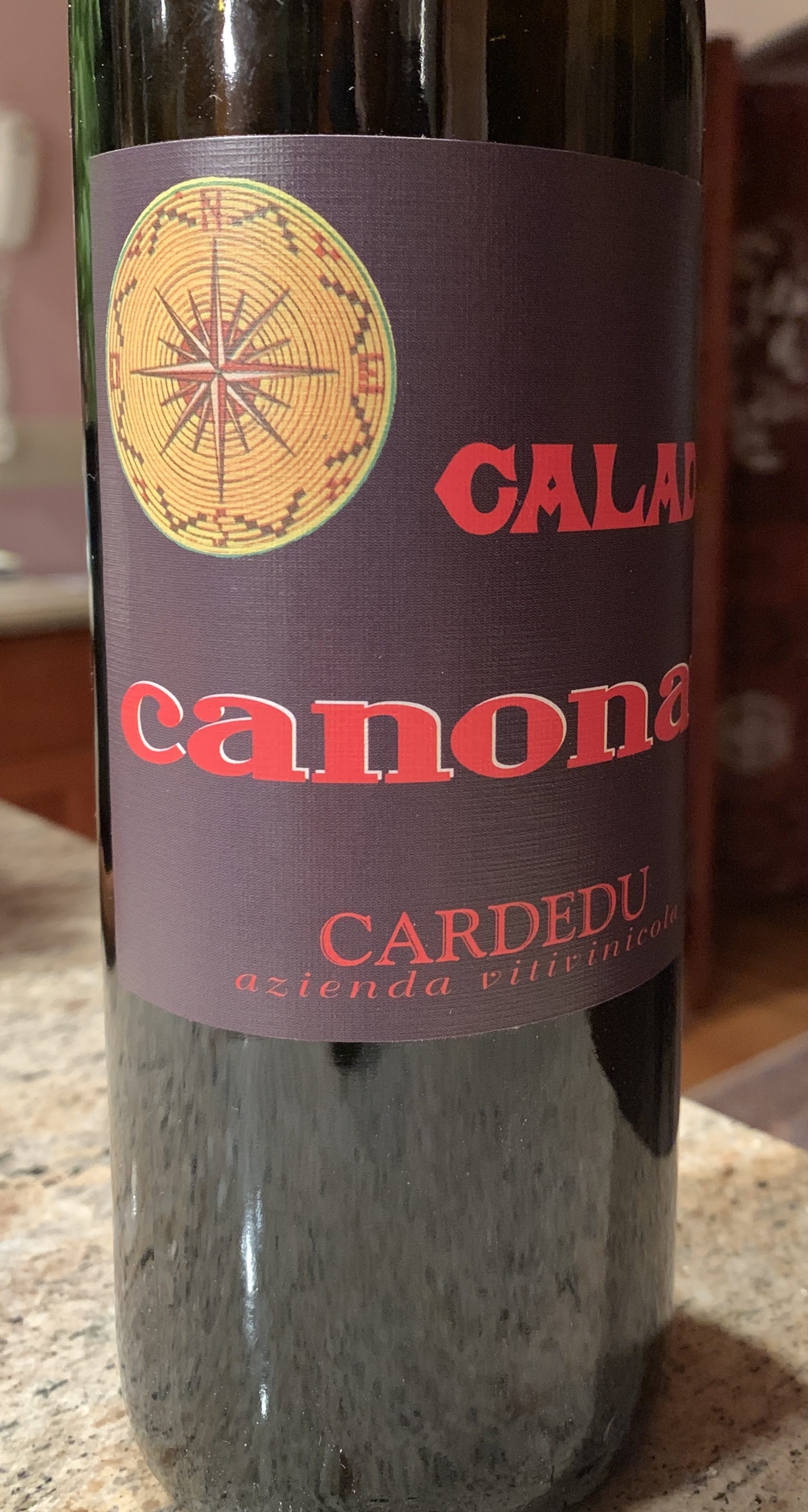
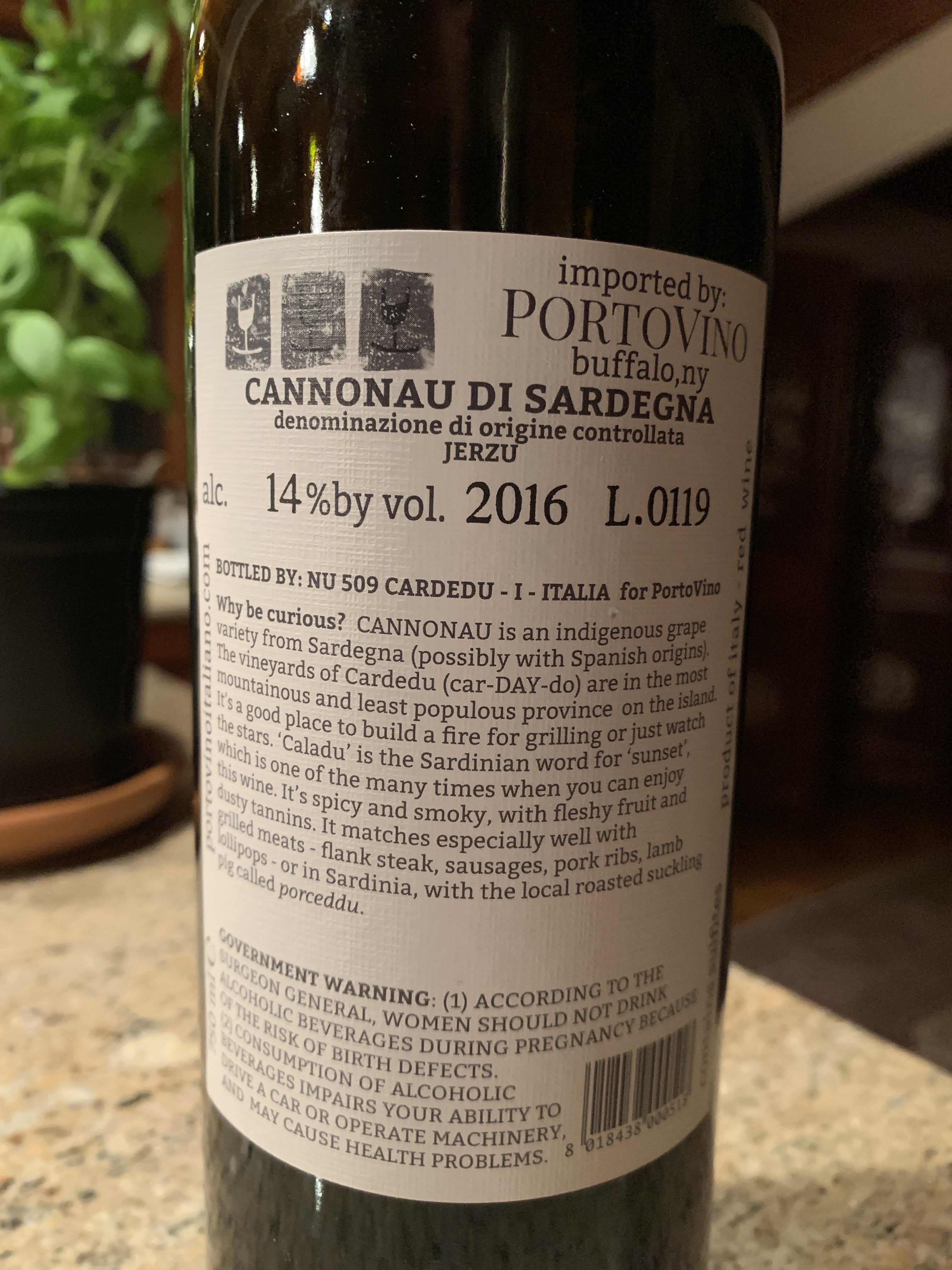
At least once a month I insist on making some fresh pasta. This particular one featured tagliatelle, prosciutto, Sardinian Pecorino, and Cannonau wine, along with fresh summer squash and peas from our local farmers, and sage from my herb garden.
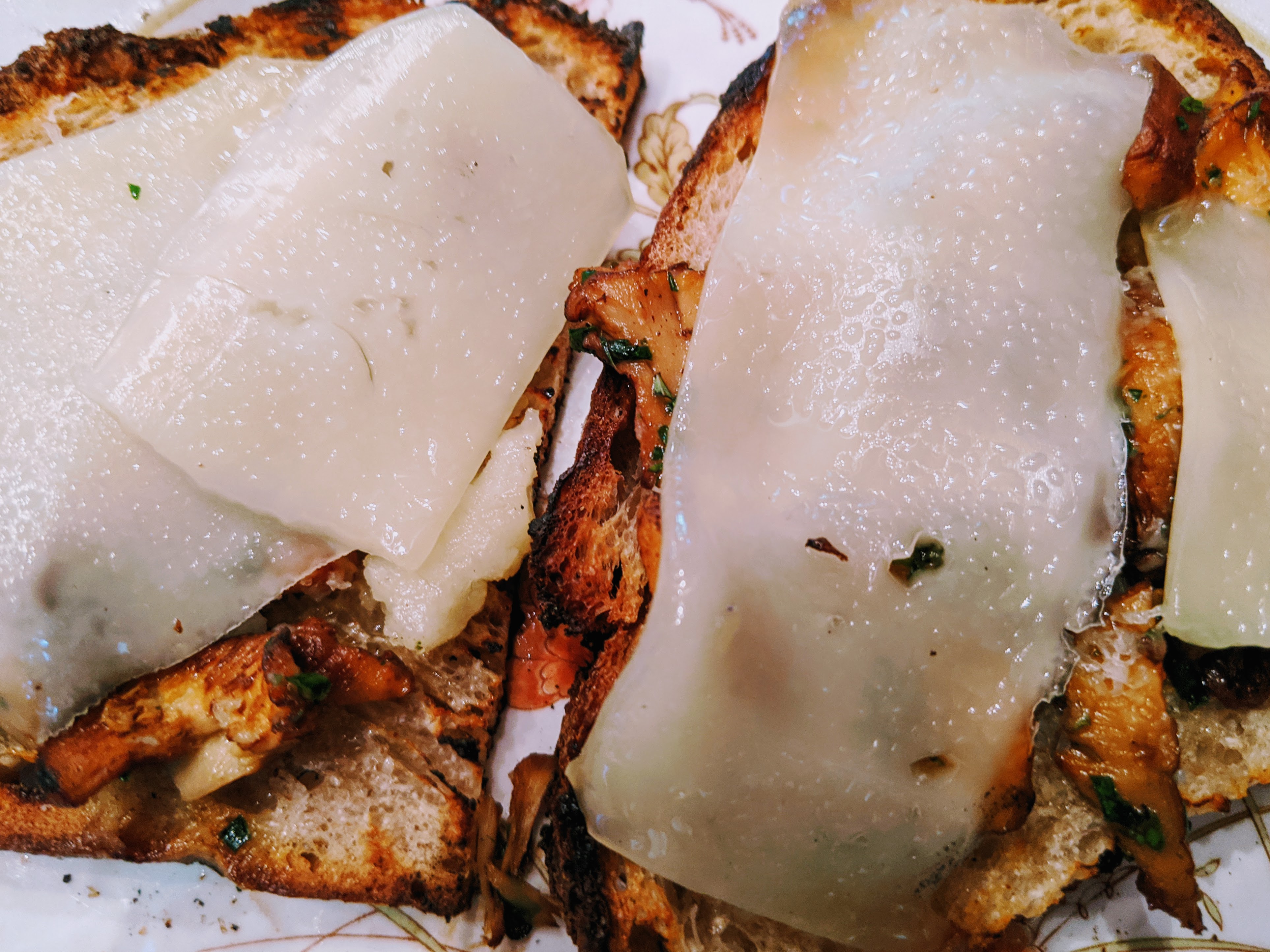
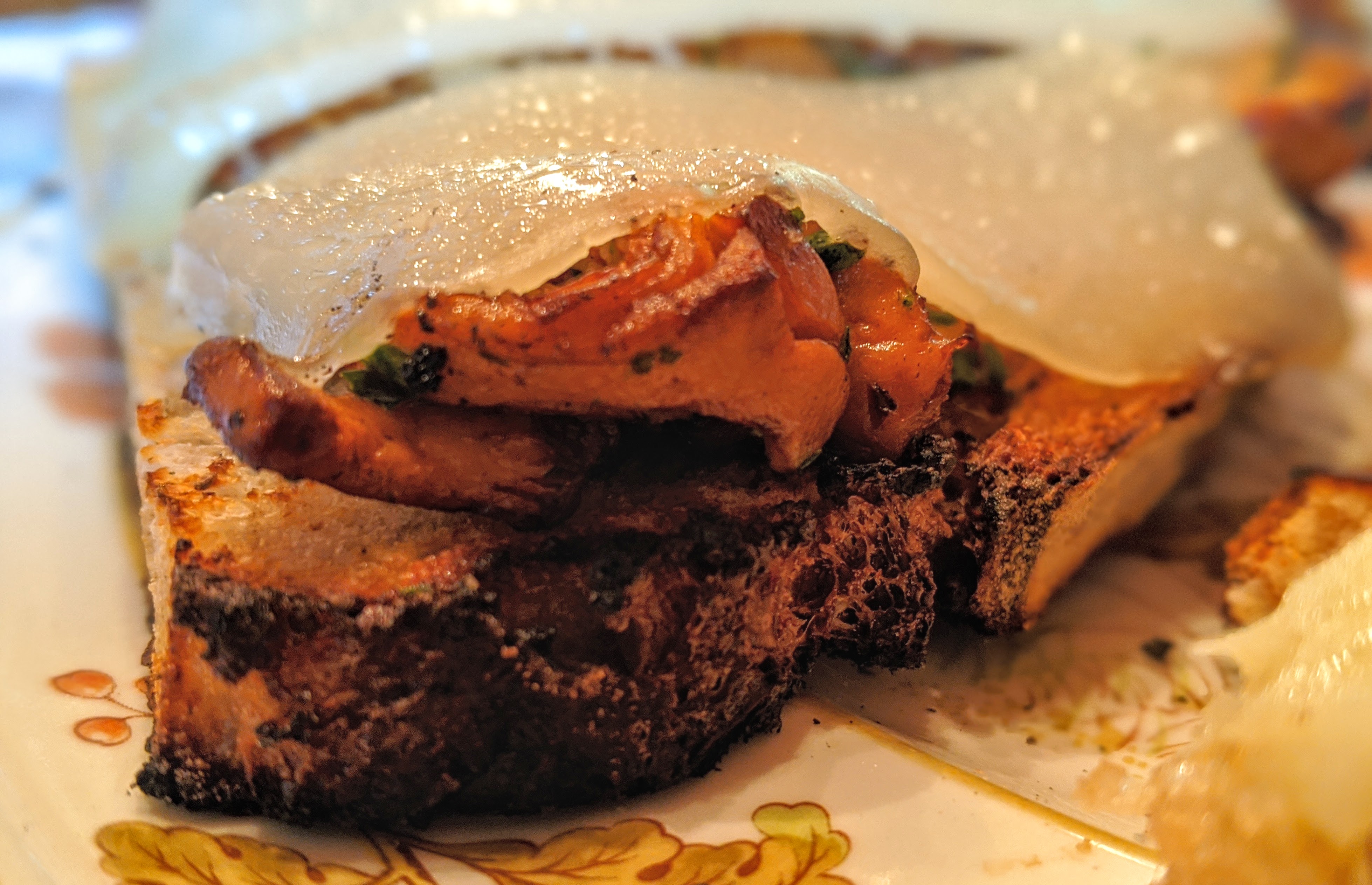
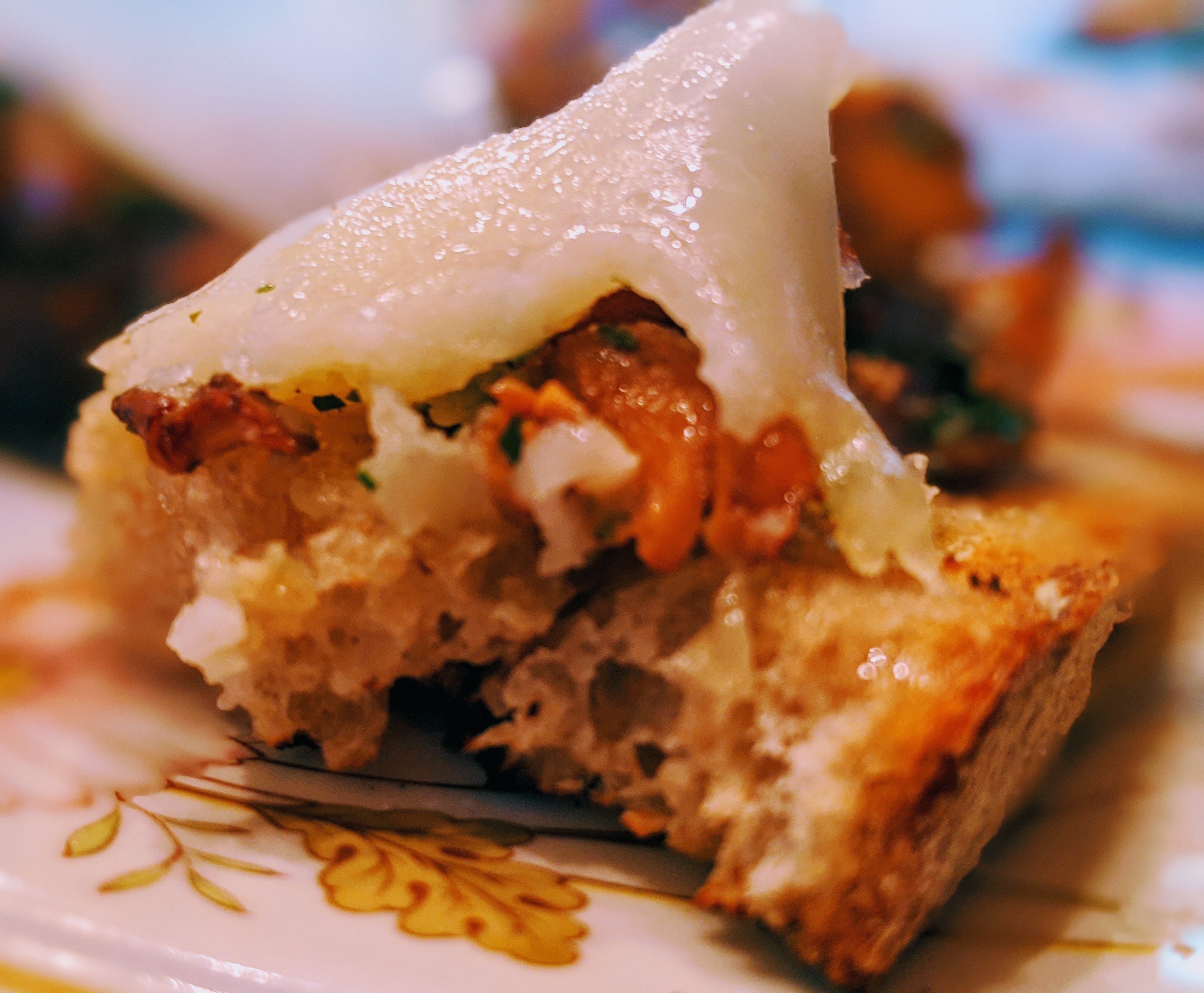
July has been a good month for my sourdough breads. I bake two loaves every other week. Lunches are often simply bruschetta and vegetables leftover from previous night’s dinner. One of my favorites is made with sautéed chanterelles, topped with Brique de Brebis — a French Basque cheese made from sheep’s milk. I buy it at Formaggio Kitchen’s Kendall Square store.
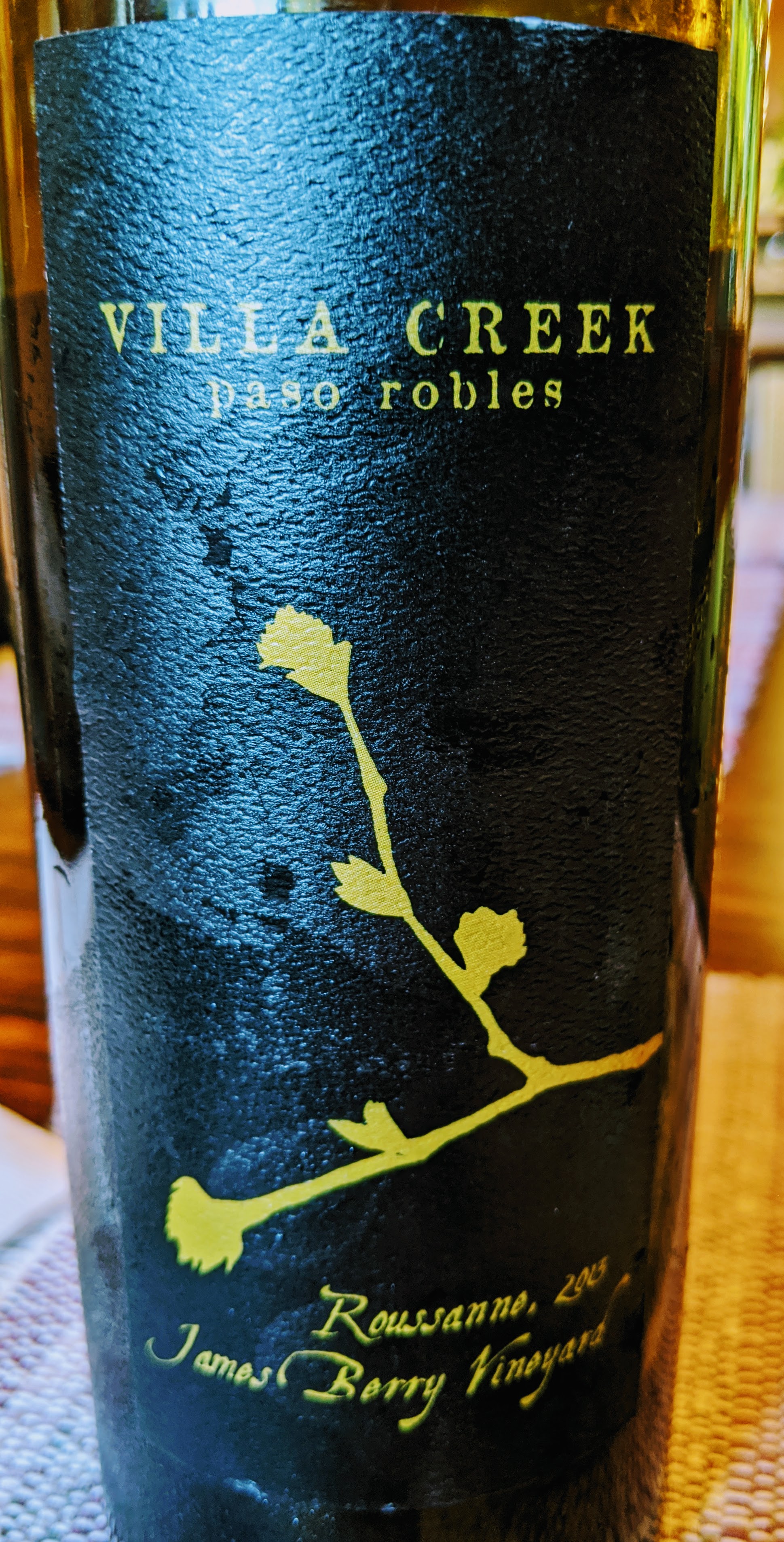
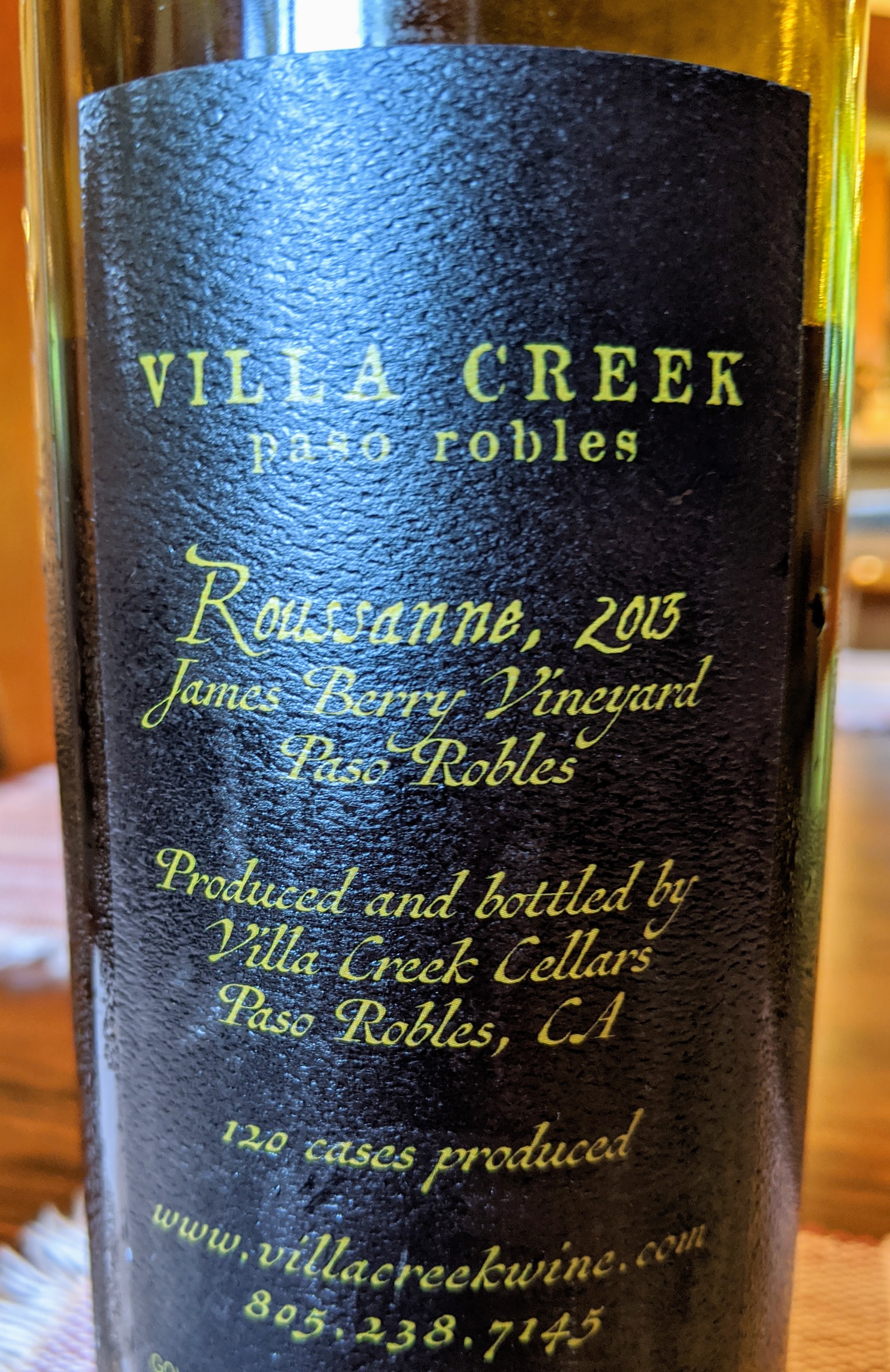
It pairs beautifully with Villa Creek’s Rousanne.
 Dgourmac's Blog