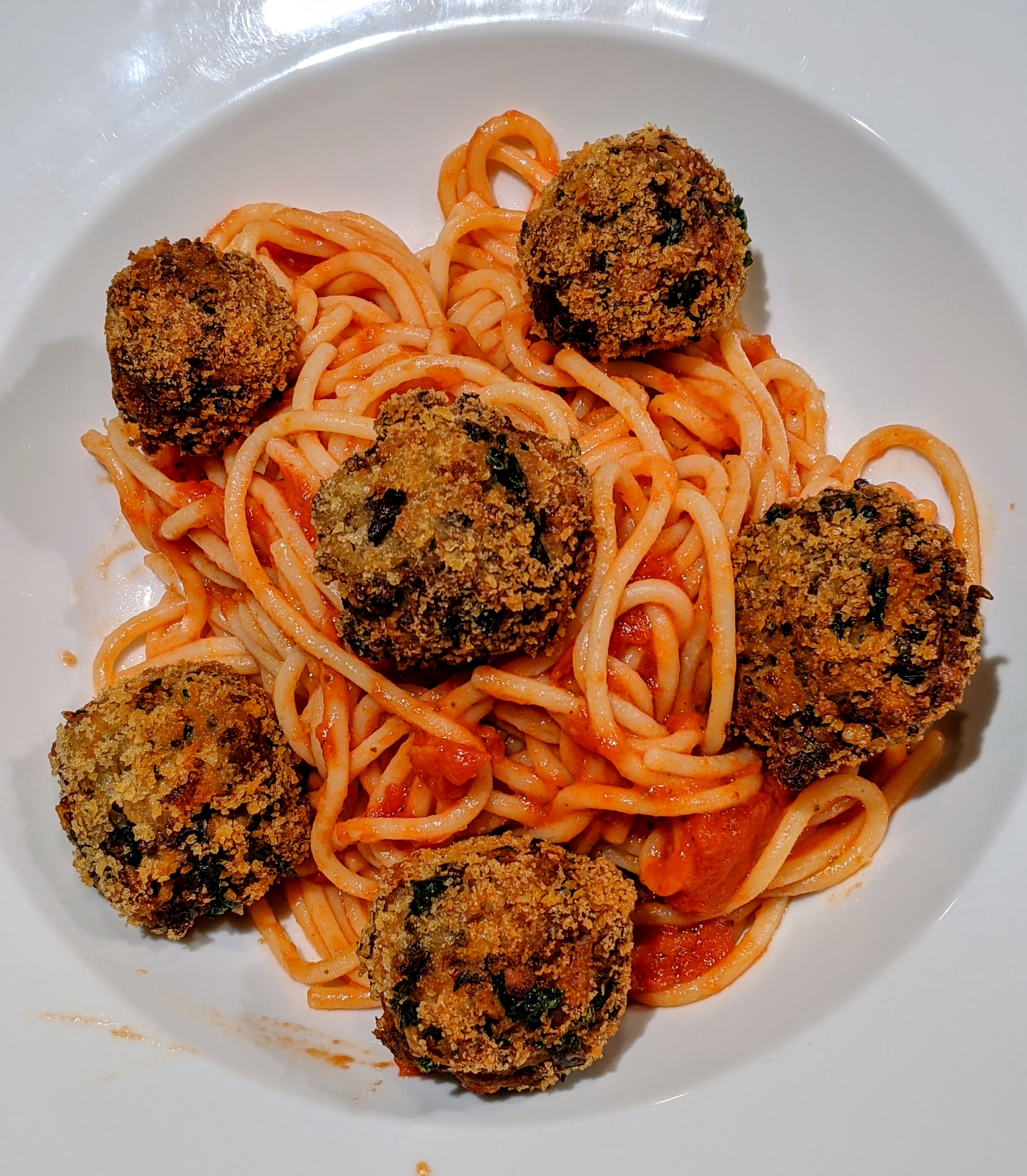
Polpette. This was a short month but long on good flavors and favorite meals. With my course teaching completed for the Spring Term, I had much more time to cook, and to enjoy Barbara’s creations, as well. One of her best dishes features Calabrian eggplant meatballs, as good or better than the ones made with real meat, Here’s her Spaghetti and Meatballs with Tomato Sauce, followed by the recipe PDF from the book, My Calabria.
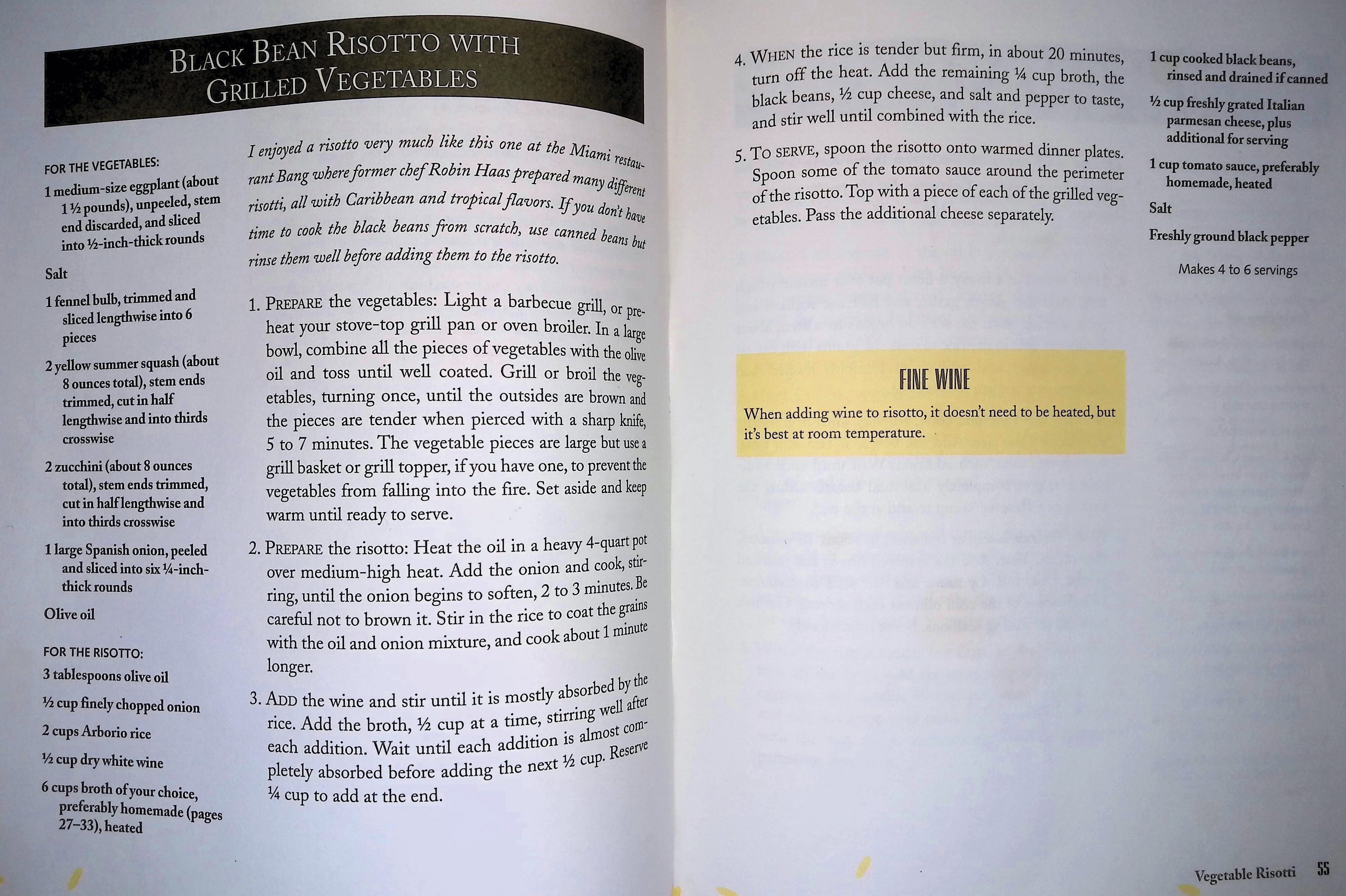
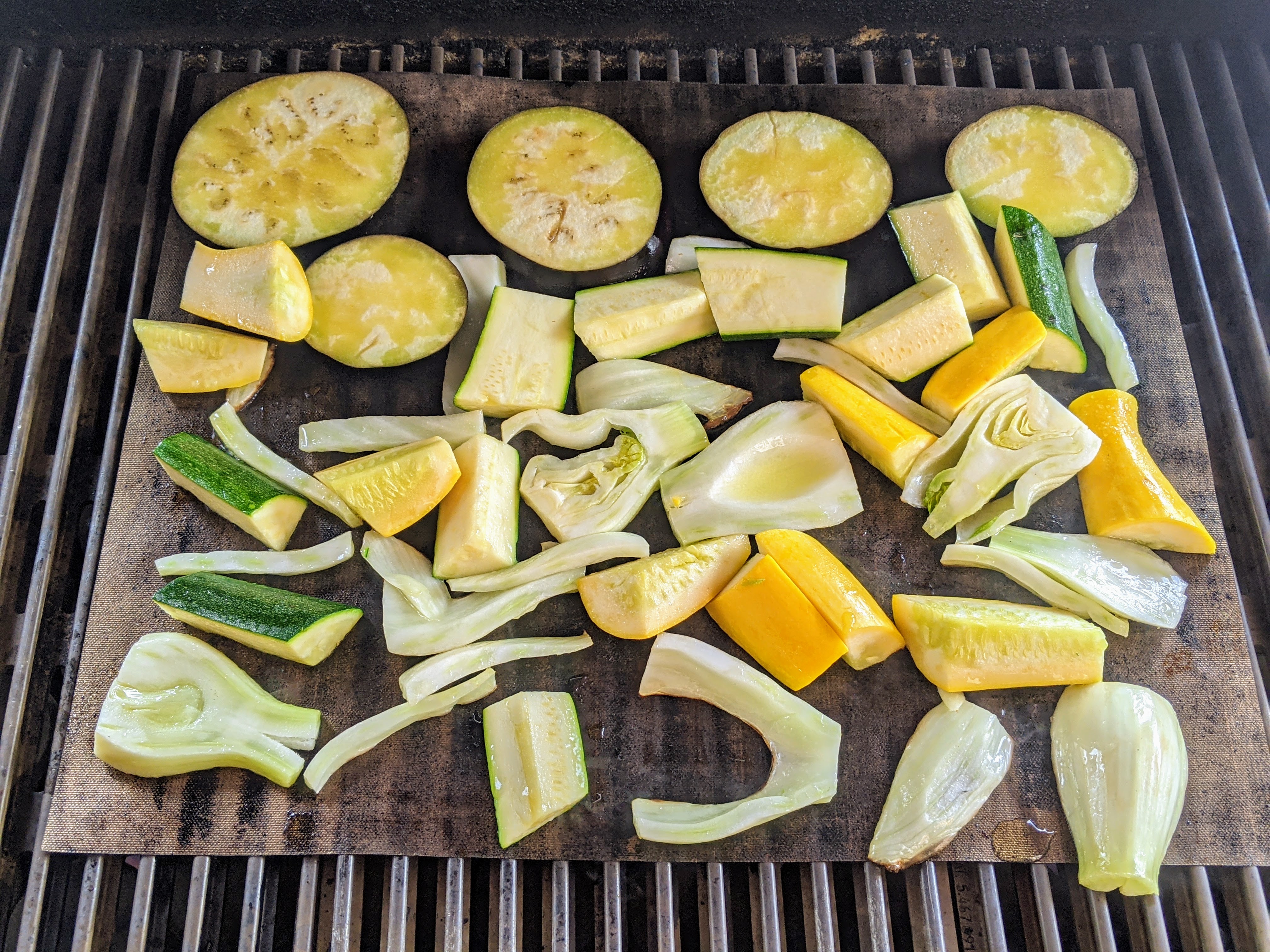
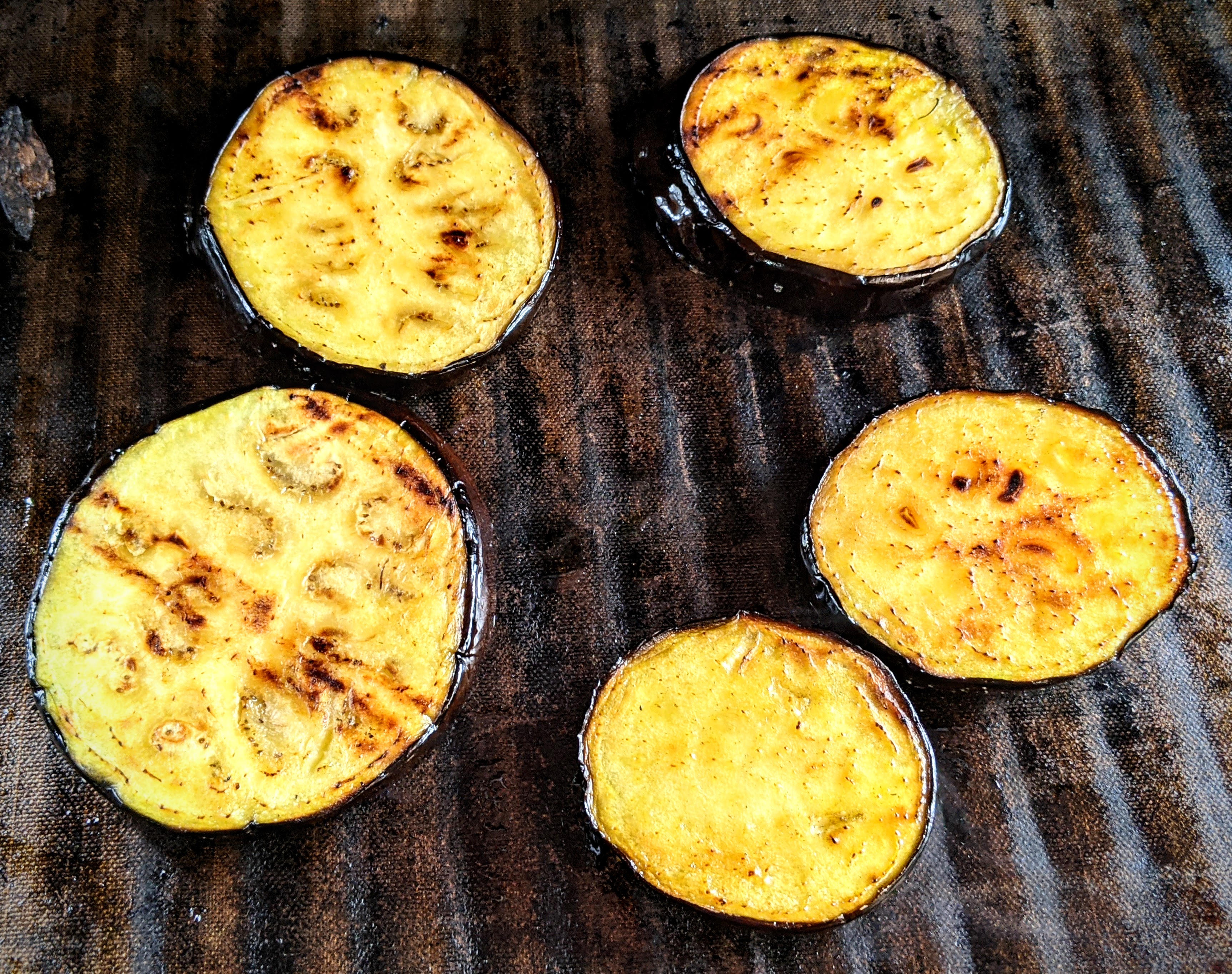
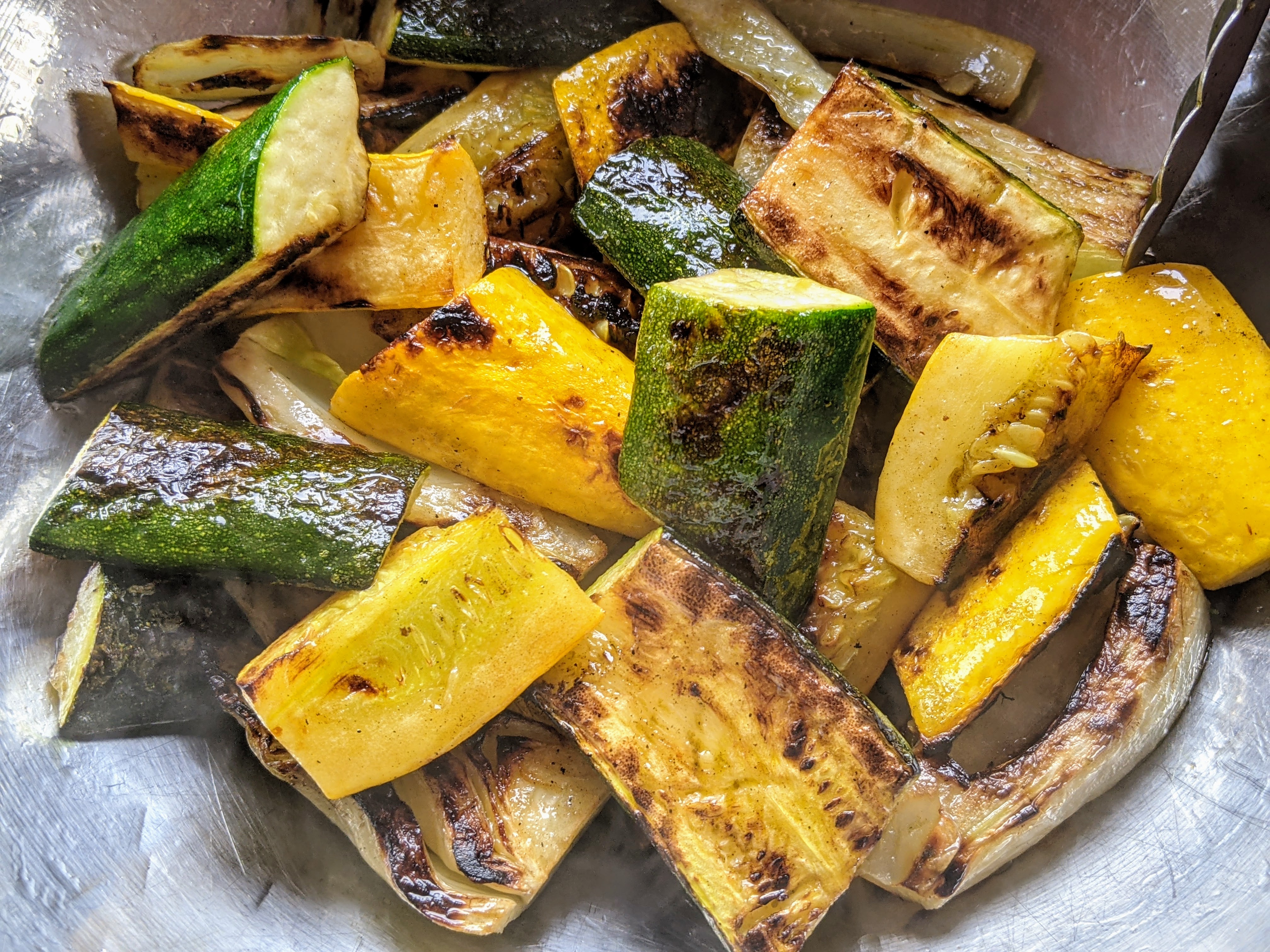
Grilled Vegetables. Two other dinners emanated from a single batch of grilled vegetables. Even though it’s pretty cold here in February, the gas grill on our screened-in porch is quite usable, so I decided to make Black Bean Risotto with Grilled Vegetables, from Judith Barrett’s wonderful book, Risotto, Risotti.
Sliced eggplant, zucchini, yellow squash, fennel, and onion, plus a single plum tomato, chopped up and added (before it went bad) provided the intense flavors. The dish was so good, I ate it all before I took a photo of the bowl. Use your imagination, if necessary.
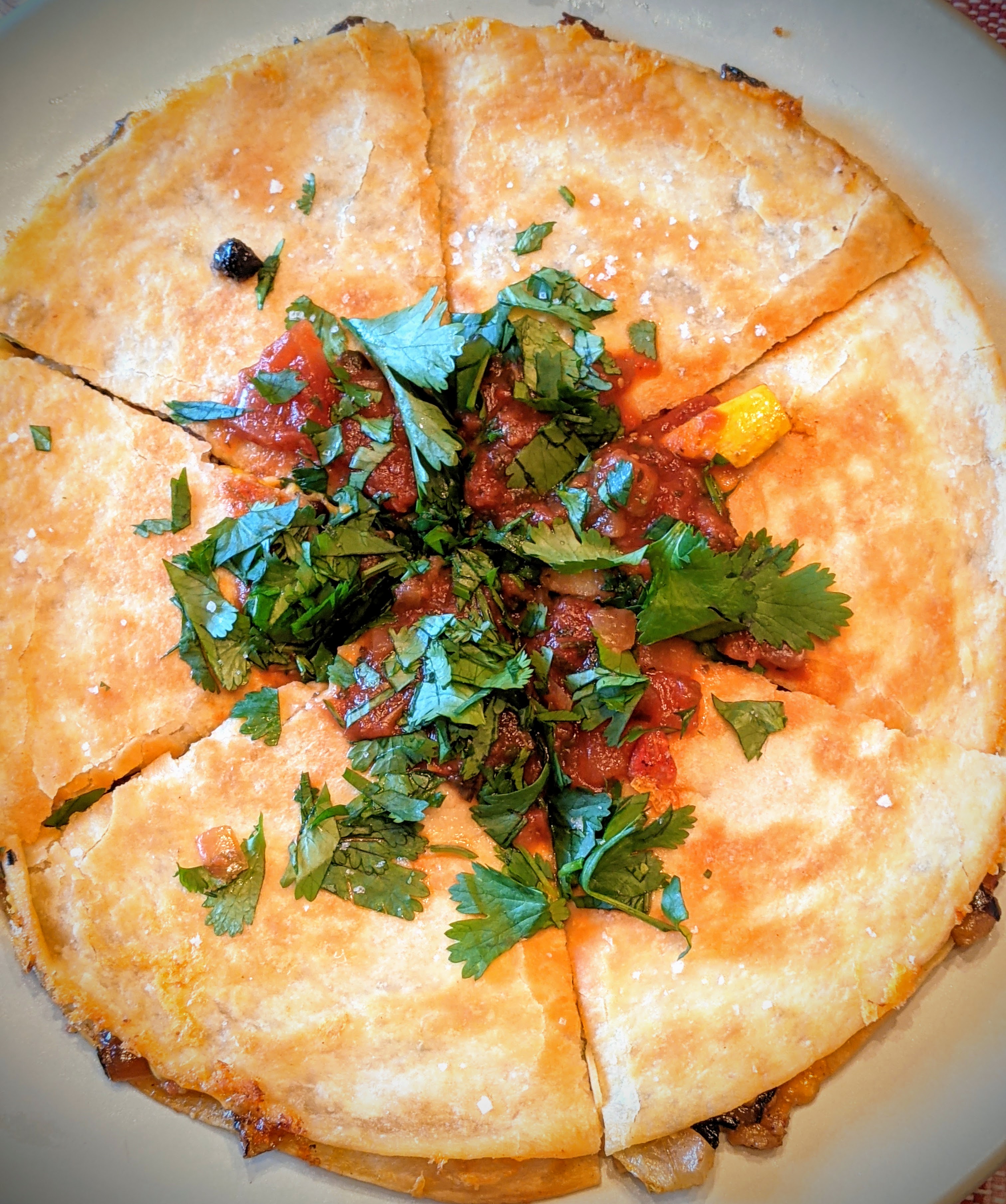
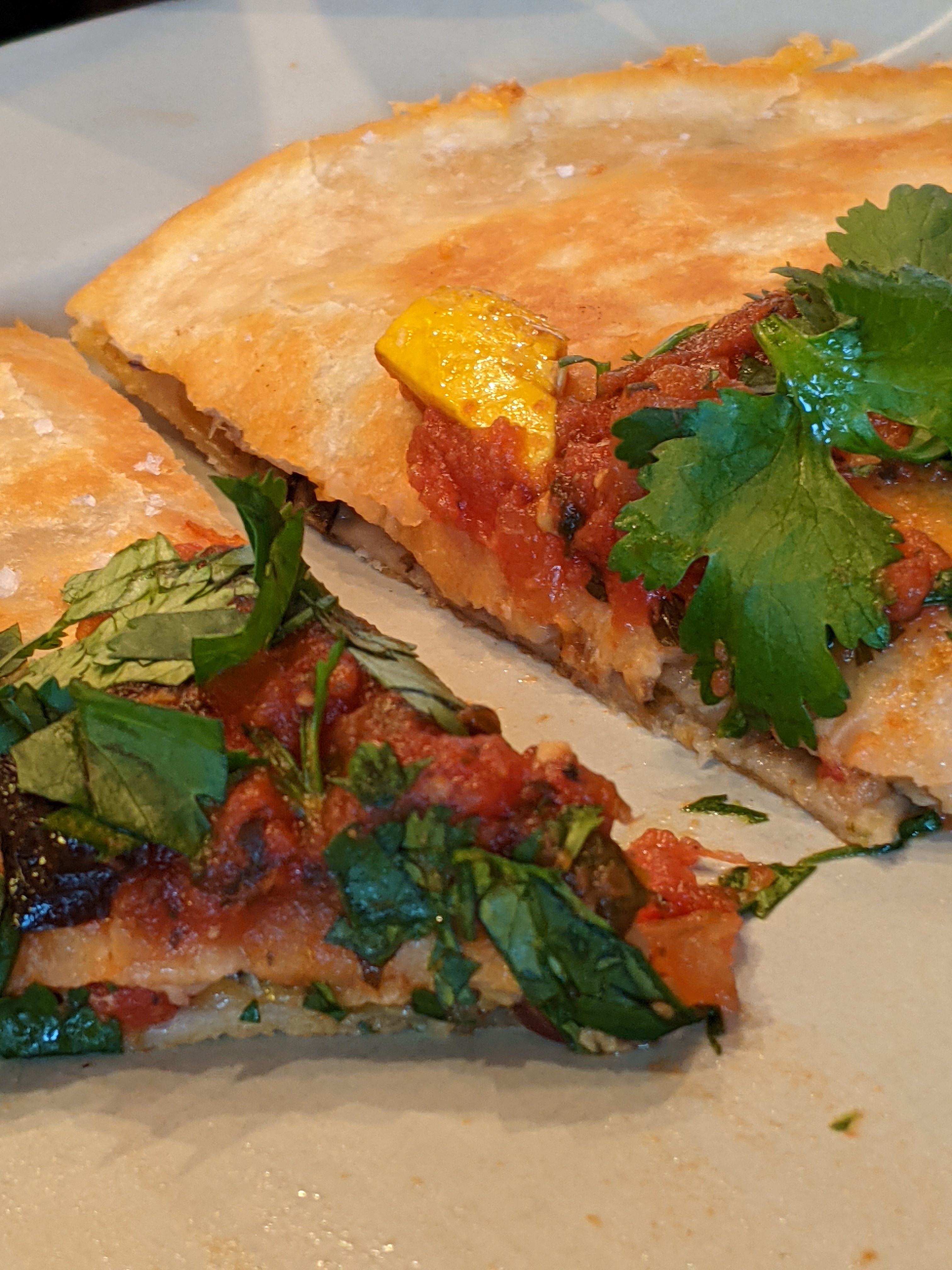
Grilled Vegetable Quesadilla. Fortunately, I saved the remainder of the vegetables (the risotto did not require very much of them). That gave me an opportunity to make a quesadilla with them a few nights later. Flour tortillas and grated Colby cheese, plus black beans, salsa and cilantro were all I needed. I was delighted with the results, starting with a Cuban or Caribbean take on an Italian risotto, and ending with a Mexican or Tex-Mex version of a quick quesadilla, successfully accompanied by a red wine from Puglia in Southern Italy — a cross-cultural event indeed.
Today was a fine day for inventing a new dish for lunch and for trying out two recipes I had never attempted before, for dinner.
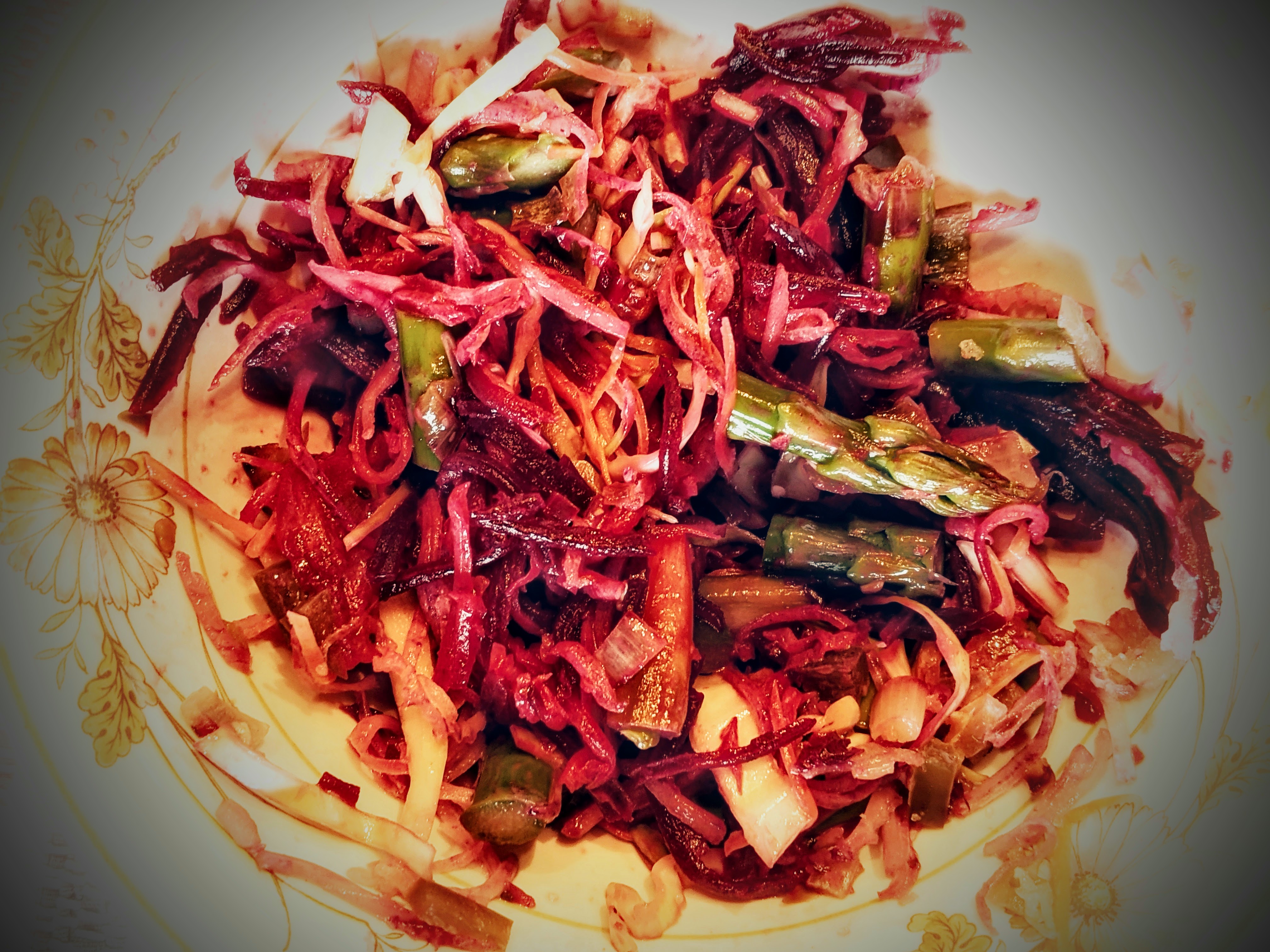
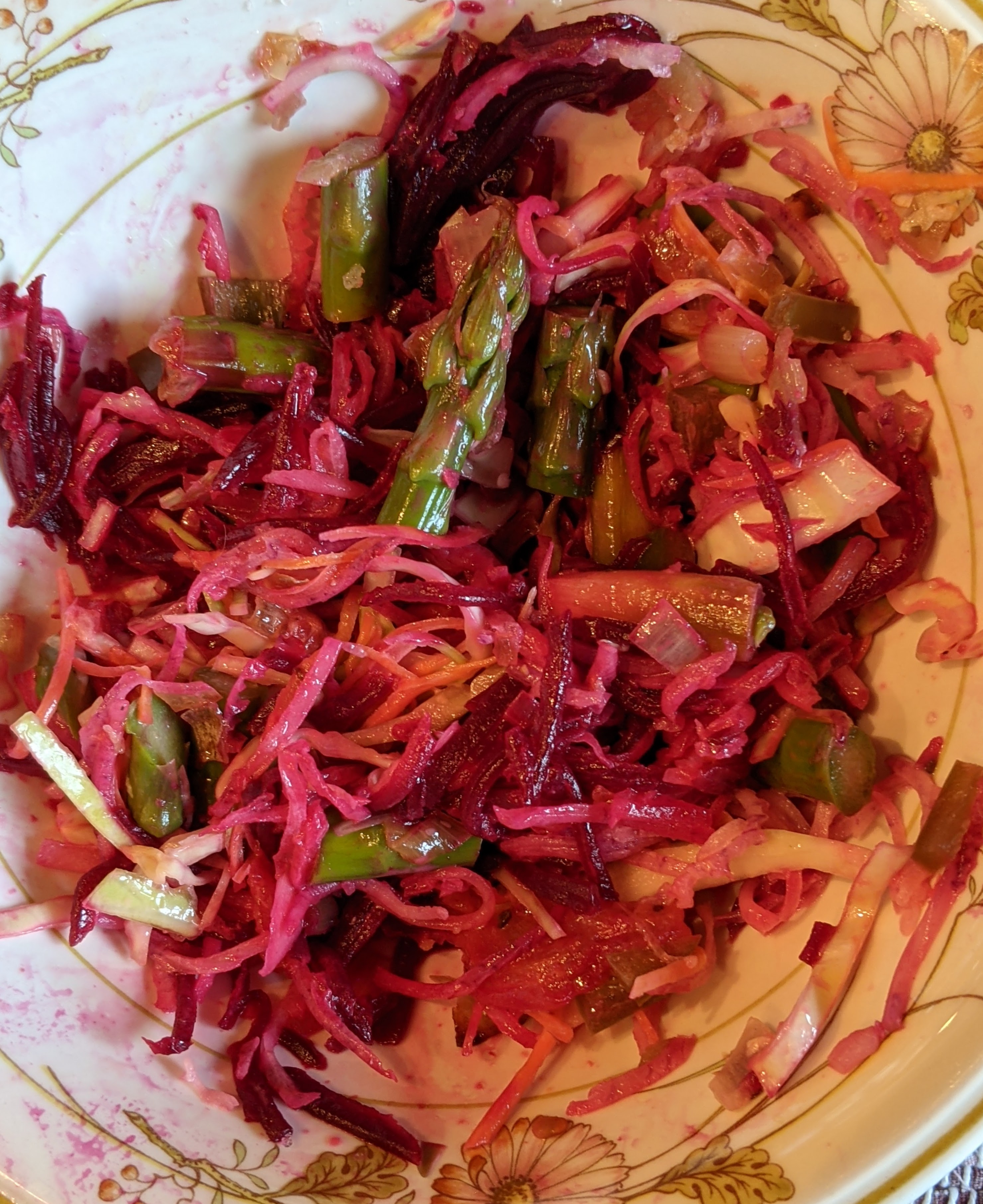
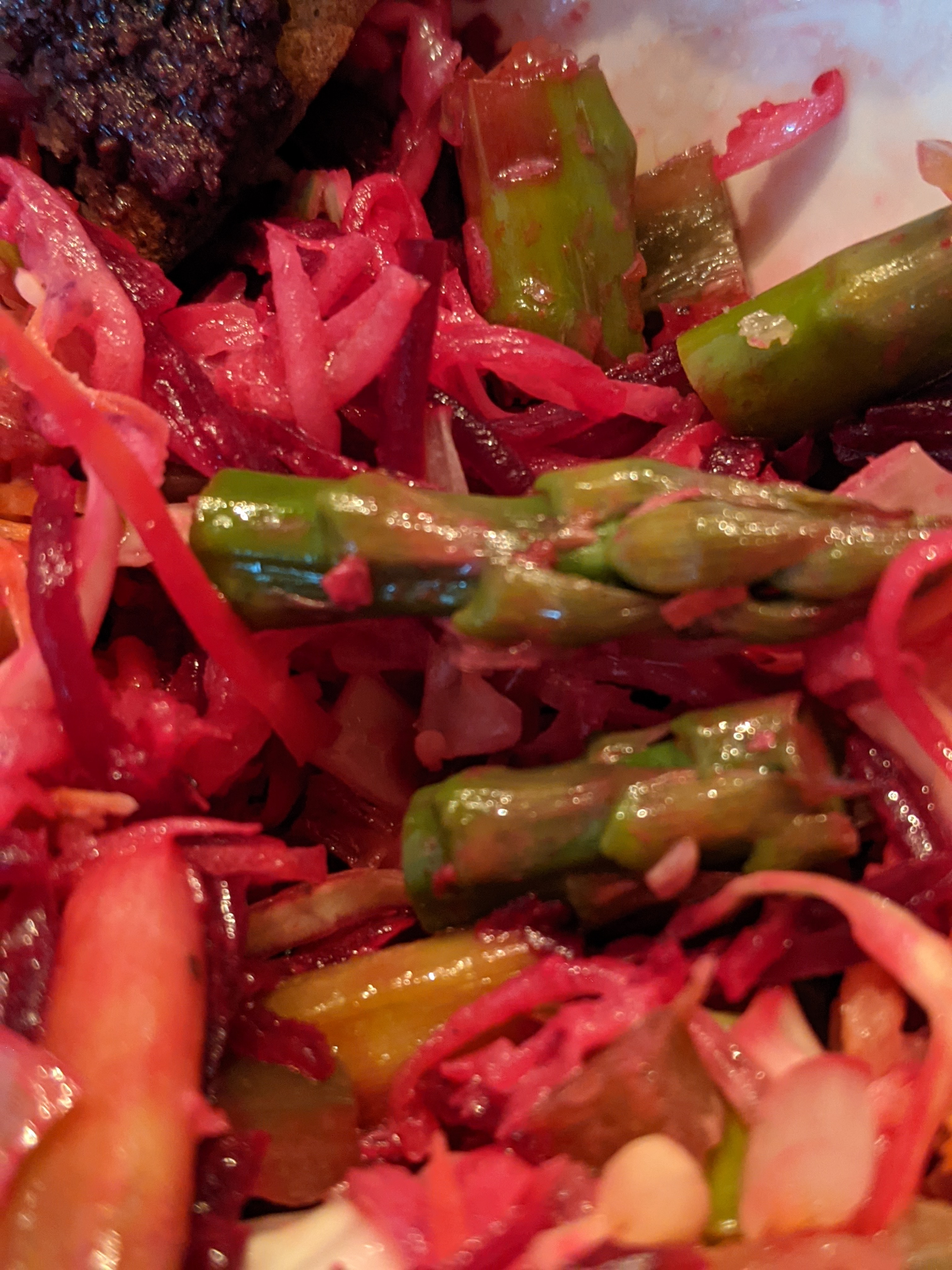
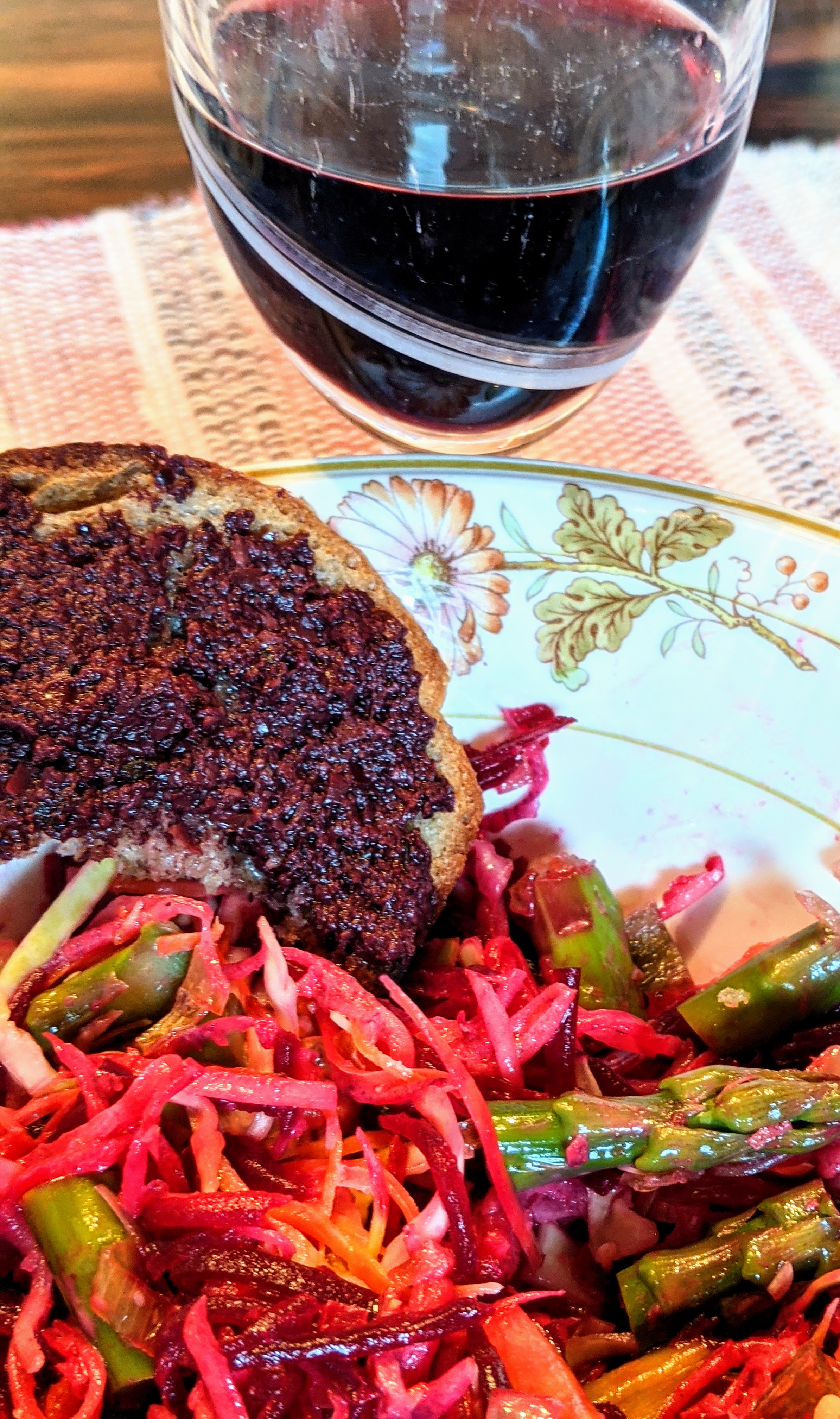
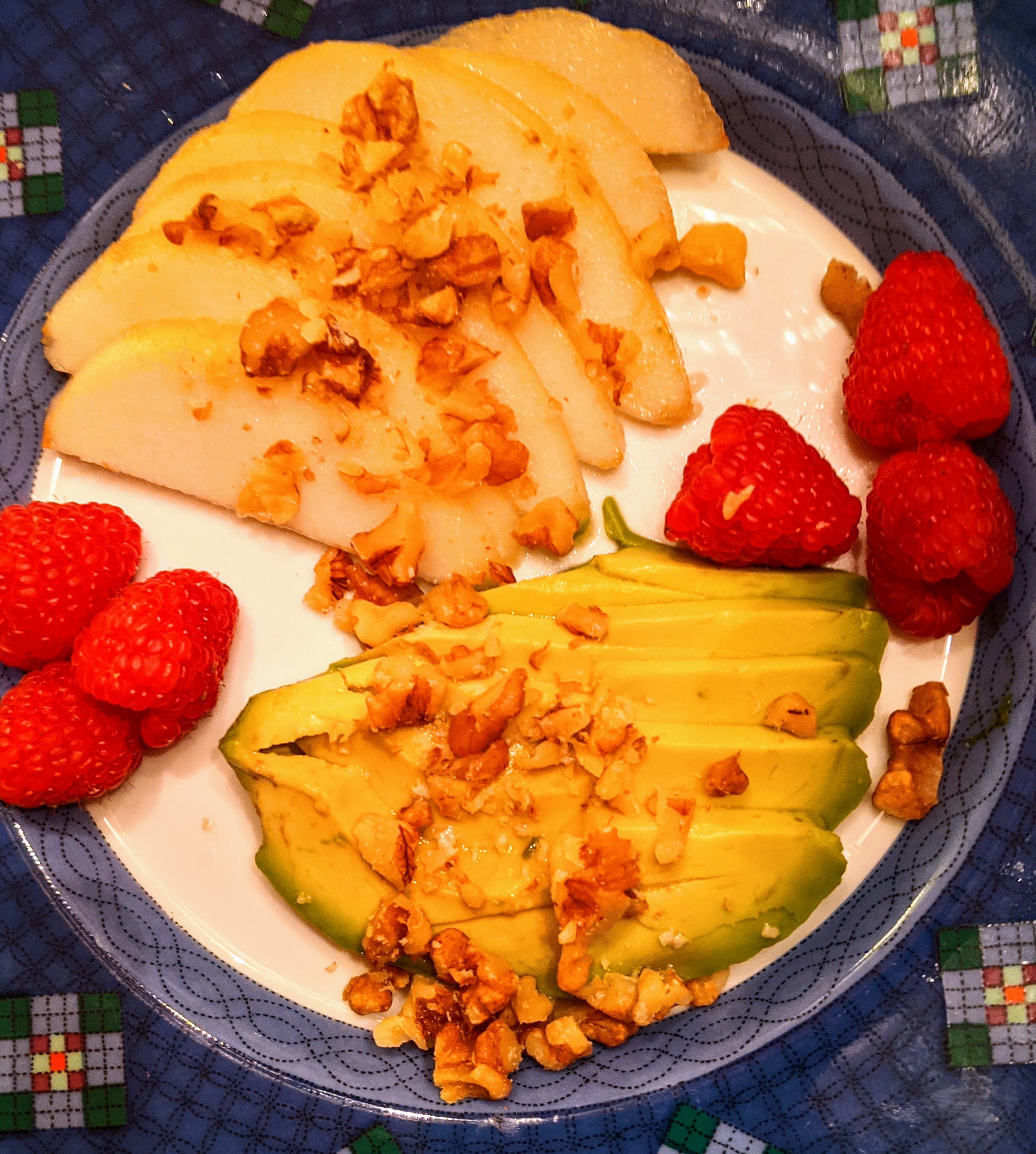
Lunch was inspired by available elements of past, present, and future salads. Favorite tools played a part, as well. The tool is a Kuhn Rikon mandoline-style julienne cutter. I decided to finish the unused half of a purple daikon radish and one large steamed beet. The tool made quick (and safe) work of the task. The vegetable sticks went into two prep dishes, and then were flavored quickly with several pinches of Sicilian sea salt. This incentivized me to examine the refrigerator for other candidate ingredients, and I found the tail end of Barbara’s excellent cole slaw, and some leftover asparagus spears with sautéed shallots. I had slow-roasted plum tomatoes a couple of days ago, so I grabbed a few of those, along with a small chunk of jalapeños pickled in the Fall.
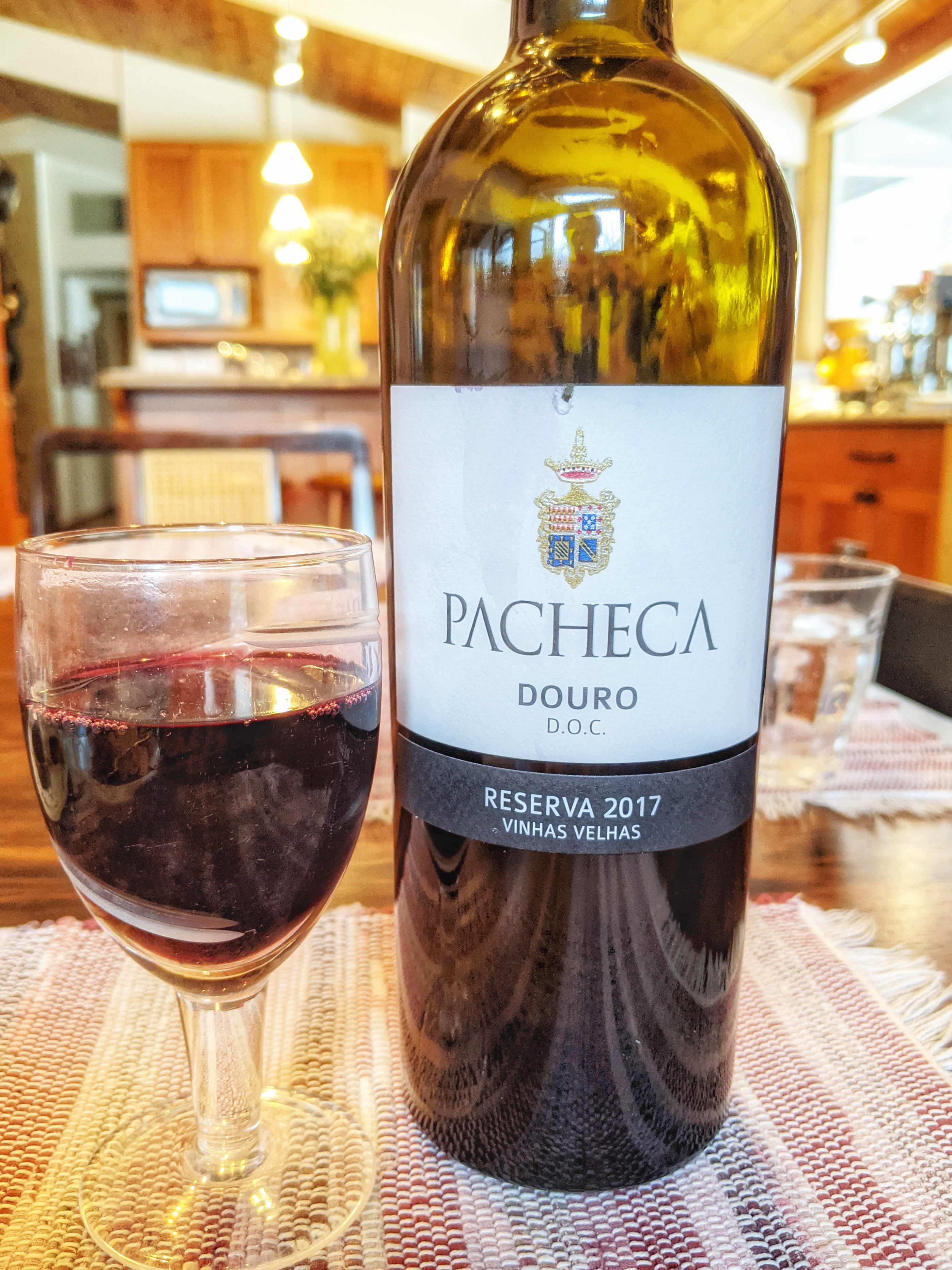
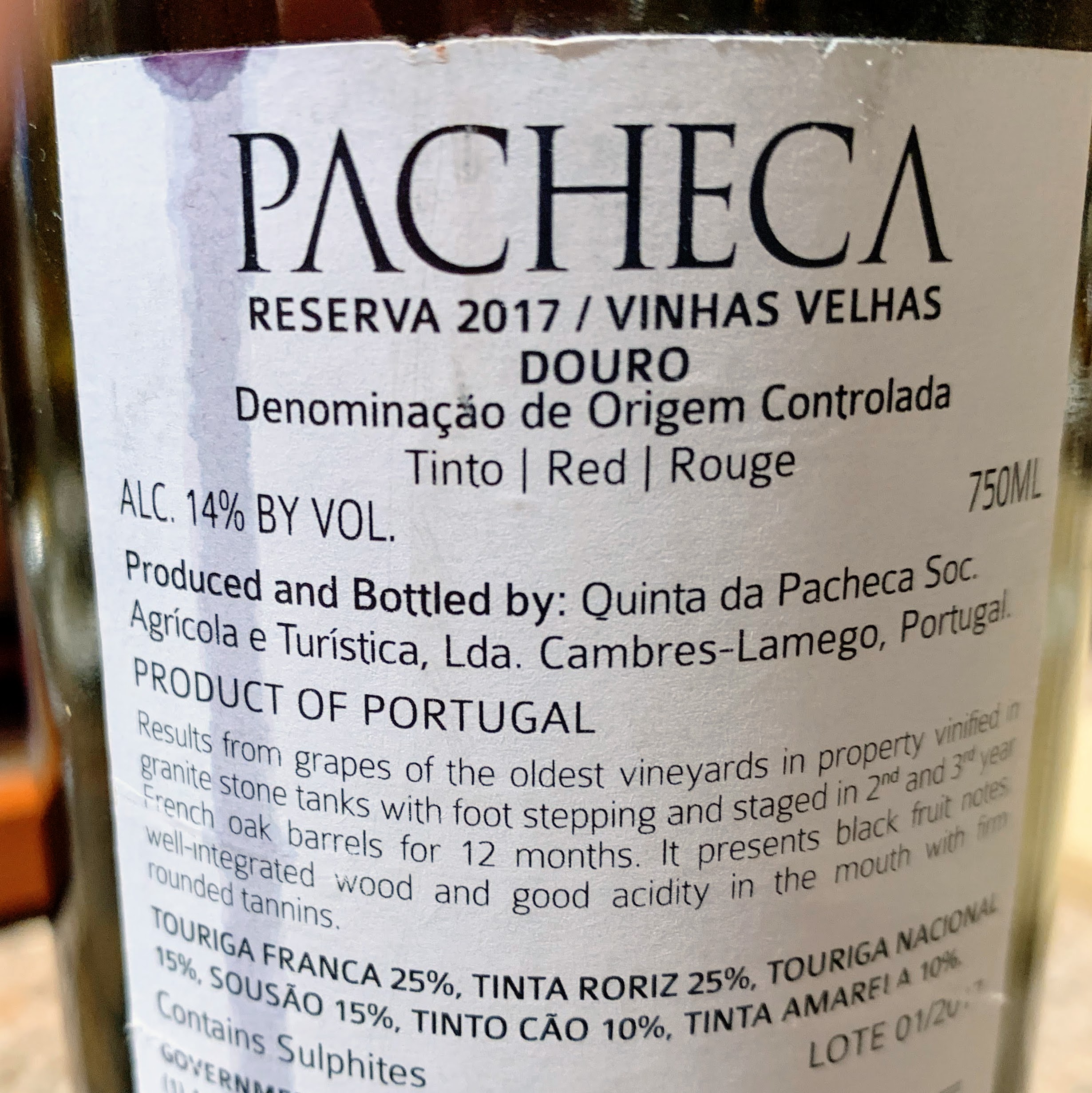
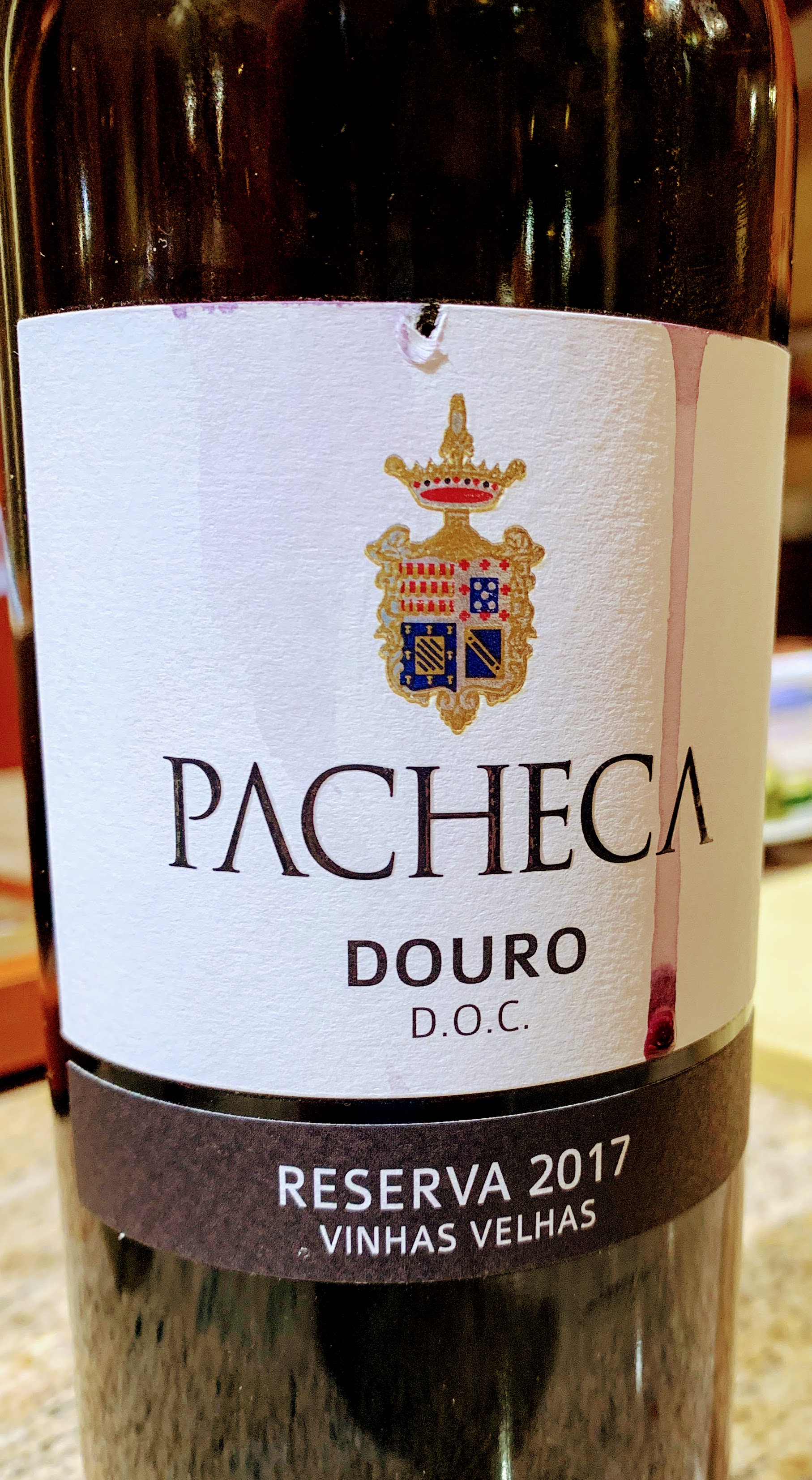
I mixed all the vegetables together in a bowl, then added salt, pepper, Kala Namak (the volcanic salt from India, which whose sulfurous flavors complement beets beautifully), Greek olive oil, and a touch of red wine vinegar. Two slices of my sourdough, topped with homemade Kalamata olive tapenade completed the preparation. I poured a small glass of a Portuguese red wine from the Douro Valley, and then devoured it all with gusto.
Kuhn Rikon Julienne Slicer
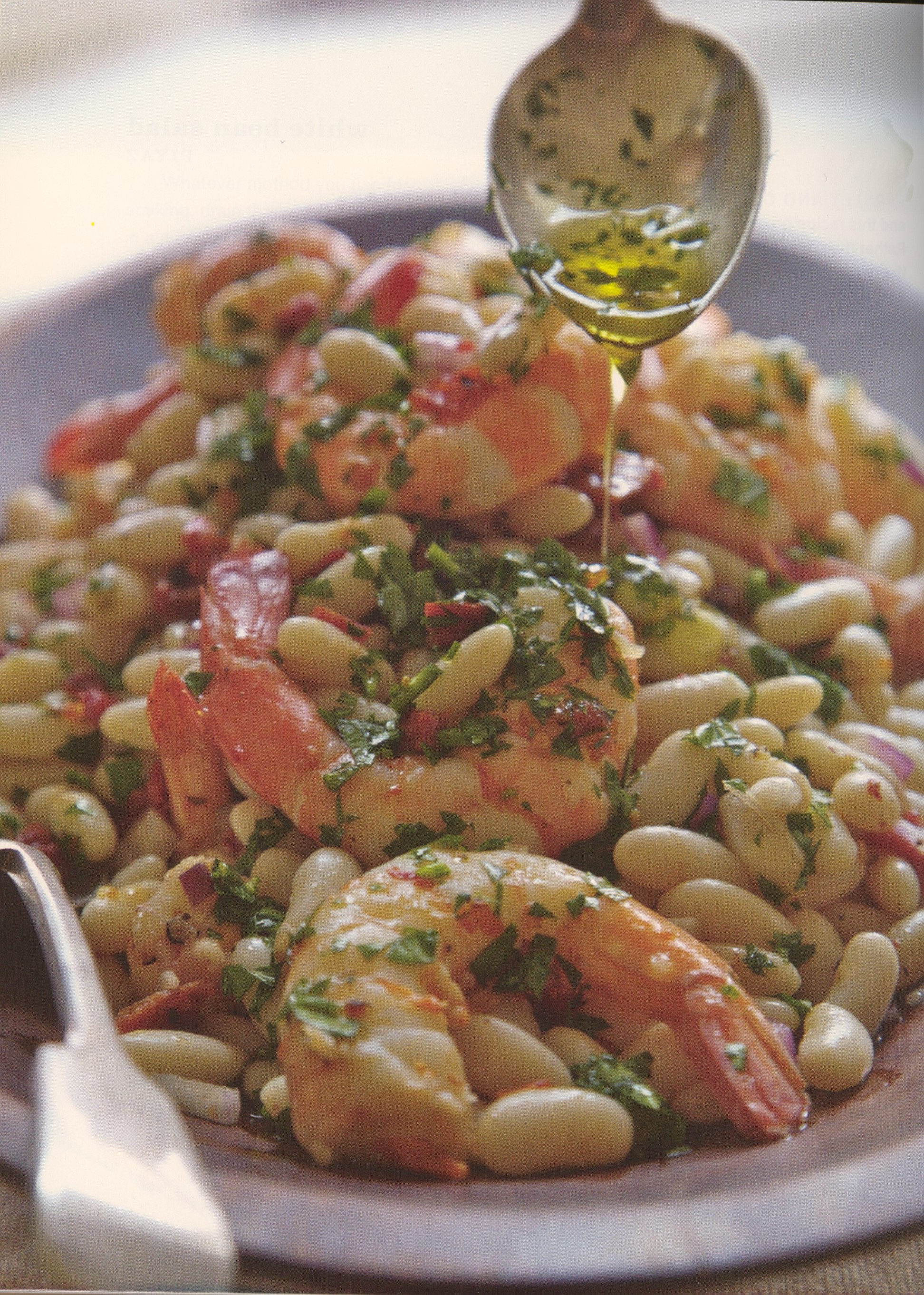
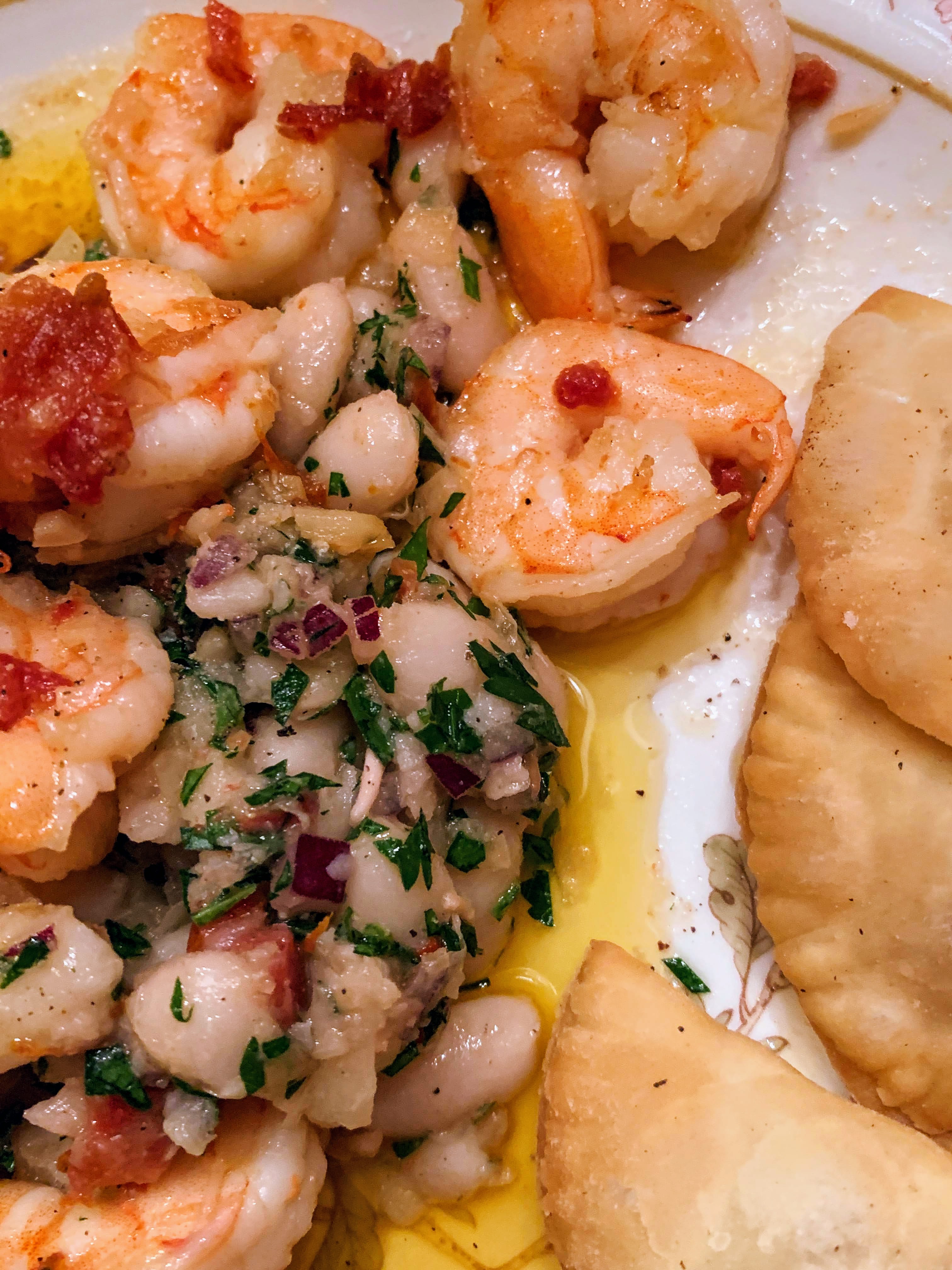
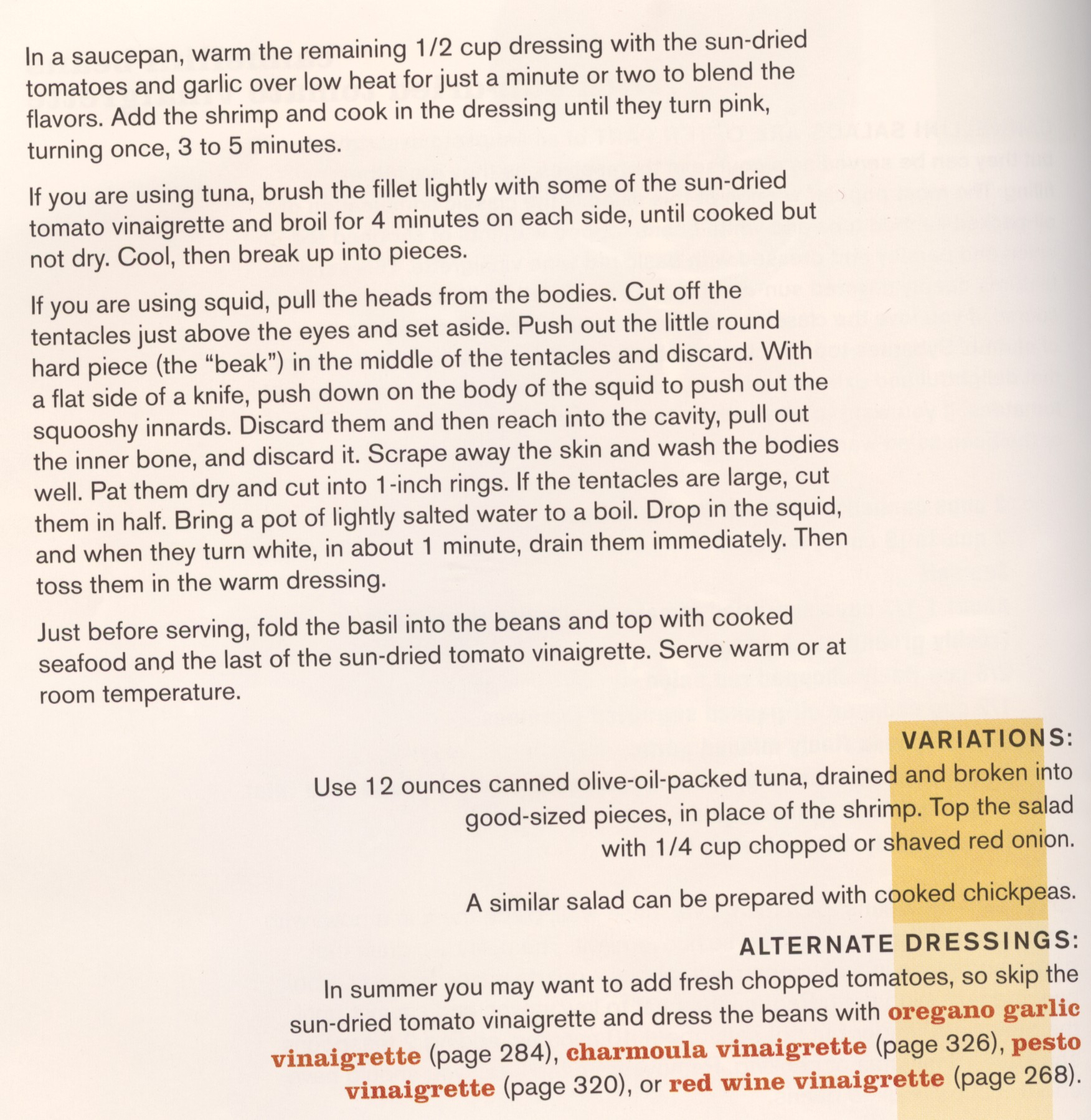
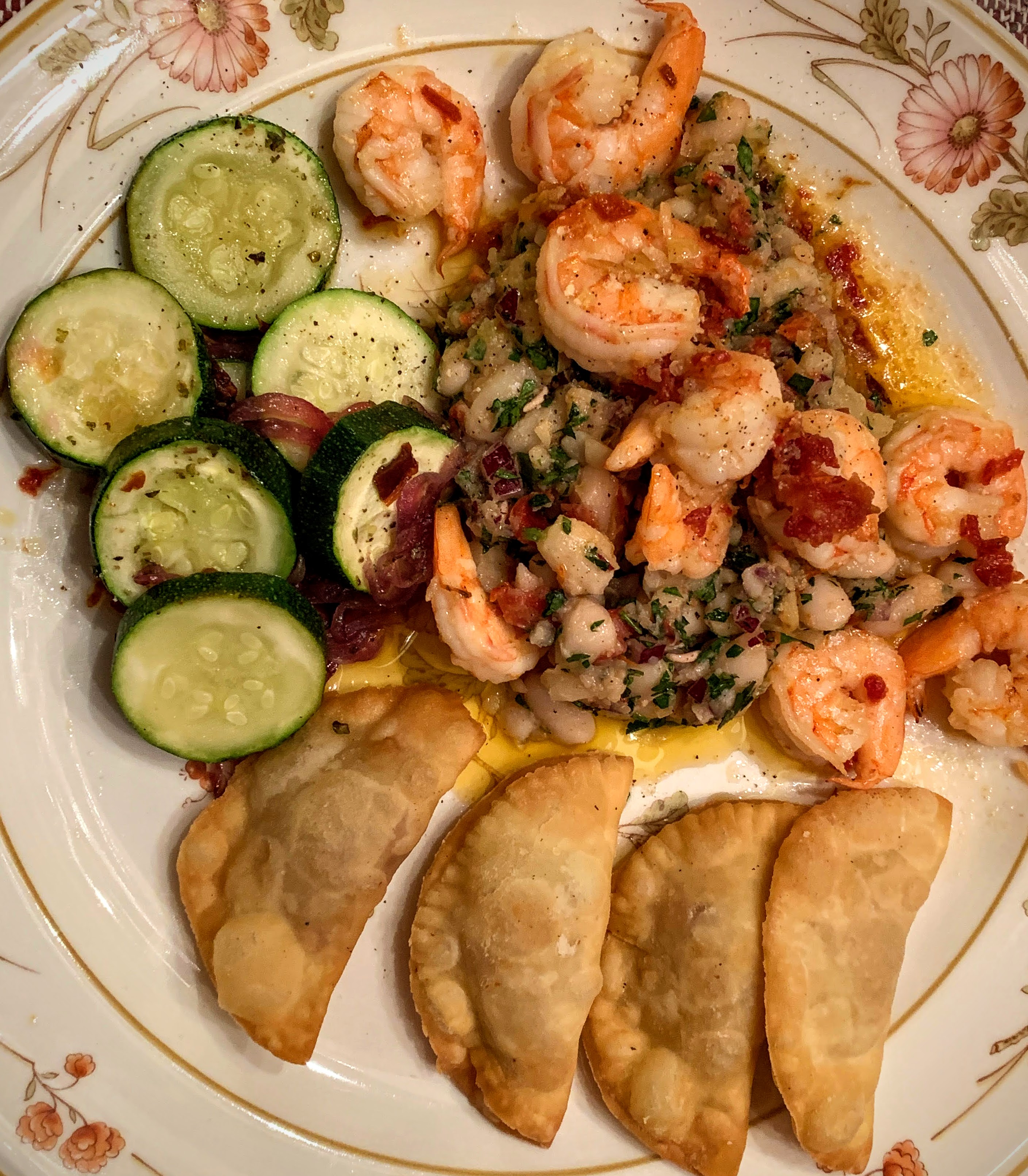
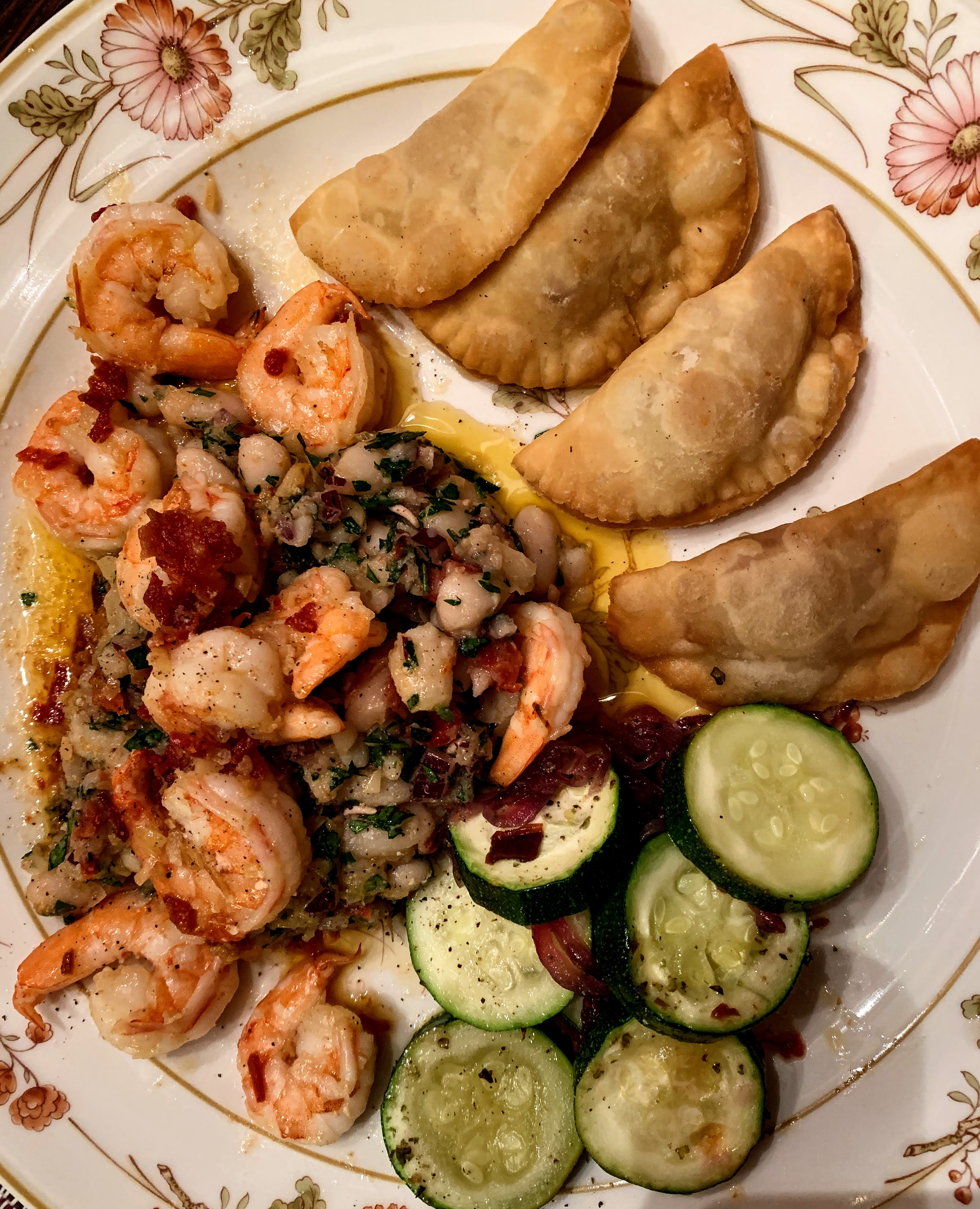
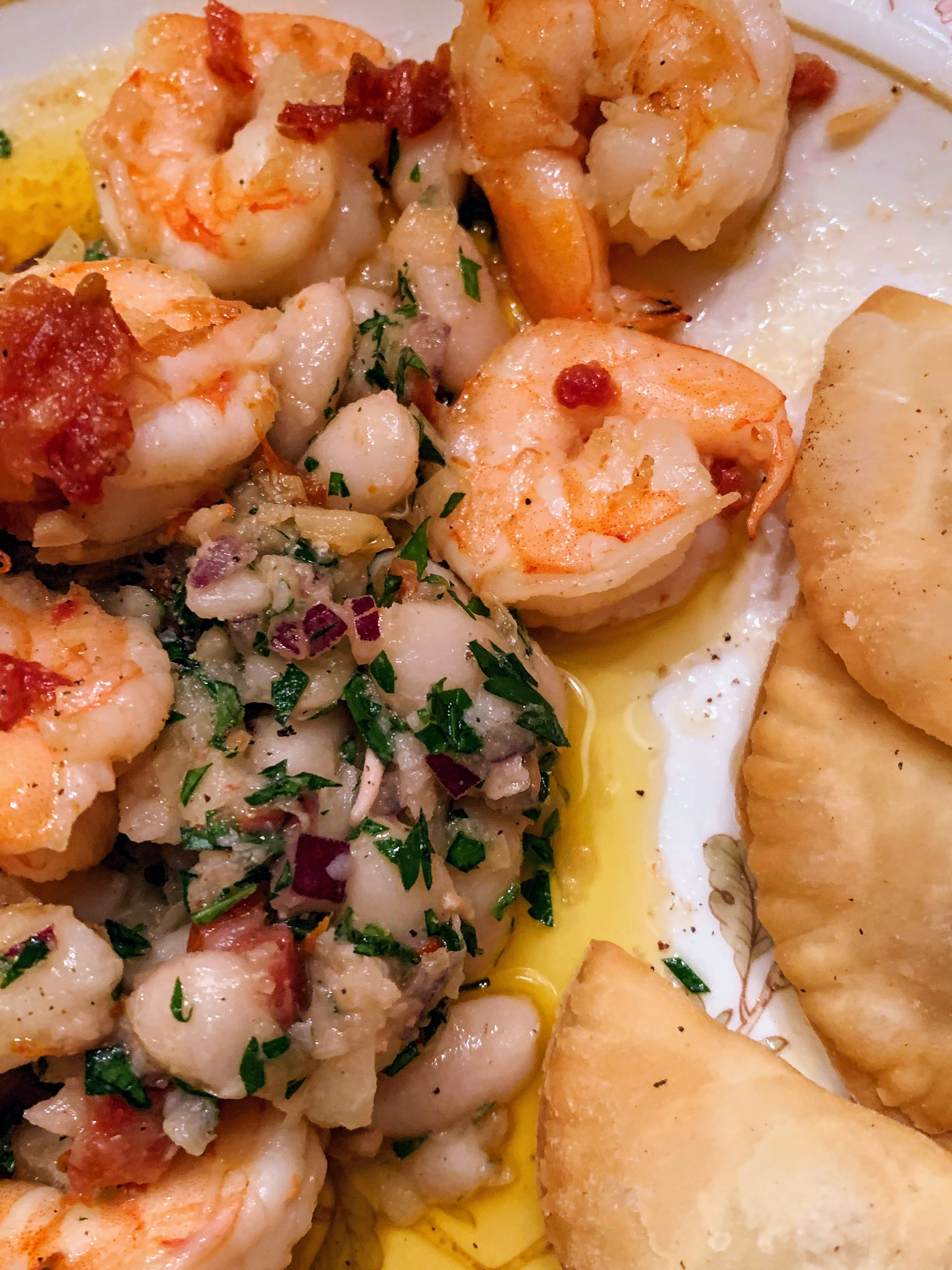
A few hours later it was time to make dinner. I had not figured out what I was going to make yet, but I did have a pot of just-cooked Marcella cannellini beans from Rancho Gordo, so that’s where I began the planning. Grabbing one of Joyce Goldstein’s cookbooks on Mediterranean cooking, I found a recipe that seemed to be just what I needed. Since Barbara is a bit limited in how much beans she will tolerate, I thought the recipe selected would be highly acceptable, since it combined the beans with a sun-dried tomato vinaigrette, and sautéed shrimp, which were in our freezer and could be defrosted in two hours.
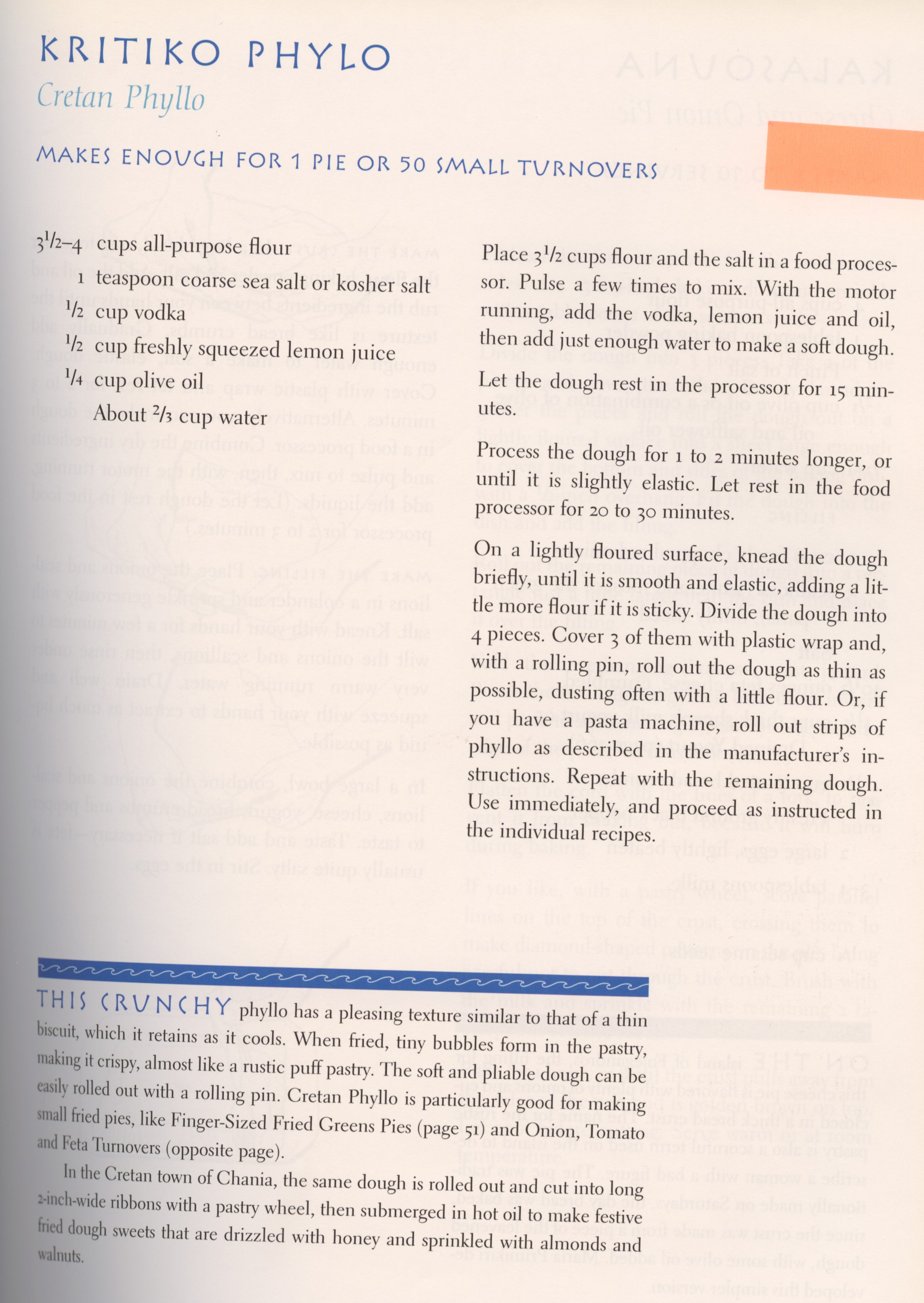
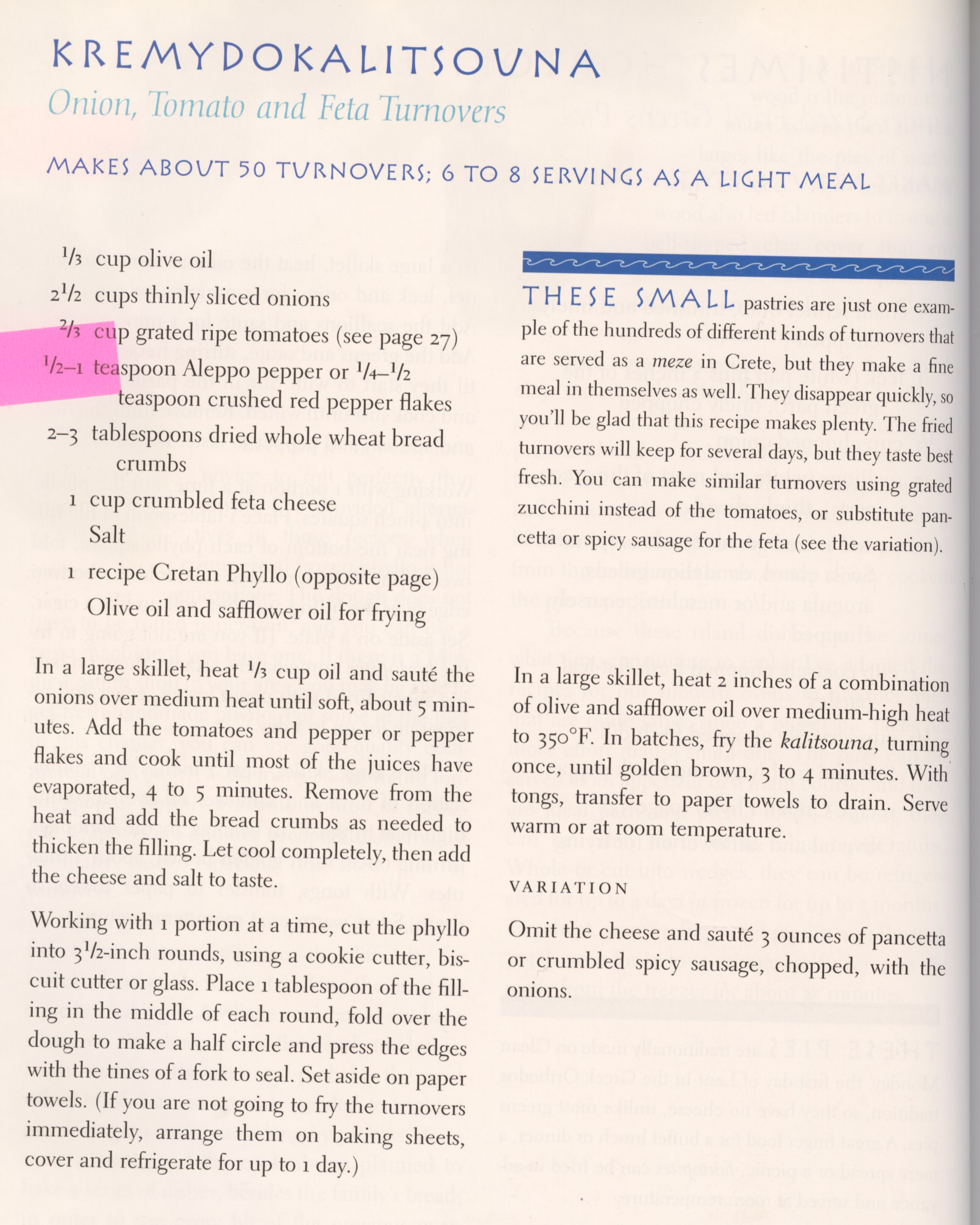
It turned out to be a good choice, but it was also a lot of work, since I first had to make the vinaigrette, prep the beans, and defrost and shell the shrimp. And — of course — I decided that I could make two other dishes to complete the meal. One was a simple bowl of steamed zucchini — microwave for 3 minutes, no problem. The other of those was a recipe for onion, tomato, and feta cheese turnovers from my Greek islands cookbook. Then I discovered that the turnovers require that I make dough called Cretan Phyllo first. So I did. Here are the recipes:
Some more Pacheca wine fit right in, and we enjoyed the dinner immensely. Not so much, all the dirty dishes, but Barbara did most of those to help out.
When I did cook something, it would likely be old favorites such as:
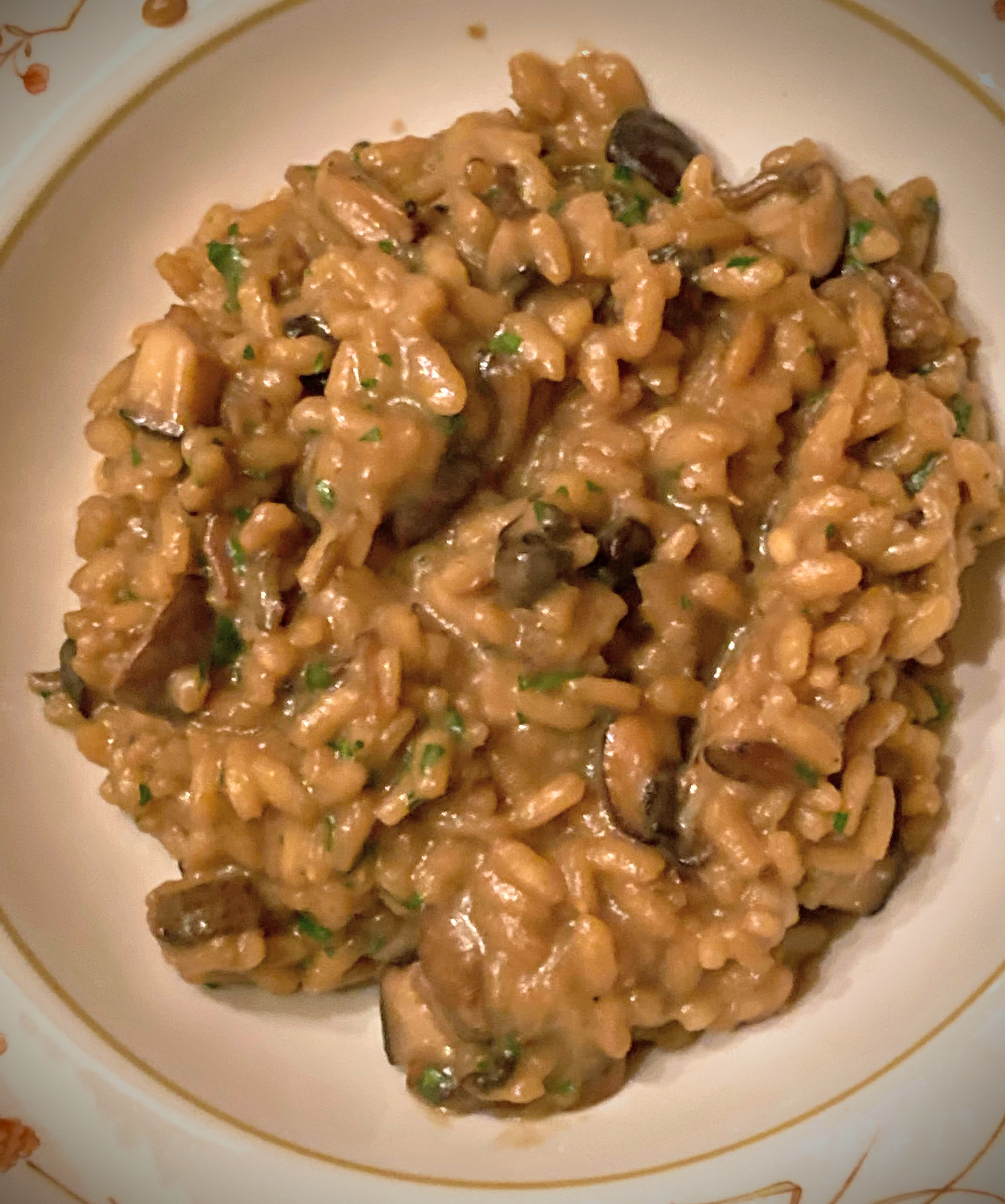
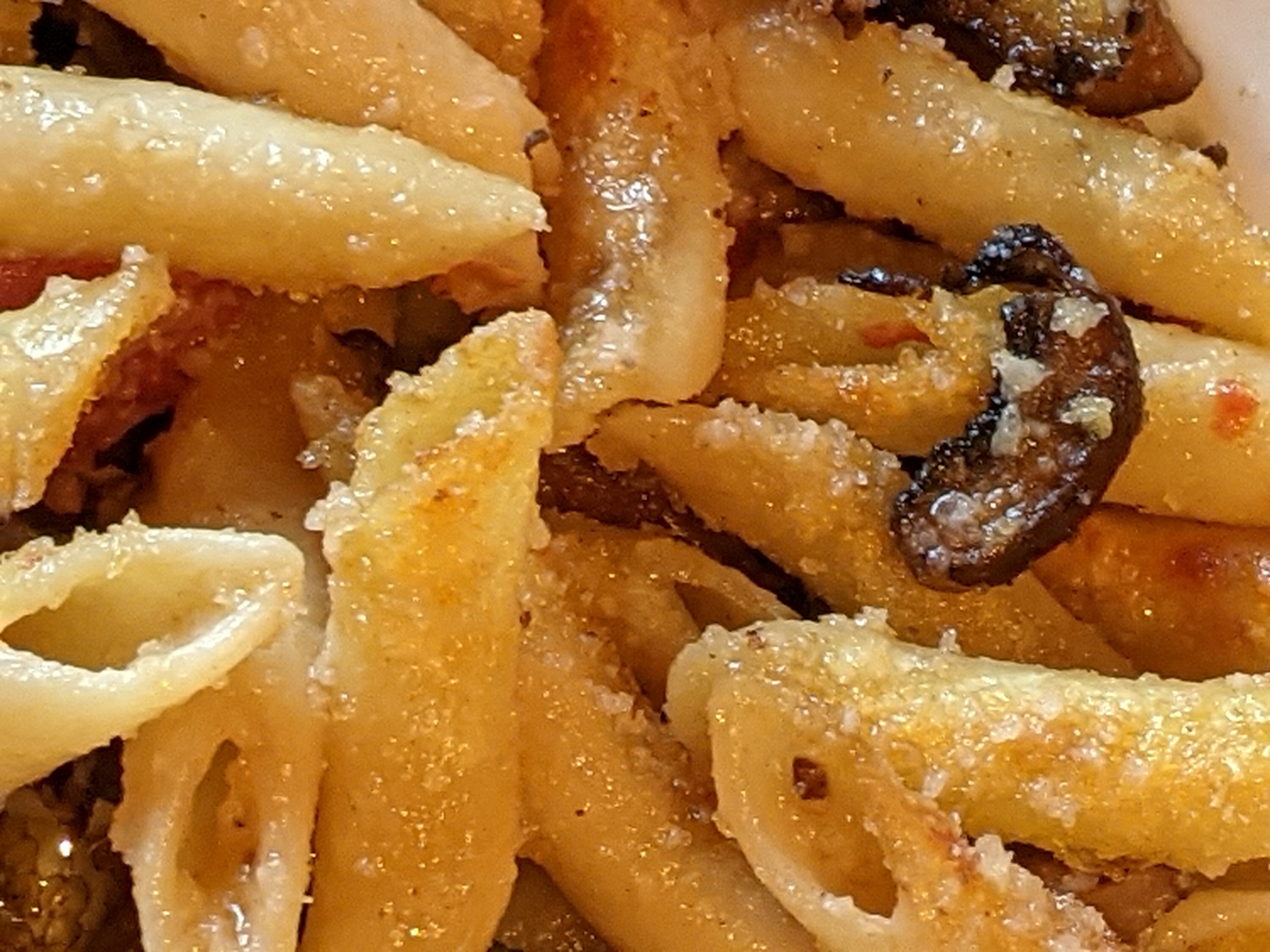
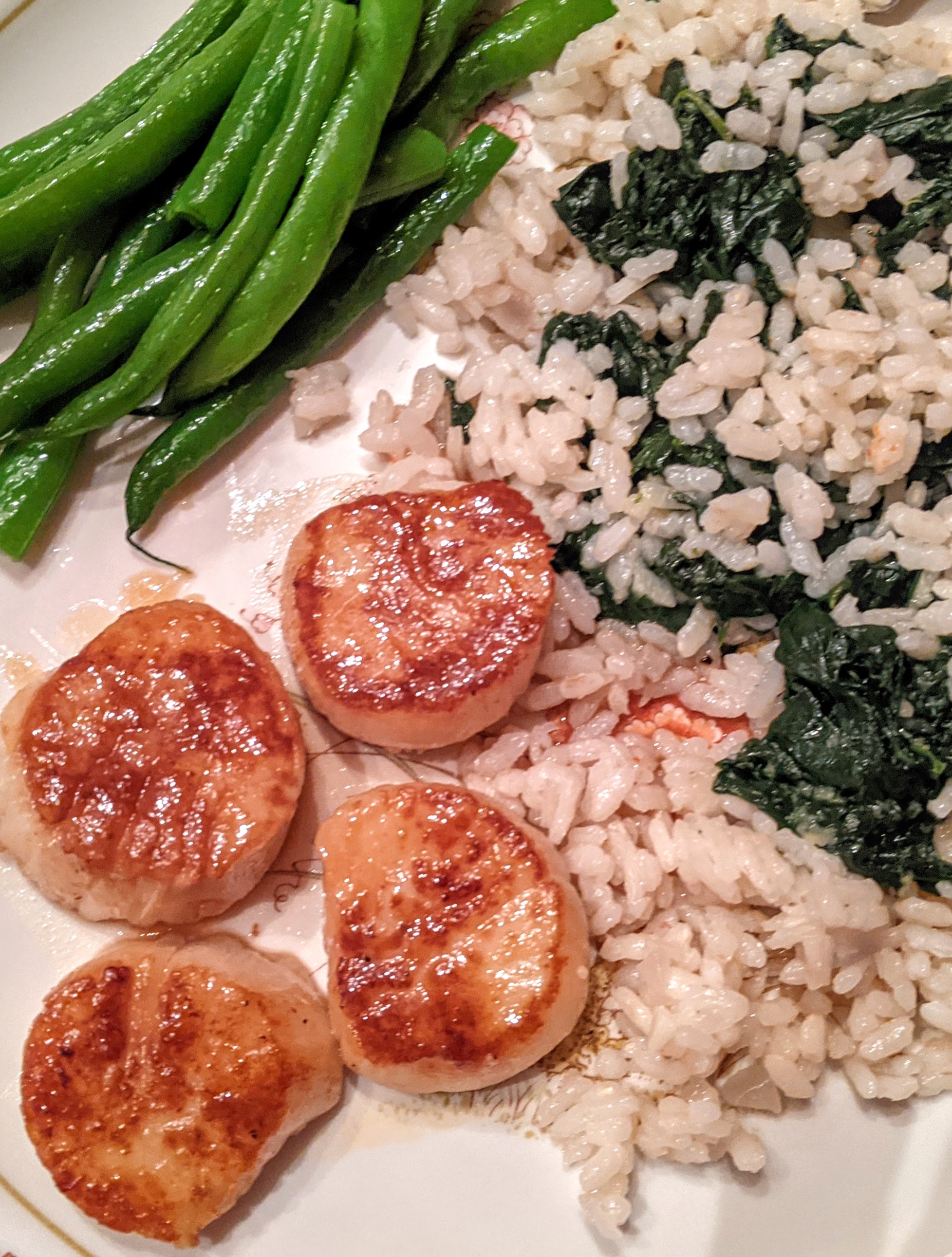
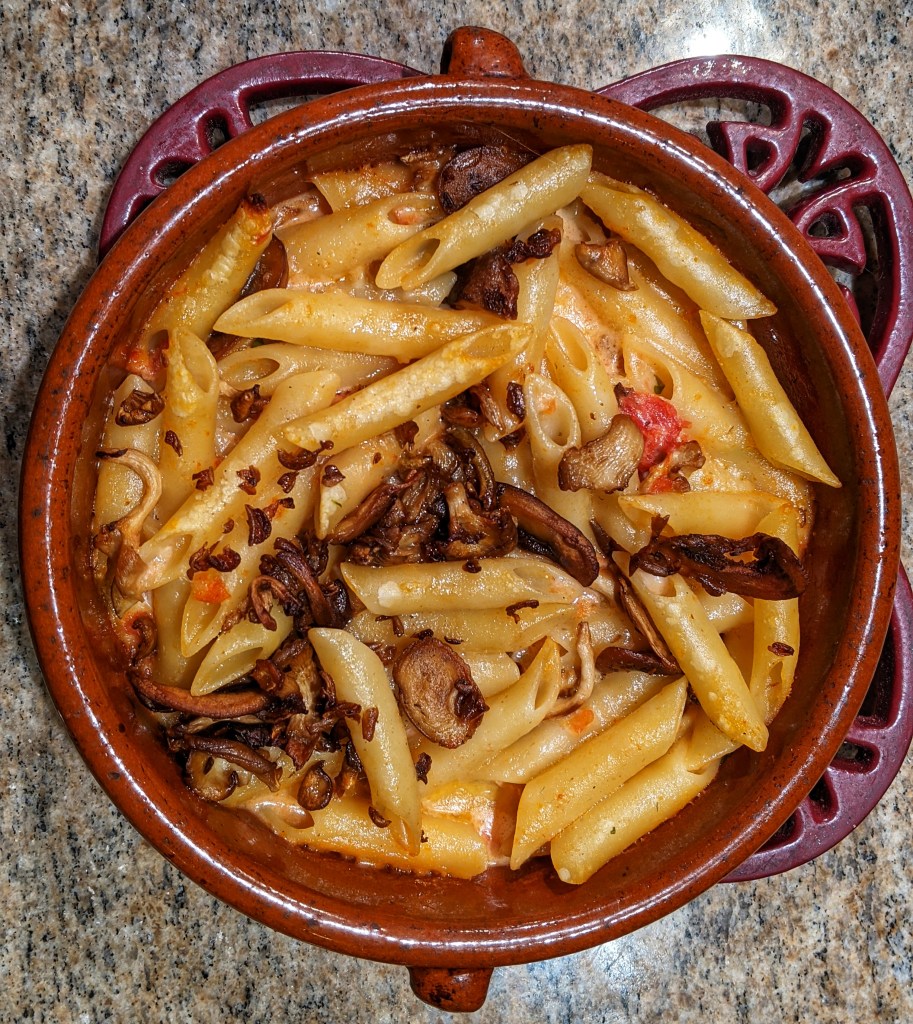
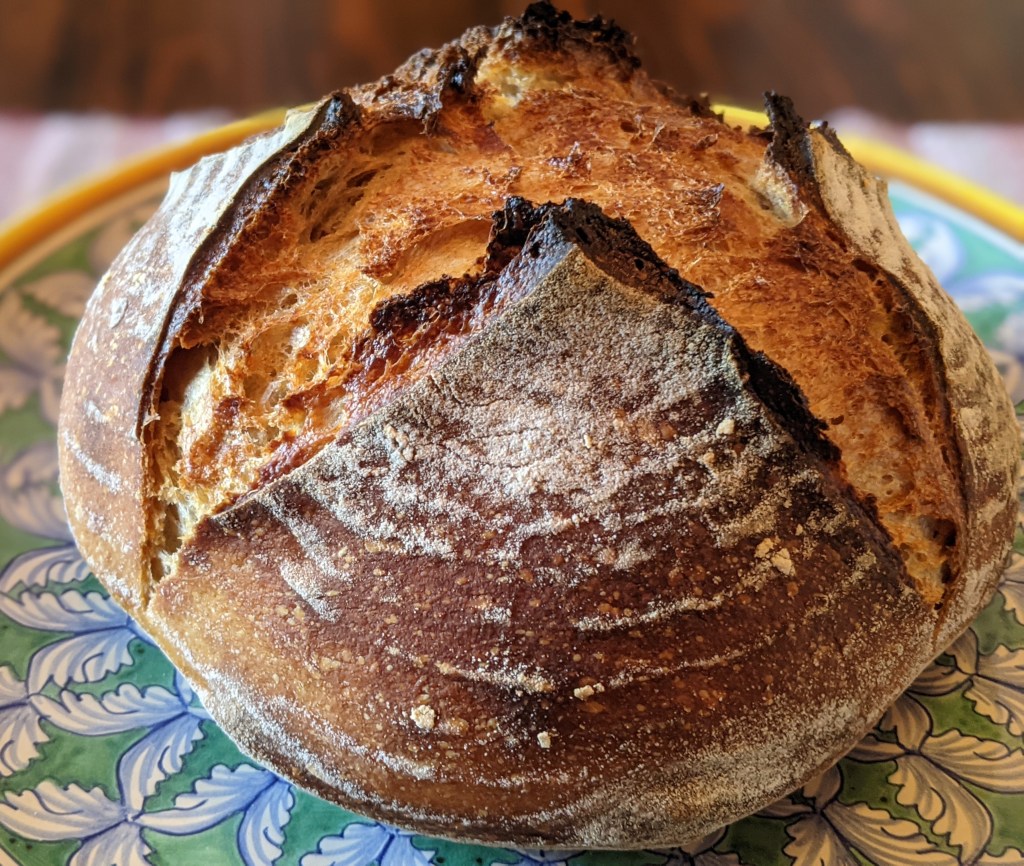
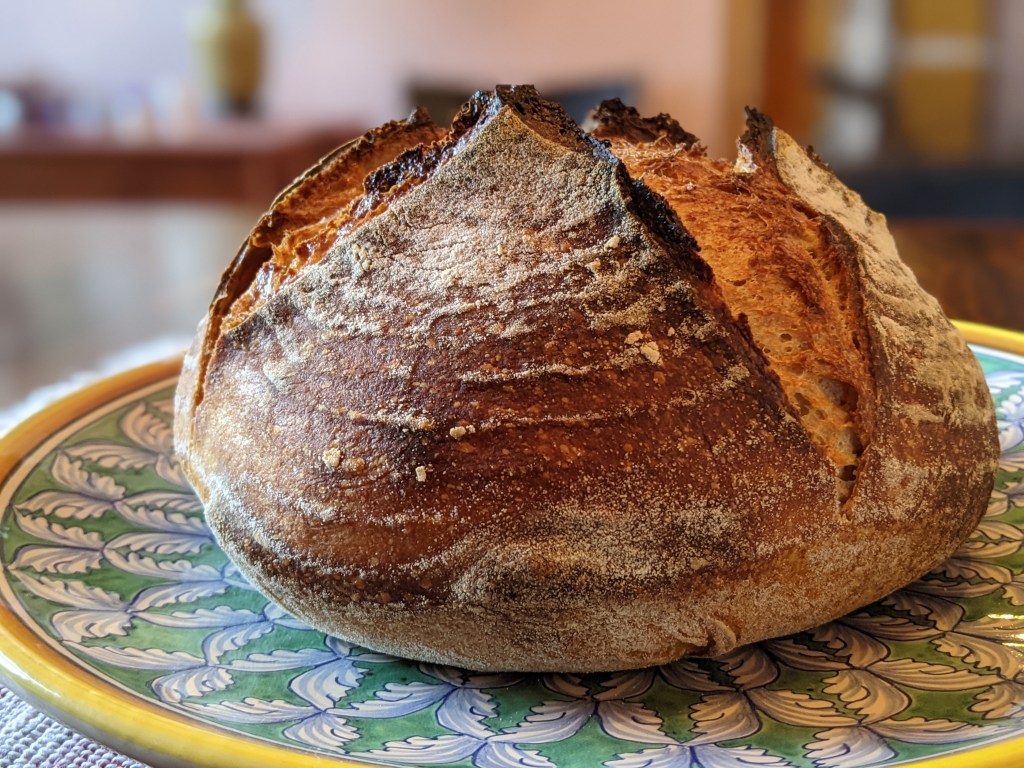
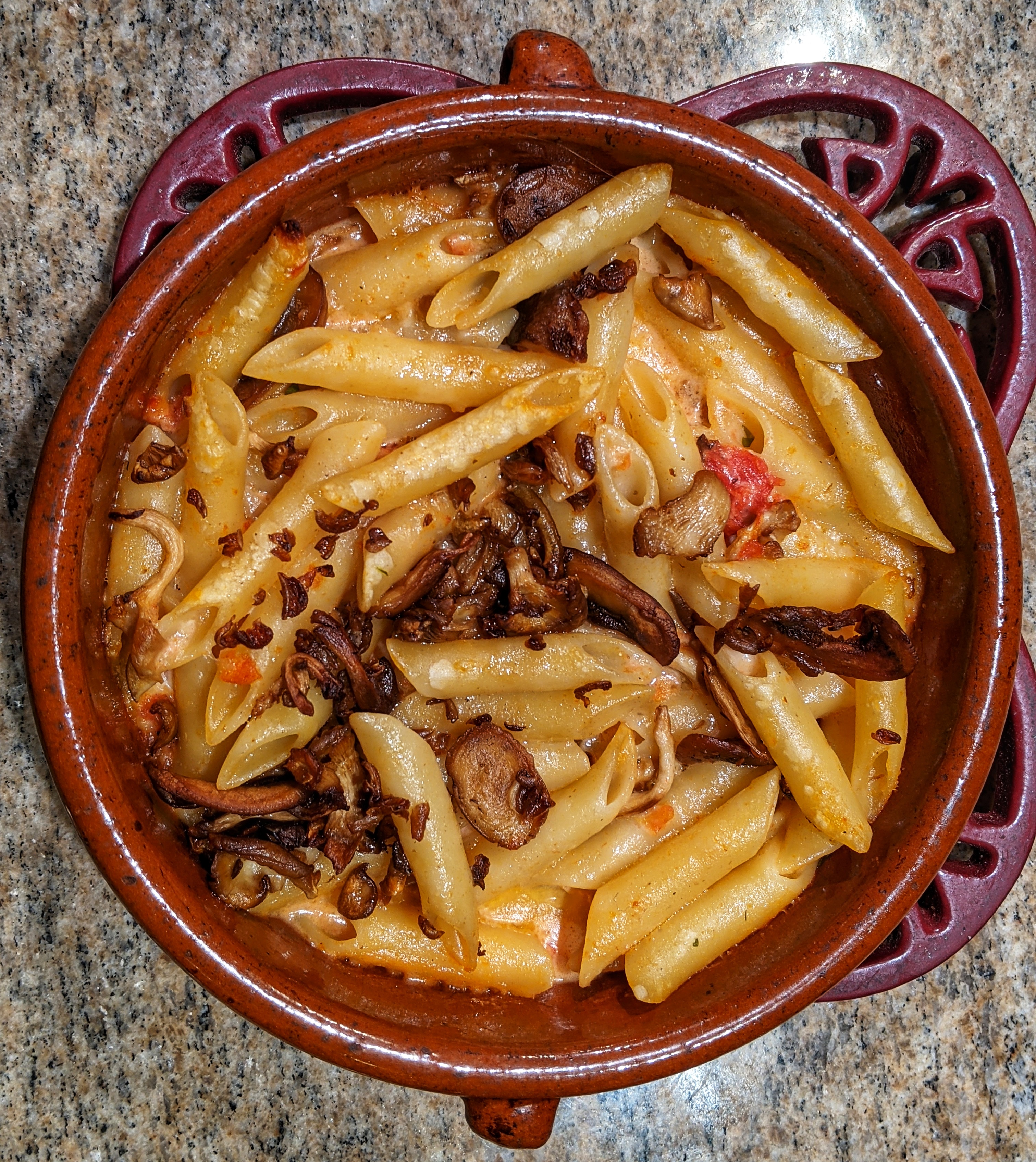
Mushroom RisottoBaked Penne with Mushrooms, Breadcrumbs, and PecorinoPan-Seared Scallops, Green Beans, Spinach with RiceMy Tartine-Style Sourdough Country Loaf
Another excuse for my lack of new posts is the recent weather pattern with plenty of February snow, which requires running the tractor/snow-thrower up and down the driveway, so we can get out, and UPS, FedEx, and Amazon can come in to deliver.
Once in awhile members of a small resident herd of deer will show up to further distract me.
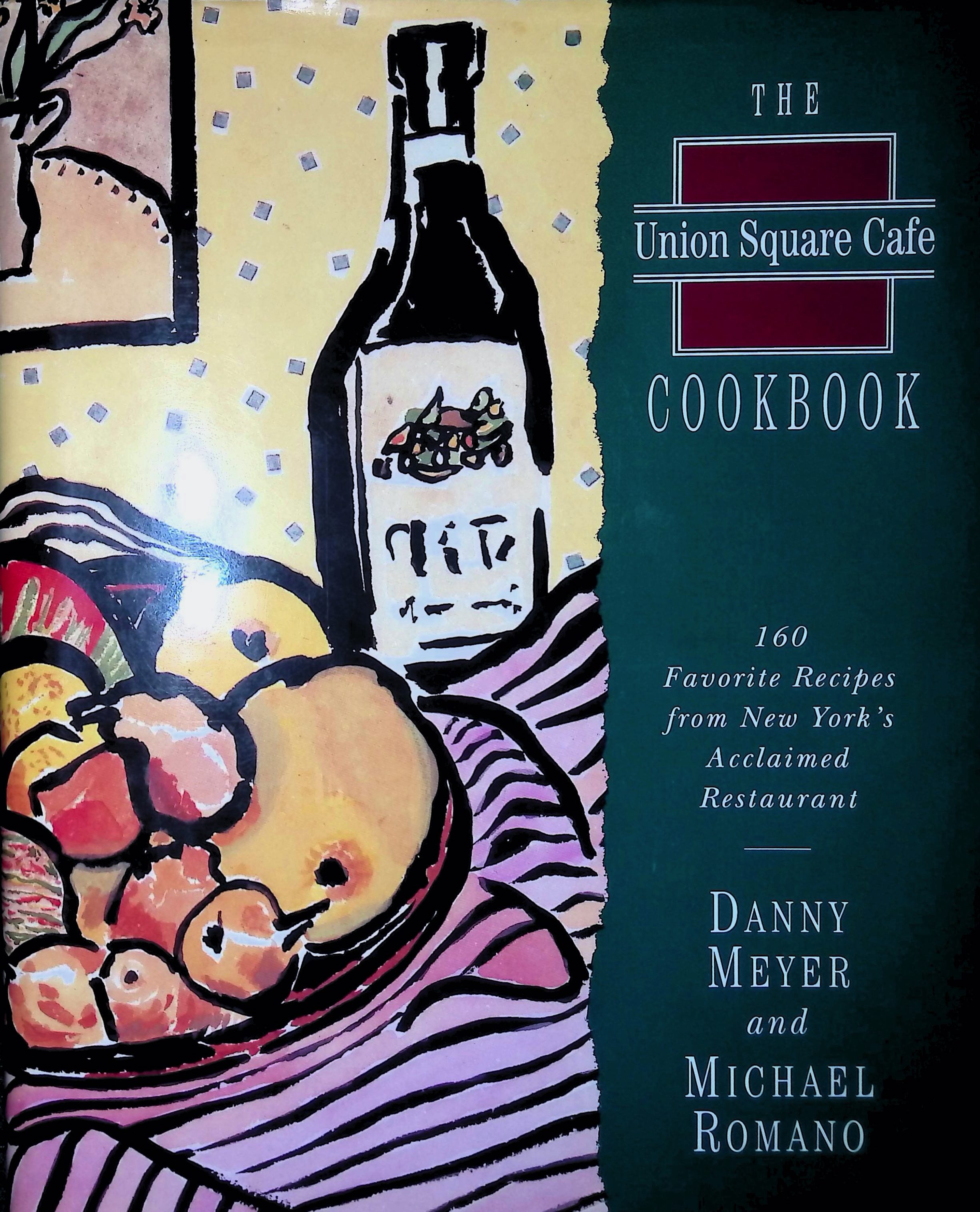
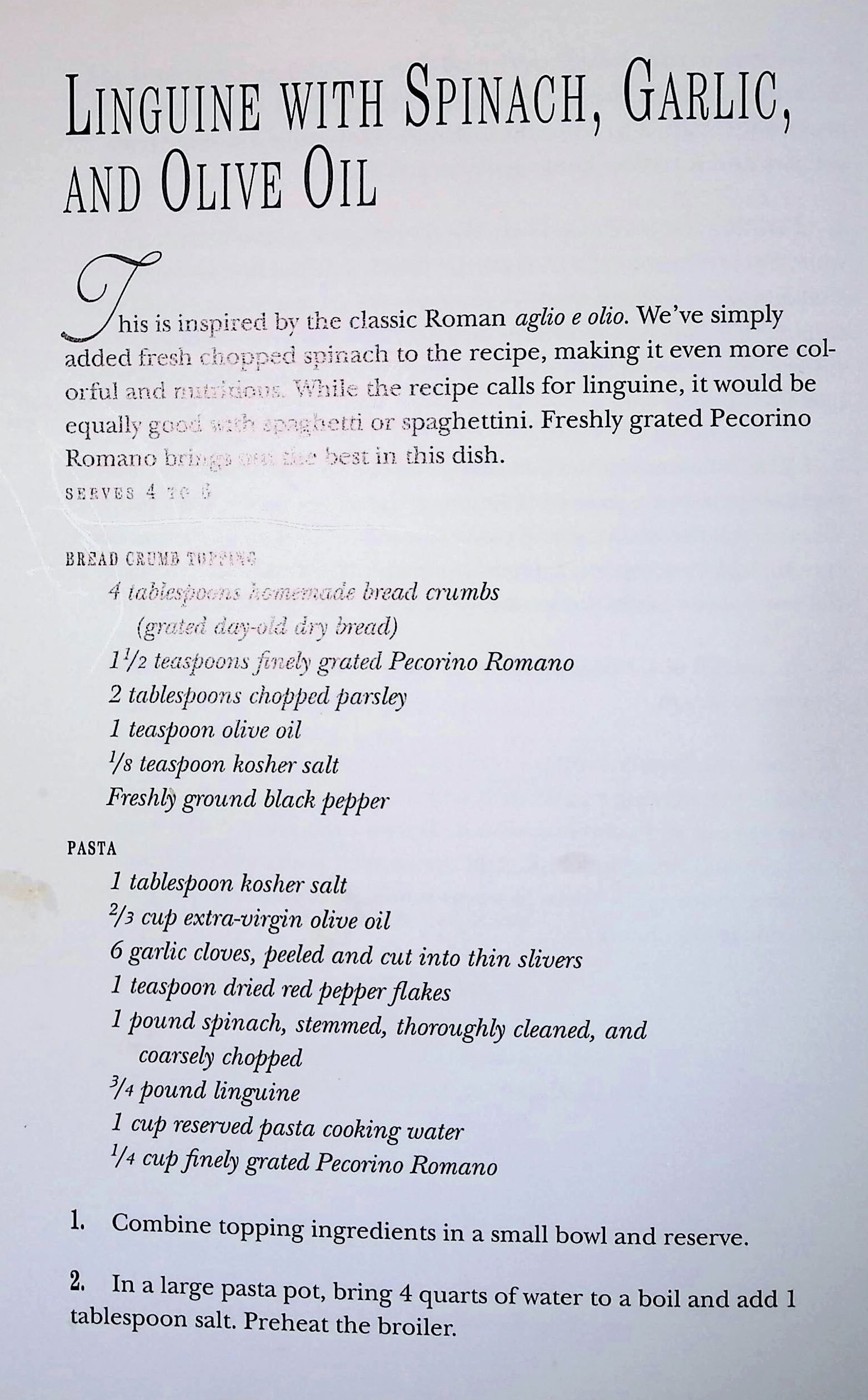
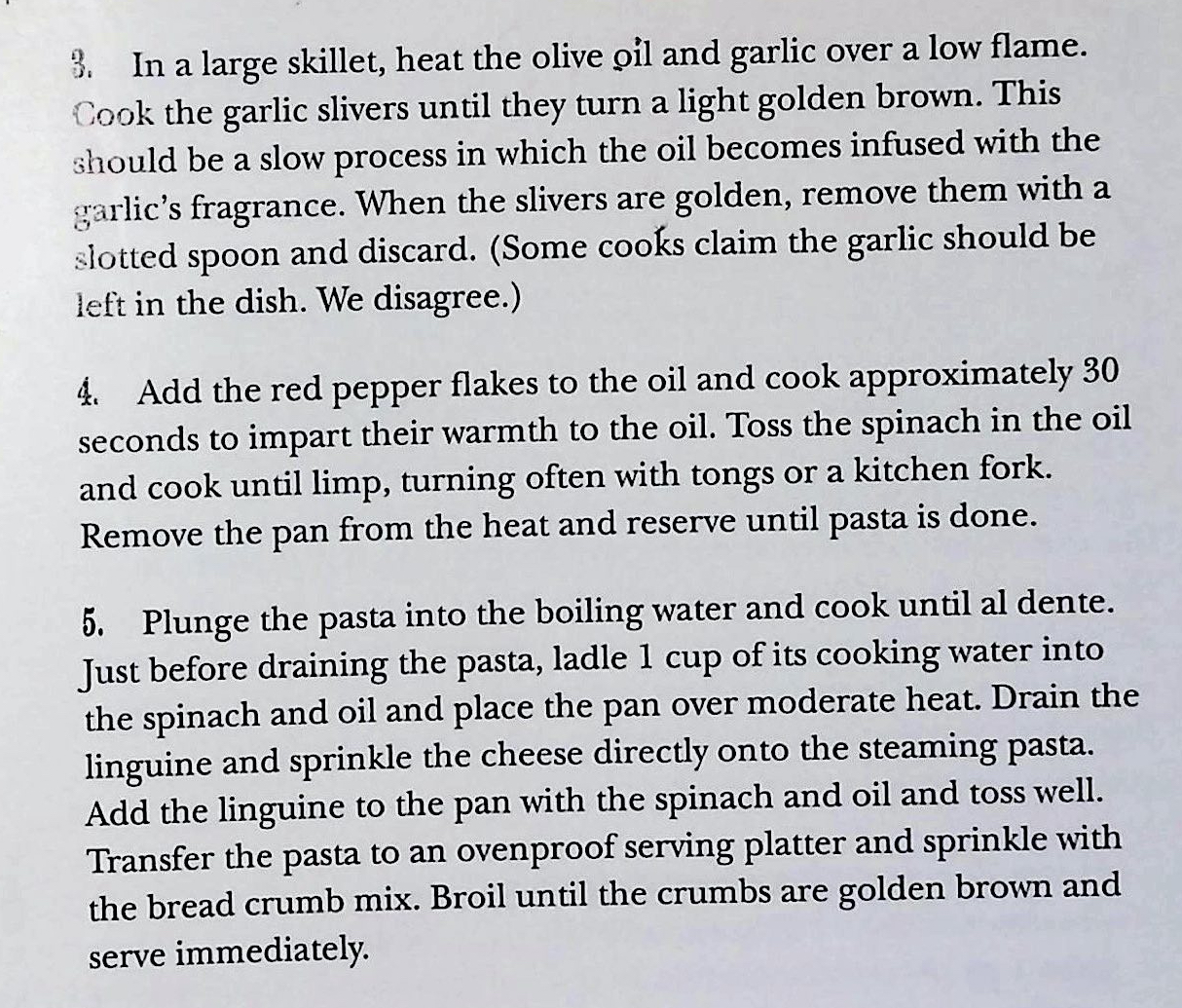
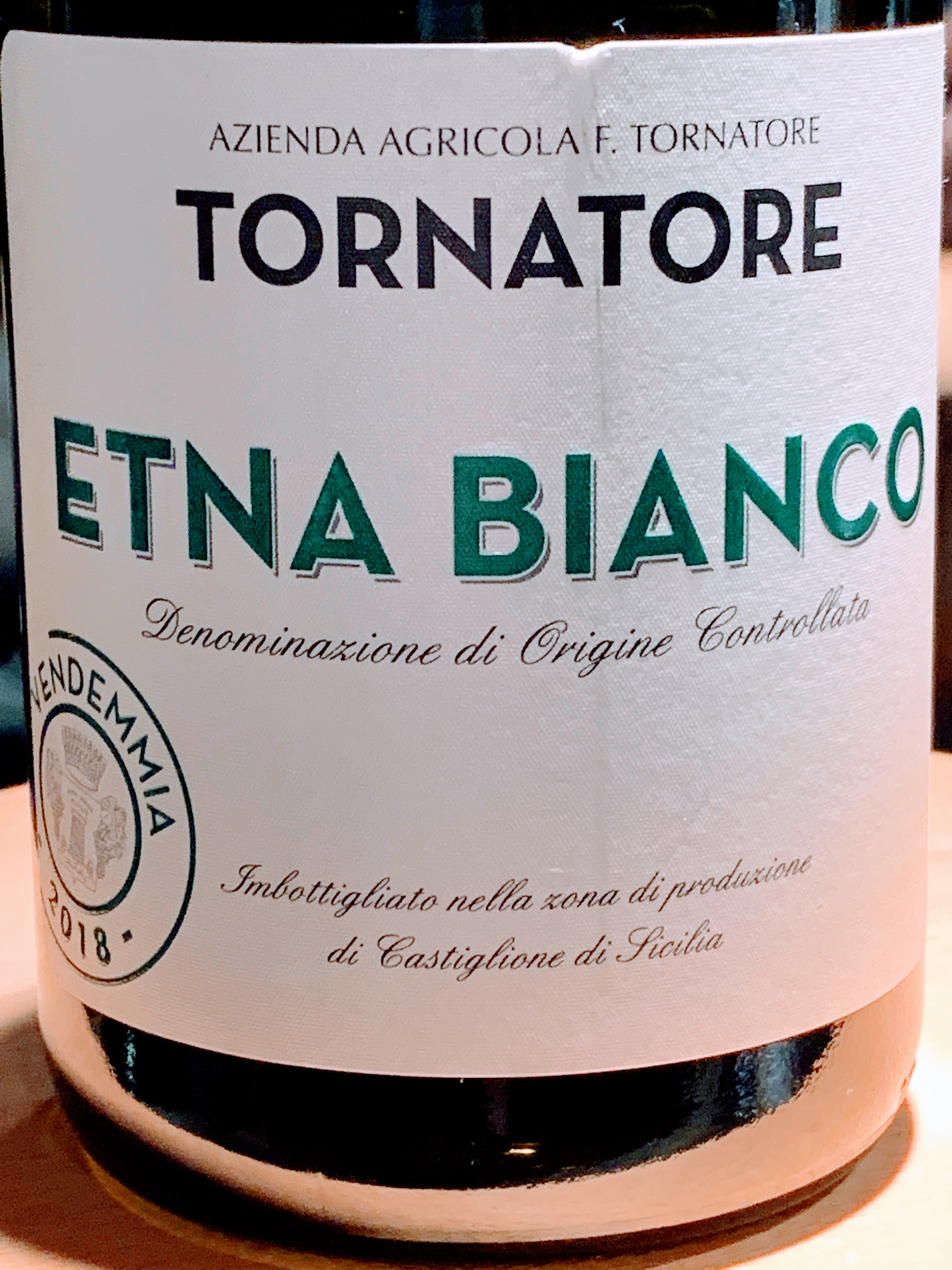
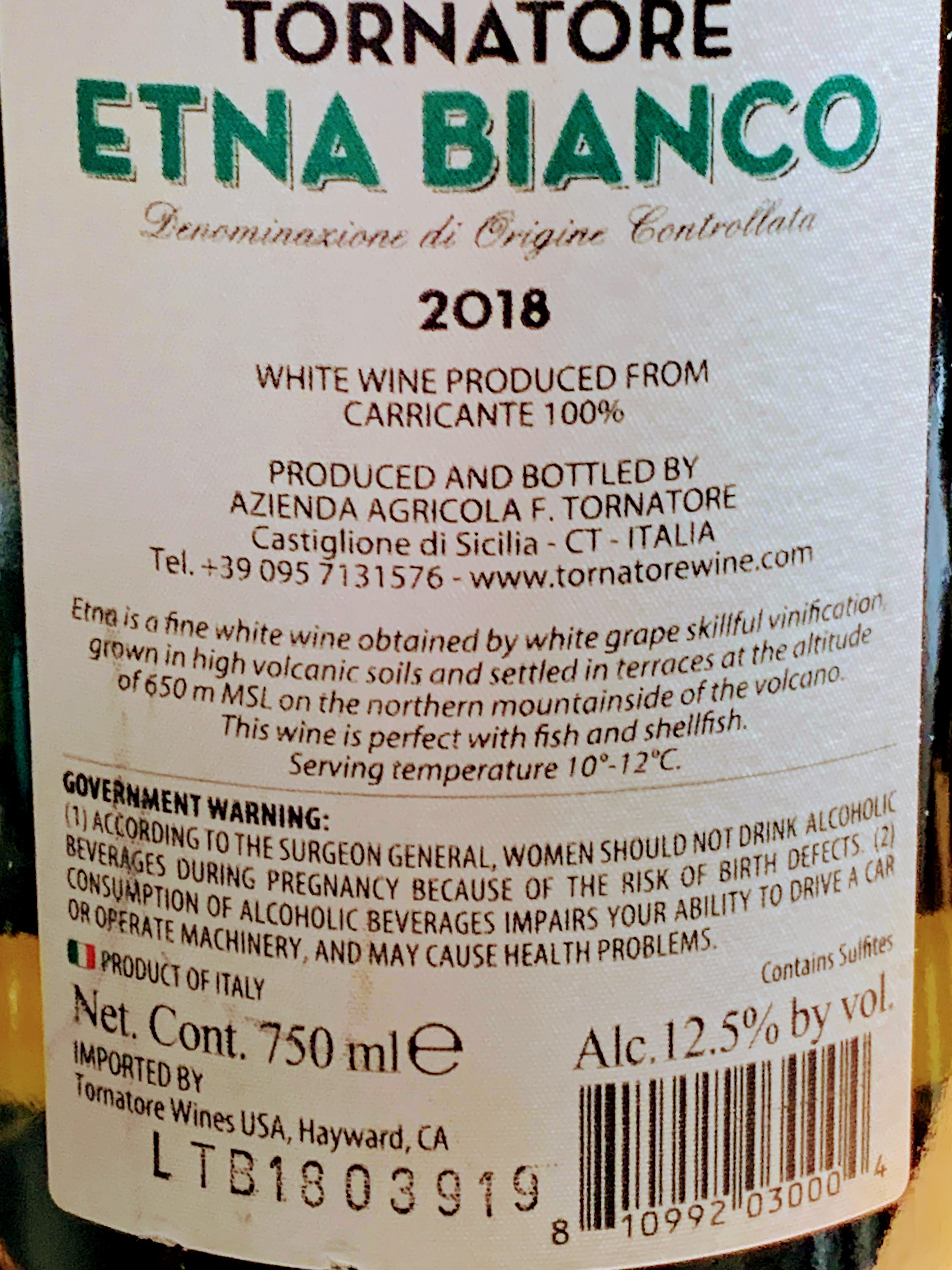
However, last night I turned to a long-neglected friend, The Union Square Cafe Cookbook. I had some spinach that had to be washed and used last night, and I was intrigued with their recipe, Linguine, Spinach, Garlic, and Olive Oil. The results were delightful. Here is the recipe, the dish and accompanying white wine from Sicily. The way they incorporated Pecorino, and then — at the end — broiled breadcrumbs, made this recipe particularly delicious.
recipe page 1Recipe page 2Linguine, Spinach, Garlic, and Olive Oil
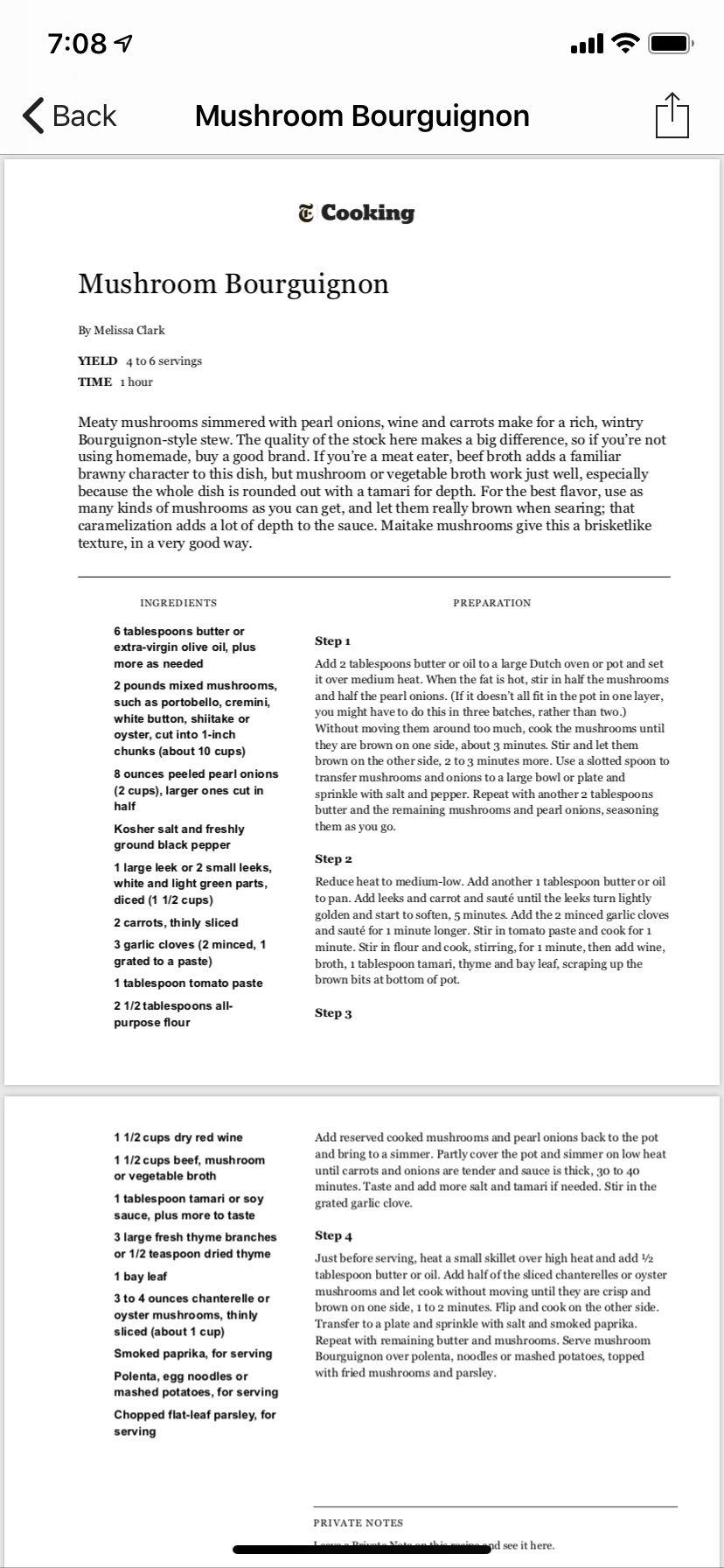
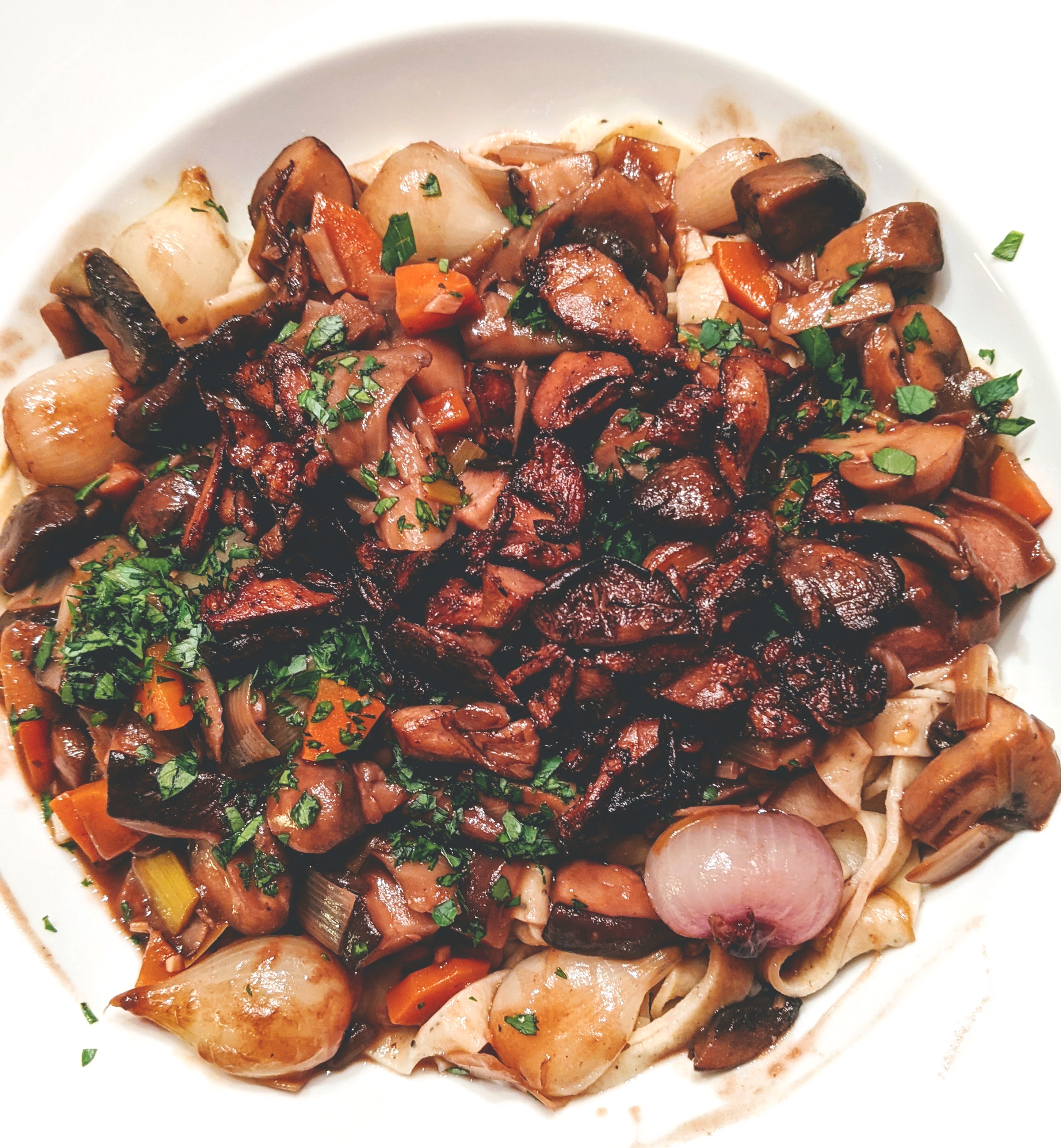
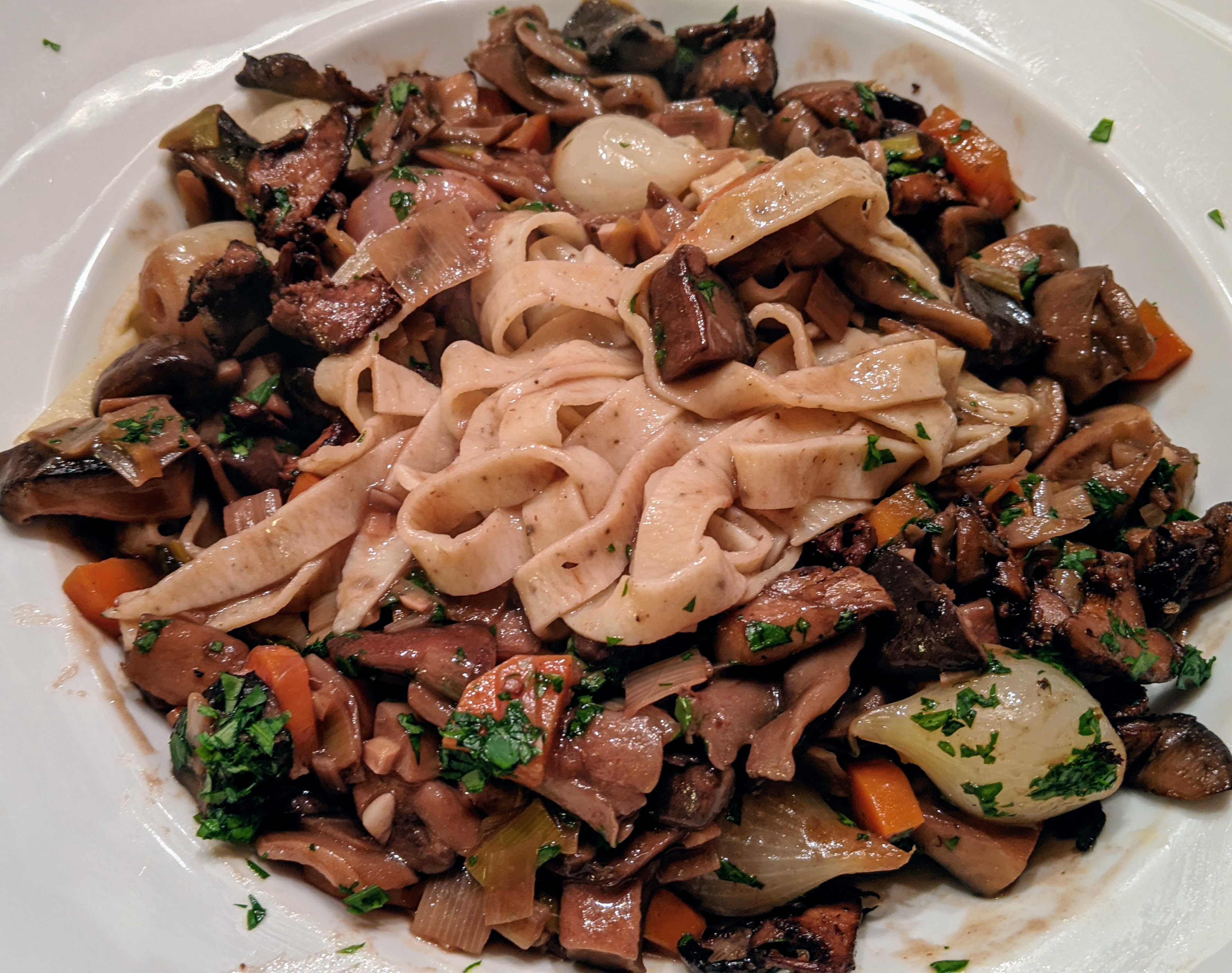
A few days ago, after re-subscribing to the New York Times Cooking Section, I saw an attractive recipe for Mushroom Bourguignon by Melissa Clark. If you’ve read this blog over time, you may have noticed that three of my favorite things are wild mushrooms, pasta, and Burgundy wine. This recipe was a brilliant opportunity to enjoy all three together, so last night I made the dish, and I served it on freshly-homemade Black Pepper Fettuccine.
Recipe
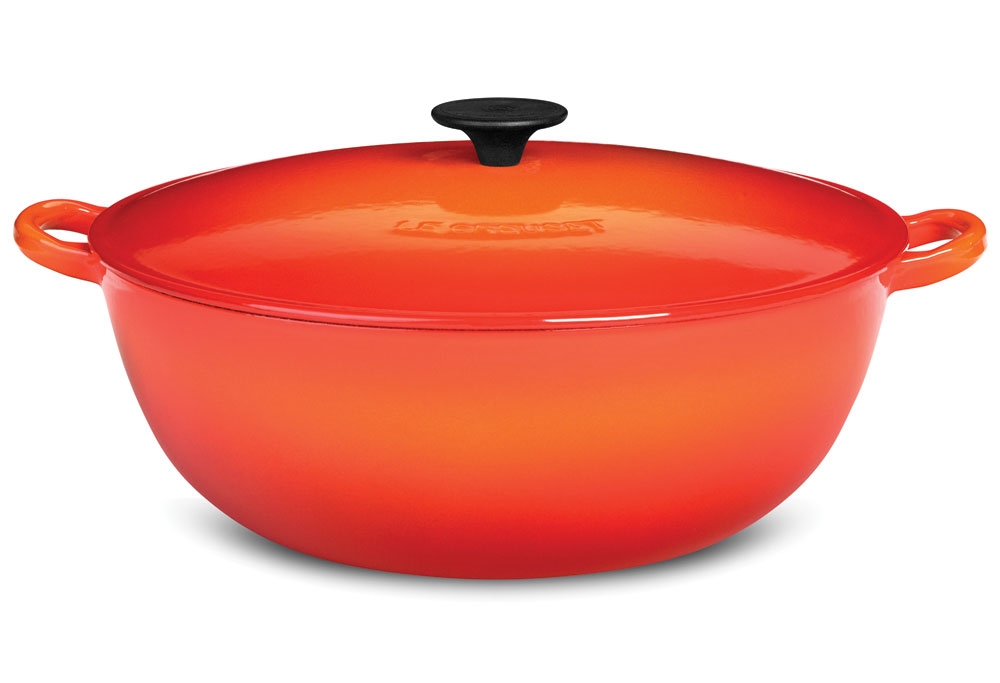
The meal was fabulous. I can add just a few notes here. The recipe was easy to follow. A fringe benefit was learning how to peel those pesky Pearl Onions with ease. I used two large pots to brown all the mushrooms and onions at the same time. One was my large Bourgeat sautéuse, and the other was the Le Creuset Bouillabaisse enameled cast iron pot. They both worked well, but — to my surprise — the Le Creuset did it better. It’s a monster pot — 7.25 qt. capacity and it weighs 8.5 lbs. without the lid, 14 lbs. with it.
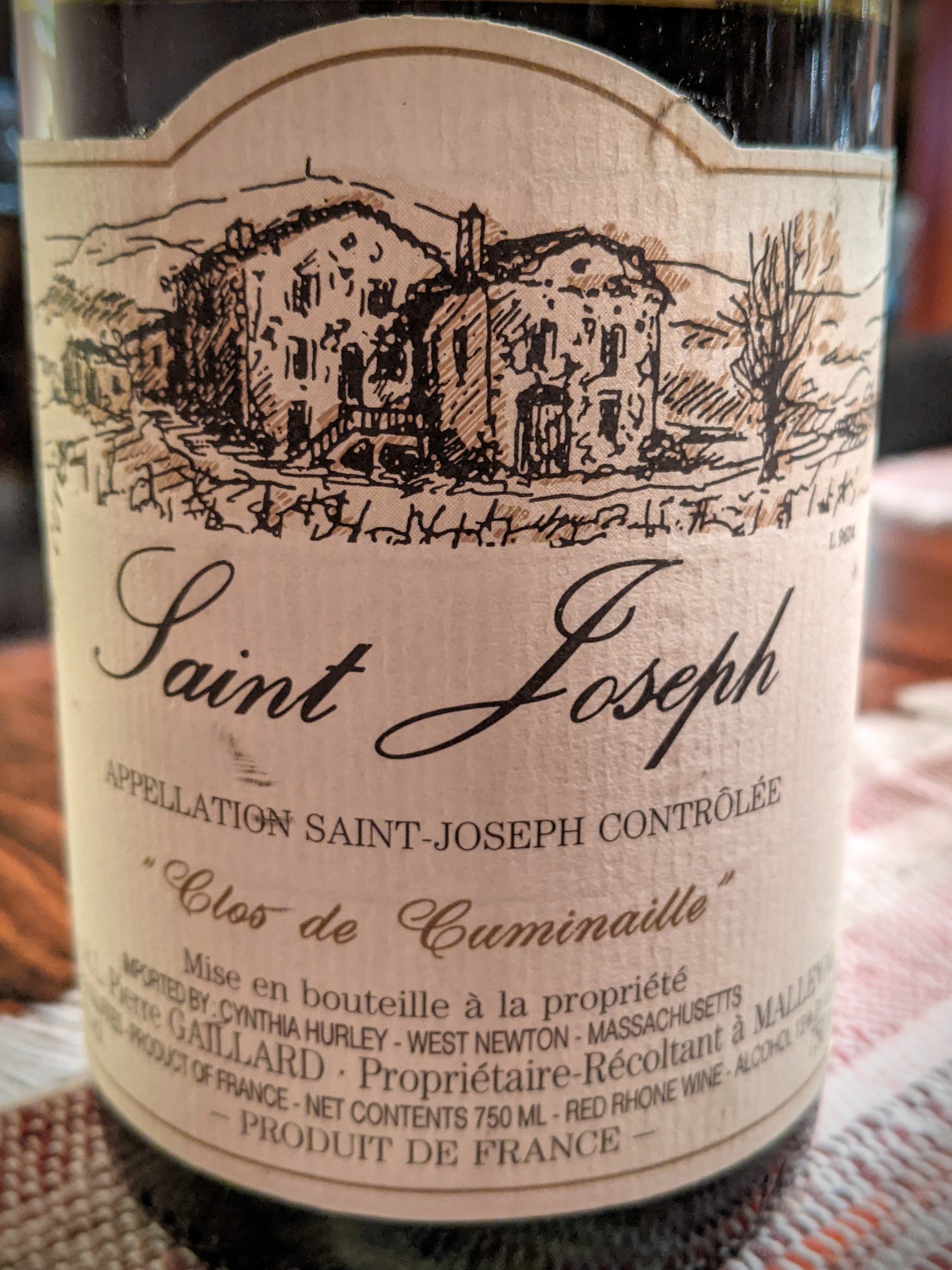
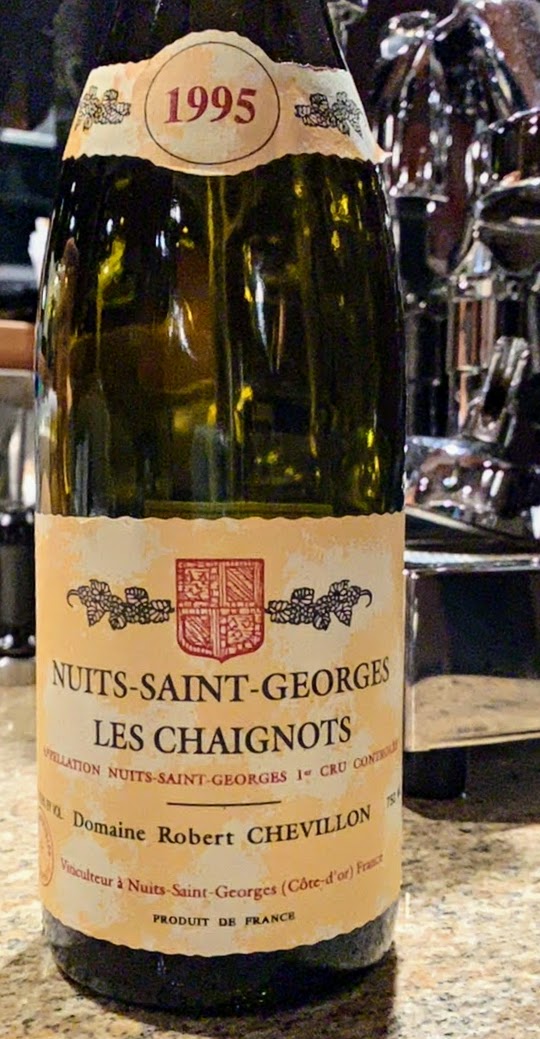
Then, of course, were the wines. Oh, the wines…. I pulled out of the cellar a 1995 Nuits-St.-Georges by Robert Chevillon, to be used as the wine for braising the mushrooms. Authentic and extremely good. Even better, was the 1994 St. Joseph, by Pierre Gaillard, pictured above. I believe I bought this over 20 years ago from Cynthia and Bob Hurley, the importers and superb French wine aficionados.
The pasta was simple. Plenty of crushed black pepper, mixed with 104 g. of ’00’ Italian flour, 1 extra large egg, and 1 Tbs. of top quality extra virgin olive oil. Spun in the small Cuisinart until it forms the dough, it was kneaded, rolled out, and cut into noodles in about 25 minutes. It made just enough for the two of us, with nothing leftover.
Credits to those who helped make this so good:
Melissa Clark, Cynthia Hurley, Pierre Gaillard, Idylwilde Farms (mushroom selection)
I don’t eat a lot of salads, but last week I had four different (and quite delicious) ones. It started late in the week, when I was cleaning out a closet holding my dried beans stash, along with packs of Polaroid film that went out-of-date 20 years ago. (It’s an eclectic collection.)
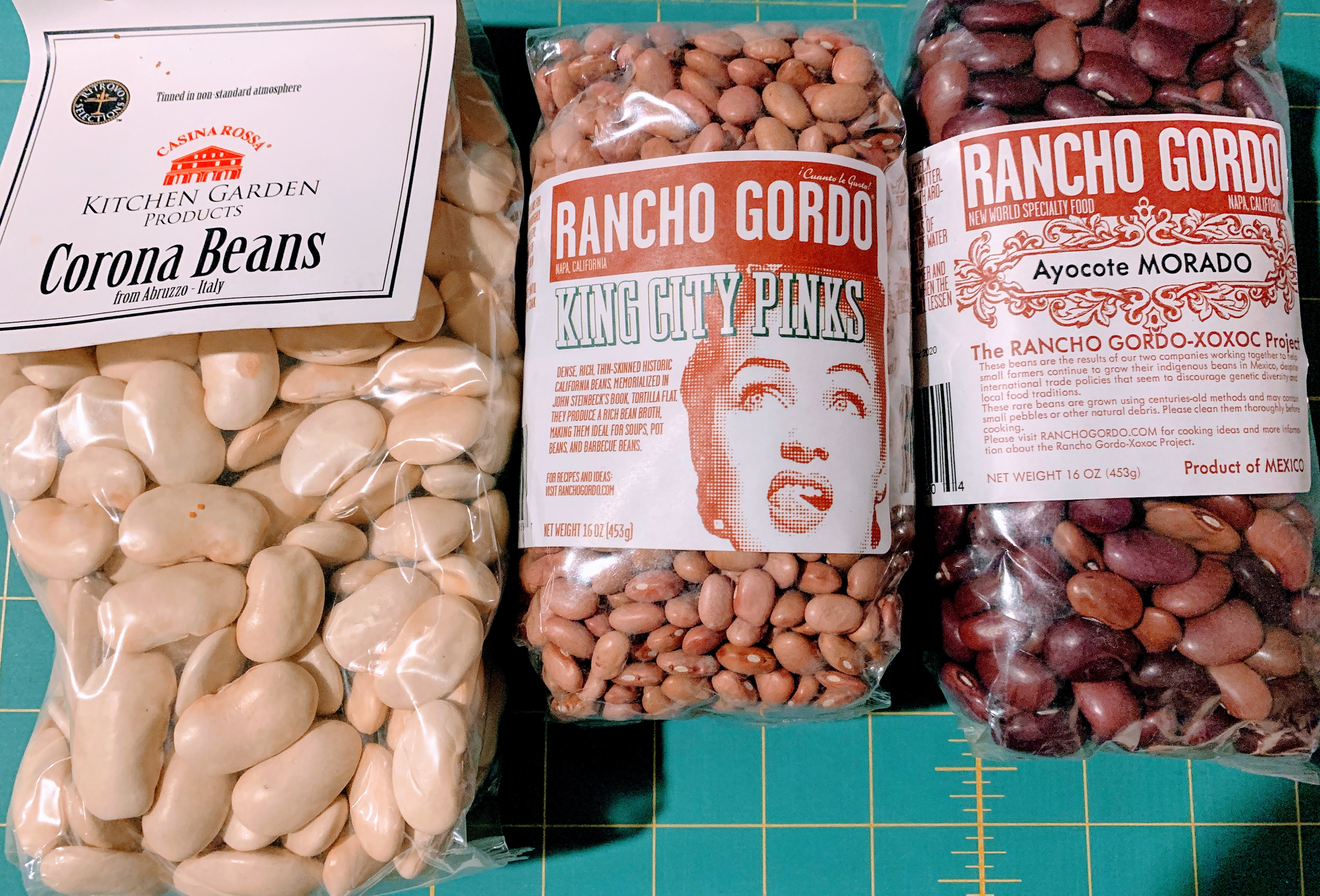
I try to keep my beans fresher than THAT, but sometimes they get away from me. While I was reviewing what was on the shelves, I came across three 1 lb. packages of dried Italian Royal Corona beans. I figured I should cook one of them, so I went through the usual ritual:
soak beans overnight in cold water with some Kosher salt
cook beans the next day in a bean pot, with a small onion and bay leaf
when beans are tender, let them cool in their broth
save the beans and broth in separate containers
use beans as desired
Here are some of the beans selected:
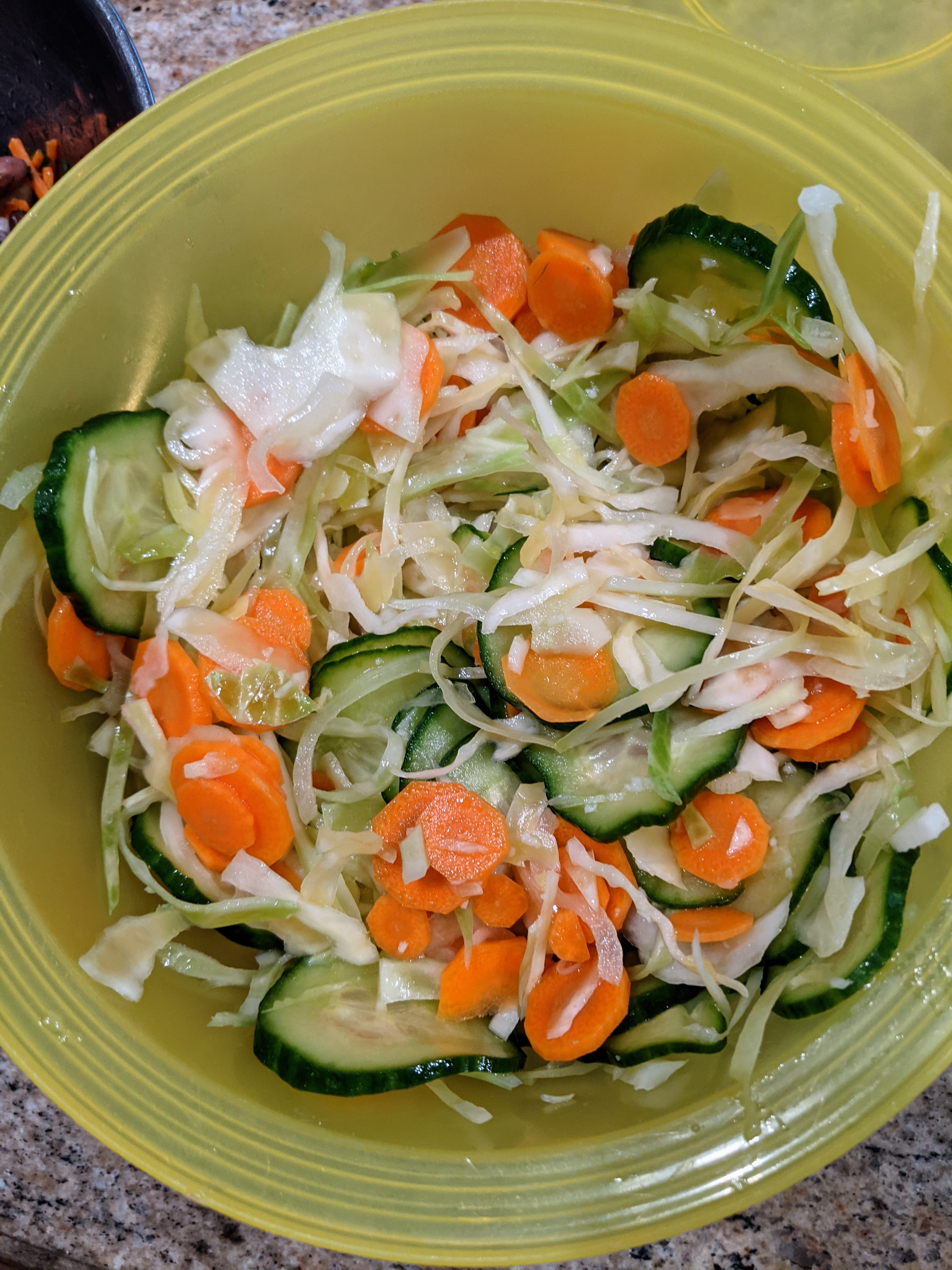
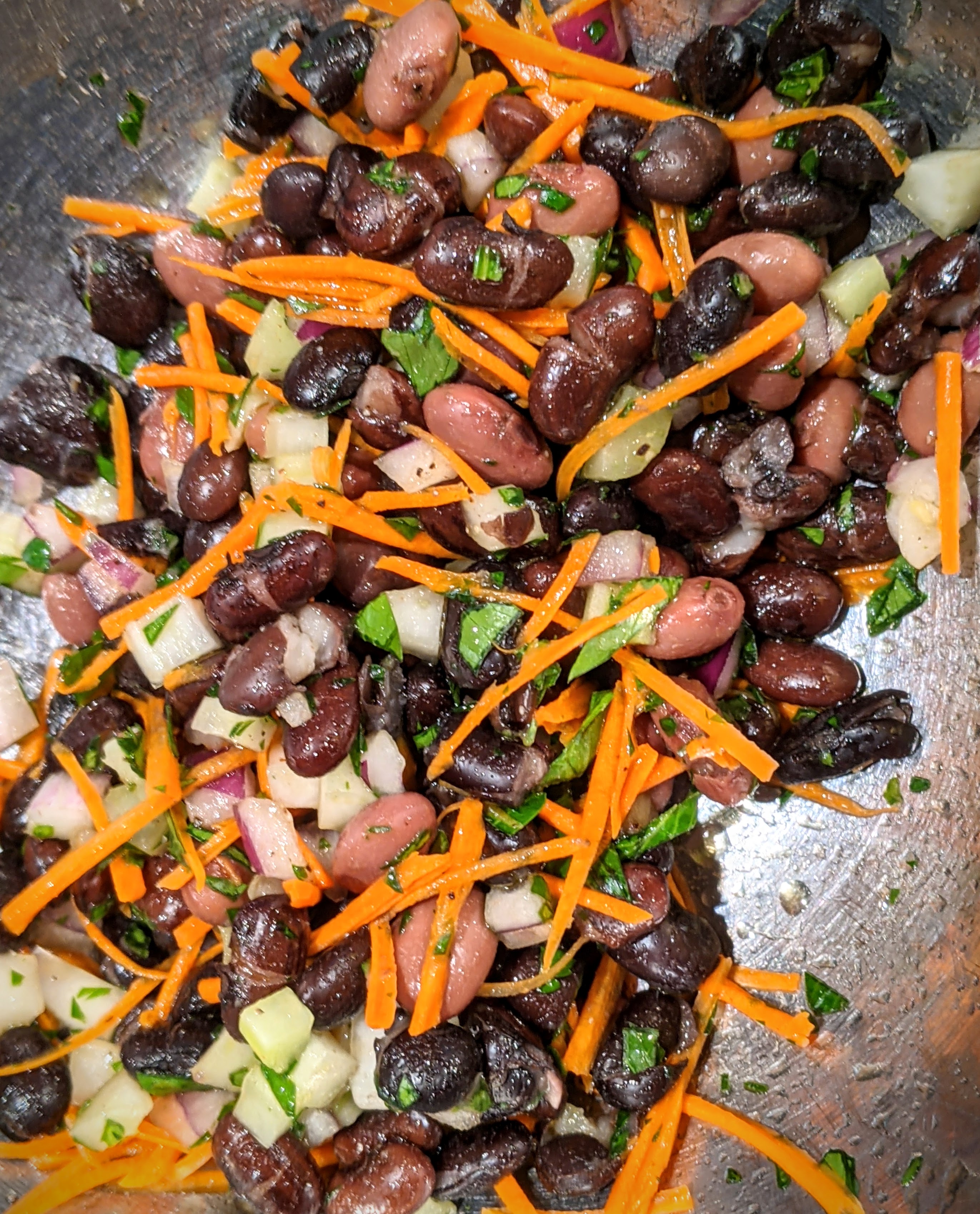
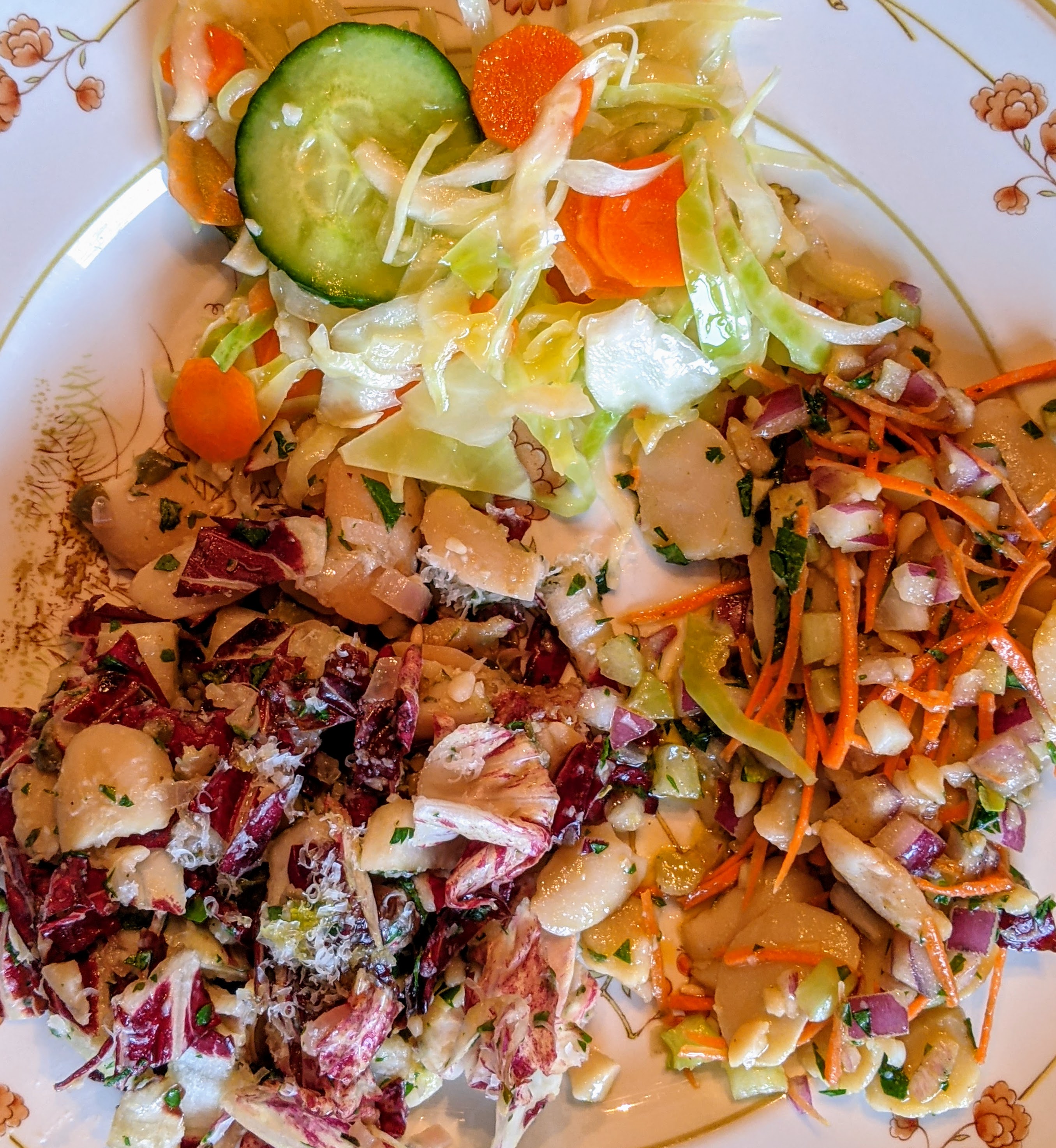
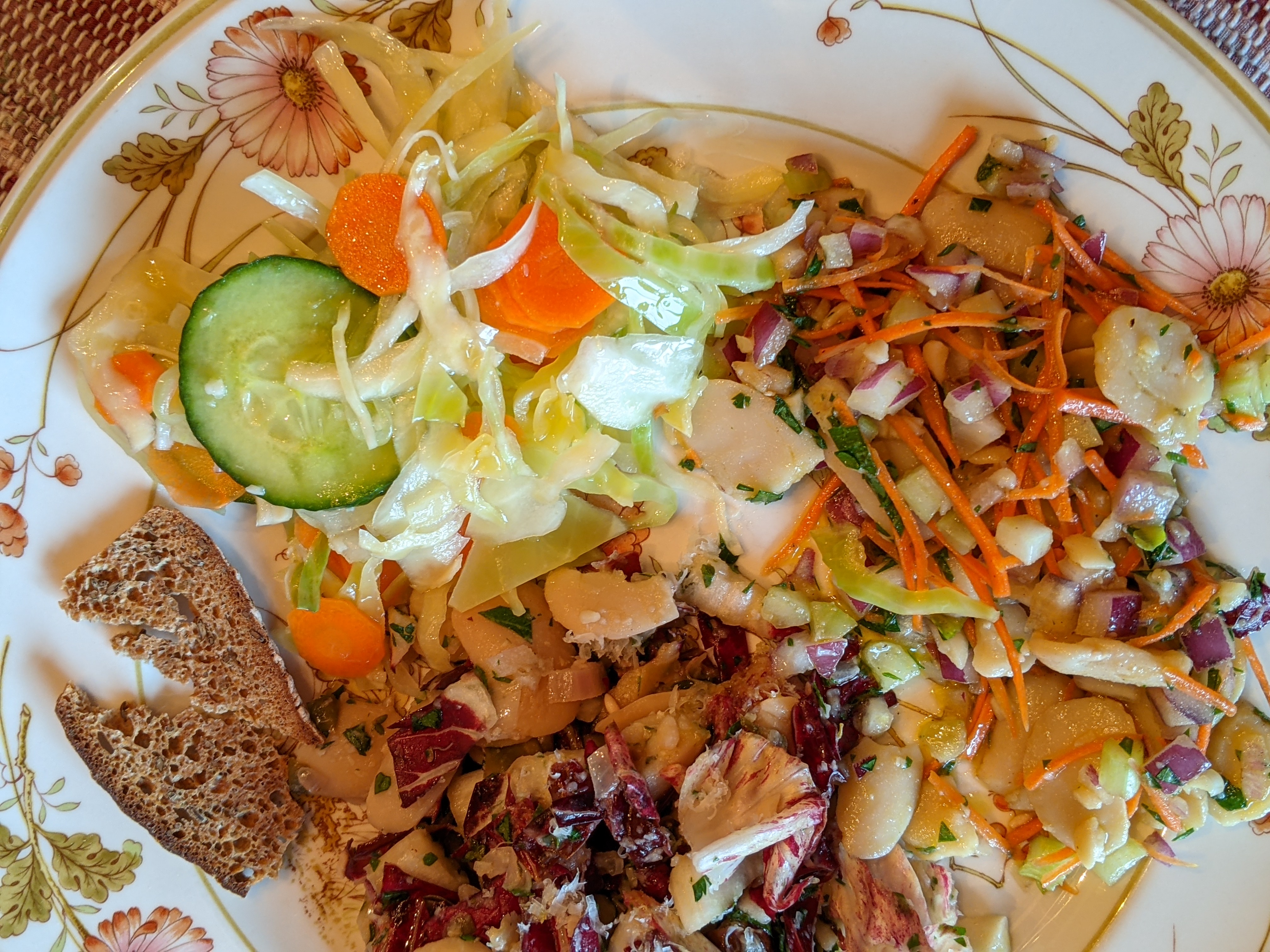
The following day I decided to make some bean salads — two salads with Corona beans, and since Barbara prefers other beans, I made one for her with black beans plus an heirloom Rancho Gordo beans from Mexico. Since this appeared to be salad day, I discovered that she had made a salad, too. This was the famous Claremont Salad, a signature dish in the high-end Claremont Diner in Verona, NJ, in the 1950’s. Her version consisted of cucumber, cabbage, carrots, and onion, pickled in a slightly-sweet vinegar dressing. (She eschews pepper, and forgot the celery vs. the original recipe.)
Barbara’s Claremont Salad
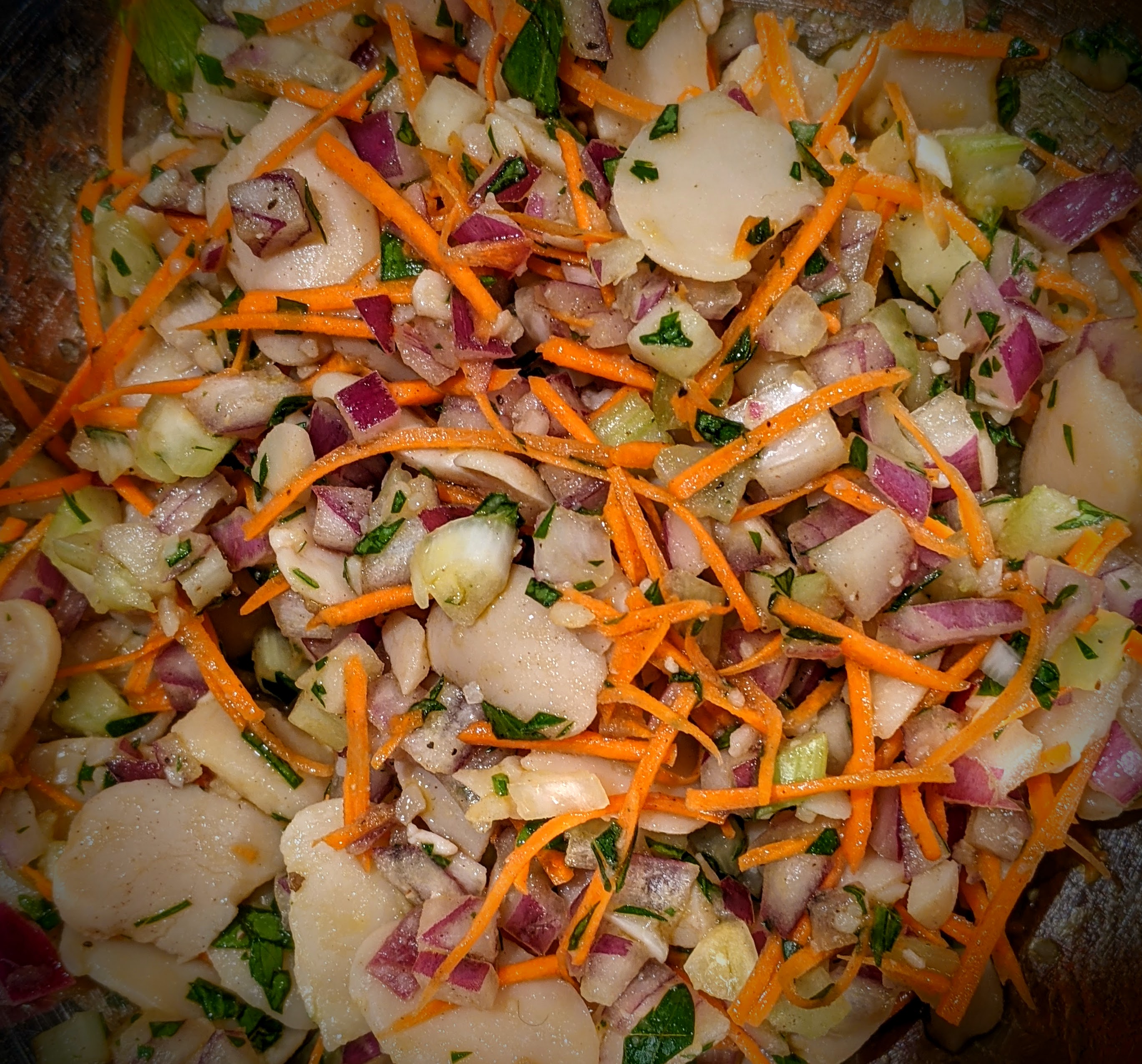
Salad: Black Bean, King City Pinks, and Ayocote Morado with onions, celery, carrot, and parsley
Salad: Royal Corona beans, with onion, celery, daikon radish, oil and vinegar
Salad: Corona beans, with chopped radicchio Treviso, radicchio Castelfranco, grated Calabrian Pecorino, and plenty of top quality olive oil and red wine vinegar
Calabrian Pecorino from Eataly Boston
When we were all done, here is what three of the four salads looked like in my lunch plate.
This has been a good month for cooking, and it’s my last chance this year to post, so here are the food and wine highlights. Of course, with this title, I am showing my age. I imagine any reader under the age of 60 has not encountered the term, so here is the explanation of where the word “doozy” originated.
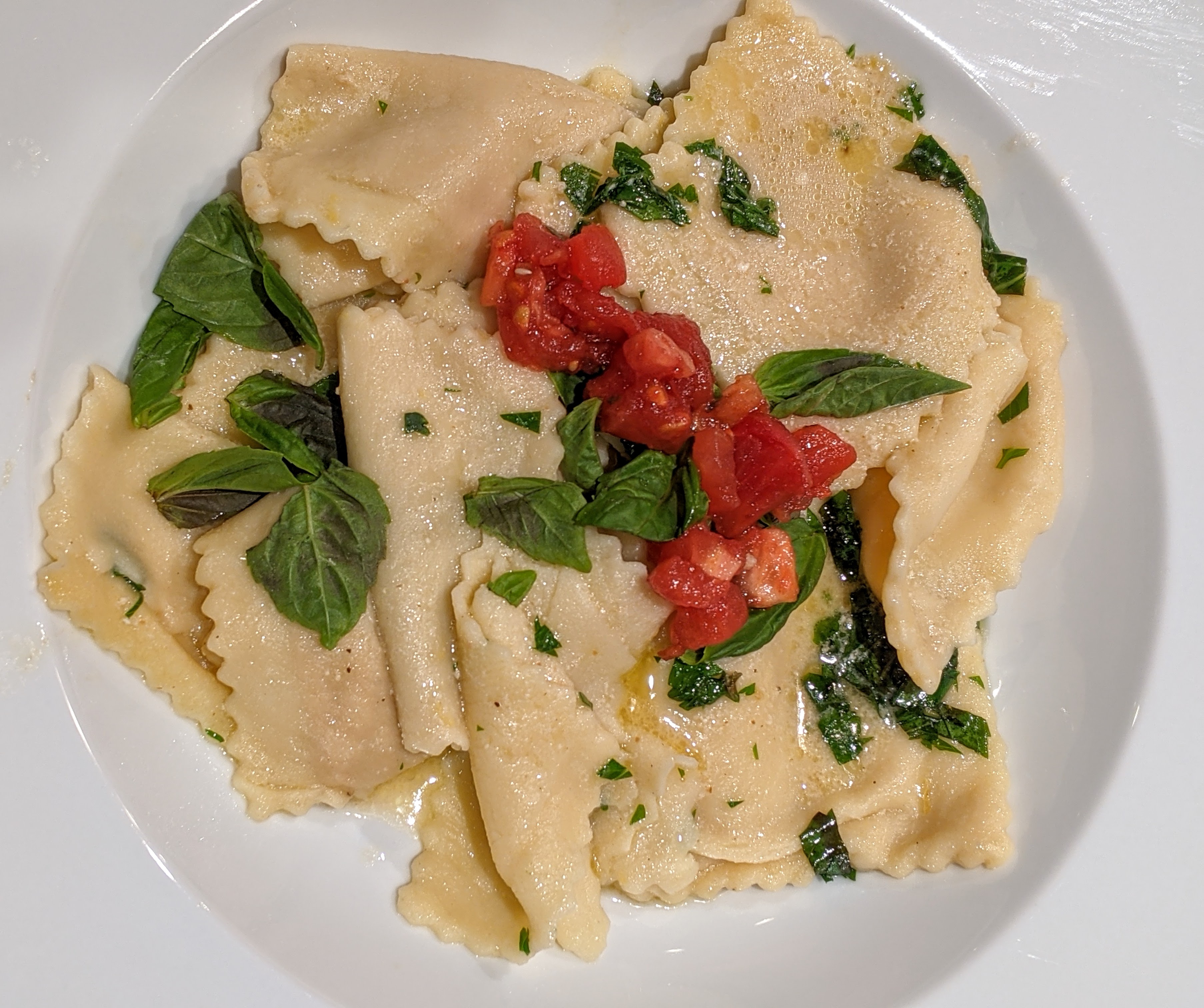
In reverse chronological order (in keeping with blog sequence), I will start with tonight’s New Year’s Eve dinner, a quiet, homemade affair for the two of us. It featured a simple ravioli recipe, produced with the help of a ravioli rolling pin, designed and made by a great craftsman and entrepreneur (Mike Finizio), who also happens to be a former student of mine in the graduate program at Tufts Gordon Institute.
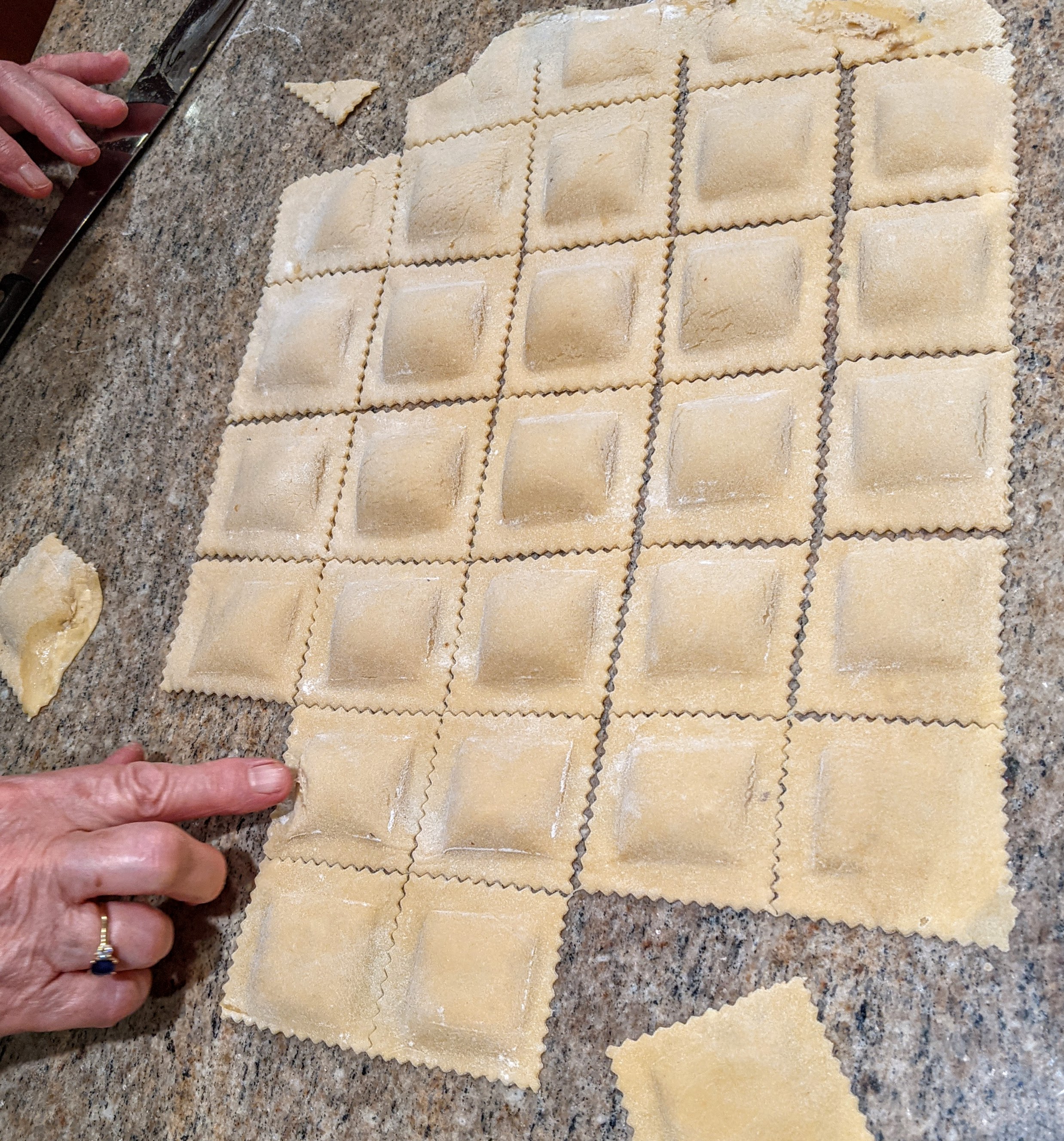
Barbara and I decided on a filling for the ravioli, made with Kite Hill Almond Milk Ricotta and an Israeli Feta cheese from Trader Joe’s, enhanced with dried porcini powder and lemon zest. I made a two-egg pasta, and we followed the method from Mike’s video.
Hand-rolled sheets of pasta converted to cheese ravioli
A simple butter and olive oil sauce with basil and parsley was sufficient, although I embellished mine with chopped, peeled, seeded plum tomato with a touch of balsamic vinegar.
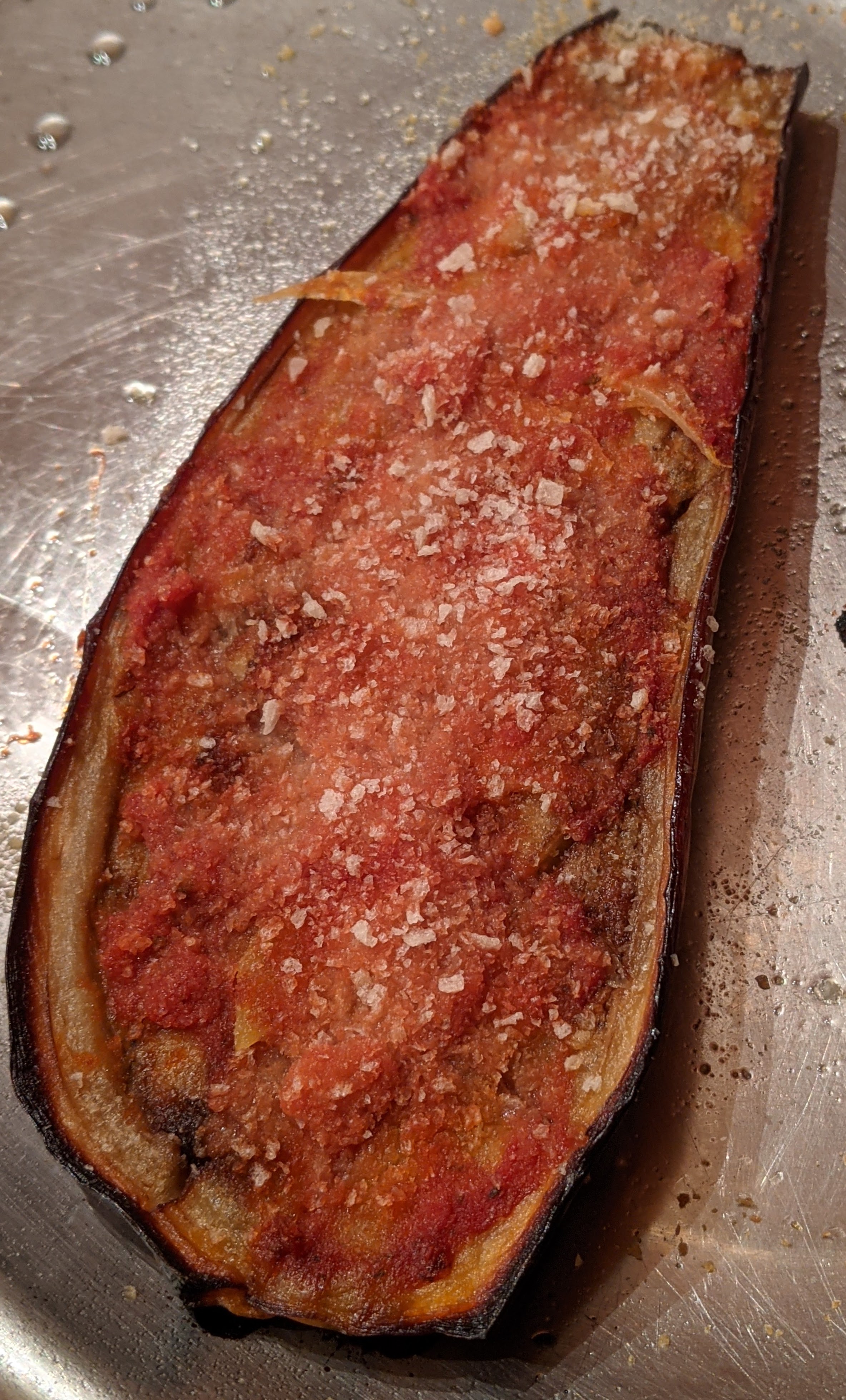
Less attractive, but equally tasty was the vegetable course — Baked graffiti eggplant halves, topped with garlic slices, tomato sauce and bread crumbs.
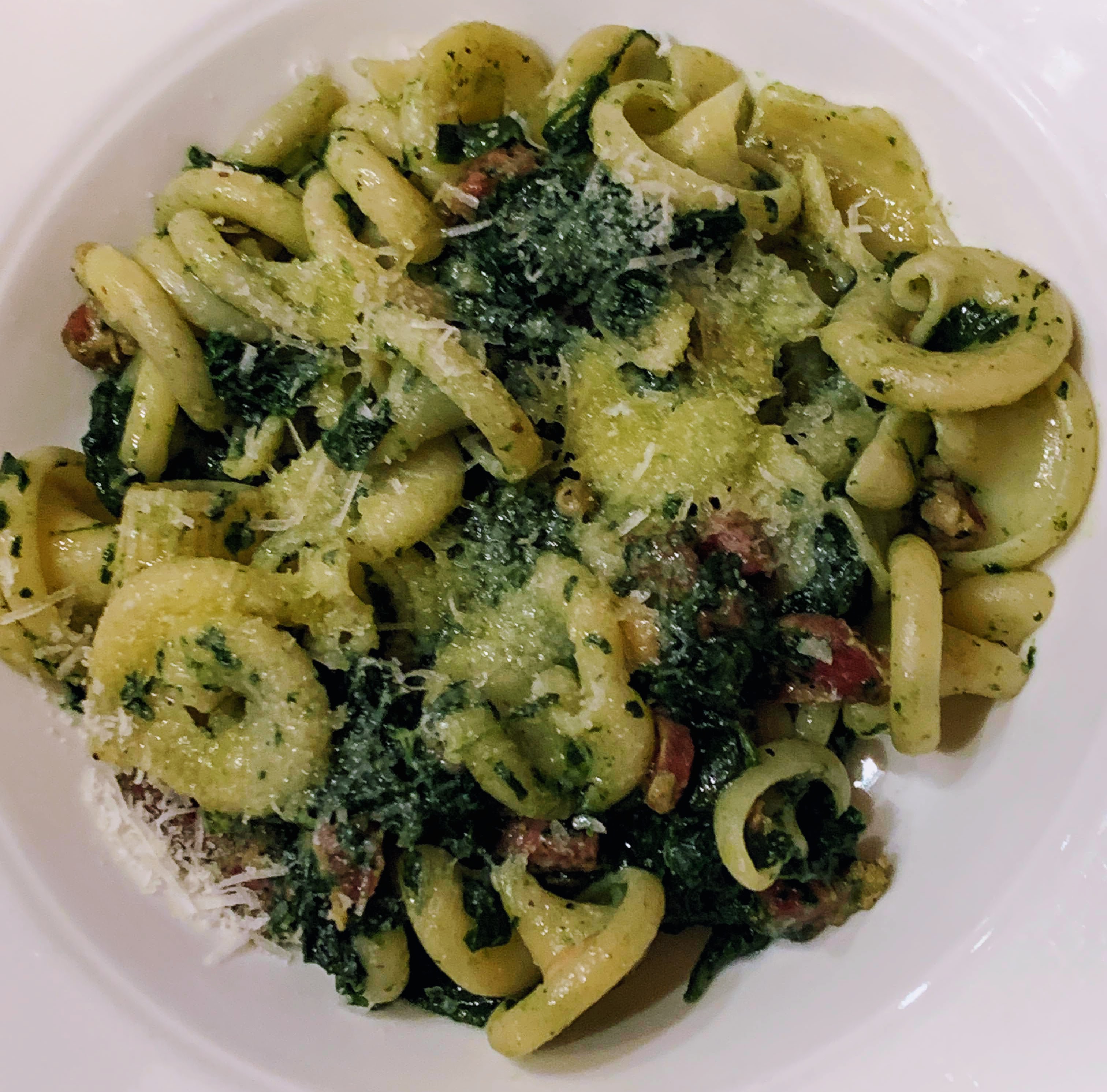
Mixed Short Pasta with Cavolo Nero
In case you hadn’t noticed before, I adore pasta. Never more than twice a day, though. We all have our limits.
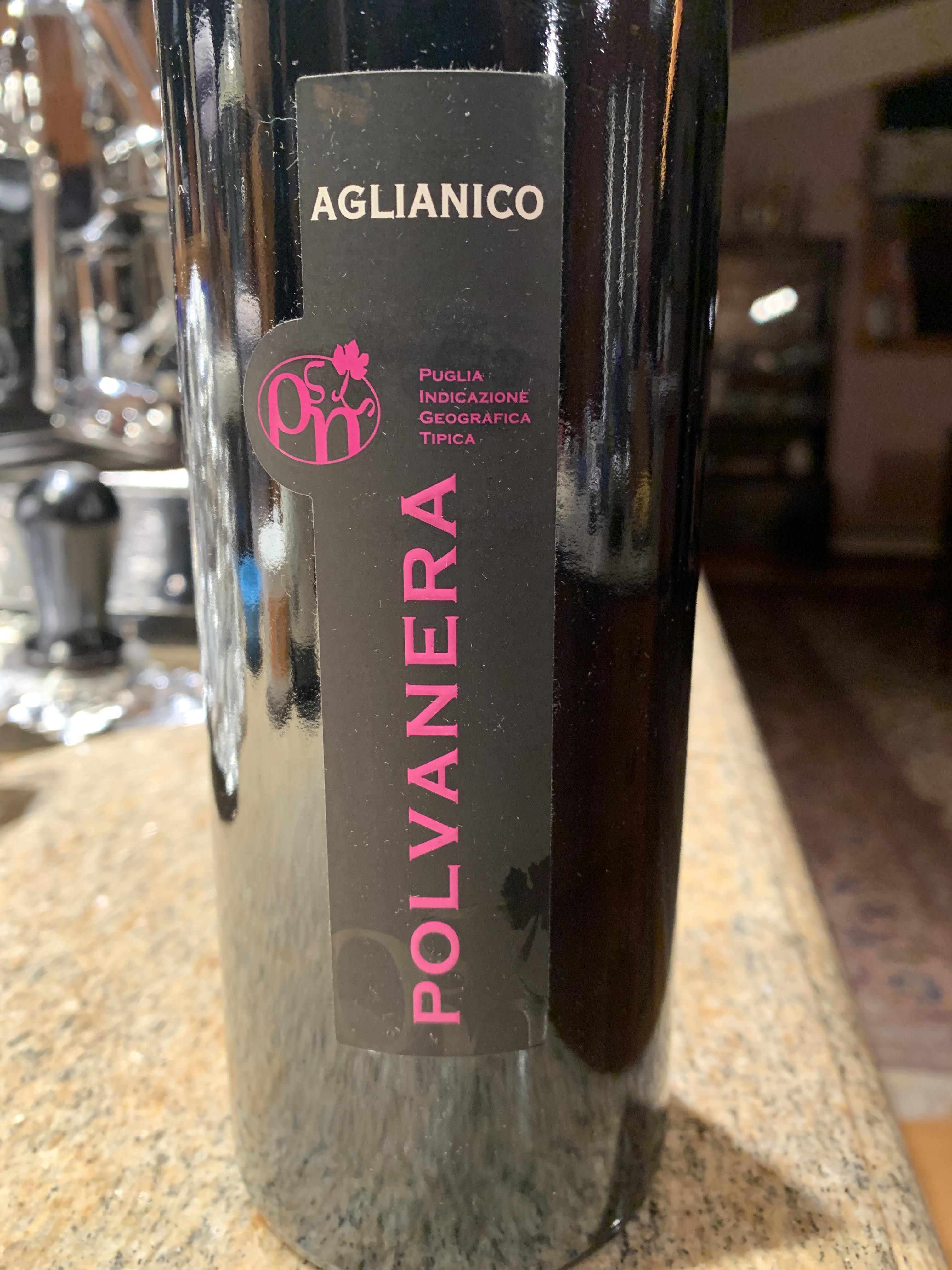
This meal was made from two different shapes of short pasta, crisped-up bits of pancetta, and tender cavolo nero. It’s a pretty typical dish in Puglia, so my wine choice was Polvanera‘s Aglianico. It’s one of Jan D’Amore’s imports, and I had visited the winery with Aaron on our trip in 2012. Excellent match.
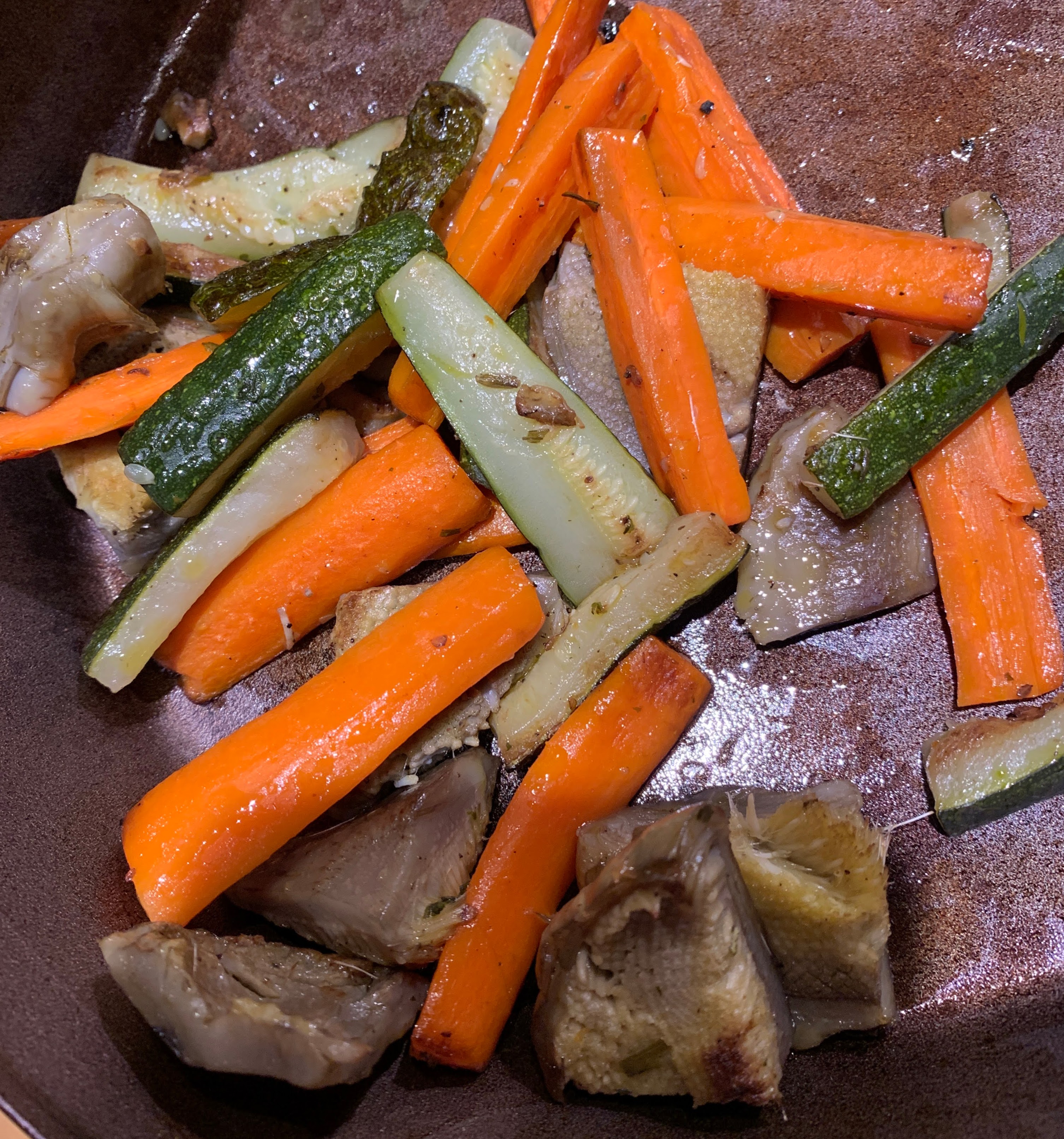
For more vegetables I blanched and then sautéed carrots, zucchini and artichoke, spruced up with herbes de Provence.
Black Pepper Pasta and Black Trumpet Mushrooms
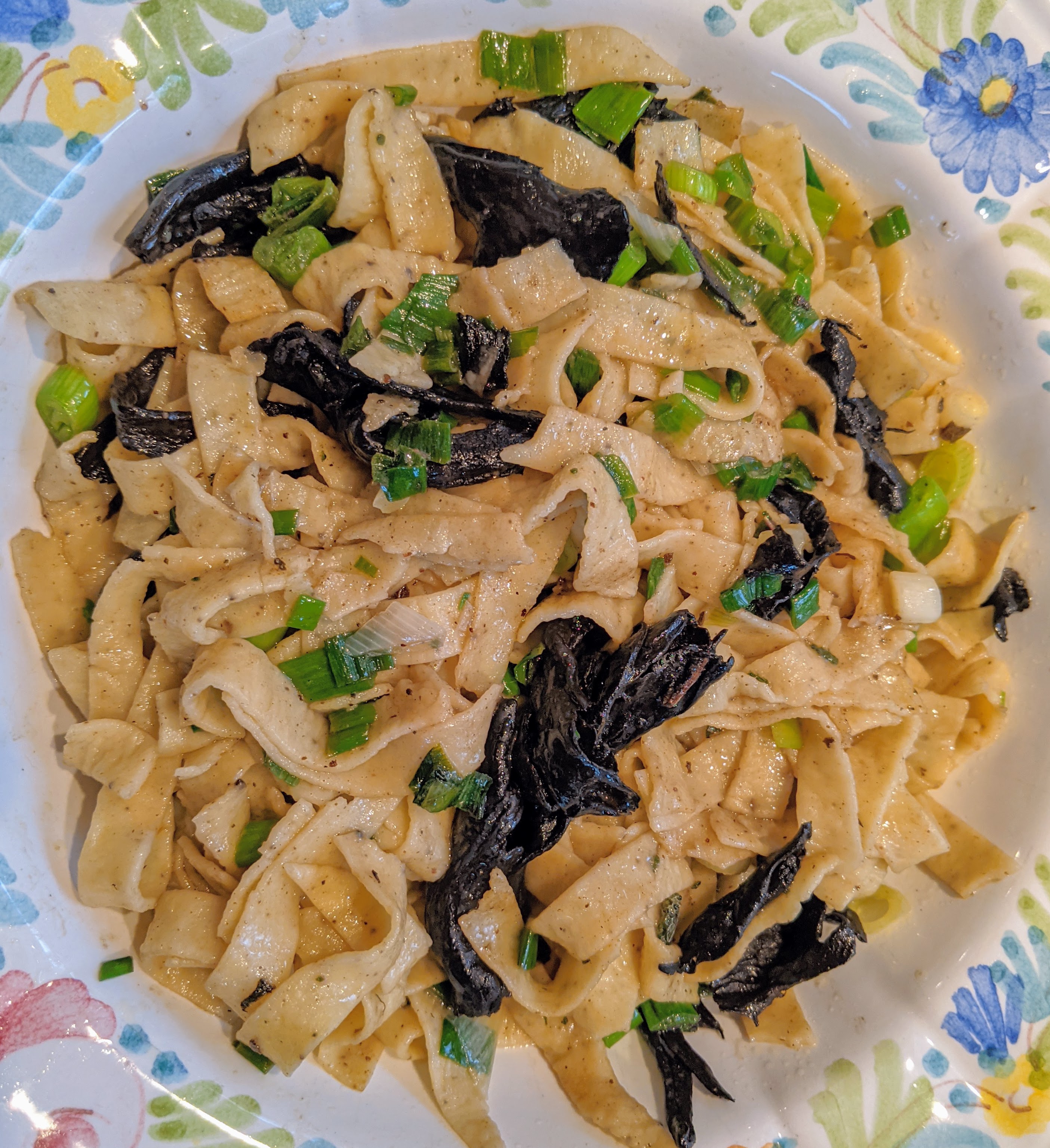
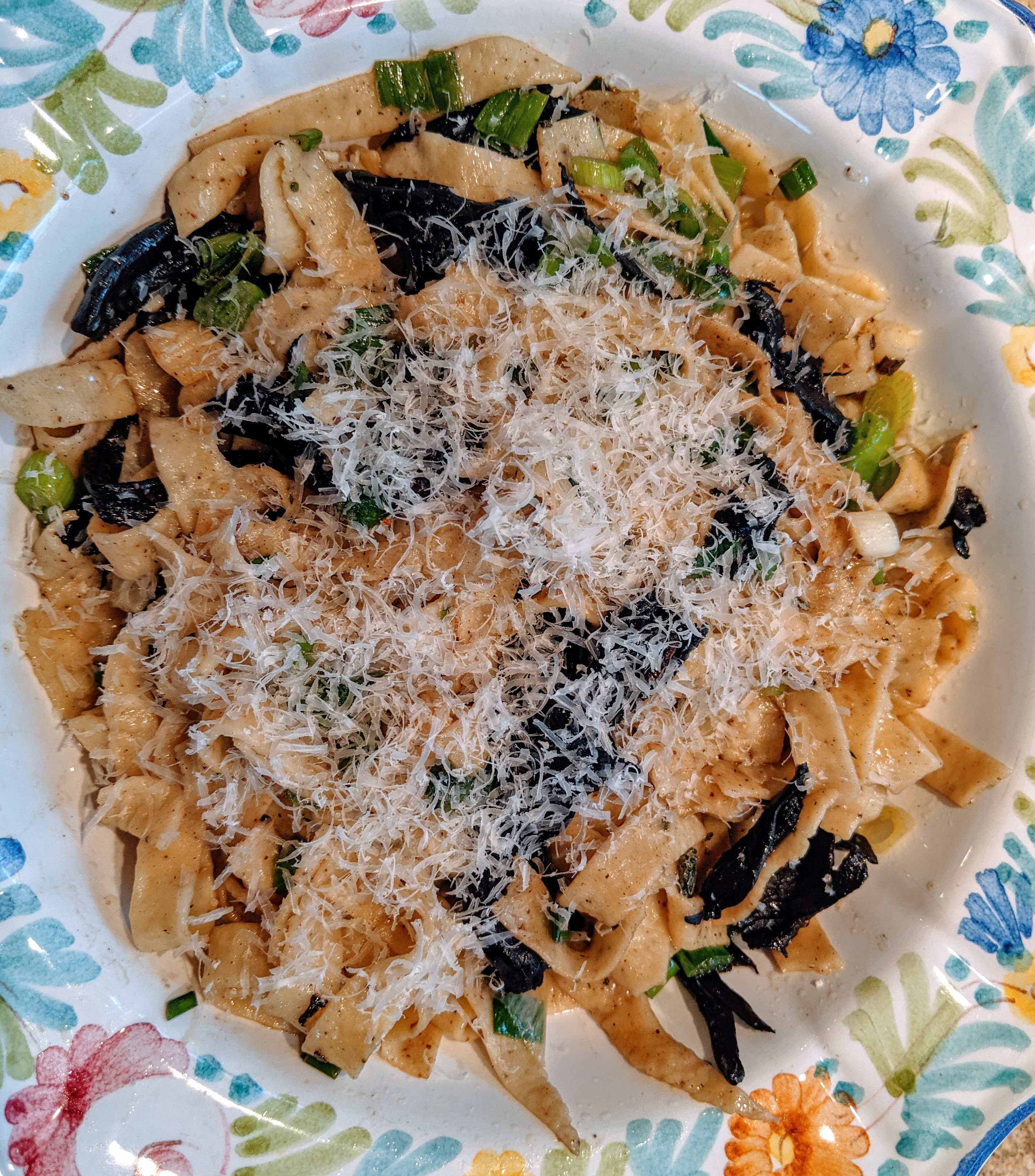
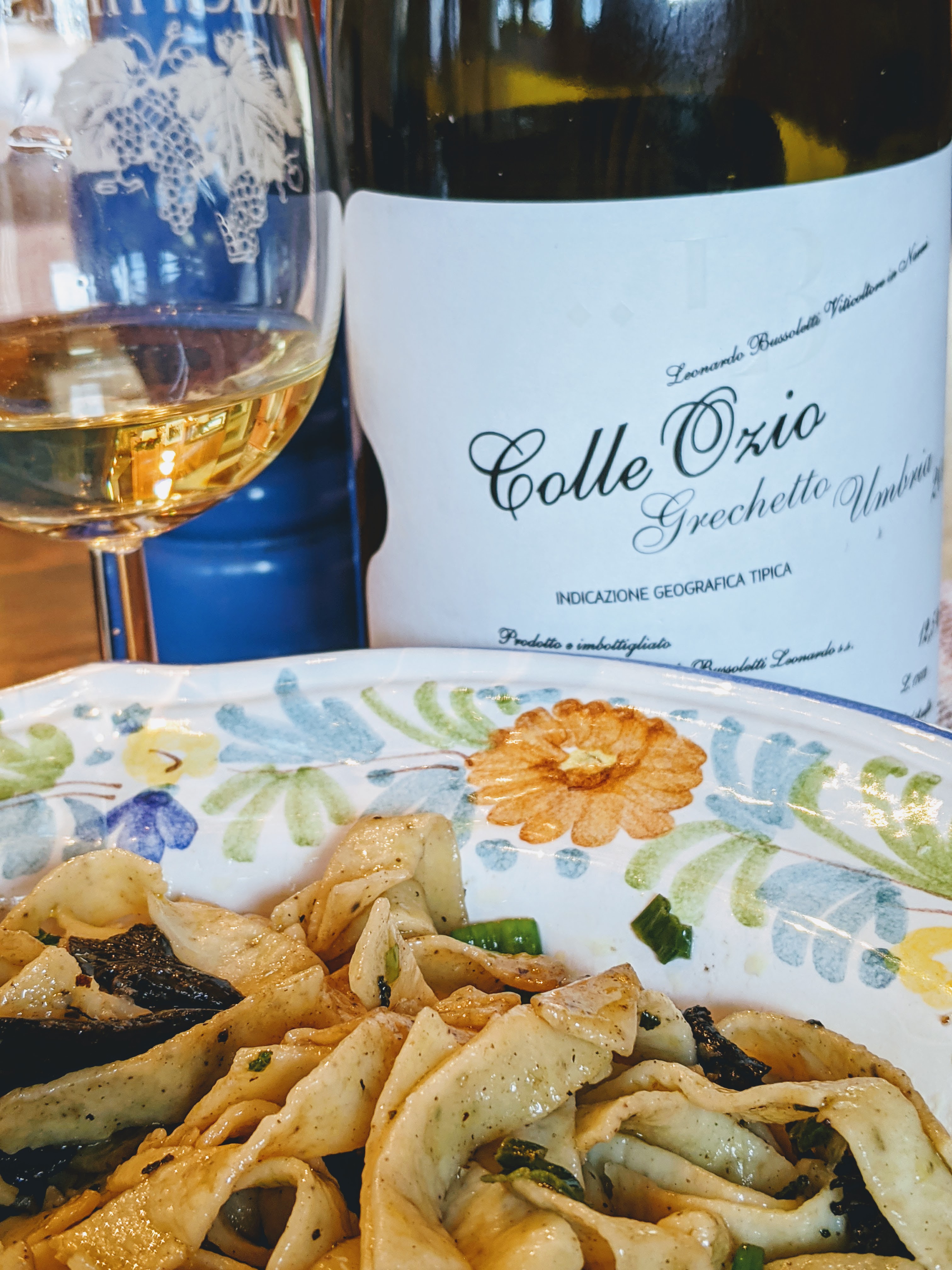
Black is also beautiful in food. Barbara had used our spice grinder to grind a lot of black peppercorns for something she made, and we had a good bit left over. It was a great opportunity to make black pepper fettucine, with my usual recipe of “00” flour, salt, egg and a little olive oil — plus lots of ground pepper for zestiness. I was excited to find fresh Black Trumpet Mushrooms while shopping at Idylwilde Farms, which were sautéed briefly with some chopped scallions and paired with a Grechetto from Umbria.
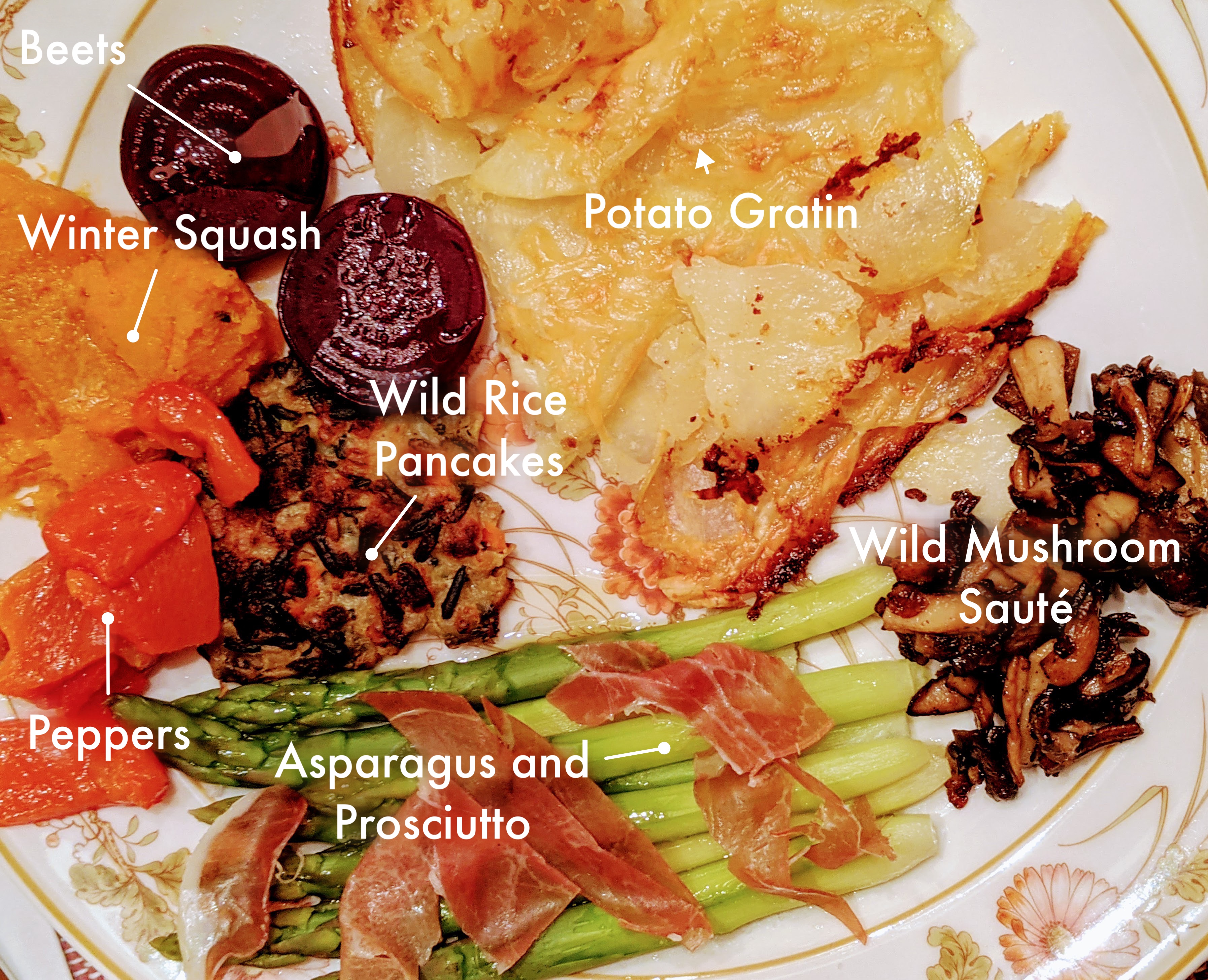
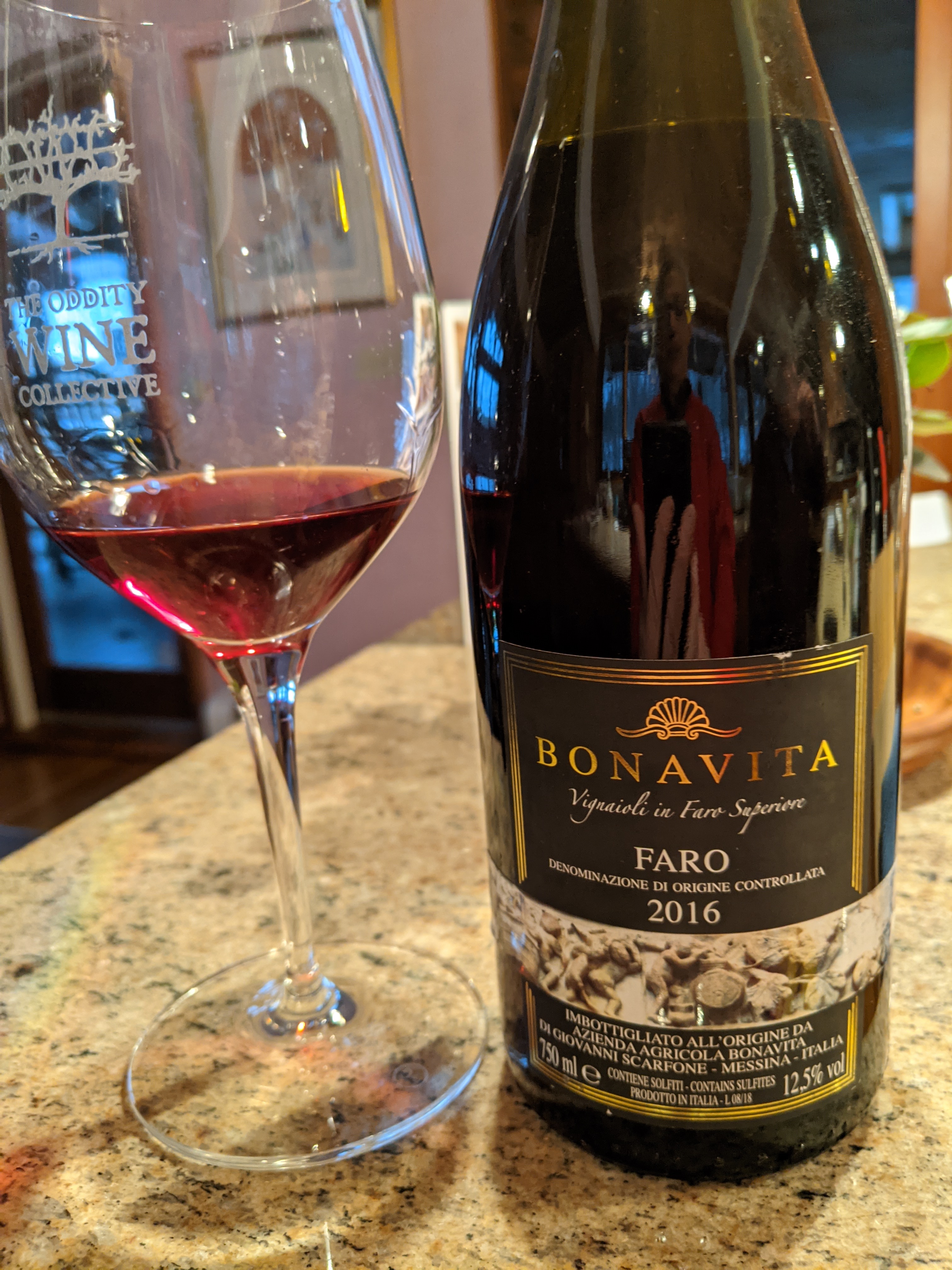
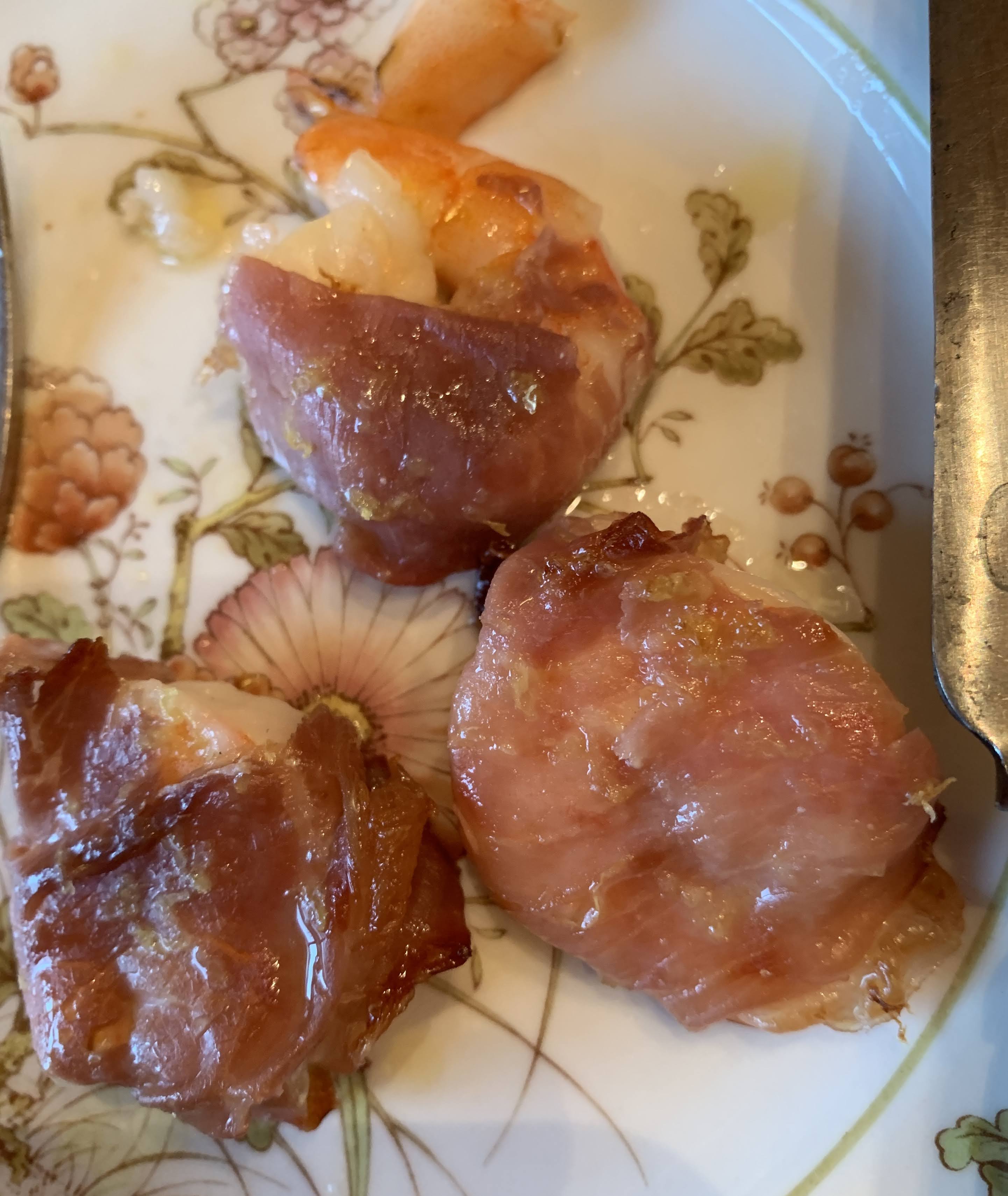
Sometimes I actually make a meal without pasta. One recent example brought together a collection of vegetables, leftovers, and two thin slices of prosciutto to create a dinner that paired beautifully with another of Jan’s wines, the Bonavita Faro from Sicily.
This by Tinrocket 1.0.2 (101) Potato Gratin | Beets | Winter Squash | Peppers | Asparagus and Prosciutto | Wild Rice Pancakes | Wild Mushroom Saute
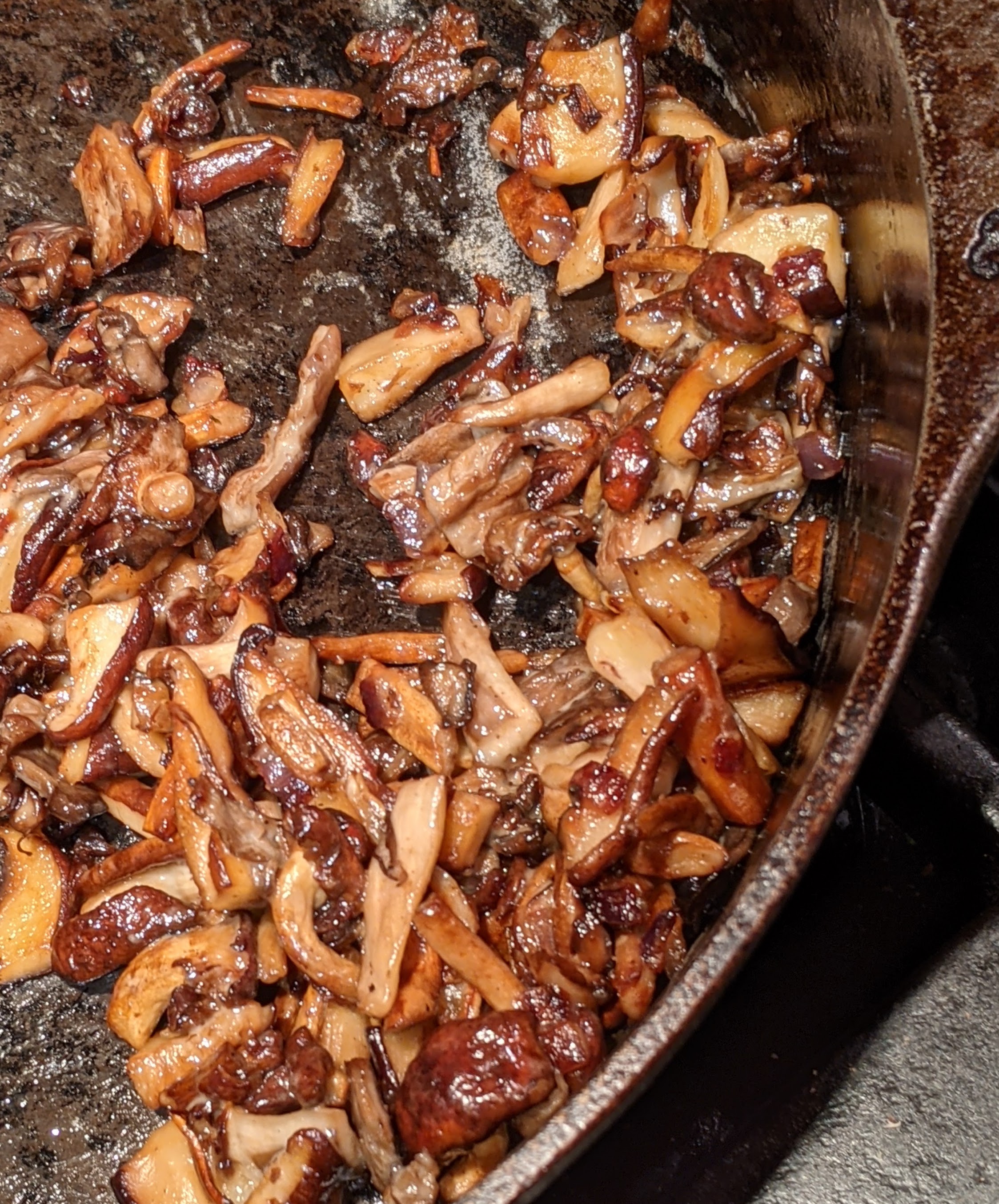
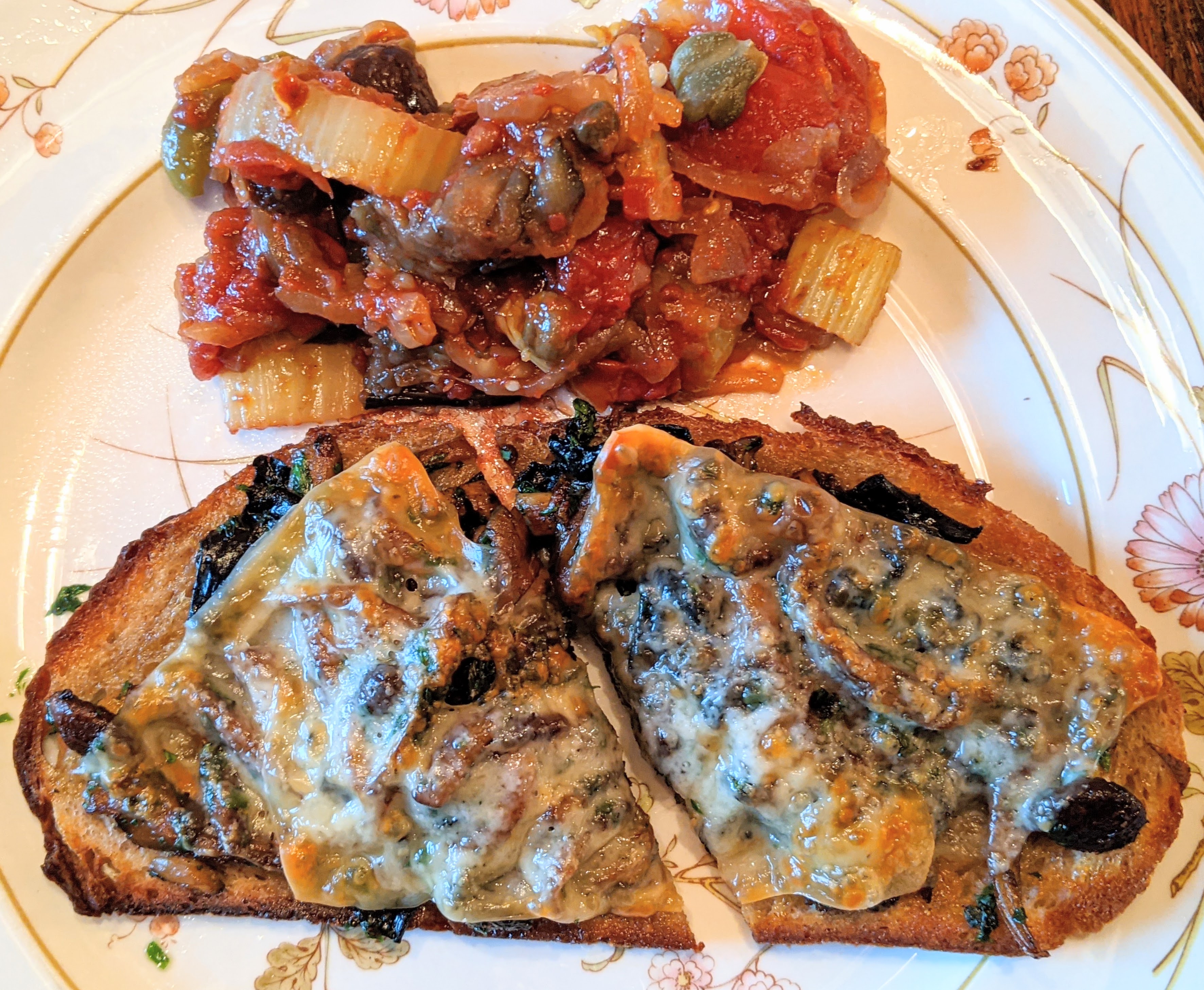
Lunch that day was marvelous. I had made my favorite Caponata (Romagnoli’s version) the day before, so it was easy to pan-fry a slice of my sourdough, sautée a mixture of wild mushrooms, add a little leftover cooked spinach, and top it all with slices of Manchego cheese. A few minutes under the broiler and lunch was ready.
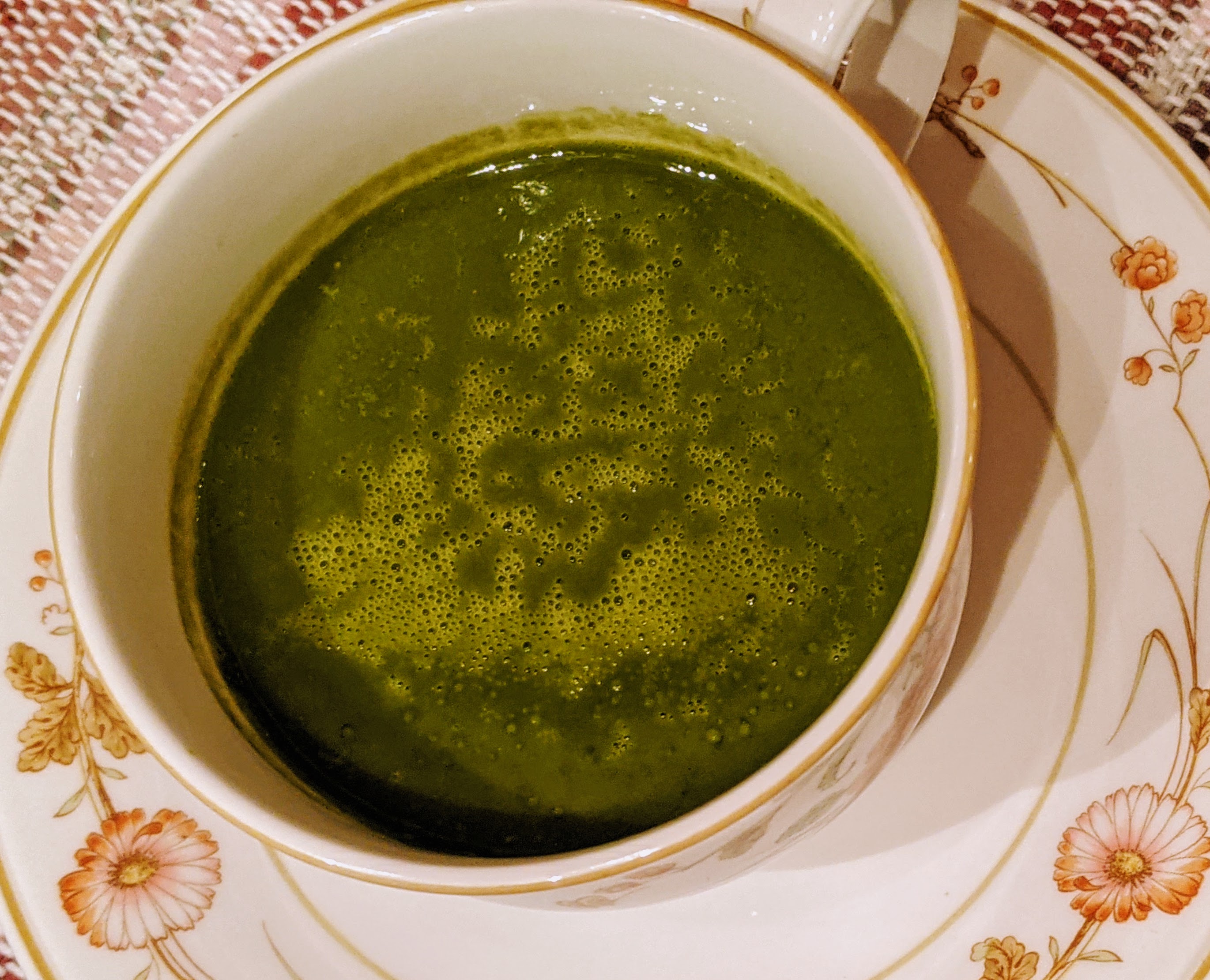
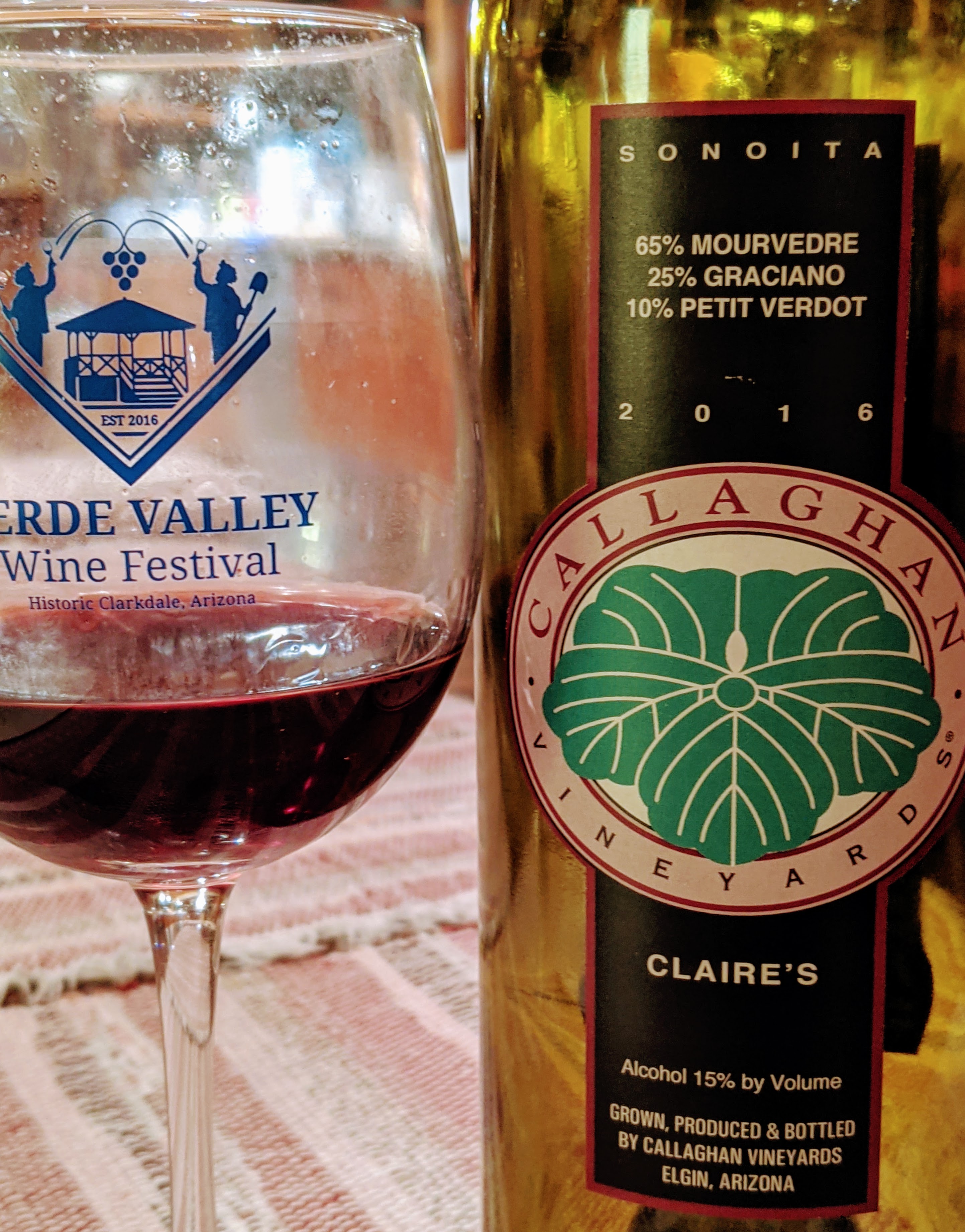
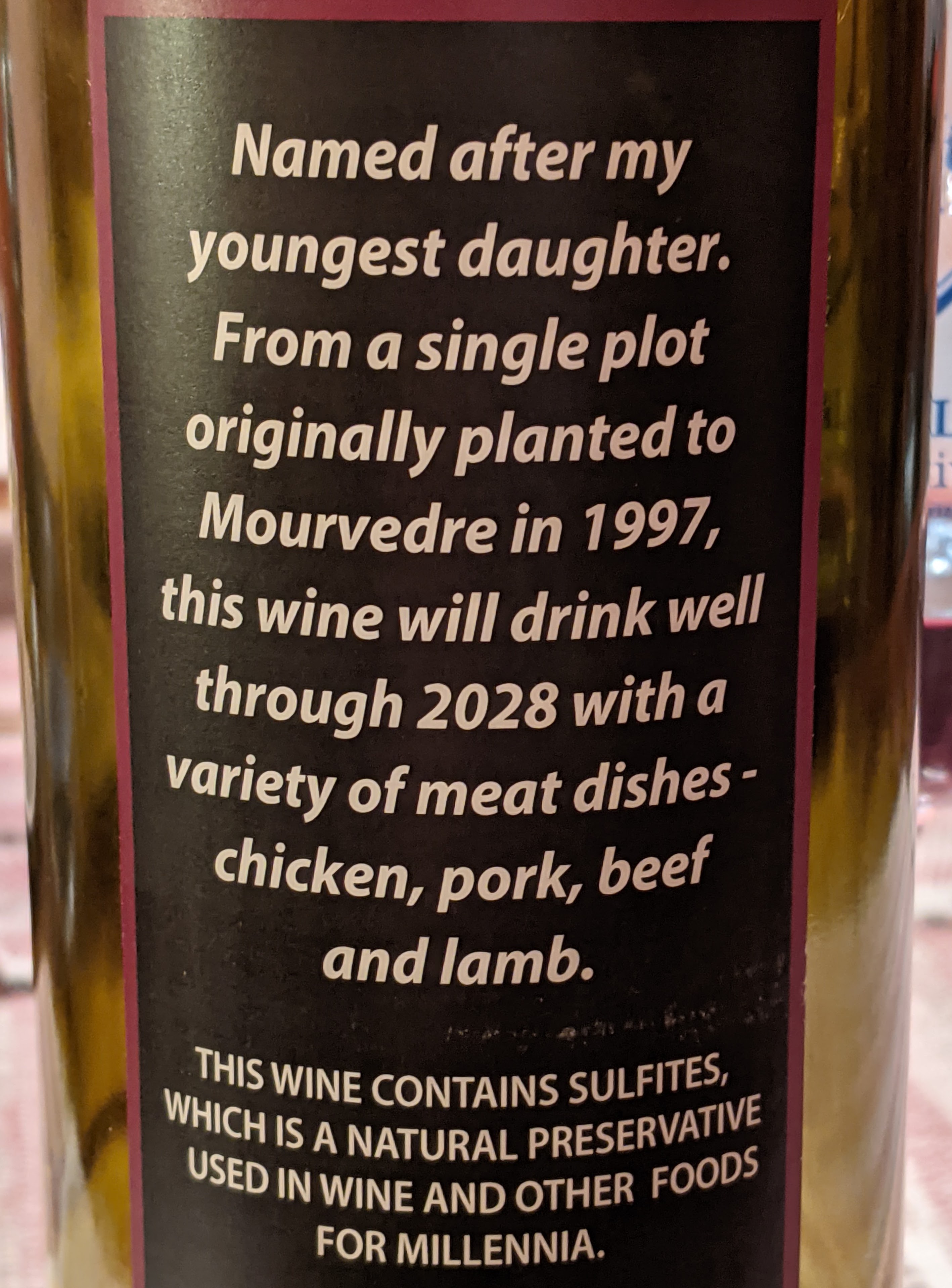
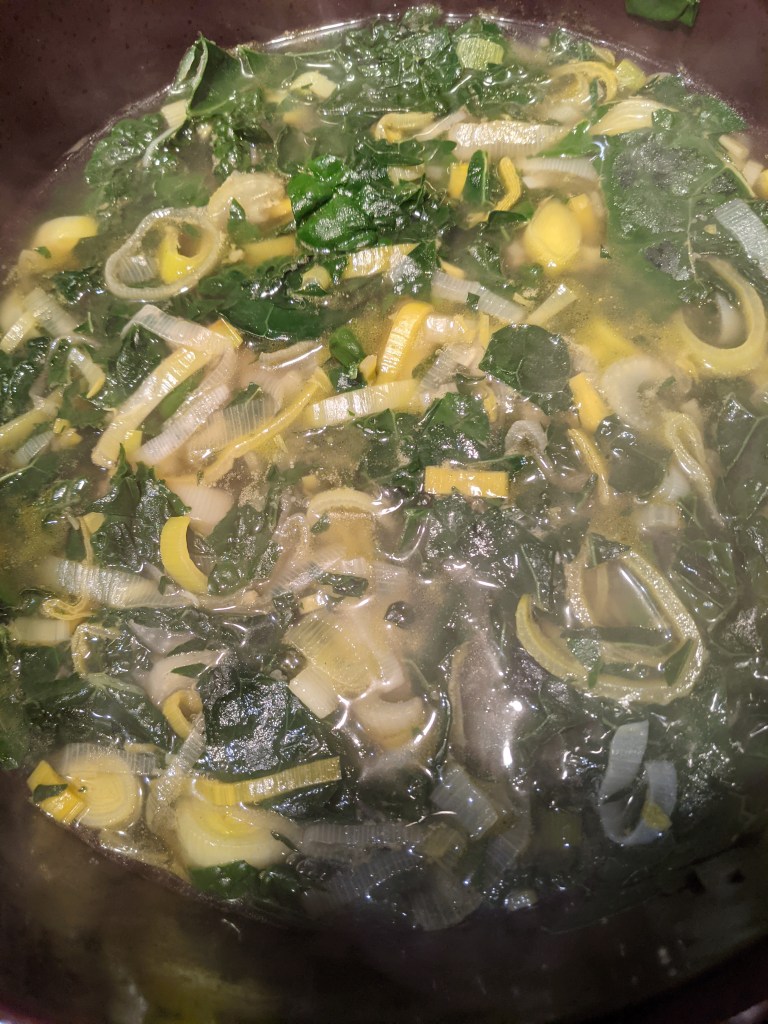
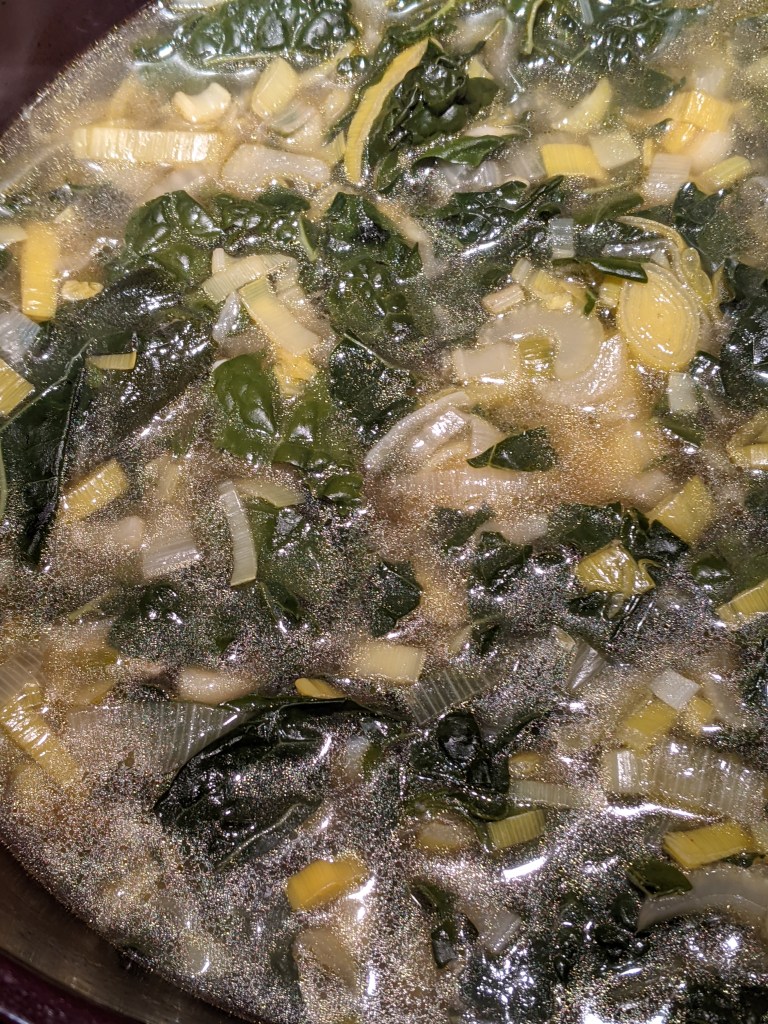
As a start I took leftover Leek and Kale soup, poured it into a coffee cup, heated in the microwave, and served it as a first course. These paired nicely with Kent Callaghan’s 2016 Claire’s Arizona red wine, enhancing the rich, earthy flavors of it all.
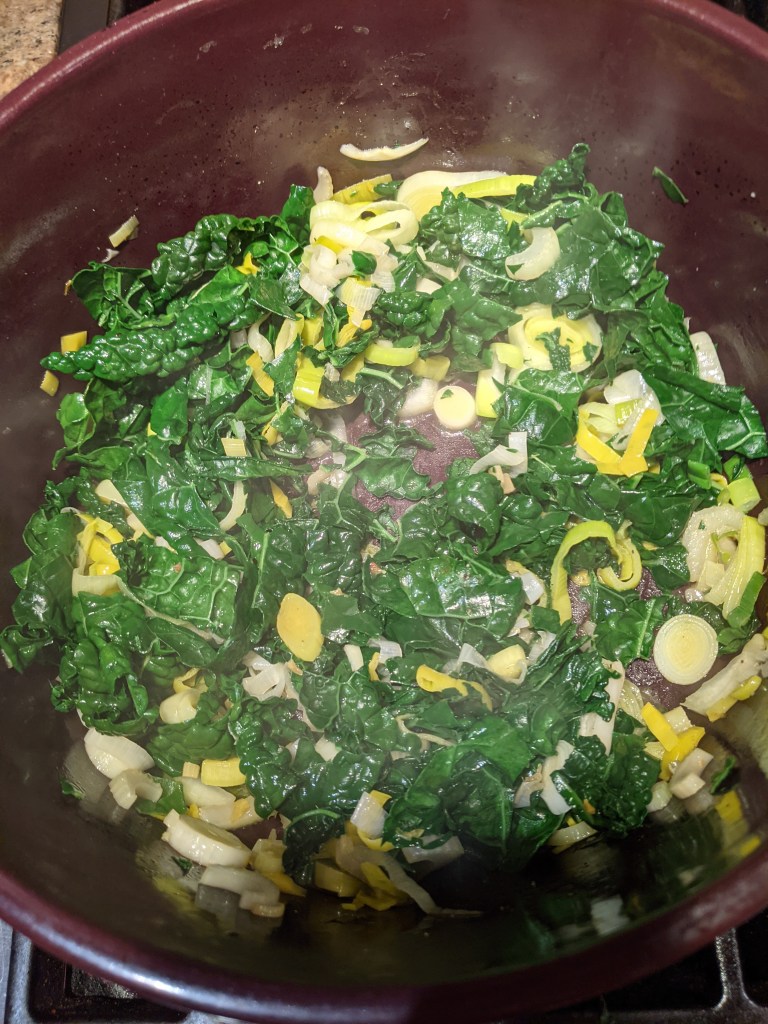
Leek and Cavolo Nero Soup
Vegetables for Dinner
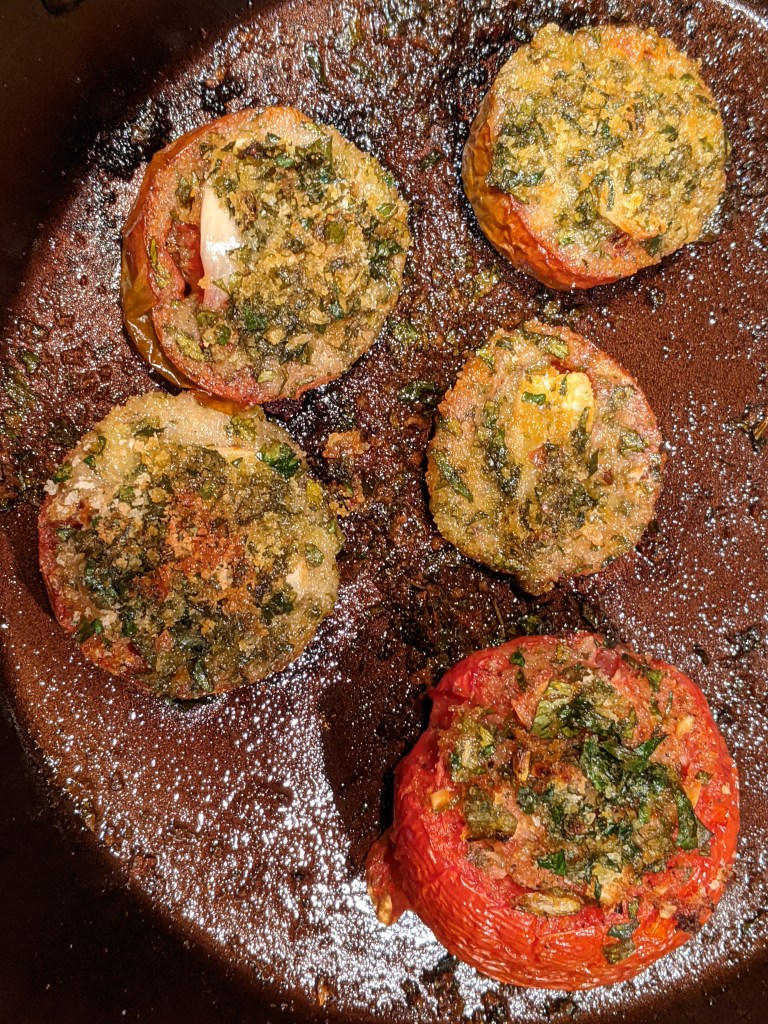
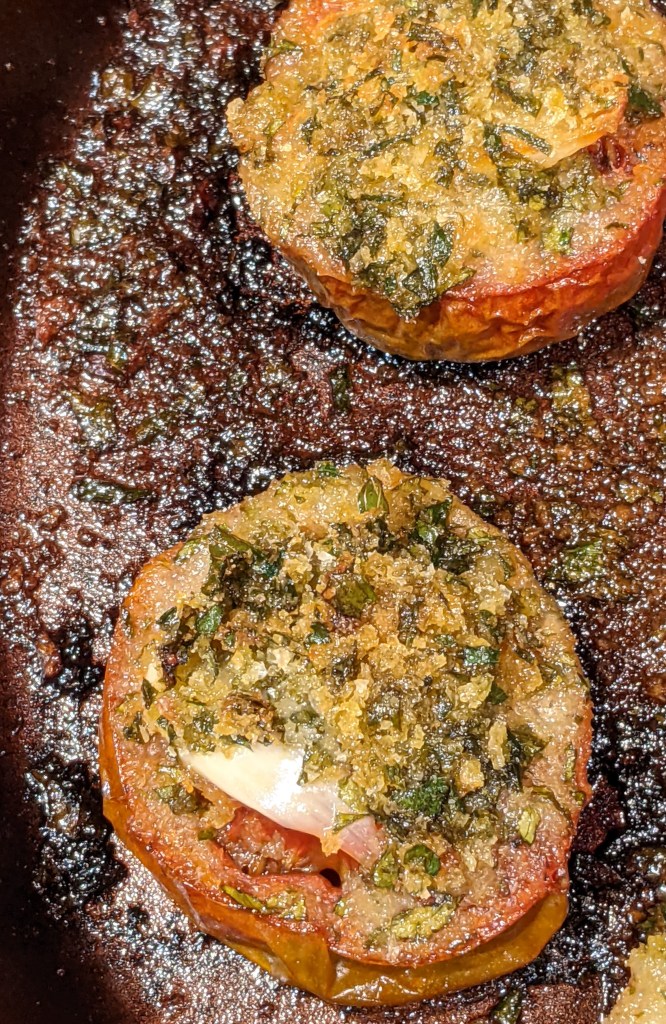
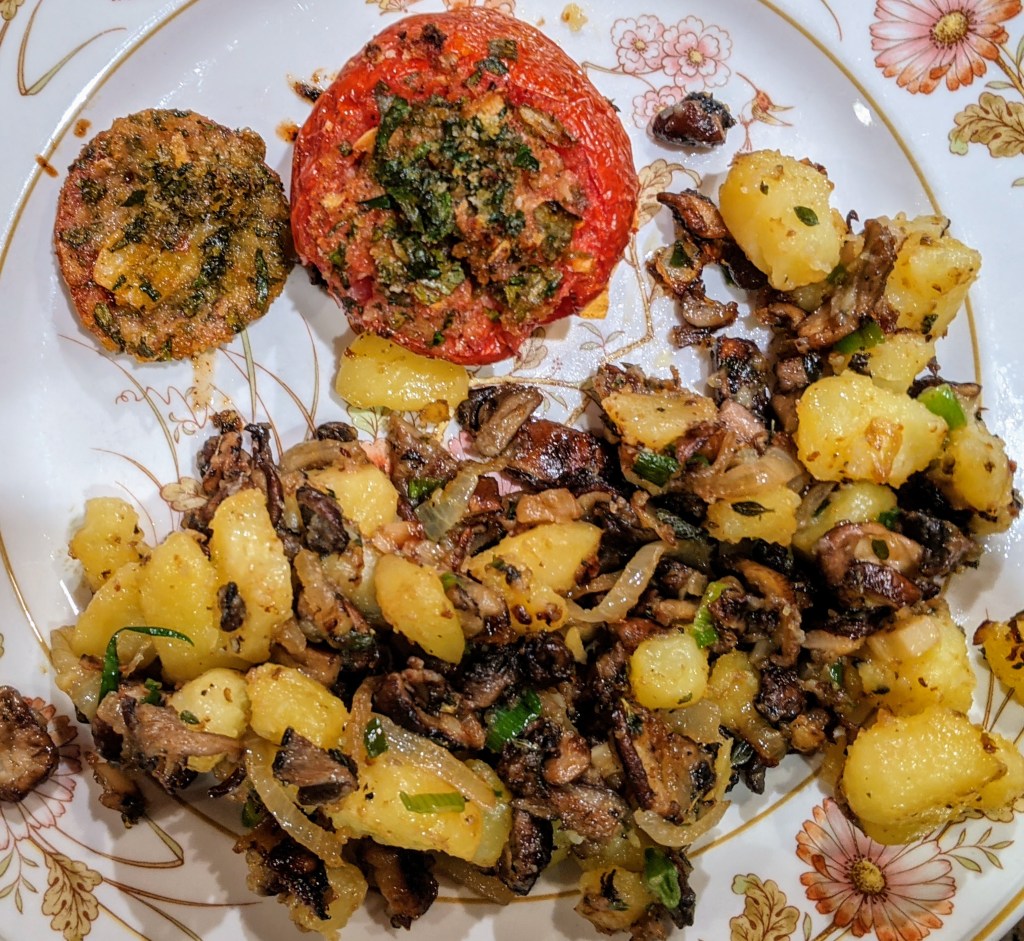
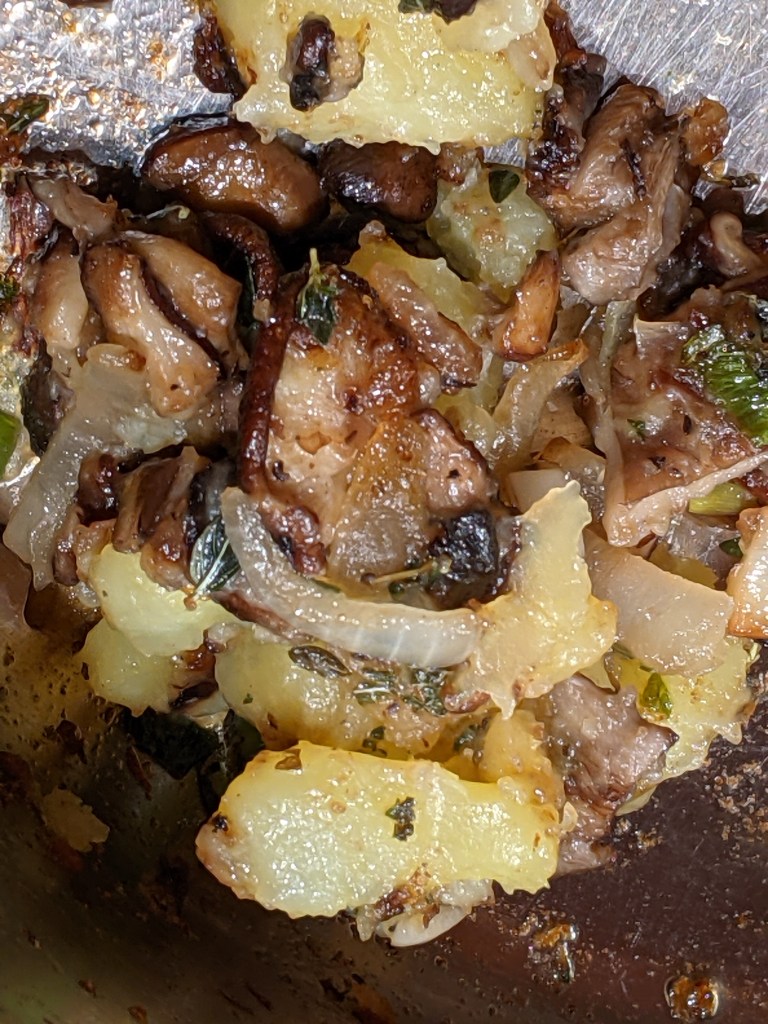
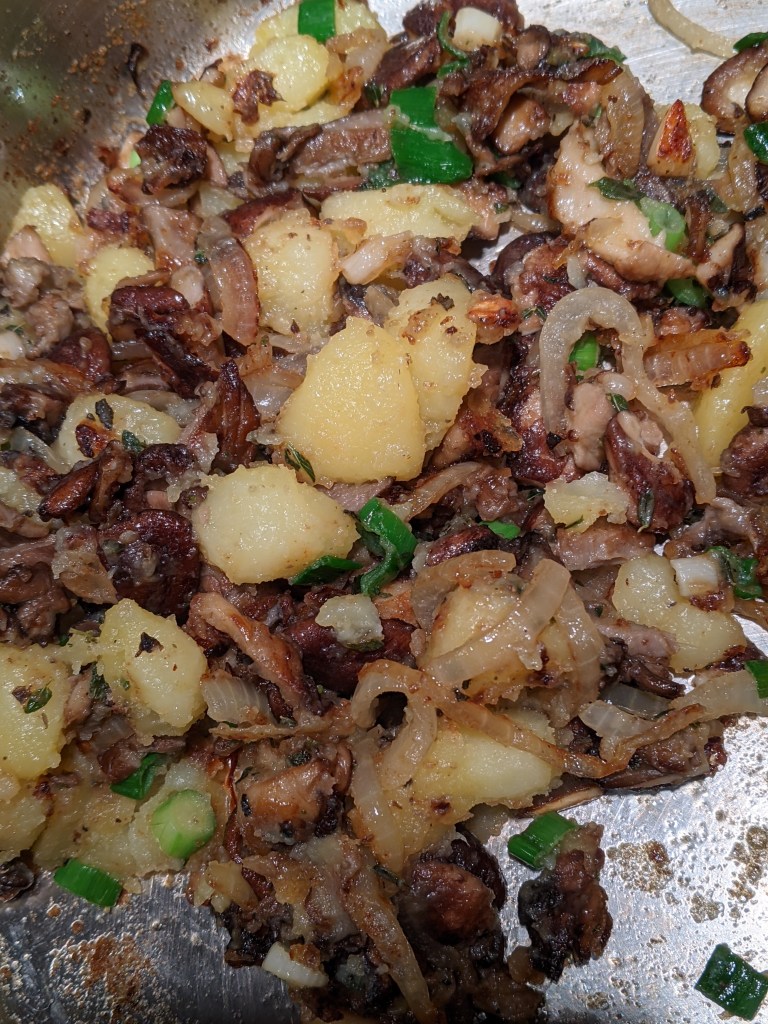
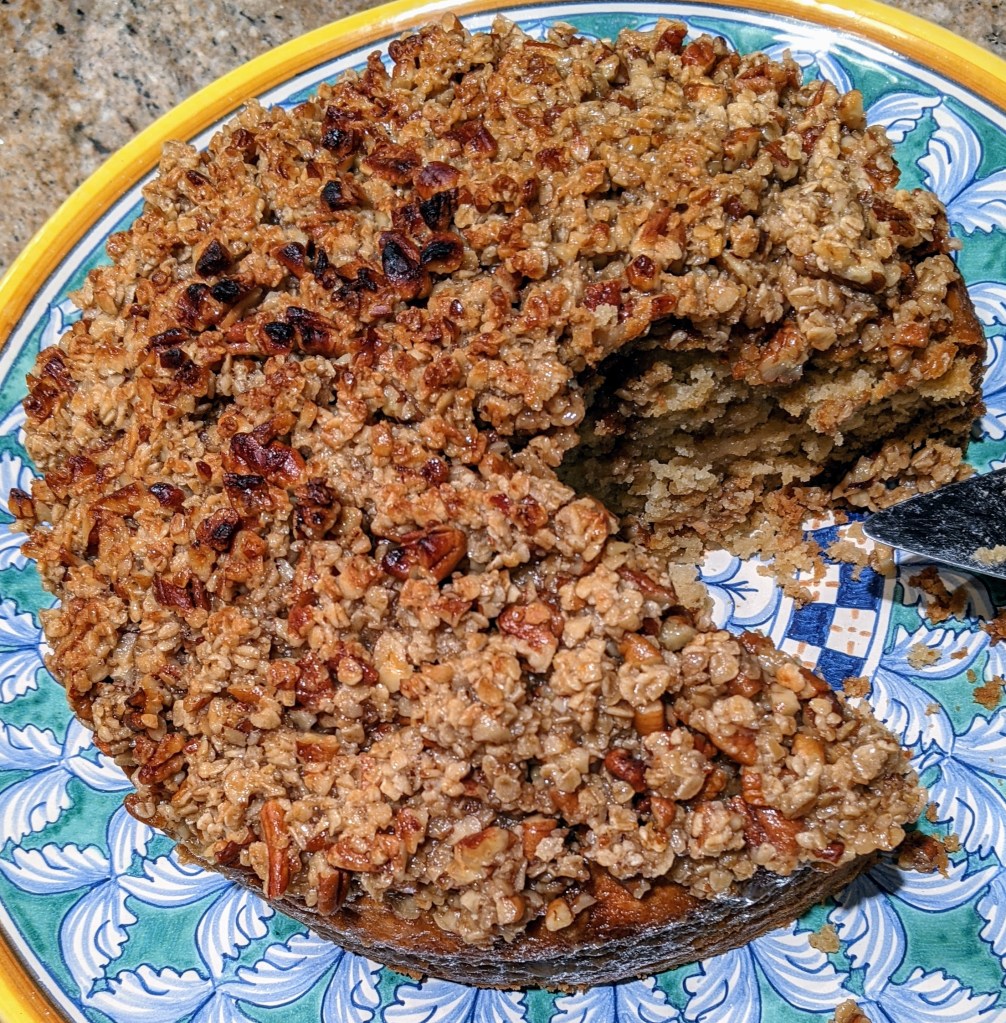
Here’s one that started with the creation of the Leek and Kale (Cavolo Nero) soup, featured roasted Provencal tomatoes, a delicious mushroom and potato sauté, and then finished with a superb Sticky Oat Cake for dessert.
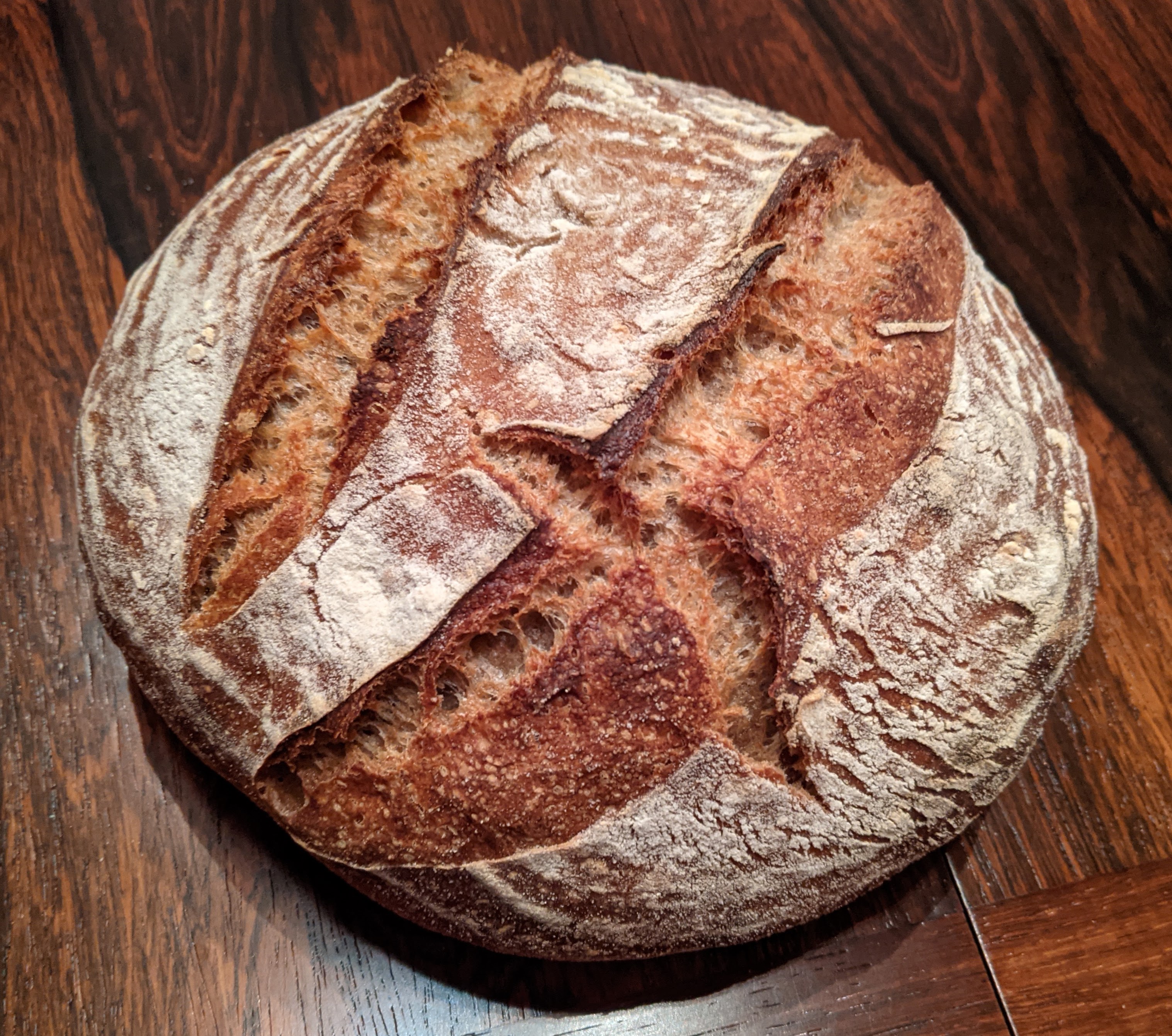
Love Tartine-Style County Loaf
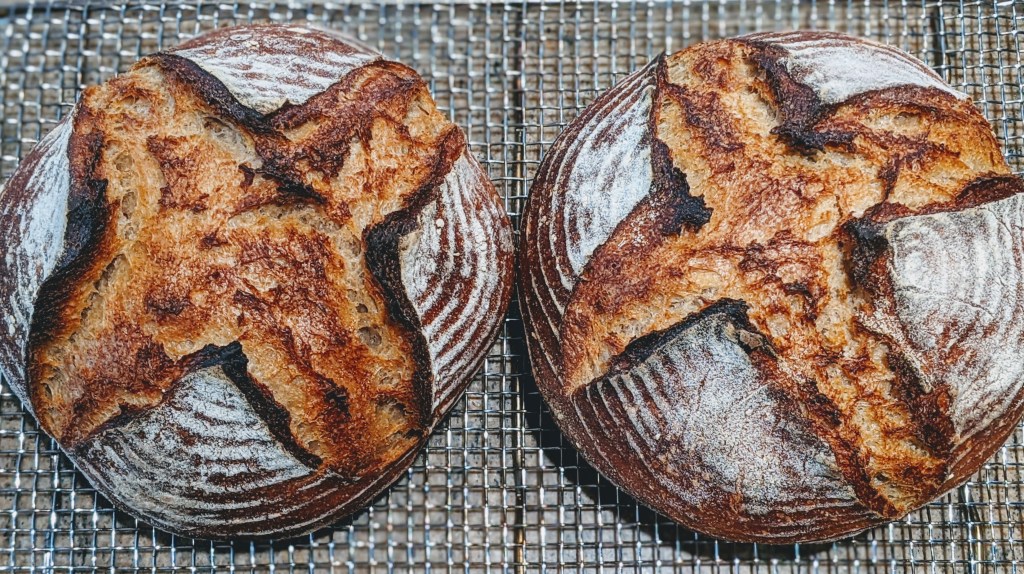
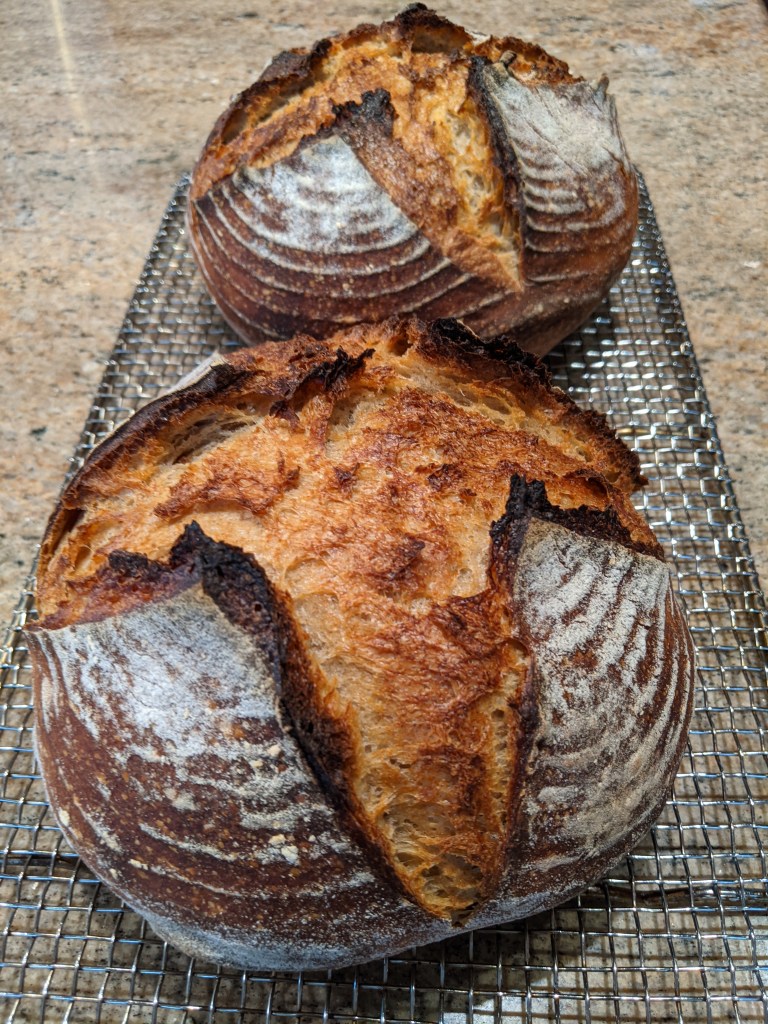
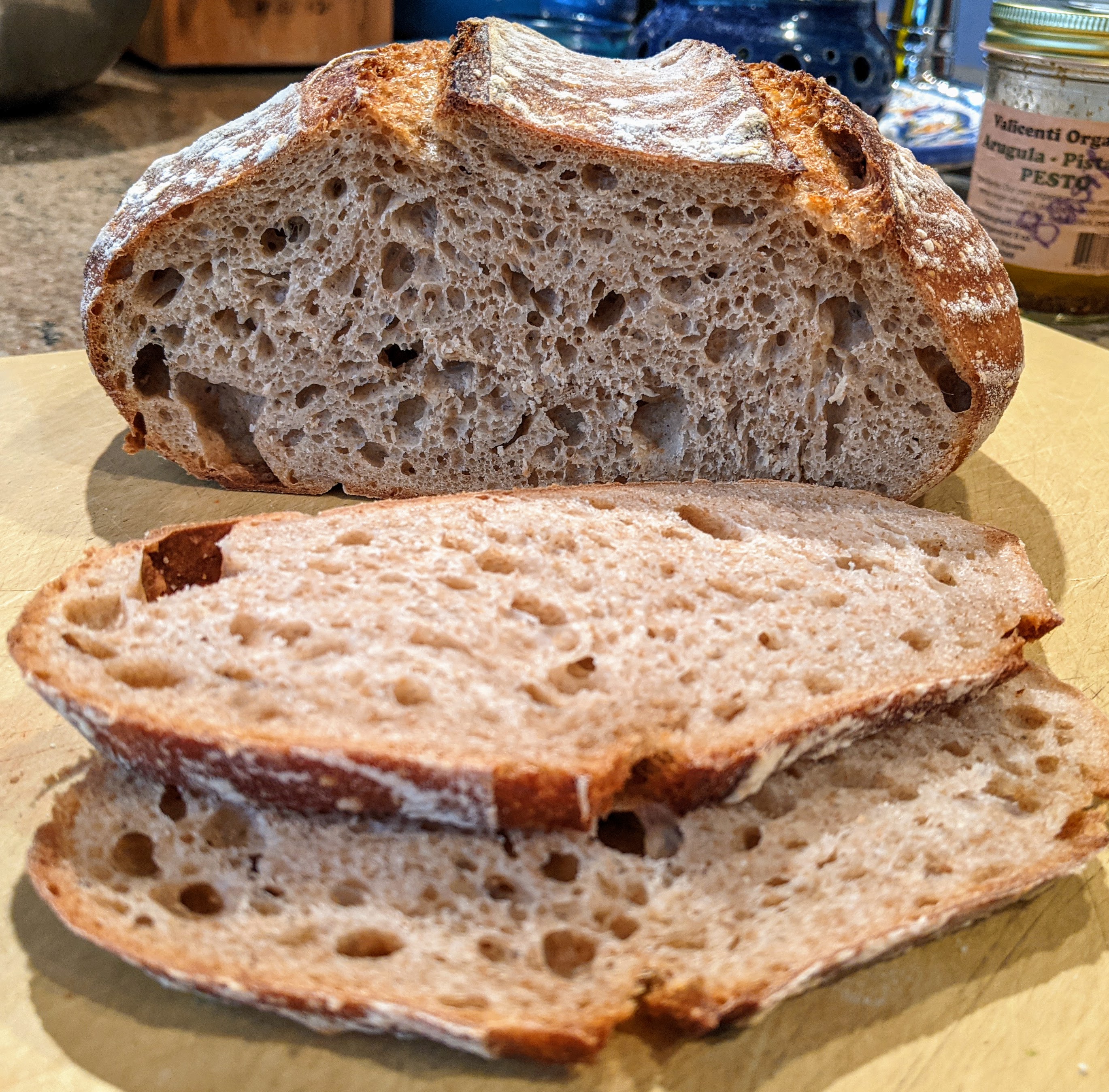
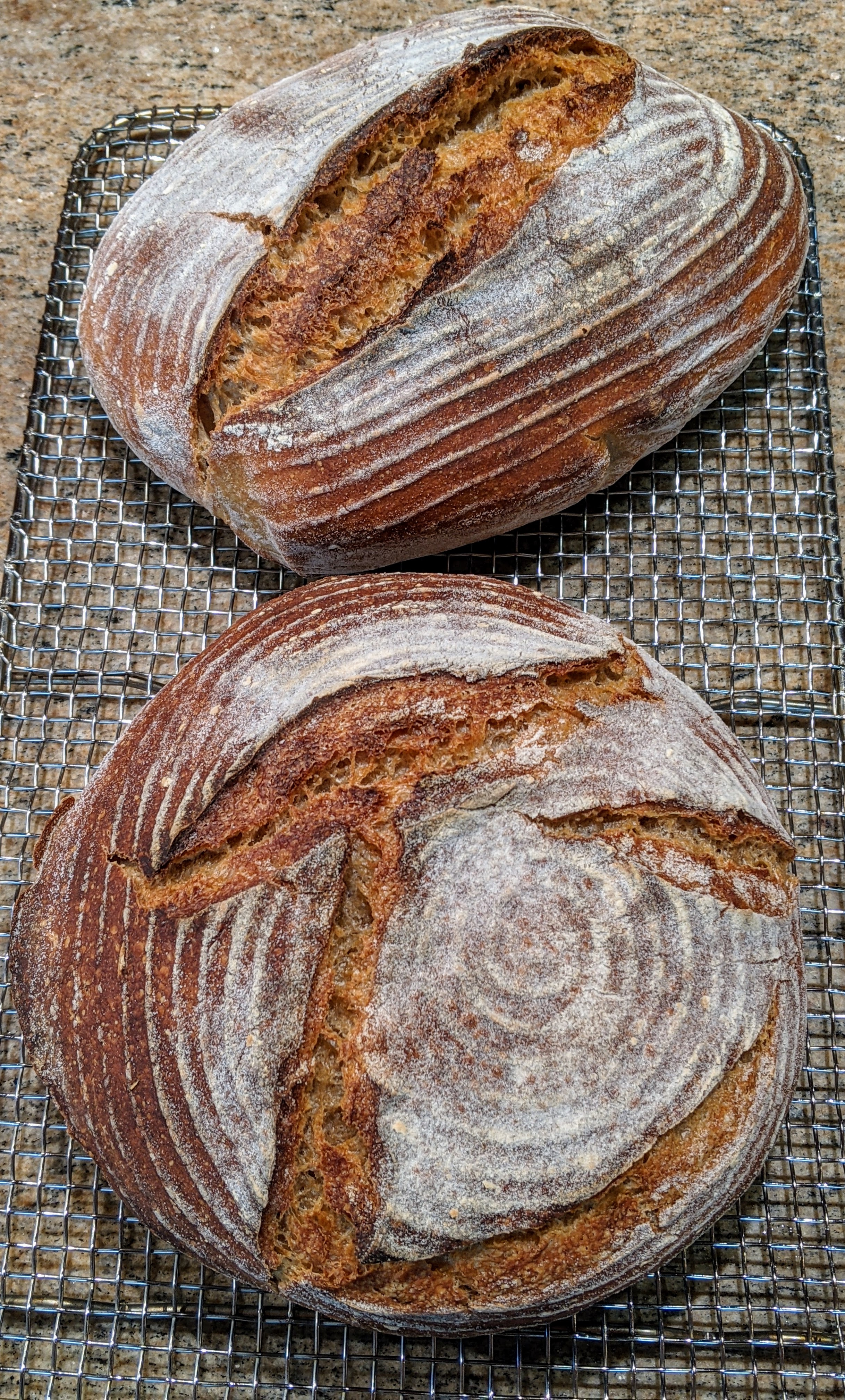
I continued to bake sourdough breads every two or three weeks. These two loaves were beauties.
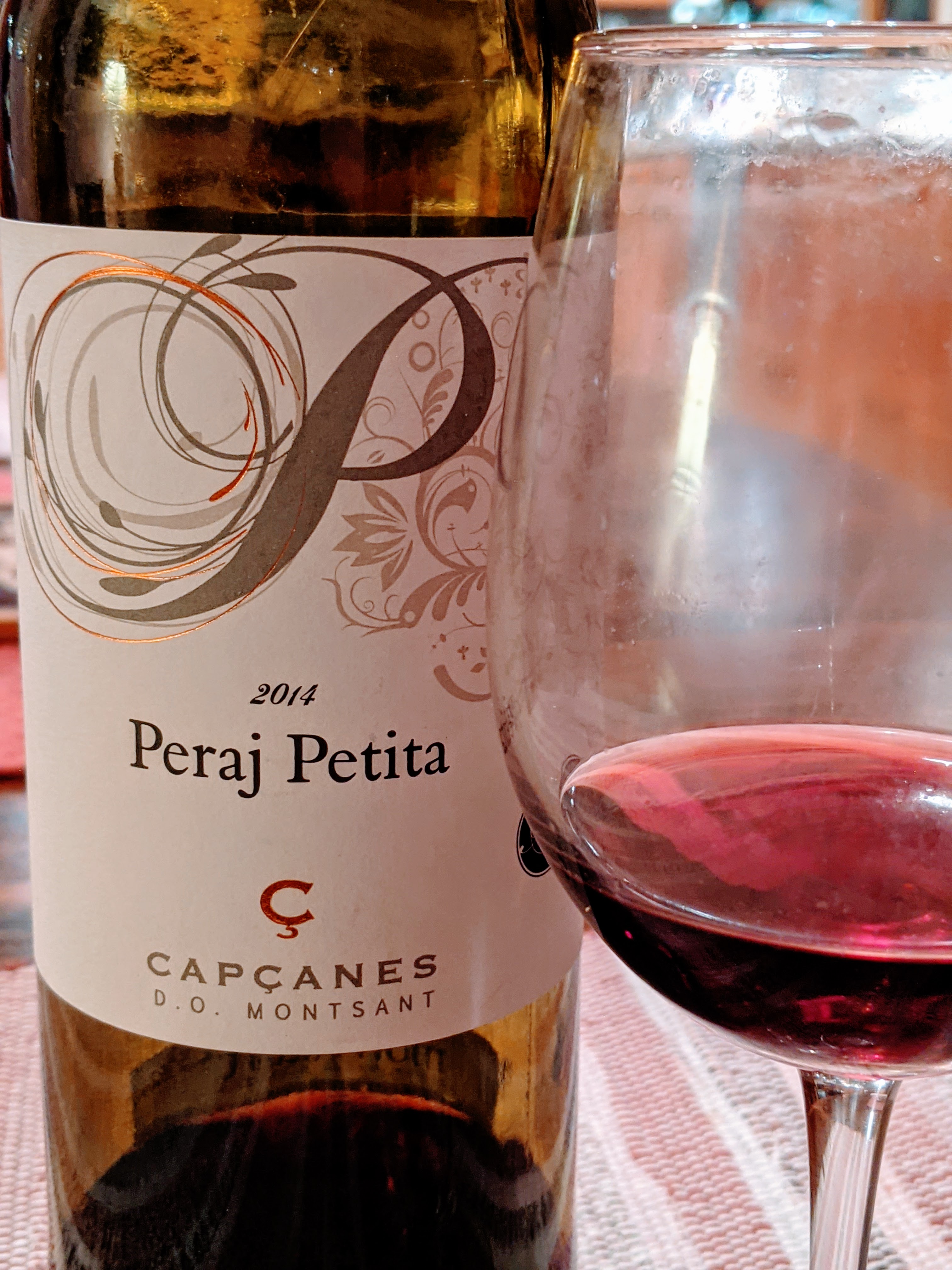
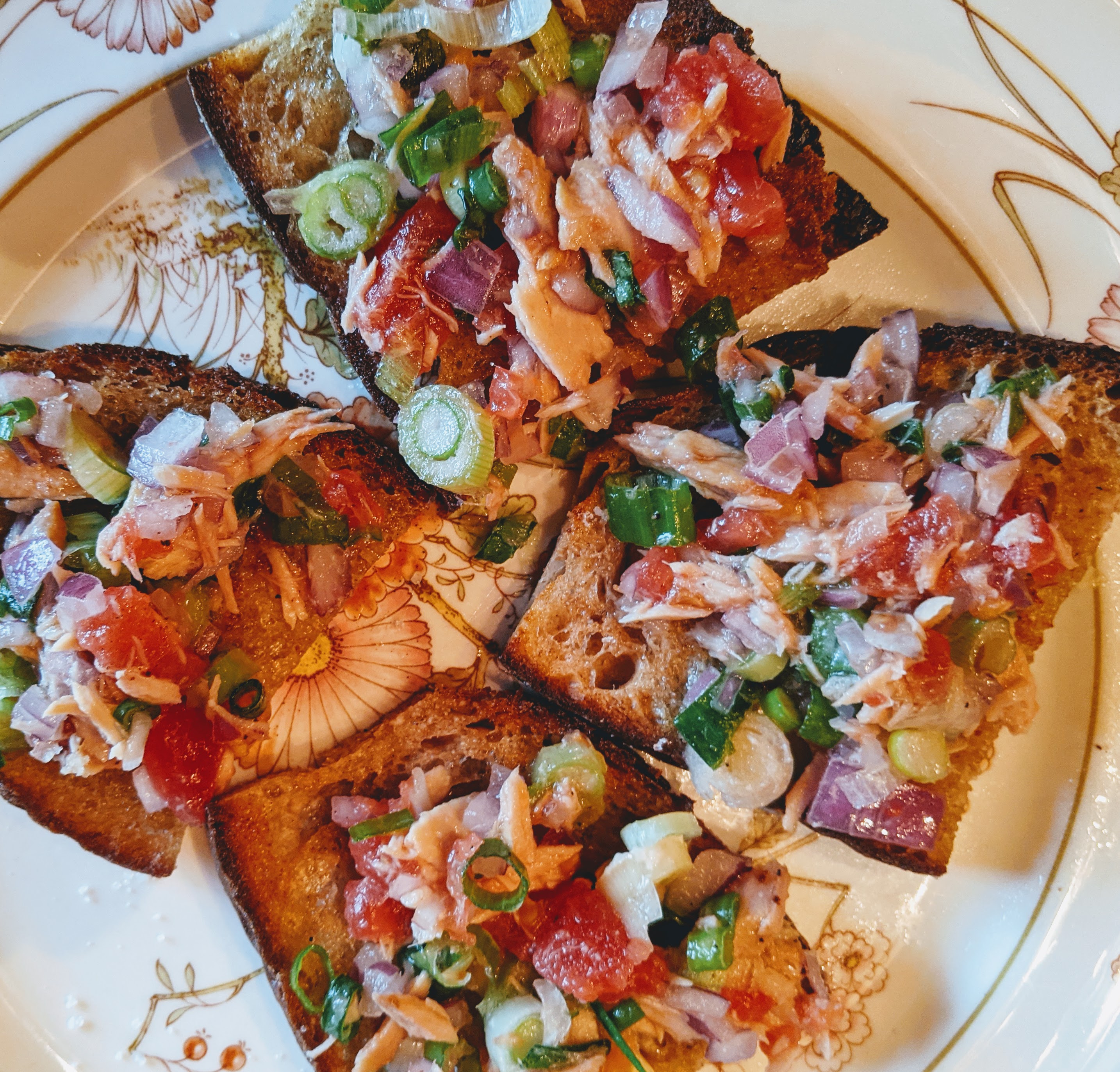
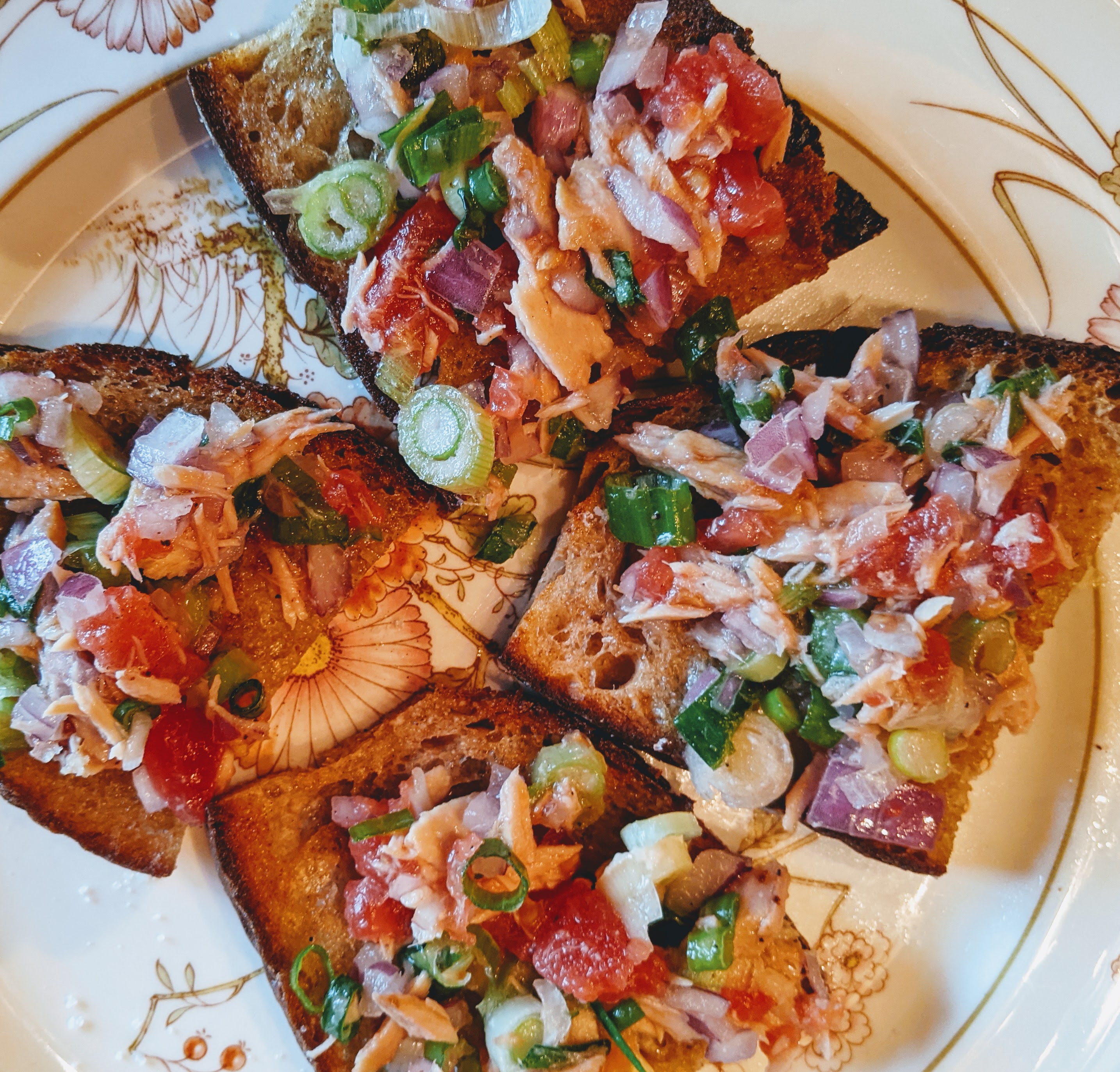
Baked pasta, Spanish wine, and Portuguese canned Ventresca Tuna by Lucas — made into a tuna salad on top of toasted bread were other highlights that week.
I hope you all have had a good holiday season, in spite of the constraints we wrestle with during these times. Let the warmth of our Hanukkah candles glowing on the last night be a beacon toward a happier, healthier new year ahead.
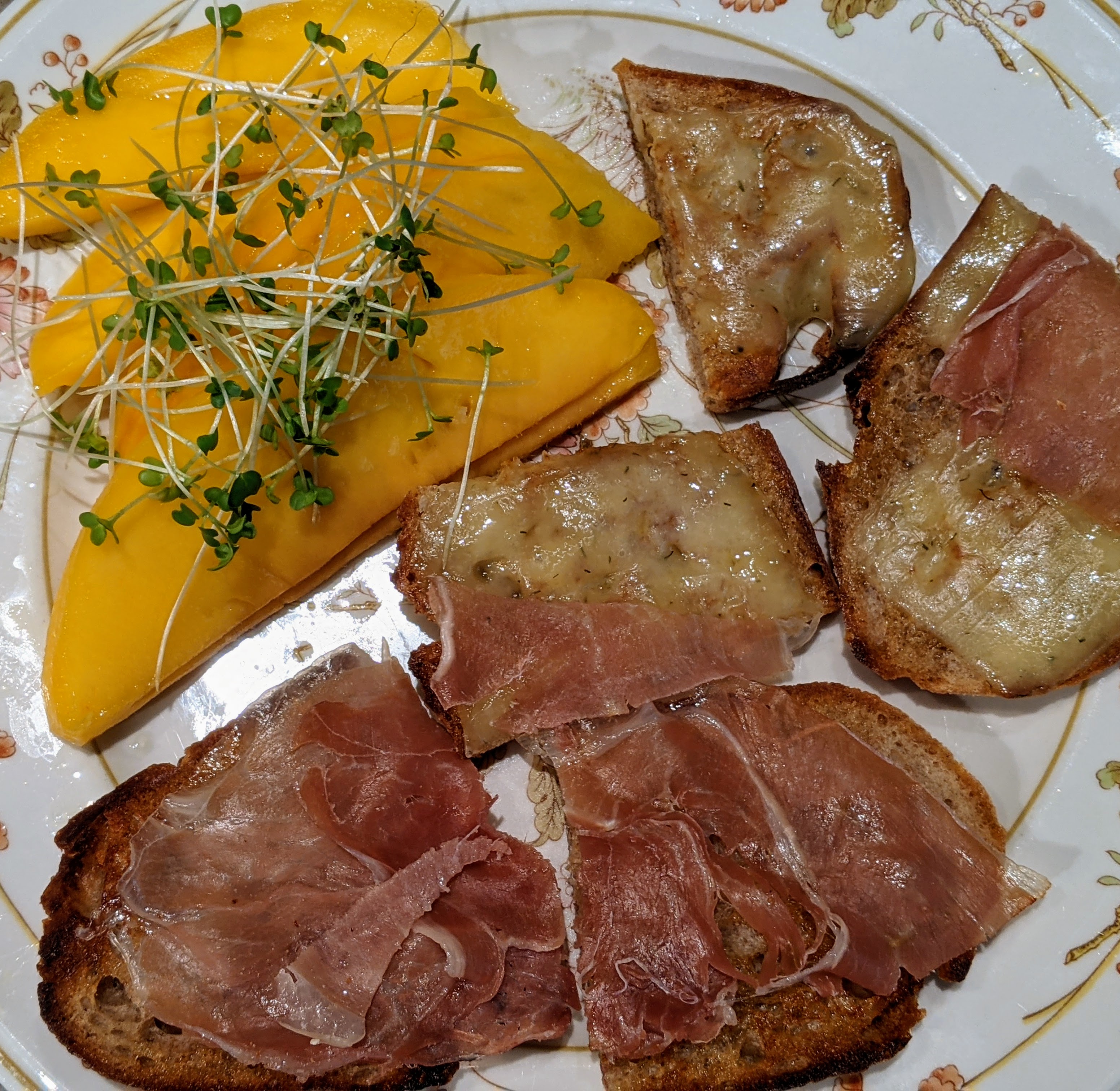
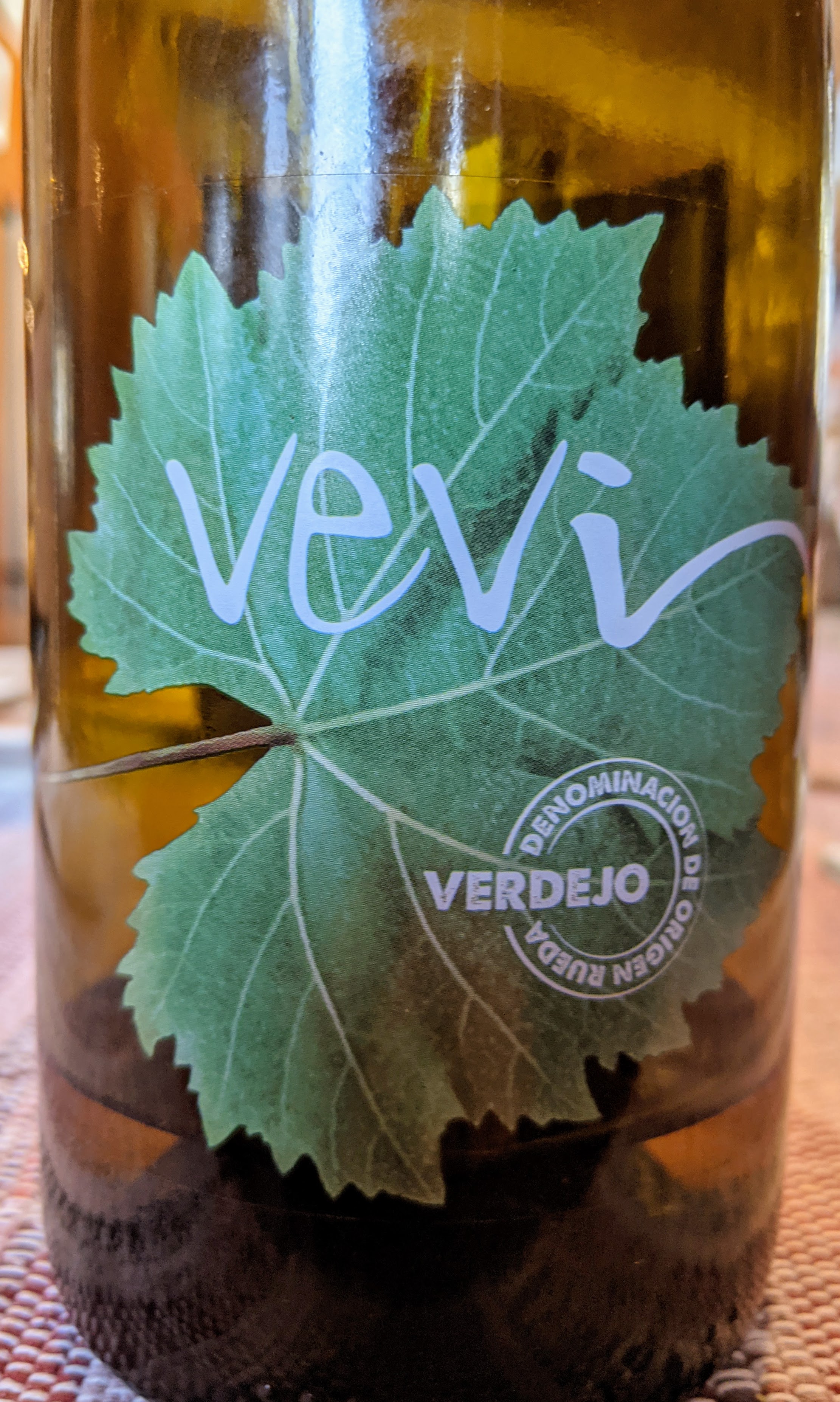
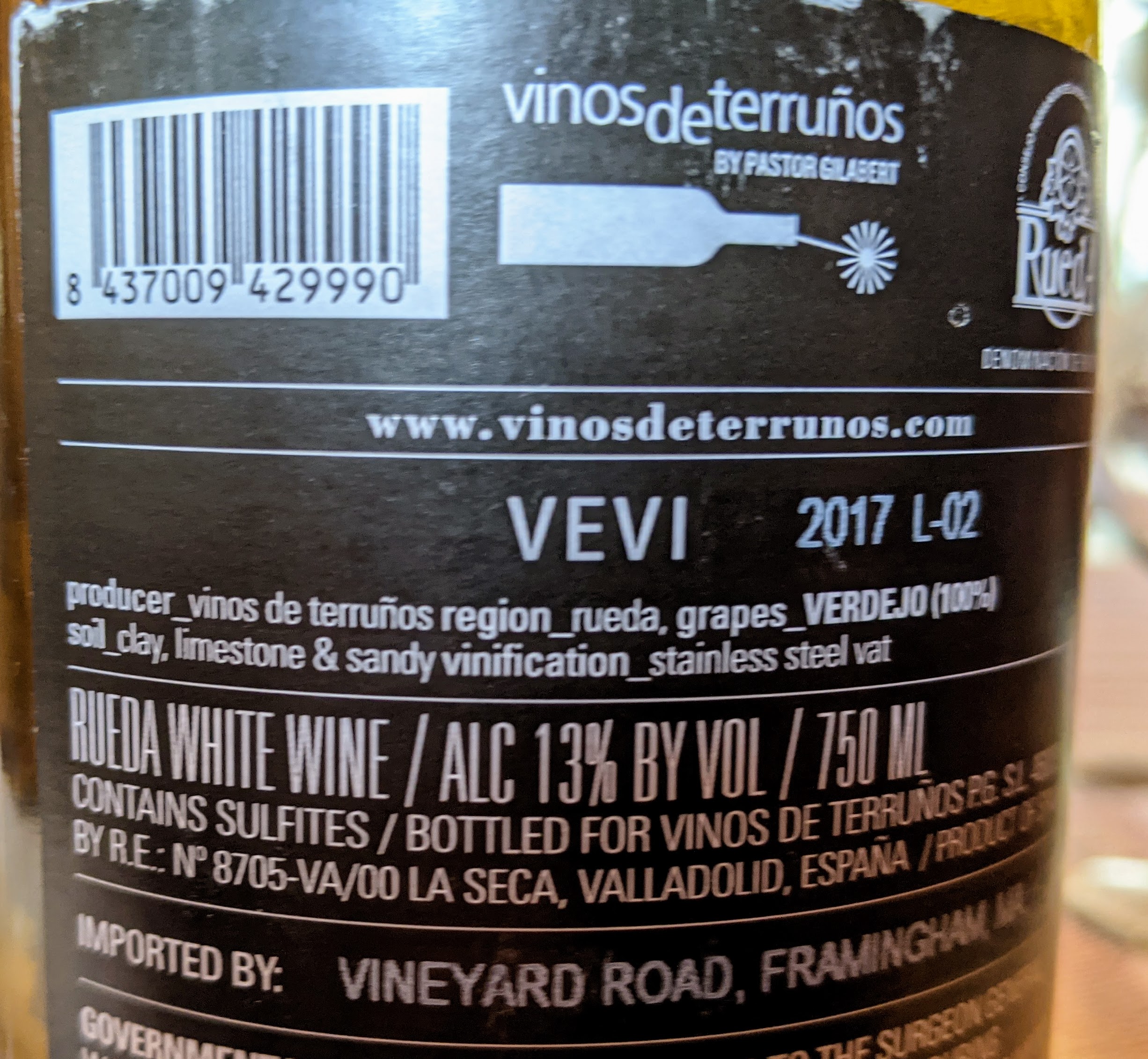
Fried bread with Prosciutto and Havarti, side order of sliced mango, sea salt and lime juiceRueda, Verdejo grapes
This bread is light and crisp, very flavorful. My regular breads have plenty of whole wheat, whereas this one has only Spelt and Rye in a 2:1 ratio for whole grains (36%), and is a very wet dough, which can be difficult to handle. Fortunately, Trevor’s videos make it manageable.
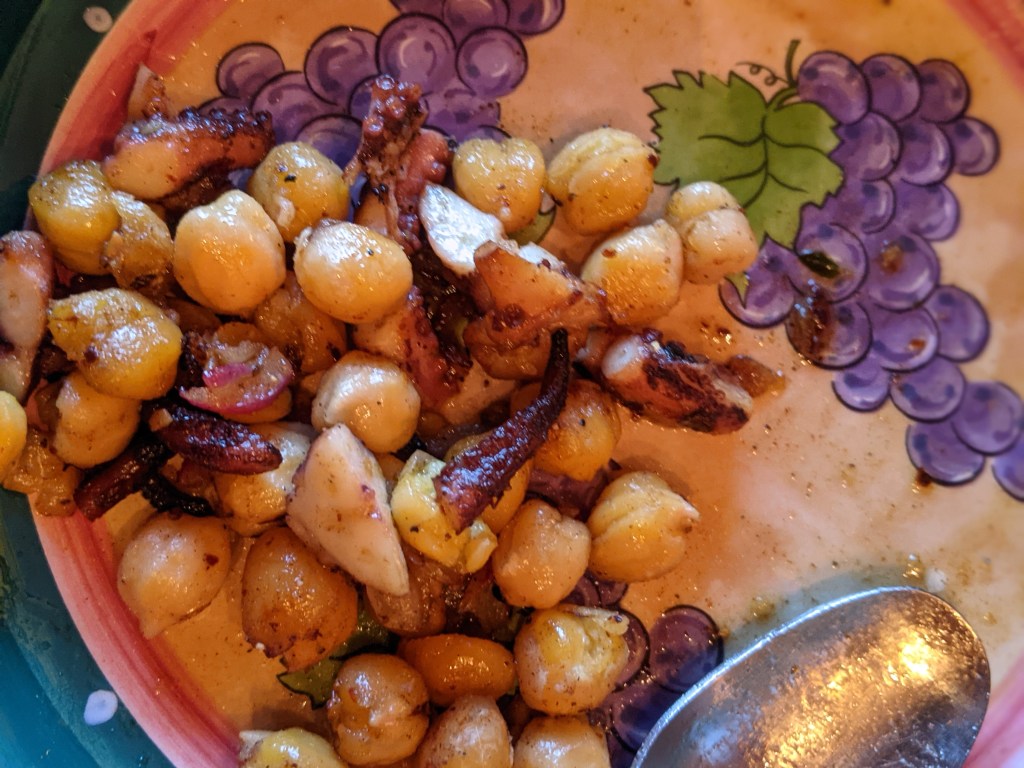
Grilled Baby Octopus, Grilled Sourdough, and Portuguese Chickpeas
Pan-Fried Sourdough, Lucas Canned Tuna, Red Onion, Scallions, and Plum Tomato
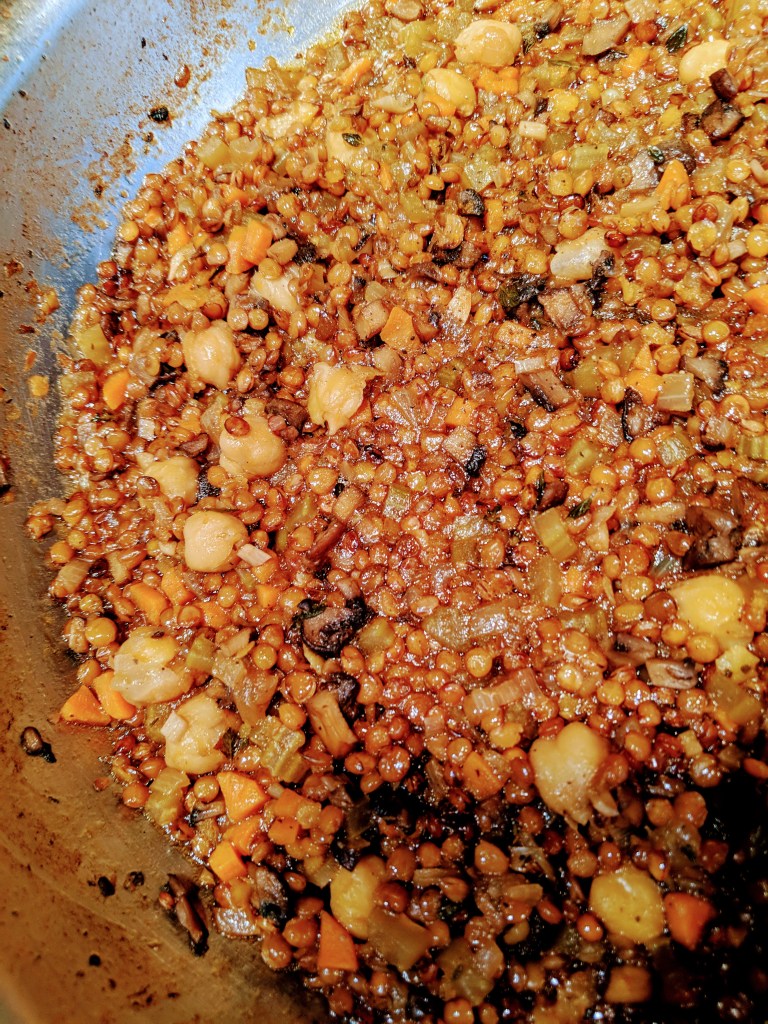
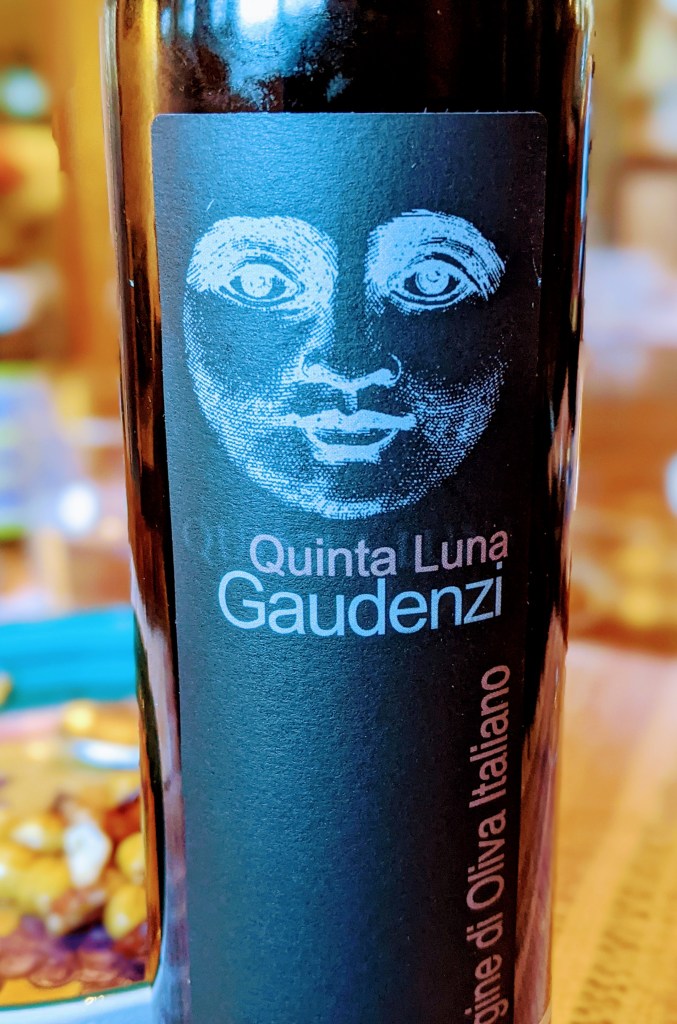
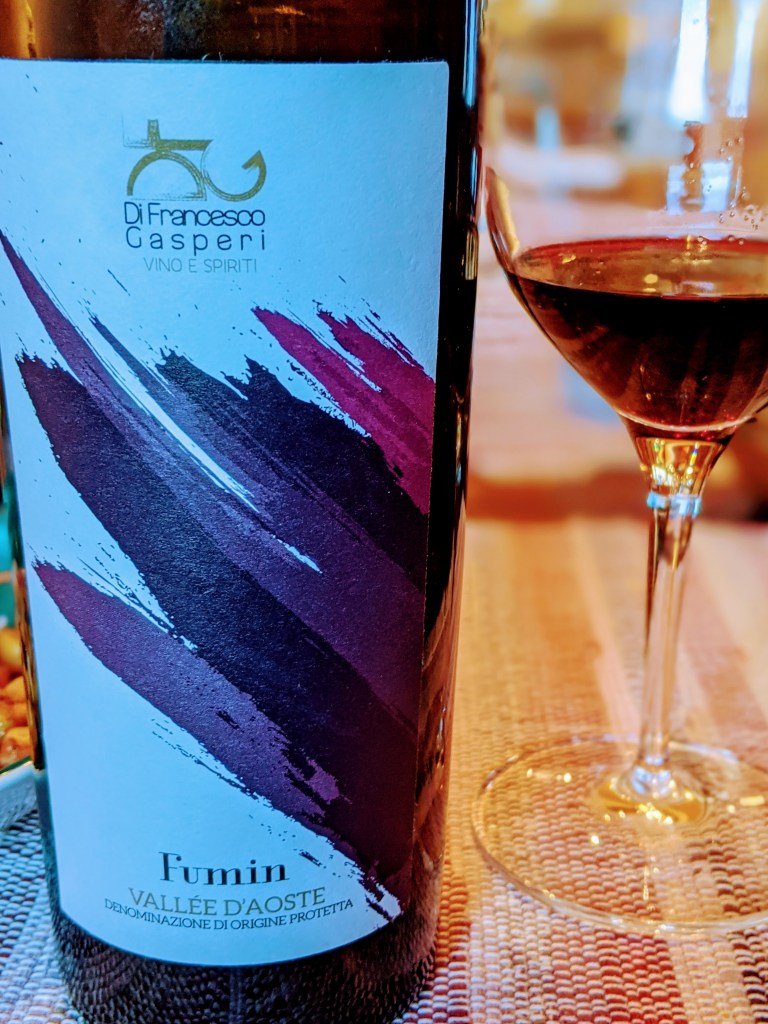
Sunday Night — Fried Crispy Baby Octopus with Chickpeas, Lentil Stew, Fumin wine and Quinta Luna Olive Oil from Italy
Altogether, it was a fine, but unusual, Thanksgiving. Food and wine very much to my liking, with major contributions from France, Spain, Portugal, and Italy — most of my favorite parts of the Mediterranean.
I’m willing to bet that none of you woke up this morning with the question in this title on your mind. Nonetheless, I am about to answer it, and I have some exciting food moments to share, in case you have any interest. If not, please move on to another post.
Due to COVID, my wife and I decided to have a private holiday with just the two of us. In yet another break with tradition, we decided — since neither of us is a fan of roast turkey — that we would start a new tradition: Thanksgiving dinner featuring a special Lobster and Pasta main course.
Naturally, this move required significant planning. The dish I had in mind takes at least two days to prepare, and obtaining great lobsters this week can be a challenge. A week in advance I contacted my best fish man, Chris, and arranged to meet him on that Monday, during one of his commercial deliveries, with a package of three pound-and-a-quarter each of the best vigorous lobsters. I brought the box home, repacked it with damp cotton towels and freezer packs, replacing the wet newspapers and melting ice cubes in the package. I made room in the refrigerator to store them overnight, and the live lobsters were quietly resting there at 41° F. until Tuesday.
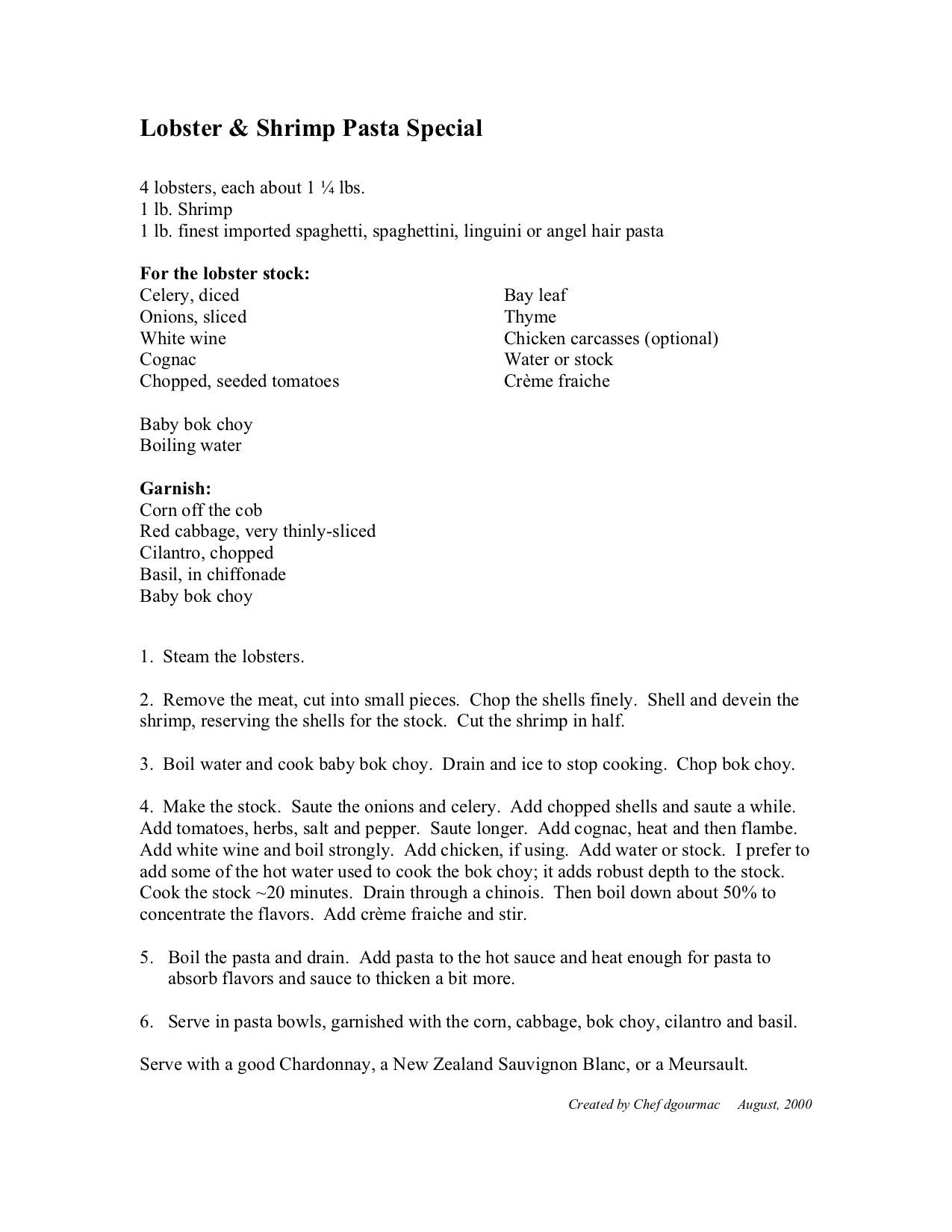
My game plan was based on a recipe I created 20 years ago, Lobster – Shrimp Pasta Special. I had not made this dish in probably 15 years, but I knew the technique and wanted to do a simplified version anyway (skip the shrimp and most garnishes) — especially avoiding trips to the store for obscure items during this hectic and dangerous week.
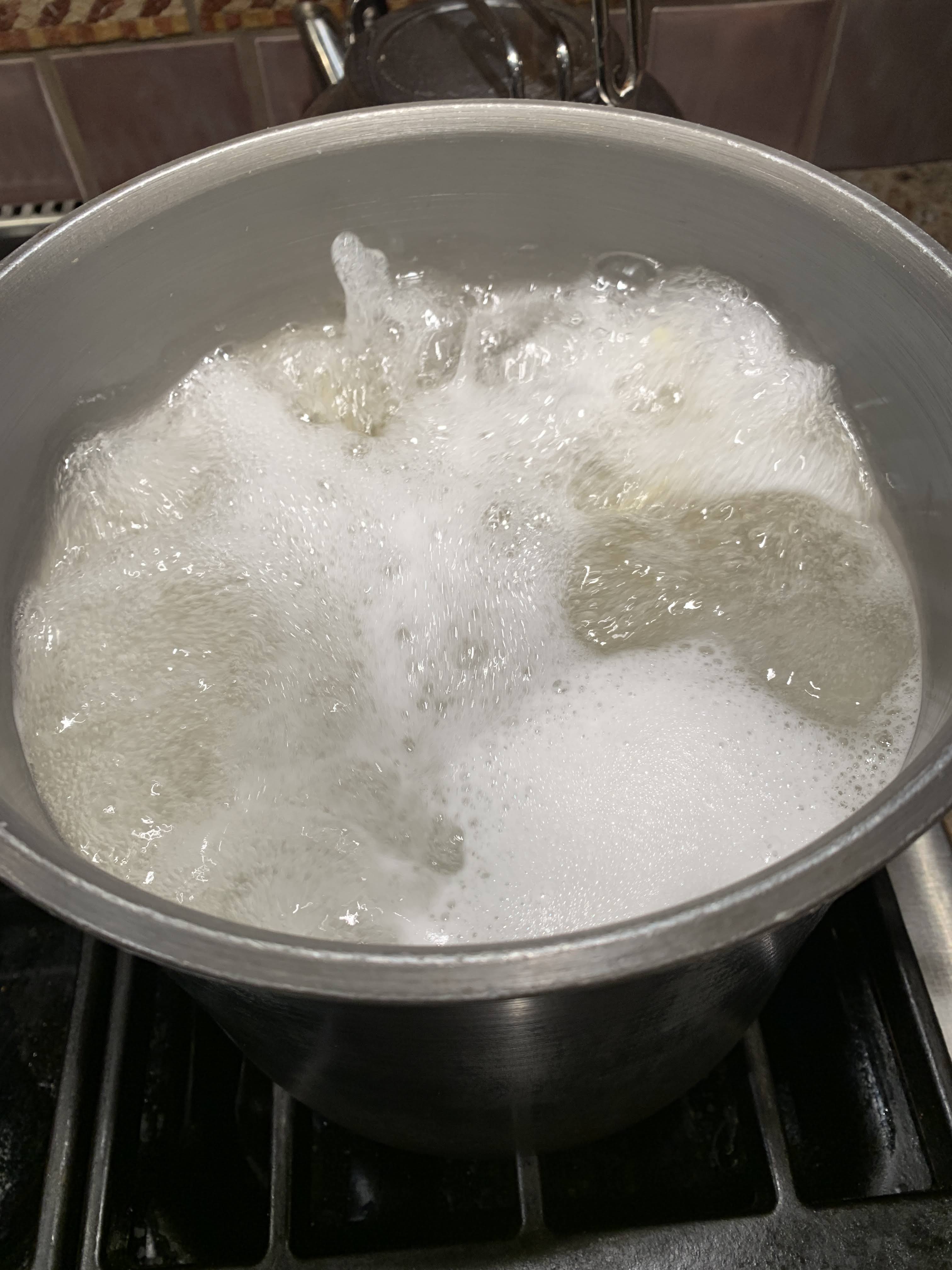
Filling a 12-quart stock pot with water and a lot of Sicilian sea salt, I boiled the lobsters for 7 or 8 minutes (depending on when one starts counting). That was long enough to firm up the lobster meat but not finish its cooking yet. It also allowed me to remove all the lobster meat and to free up the empty shells to make the stock.
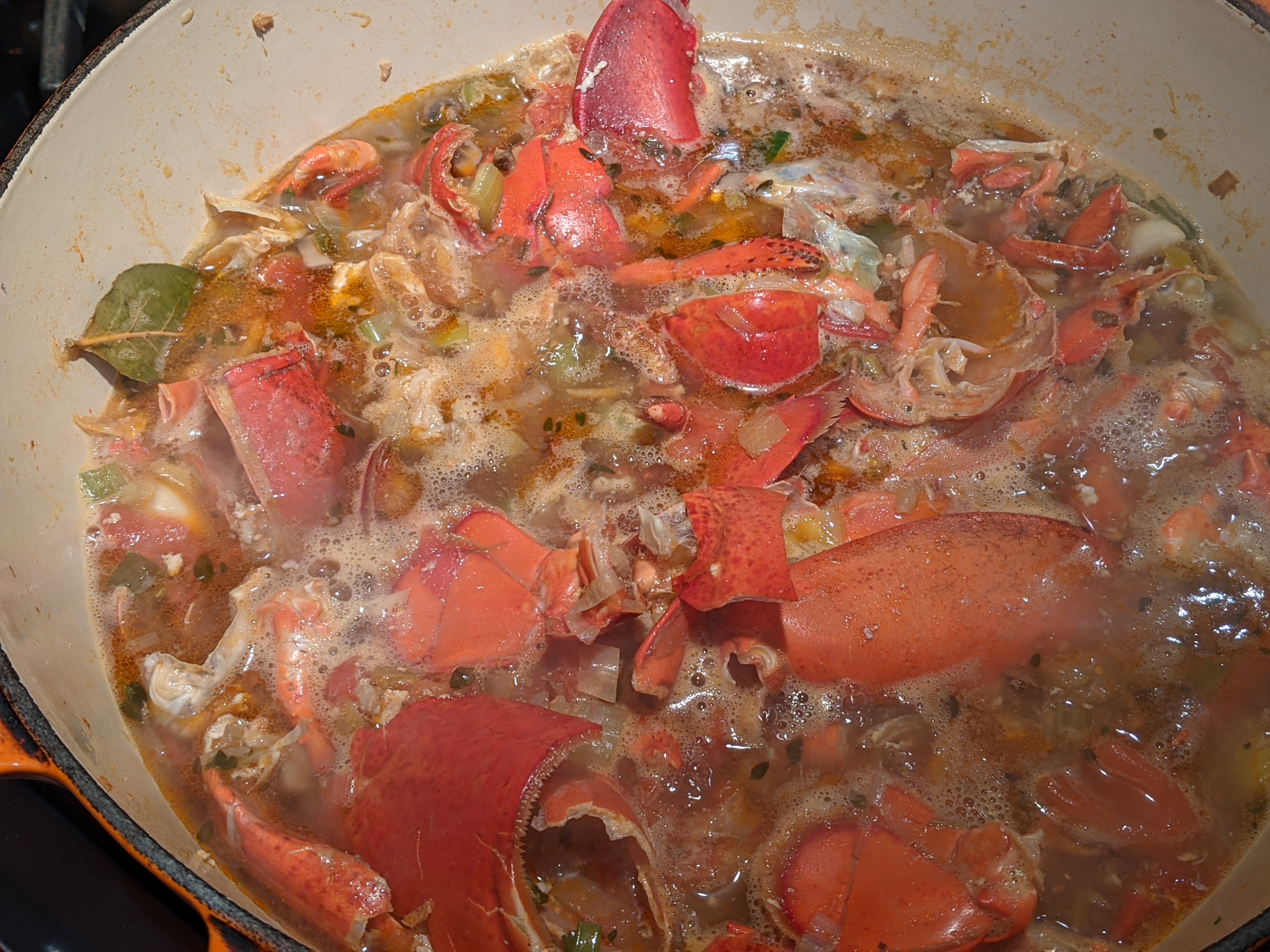
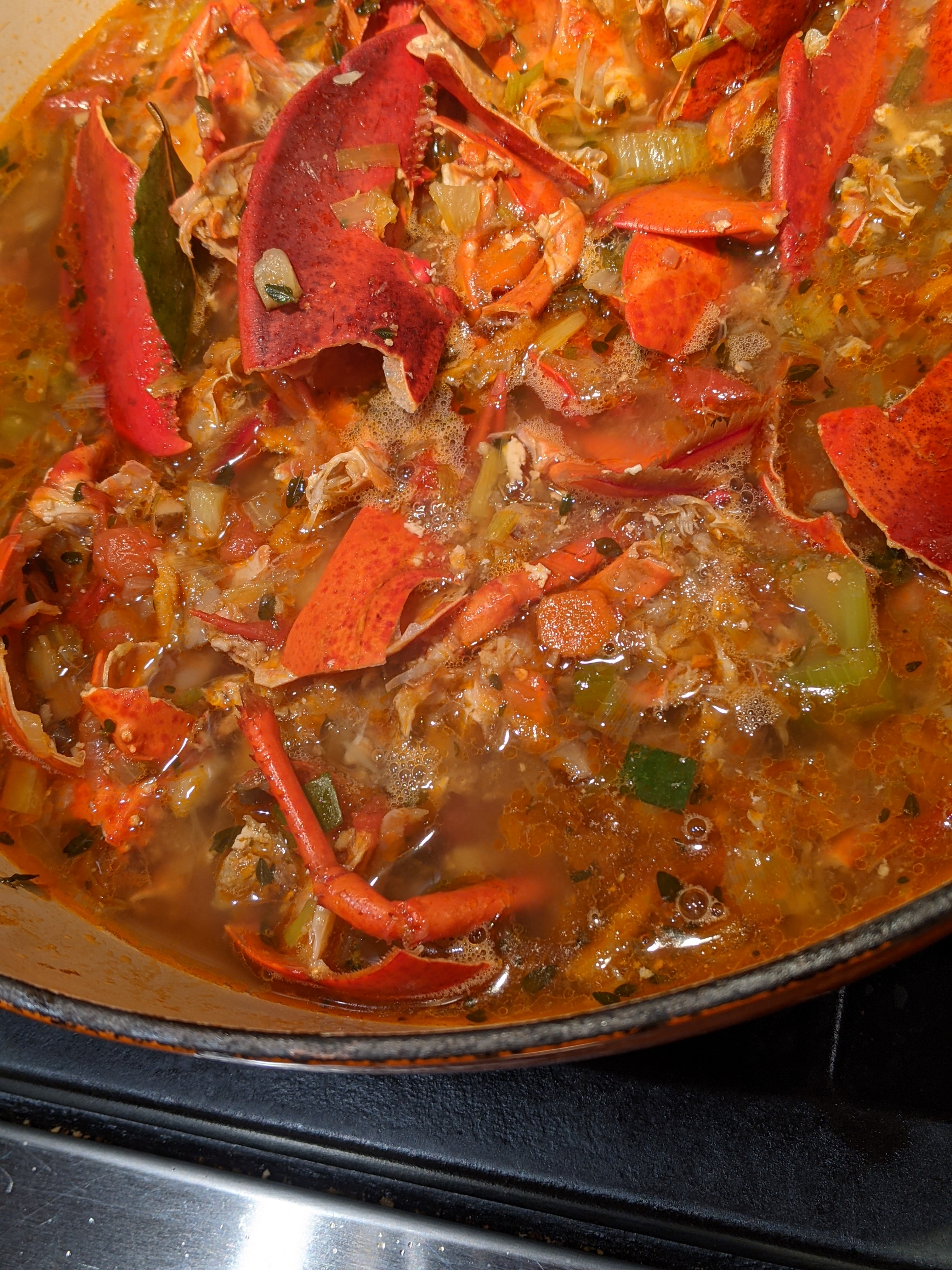
With the lobster meat securely in a bowl back in the refrigerator, I chopped the shells coarsely, along with the tiny legs and other edible but less-accessible parts of the body. and I sautéed them, (plus chopped celery, onion, garlic, leek, scallions, and a little bit of carrot) in two very large, wide pots. After these were sautéed for about 15-20 minutes, I added tomatoes, fresh herbs, salt and pepper, and soon after, some cognac and then white wine. As the vegetables cooked down in volume, I combined it all in the larger pot — my Le Creuset 7.5 quart Bouillabaisse pot, and continued to cook it a bit longer.
When it appeared that we had extracted most of the desired flavor from the carcasses, The stock was strained, first in a coarse strainer to remove the shells, and then through a chinois, to remove finer pieces of matter. The strained broth was then boiled until the volume was reduced by 50%, concentrating the flavor. I decided to add the cream the when assembling the final dish on the holiday.
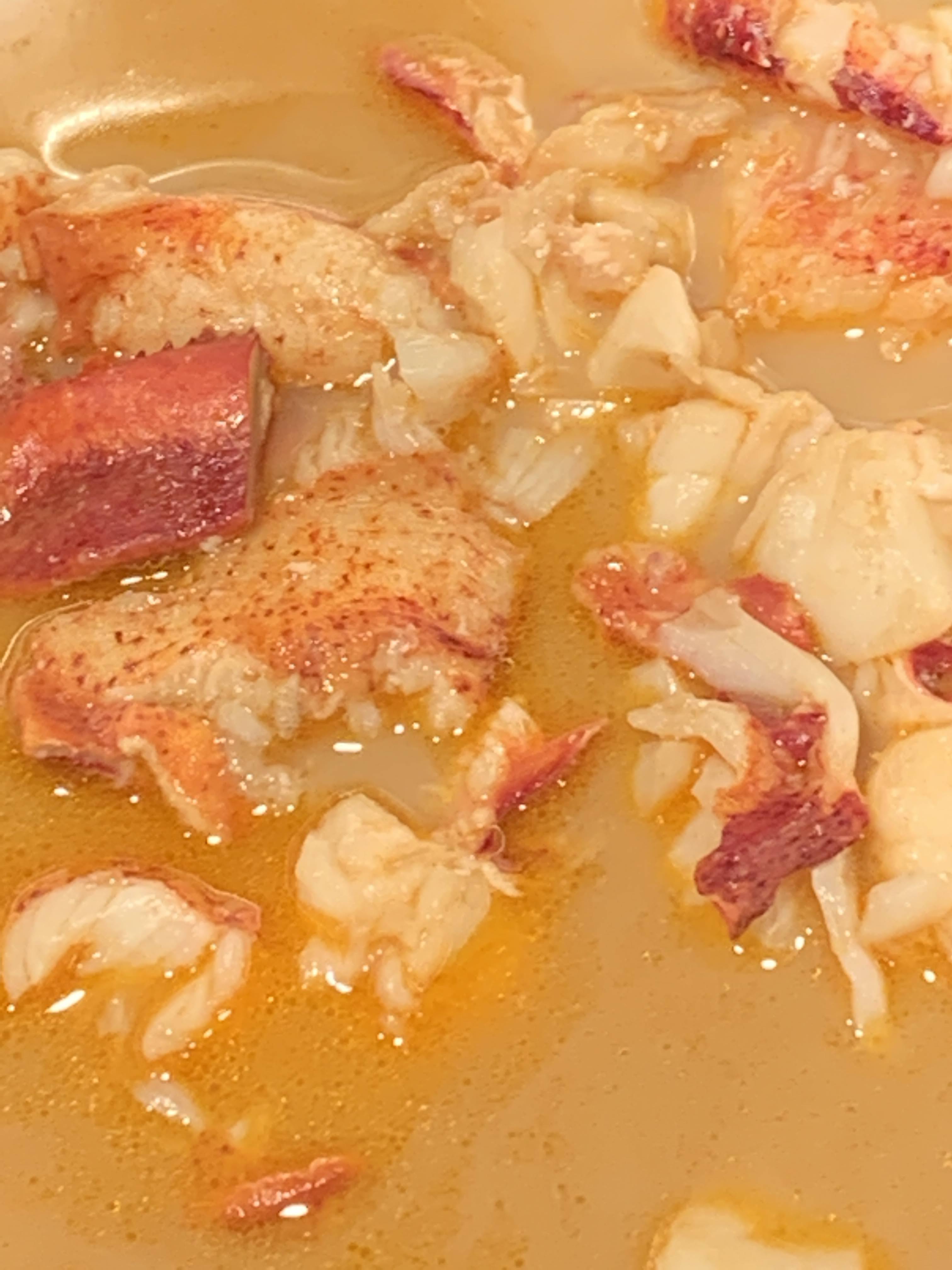
Thanksgiving Day arrived soon enough. Step 1 was to boil the pasta, in this case 250 g. of linguine. The lobster meat had already been warmed in the strained broth and cut into bite-sized pieces and then separated into two groups: tail meat and claw meat, so I could distribute them evenly.
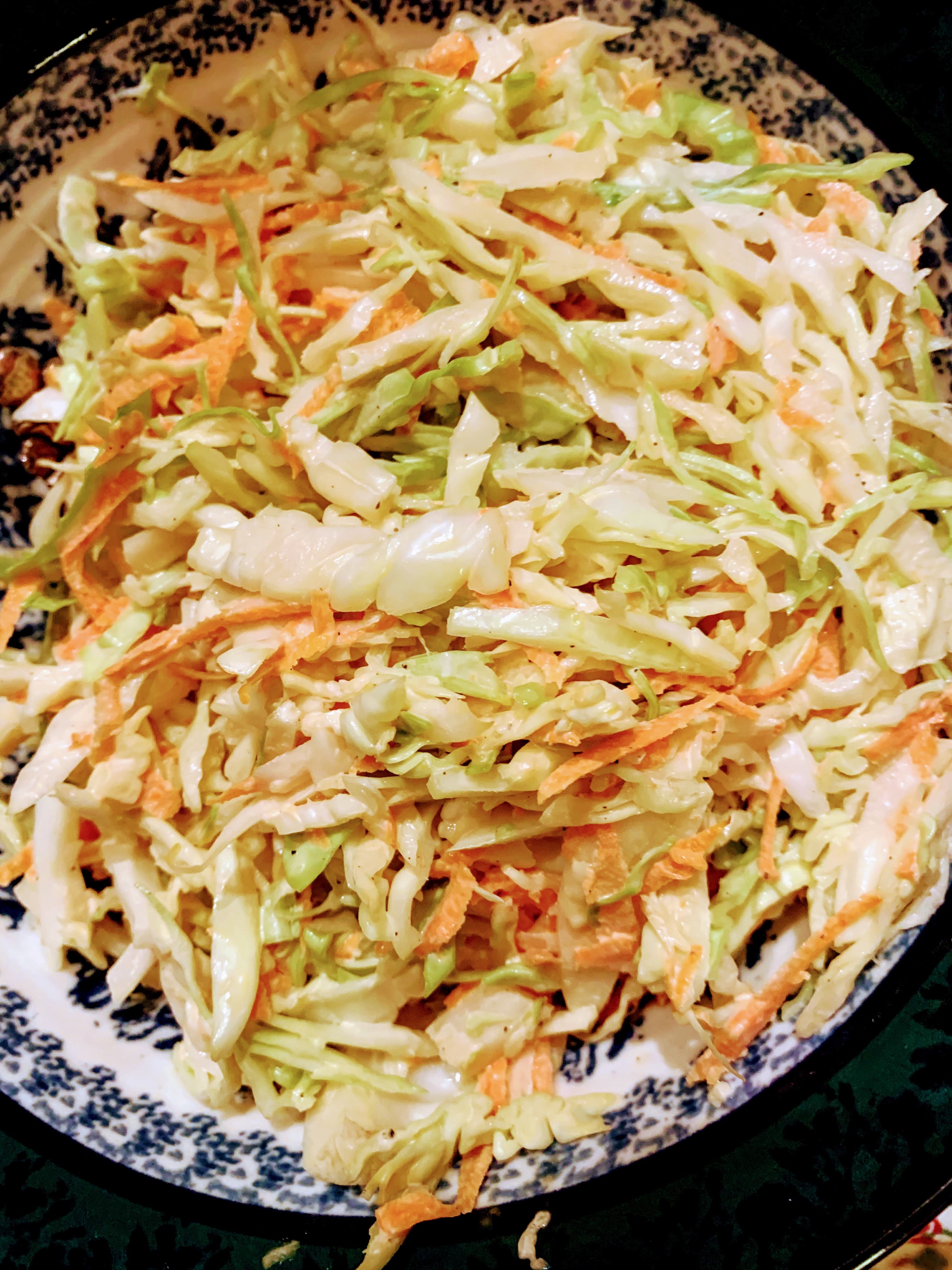
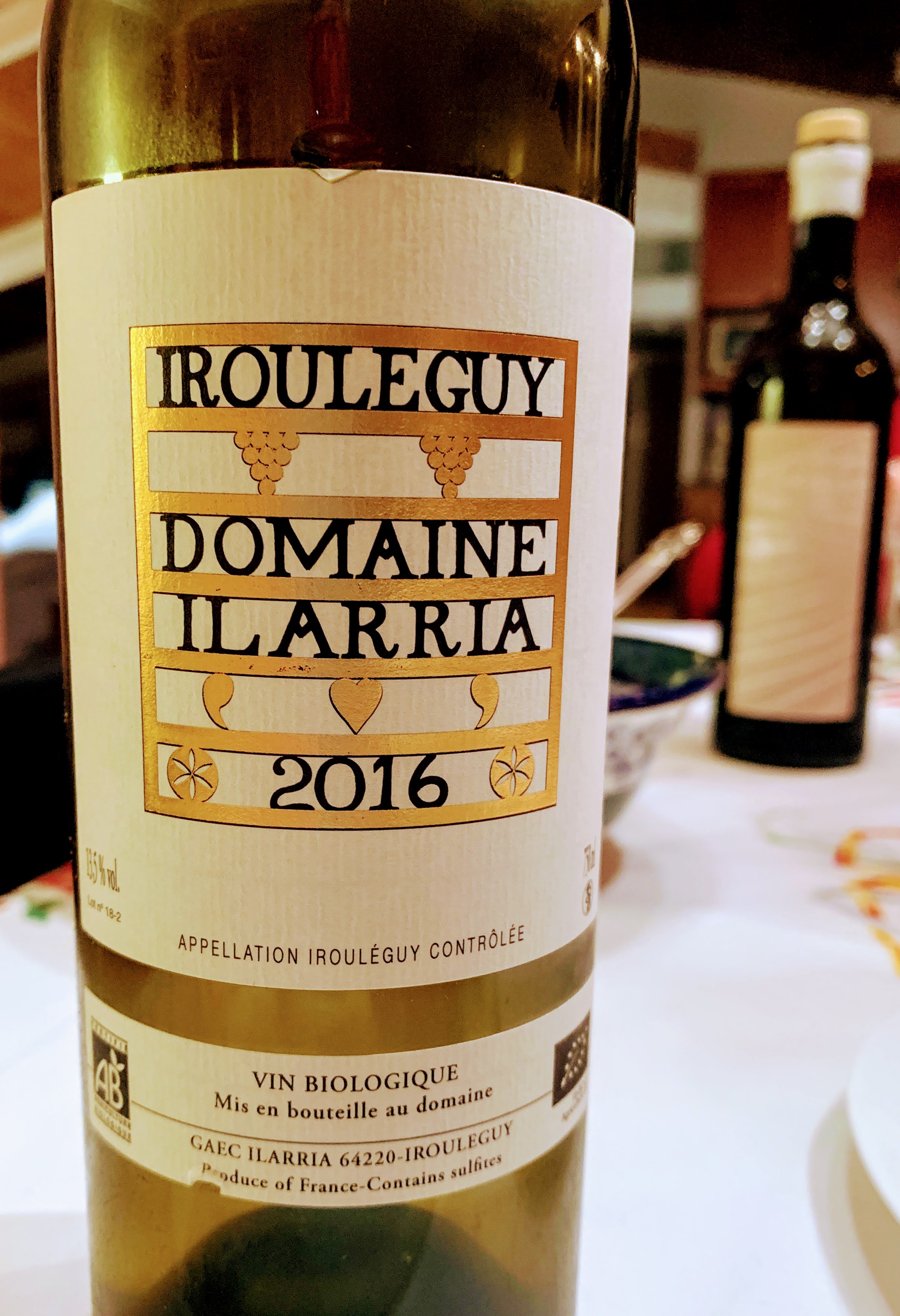
Our largest pasta bowls accommodated a full portion of lobster, sauce, and pasta, This we sprinkled with chopped fresh parsley and basil from our greenhouse and then accompanied with Barbara’s excellent cole slaw. I tried two white wines, settling on a French Basque wine, Domaine Ilarria from Irouleguy.
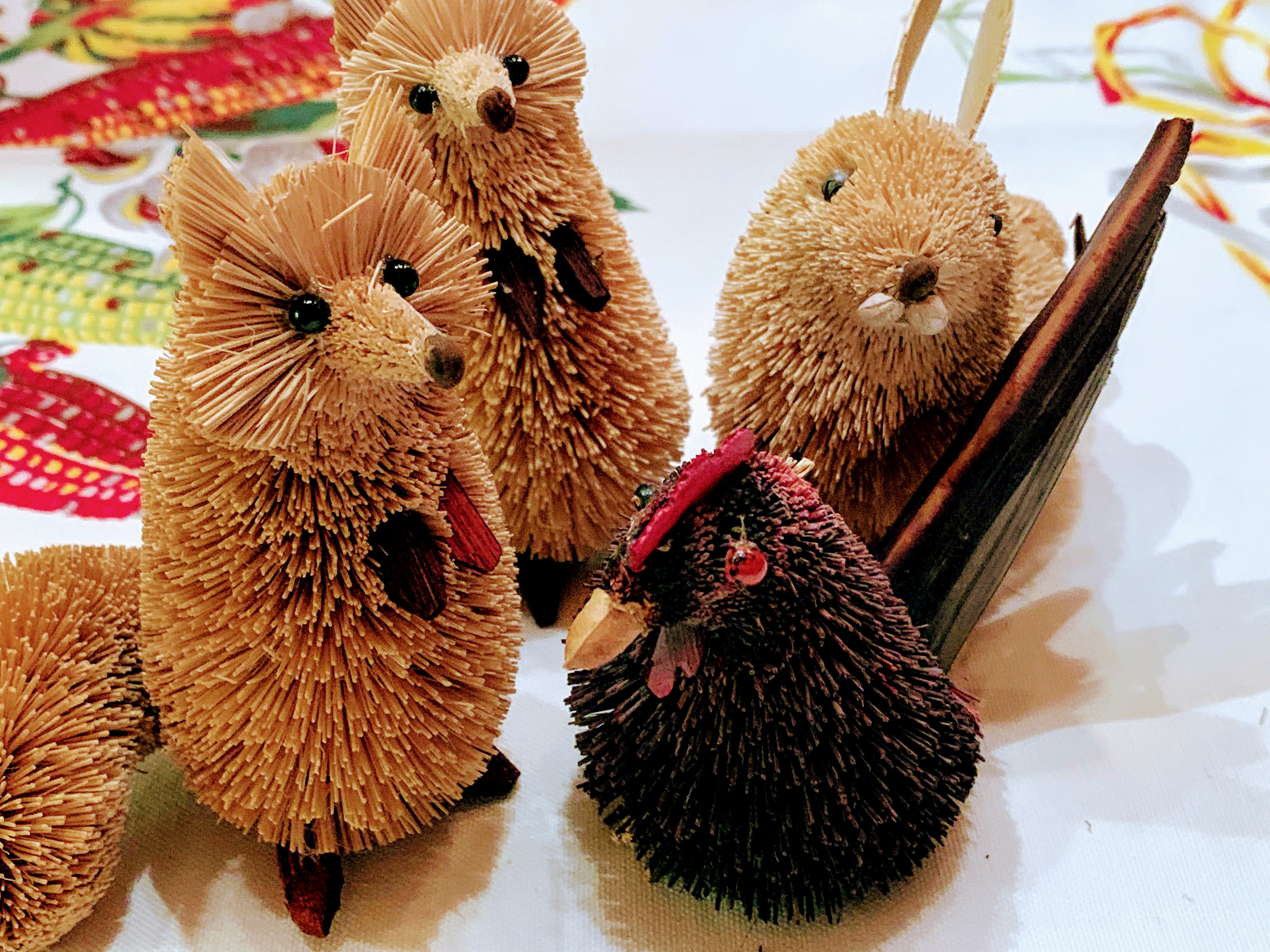
Barbara’s straw rodents completed the holiday table, until her Sweet Potato Pie was presented for dessert. Altogether, a happy new tradition, in my view.