records an eclectic mixture of food, travel, and experimentation.
Food
A simple and satisfying supper:
A new dish from my wife’s cookbook club — a Shallot Tart:
Baking my favorite sourdough boule…
Improving my technique cooking marvelous fresh Porcini…
Yet another tasty beet salad….
Trying out an octopus appetizer at a new French restaurant in Cambridge (Batifol):
accompanied by artichokes and a red pepper coulis.
Travel and Experimentation
We went out West for almost a week, visiting our son. The weather was perfect and it was a joy to be together again. Experimentation came about during an excellent dinner in Jerome. There I had the best Negroni I ever had. The secret ingredient was Punt e Mes, a vermouth with a touch of amaro flavor. I made another when we got home, and it was just as good.
Visiting offers interesting insights into the lives of others….
I often turn to Greek dishes when I am looking for healthy, flavorful, satisfying meals based on good vegetables. You will find a number of such meals in this blog, such as Briam, Tourlou, and Soufiko. Tonight we added a new one to the repertoire: Melitzanopilafo.
One of the best and most prolific sources of these Greek gems is Diane Kochilas. We were happy to borrow from her library tonight for a delicious dinner. Check out her video on her website.
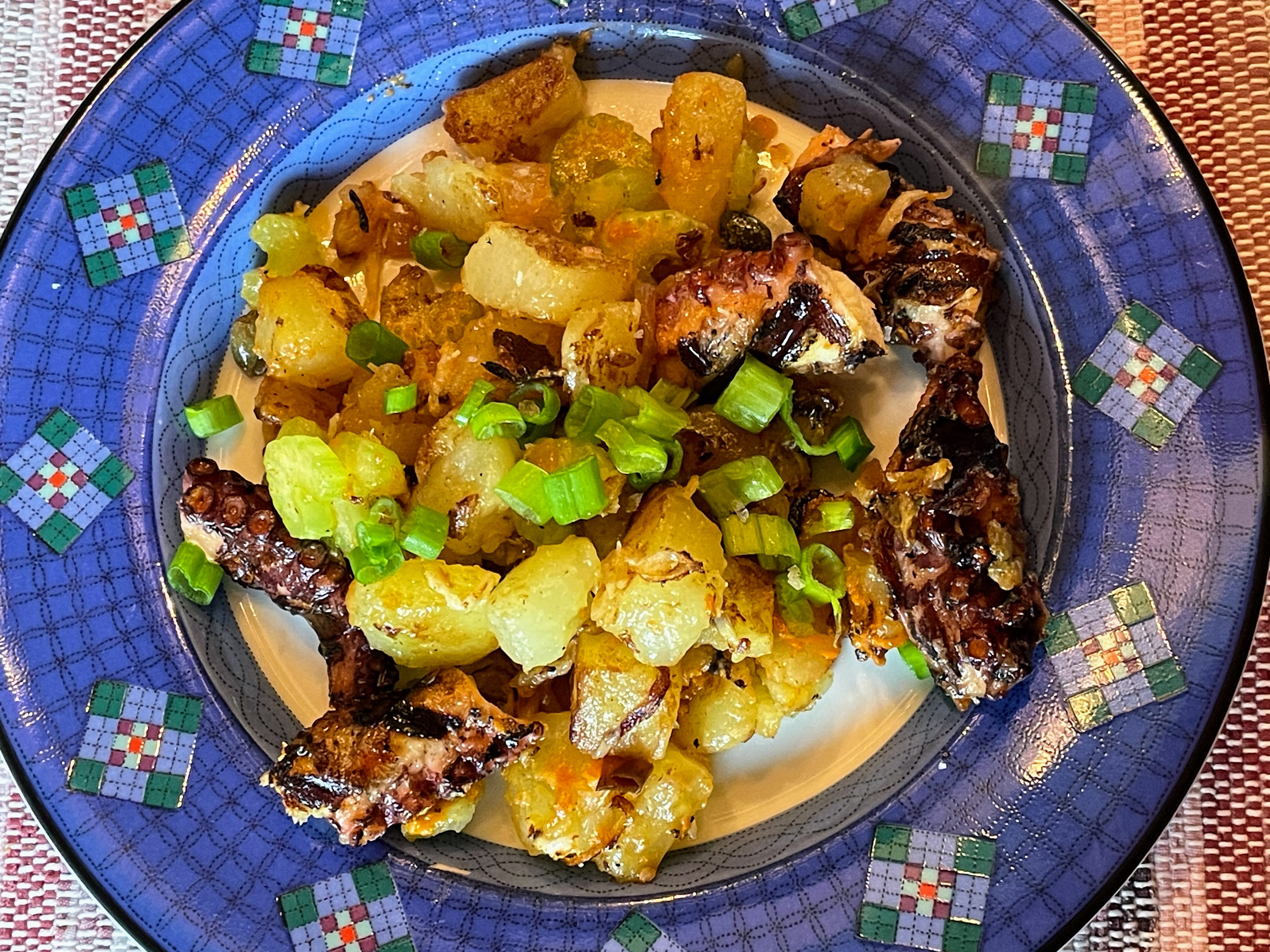
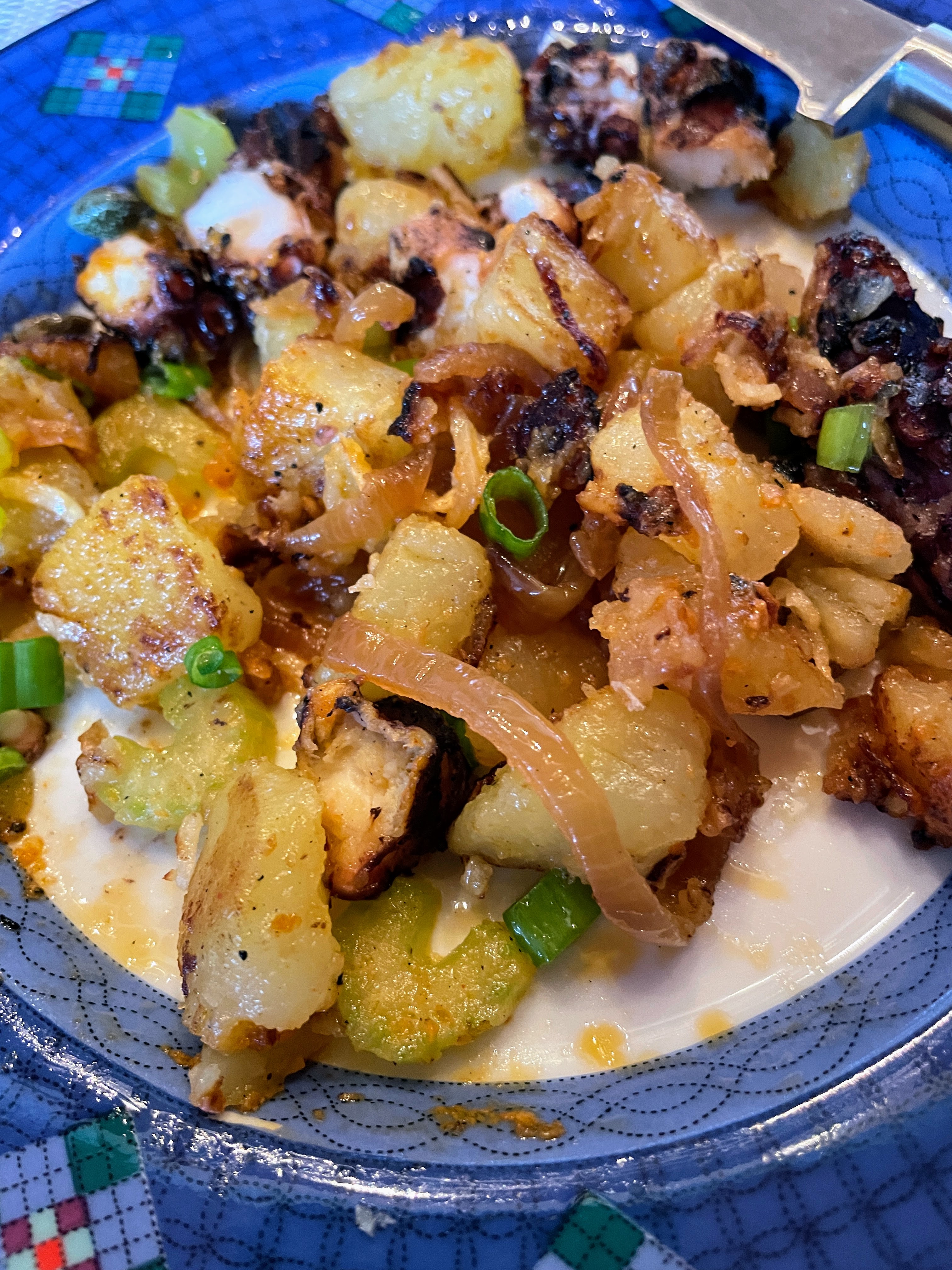
I continue to be amazed with how many delicious dishes can be made when you start with octopus and potatoes. Today’s lunch, for example, began when I grilled three tentacles from my latest octopus. After peeling one Yukon Gold potato, I cut it in medium dice, boiled it for 10 minutes in salted water, and then began the sauté.
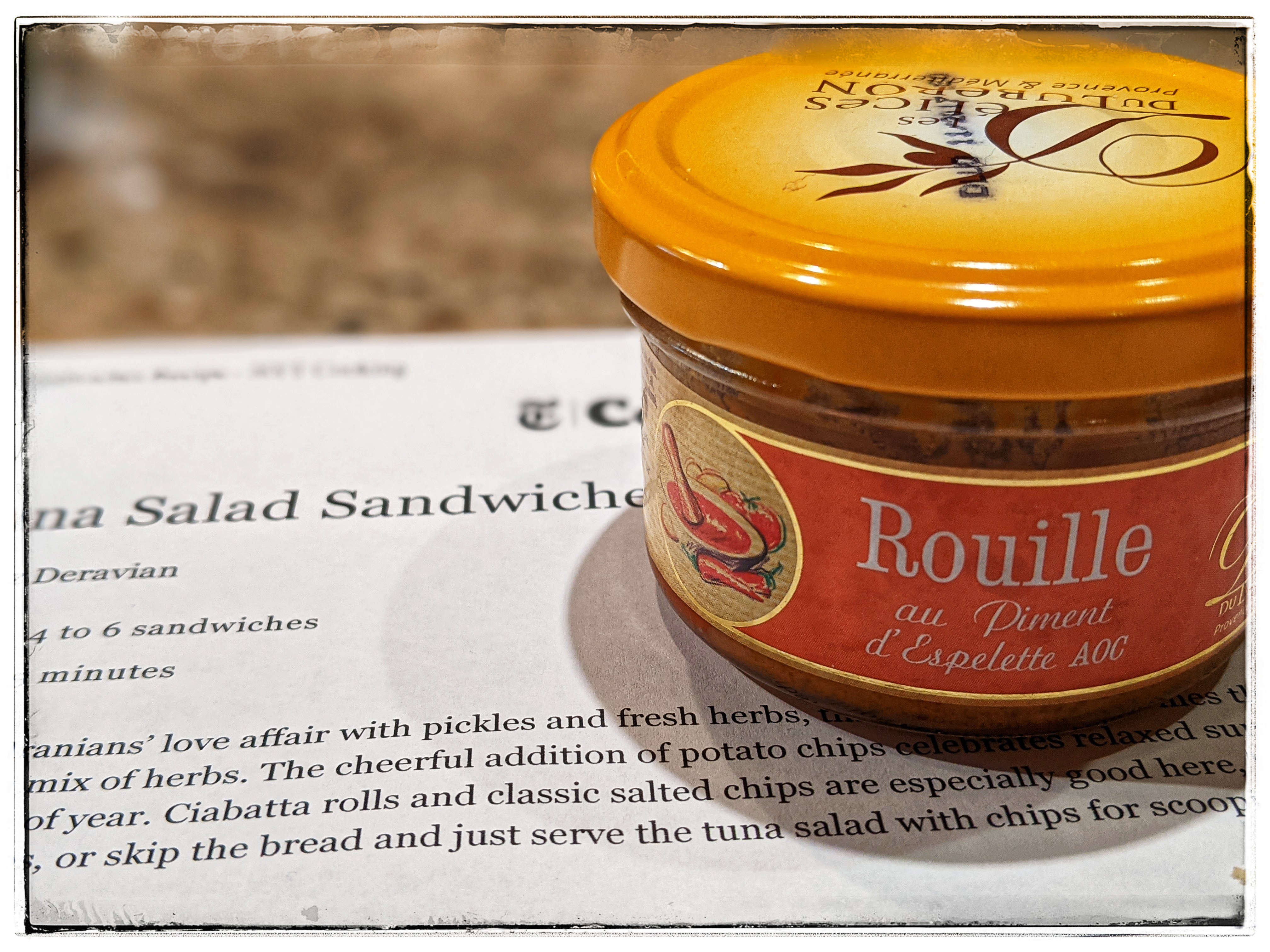
As the potatoes began to brown, I added some chopped celery, a small piece of julienned Daikon radish, a tablespoon of Rouille D’Esplette for the Basque touch in flavors, a bit of leftover caramelized onions, a tablespoon of Santorini capers, and chopped scallions. The dish was finished off with a few squirts of a Meyer lemon, a pinch of Maldon salt, and a few glugs of my best Portuguese olive oil.
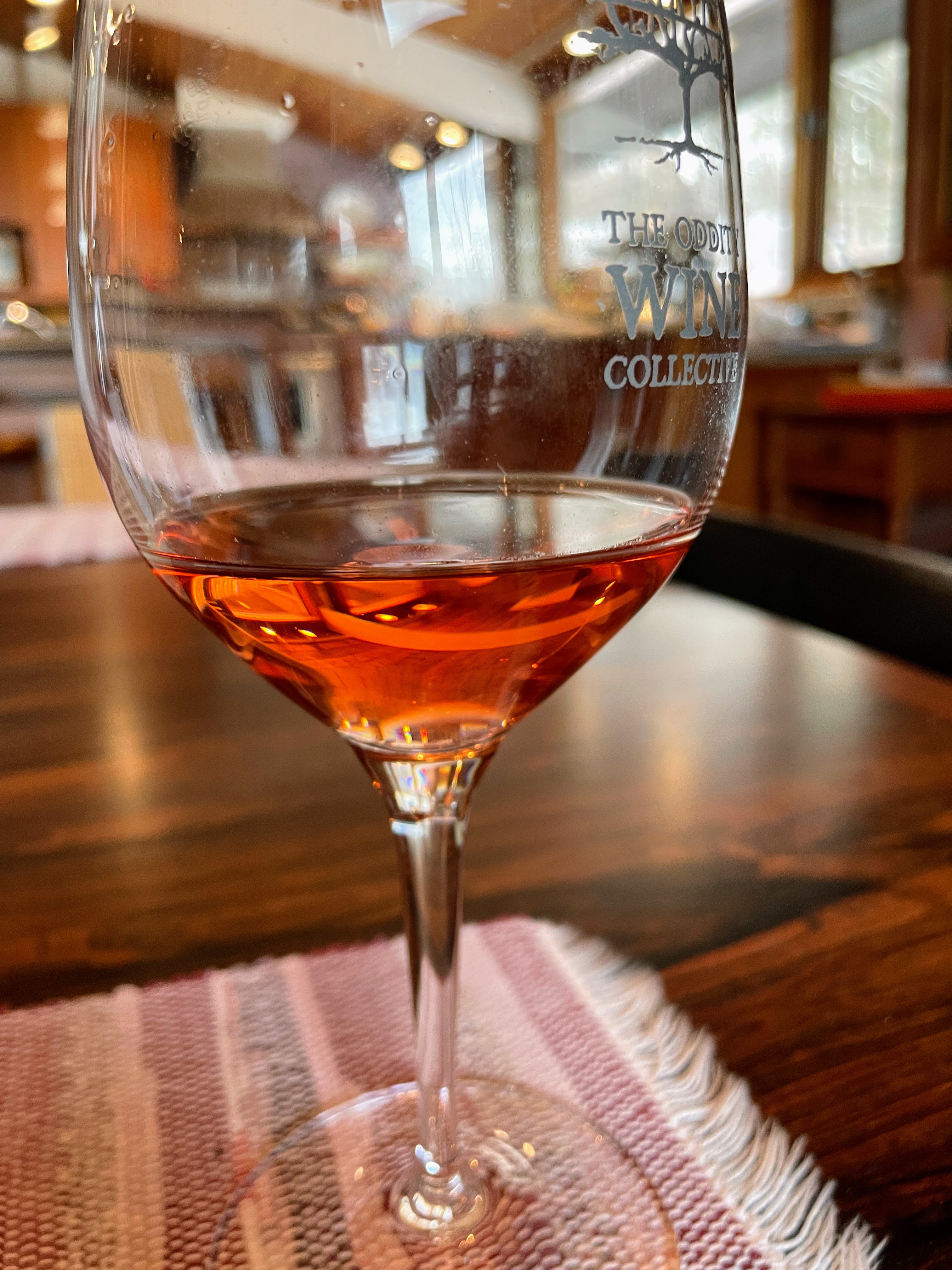
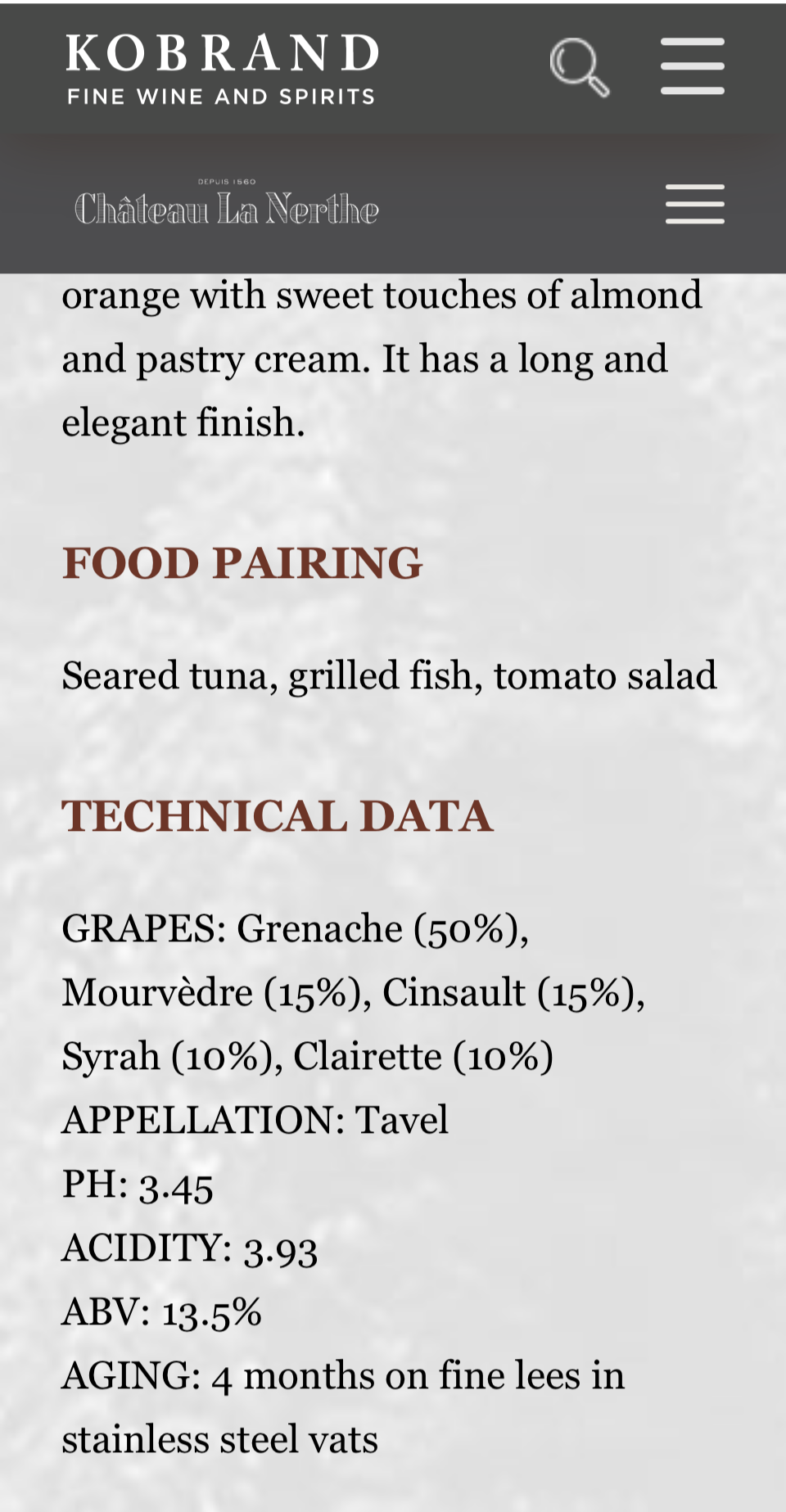
It was delicious from every angle. That was also true of the accompanying rosé, Prieuré, imported by Kobrand. Primarily Grenache, this wine was a delightful blend of 5 grapes as listed in the photo above.
I usually find salads to be boring. Flavorless lettuce and tomatoes in plastic packaging does not inspire me in any way. However, when I have access to interesting fresh vegetables, I find a way to make exciting salads. Lunch the other day is a good example. Because of the long list of unusual ingredients, I am calling it my “Off-the-Wall Salad”.
One of the keys to this dish is that the raw beets and kohlrabi were sliced in fine julienne style with this mandolin device, an extremely useful piece of kitchen equipment.
To complete the “Off-the-Wall-ness” of the meal, I selected a delicious Georgian wine with 30% skin contact, Tsolikouri. The antithesis of “boring”.
It’s a Monday night and it’s my turn to cook dinner. One of the deciding factors determining our meals is the status of ingredients. Tonight’s near-crisis was a dish on the kitchen counter with 5 small fresh tomatoes which were fully ripe and nearing their end-of-life. As usual, I began the search for the meal by taking the key ingredient and exploring the options.
I’m very comfortable in the digital world and use my computer to canvas recipes in my Dropbox folder (with about 7,000 recipes), as well as on the internet. Tonight, however, I started with my analog resources (a few hundred cookbooks). One book caught my eye: Pierre Franey’s Cooking in France. As I perused the pages (which I had not read in a few years), I quickly located one from Burgundy, Sautéed Spinach with Tomatoes that interested me. It was short, clear and concise, in Franey’s inimitable style. and I was thrilled to see what I could do with a full bag of spinach purchased two days ago, in addition to using the tomatoes.
Now I needed some protein, and my wife had just bought a bag of Lundberg Organic Long Grain Brown Basmati at the market. Here’s where the leftovers kick in. I sliced the remaining half of yesterday’s shallot to add to the rice. The other home run in the leftover department was 2/3 cup of mushroom potato broth, recently used to braise fingerling potatoes. The 1/2 cup of rice was cooked with the broth, topped off to make 1 cup of liquid, plus 2 Tbs of unsalted butter. That required 45 minutes of simmering and 10-15 minutes of resting to finish the grain.
It took less than 15 minutes to cook the spinach and tomatoes. I also sliced some of the focaccia I made yesterday to accompany the vegetables.
Spinach and tomatoes atop the brown Basmati rice, alongside focaccia
La Piece de Resistance, as we say in Burgundy, was a glass of Italian wine from Friuli at the Slovenian border. Made from the not-well-known Schioppettino grape, it was a gift a few days ago from a good friend of ours who is the importer and distributor for I Clivi wines in our state.
The meal was a big hit. It also checked all the boxes: used must-cook ingredients, leftovers, on the table in less than an hour, healthy, easy cleanup, and delicious. Bon appetit!
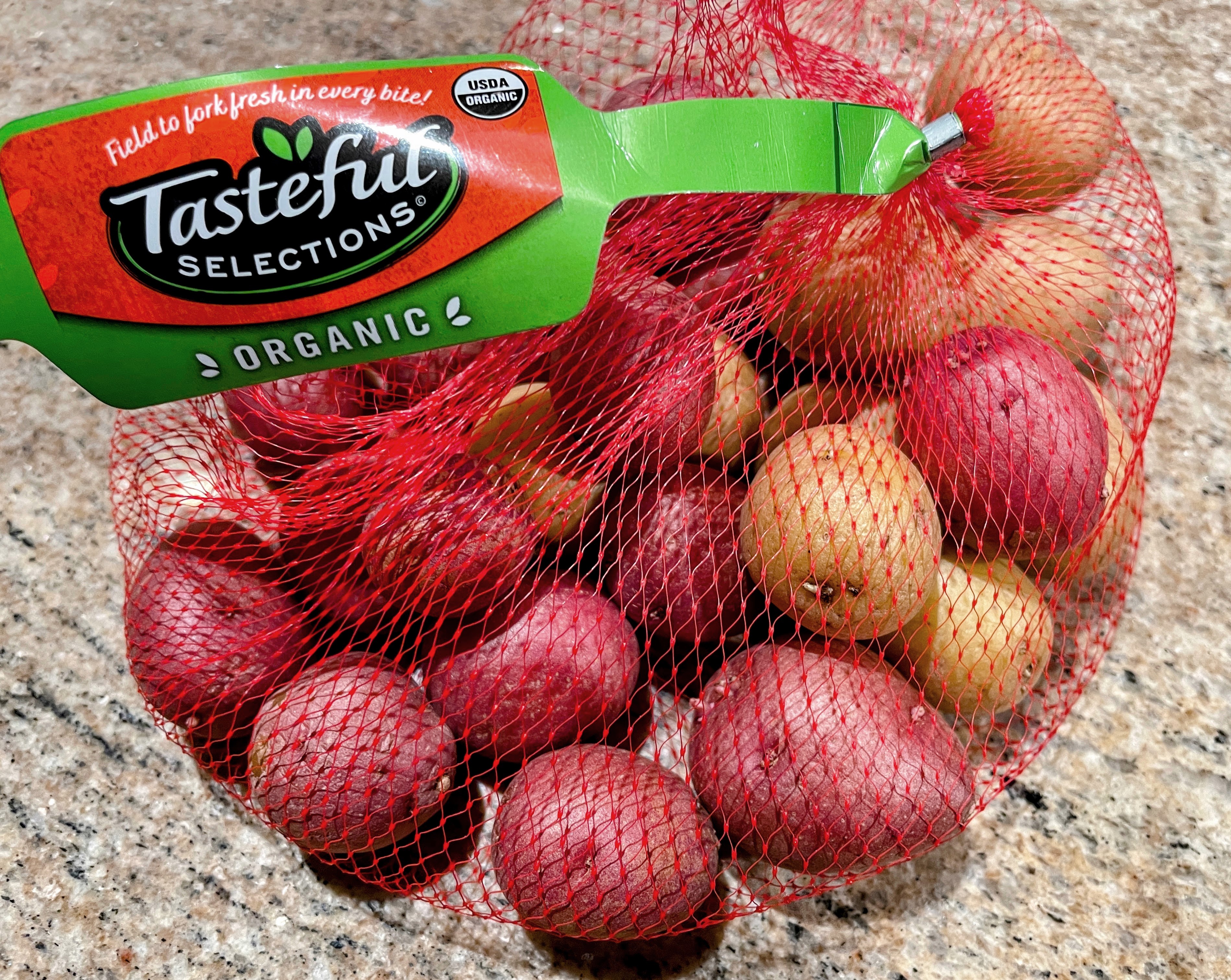
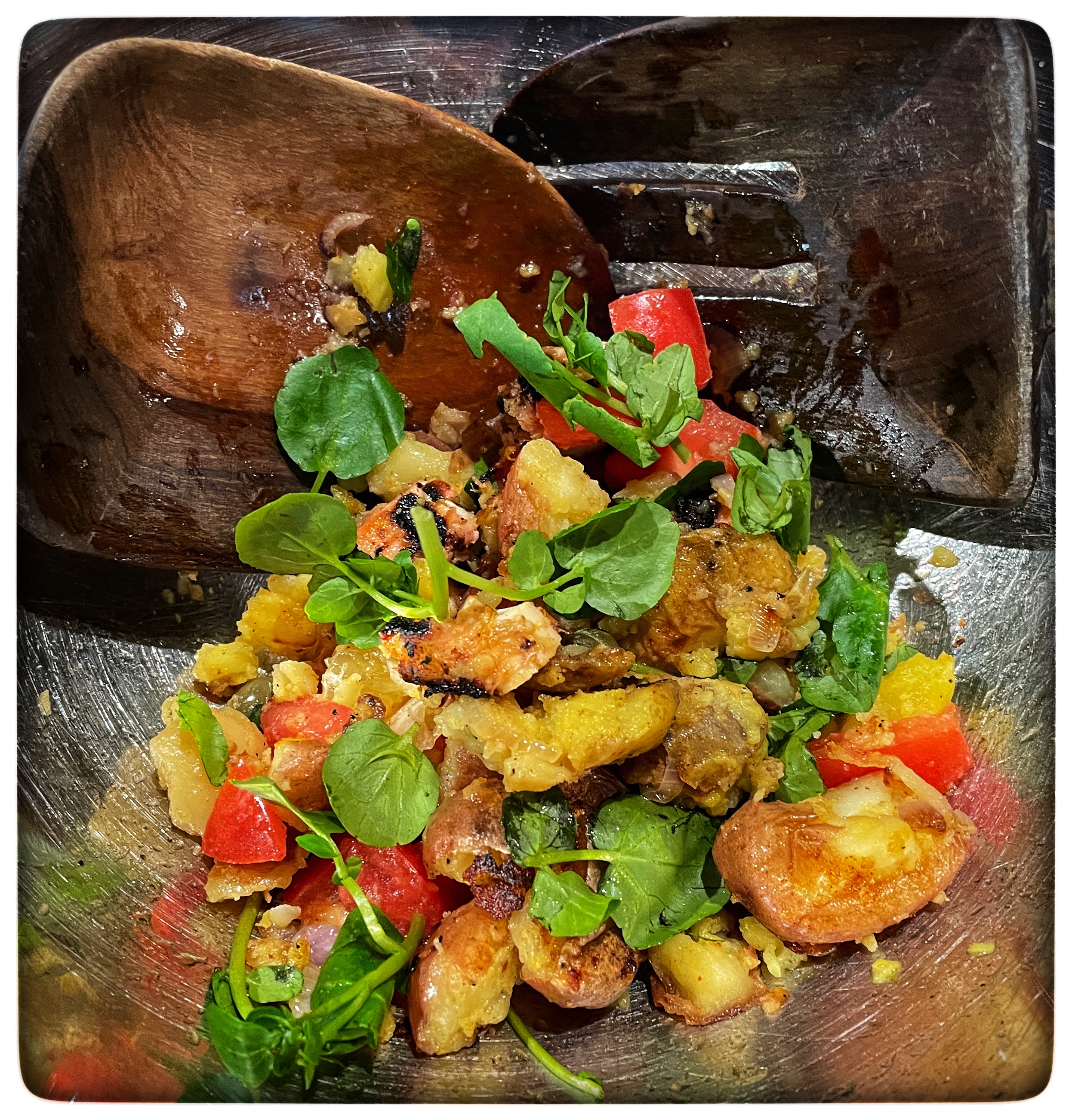
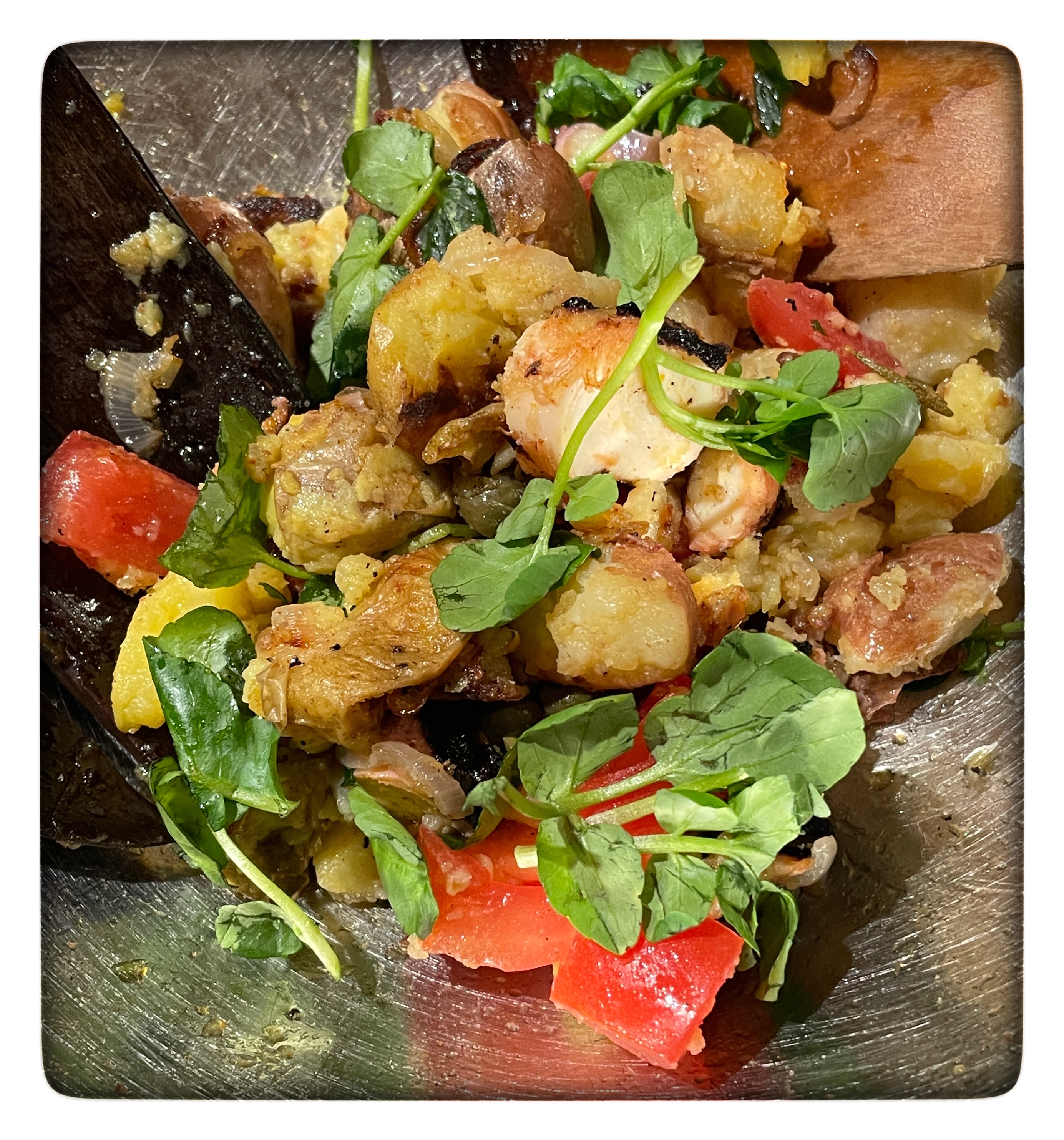
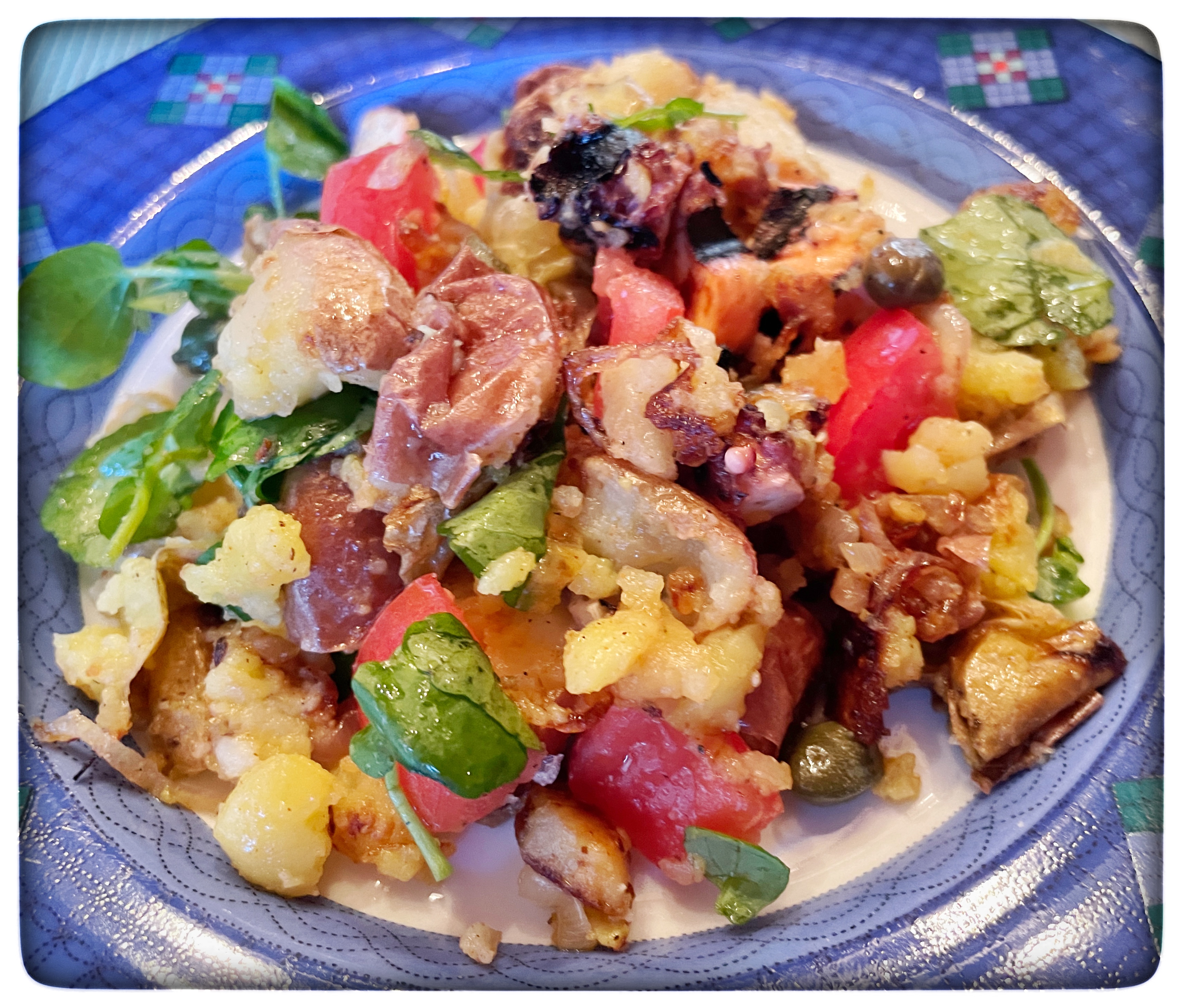
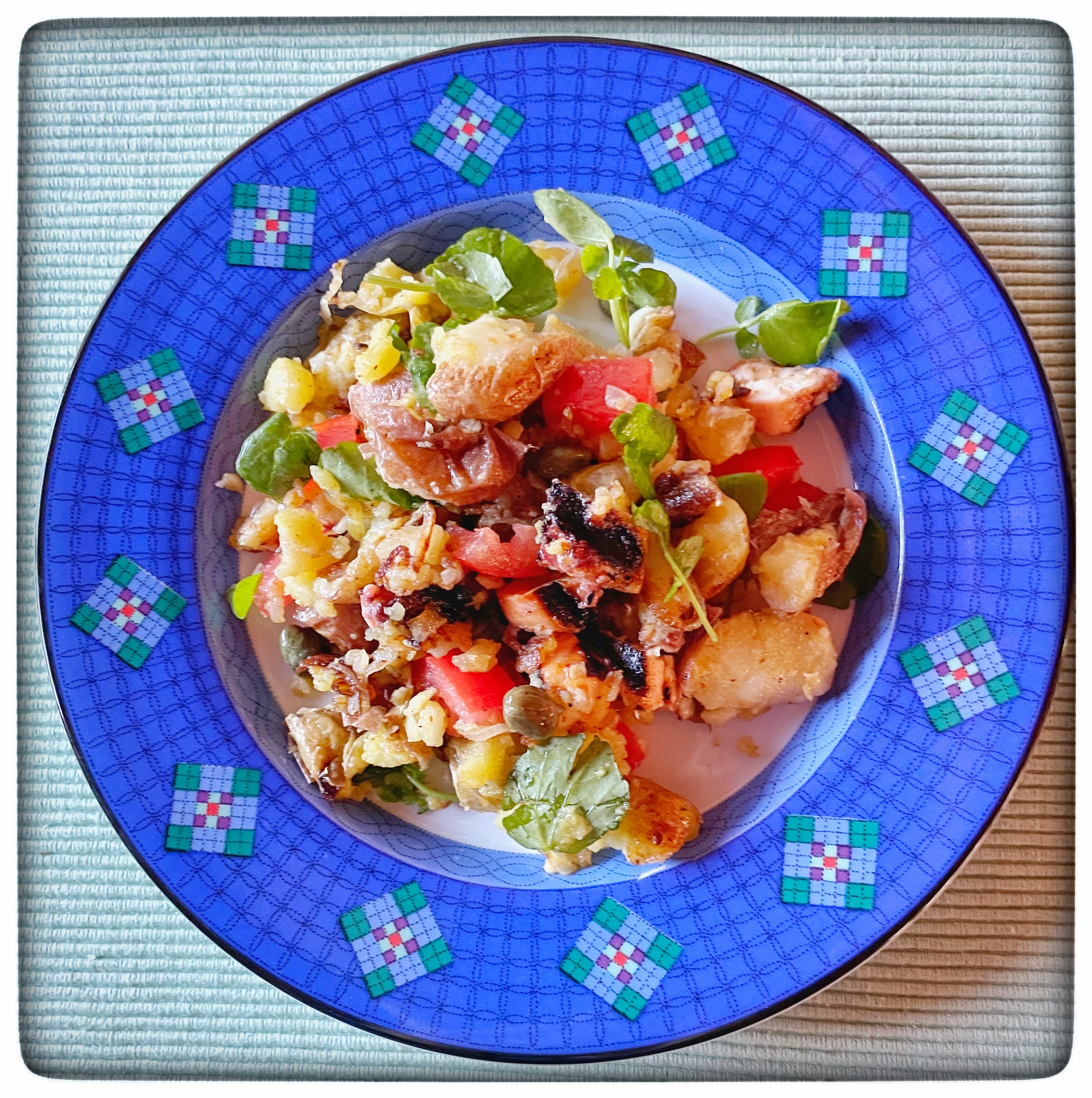
It is nearly impossible to make a bad meal with grilled octopus and potatoes. Today’s case in point was an experiment that came out great. The primary ingredients were little baby (“one bite”) potatoes and one and a half grilled octopus legs. They were accompanied by one plum tomato, a sautéed shallot, a few capers, watercress, olive oil, salt and pepper, Meyer lemon segments, and smoked pimenton.
Recipe
1. Simmer the tiny potatoes in a broth of water, a few desiccated mushrooms, shallot and five slices of leek.
2. When the potatoes are tender, crush them in a frying pan and sauté with olive oil, flaky sea salt and pepper, and cook until they are crispy on the outside edges — about 20 minutes.
3. Cut up the tomato, and sauté another shallot. Mix them together with the capers in a large bowl.
4. Grill the octopus. Cut into bite sized pieces and serve topped with the watercress for color and flavor.
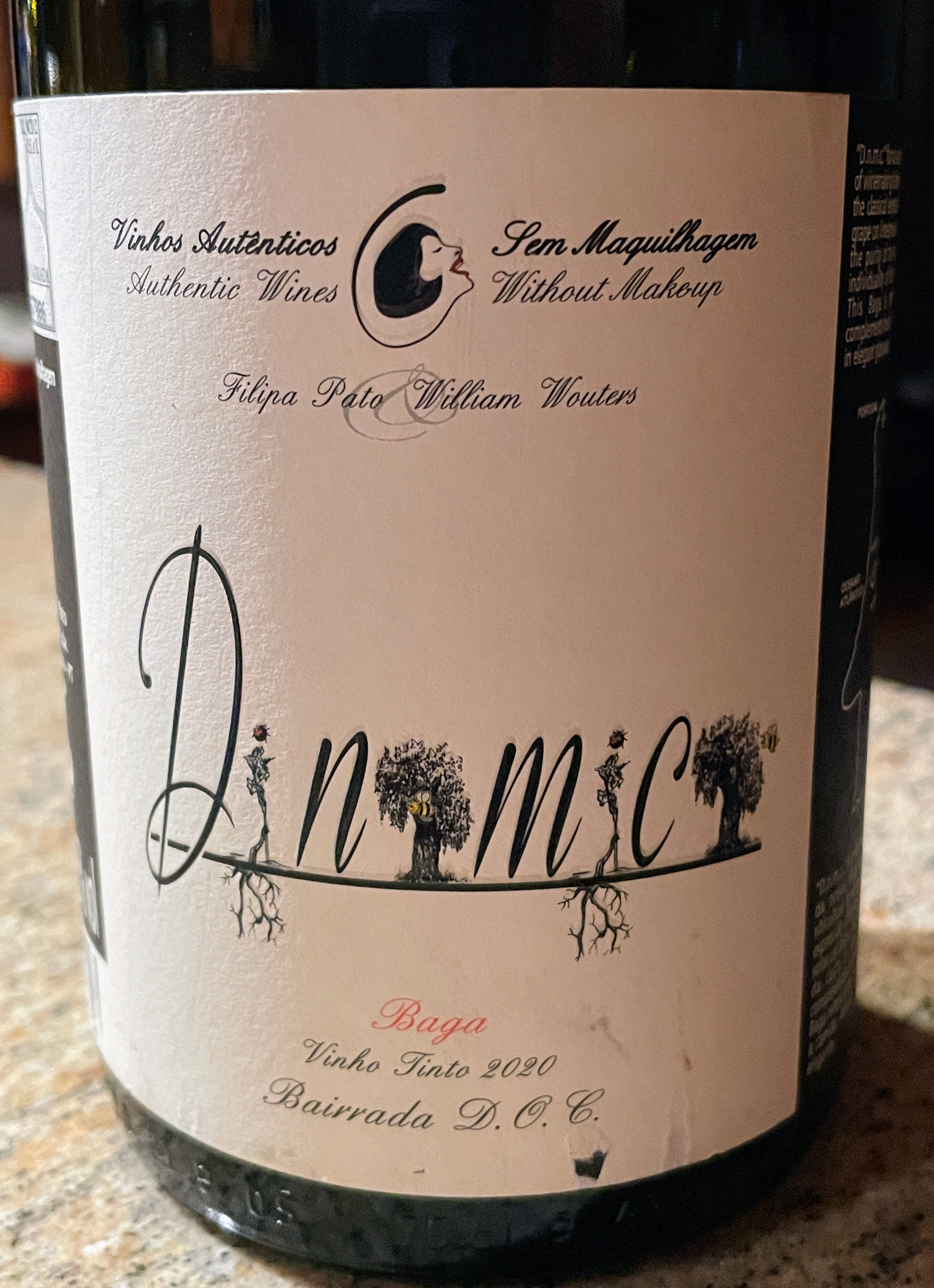
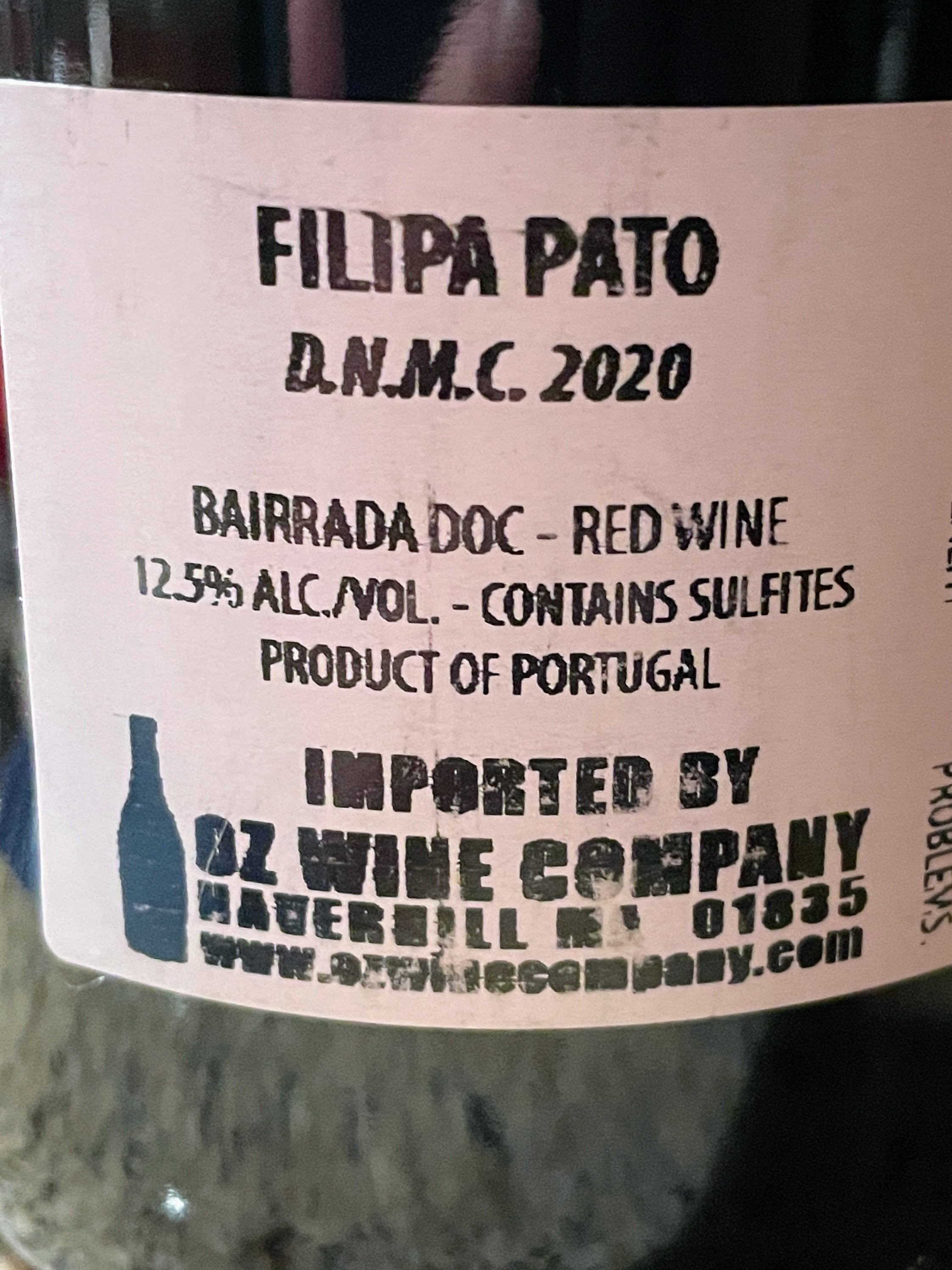
Wine? Of course! A Portuguese red wine made from Baga grapes — Filipa Pato Dinamica was a perfect match.
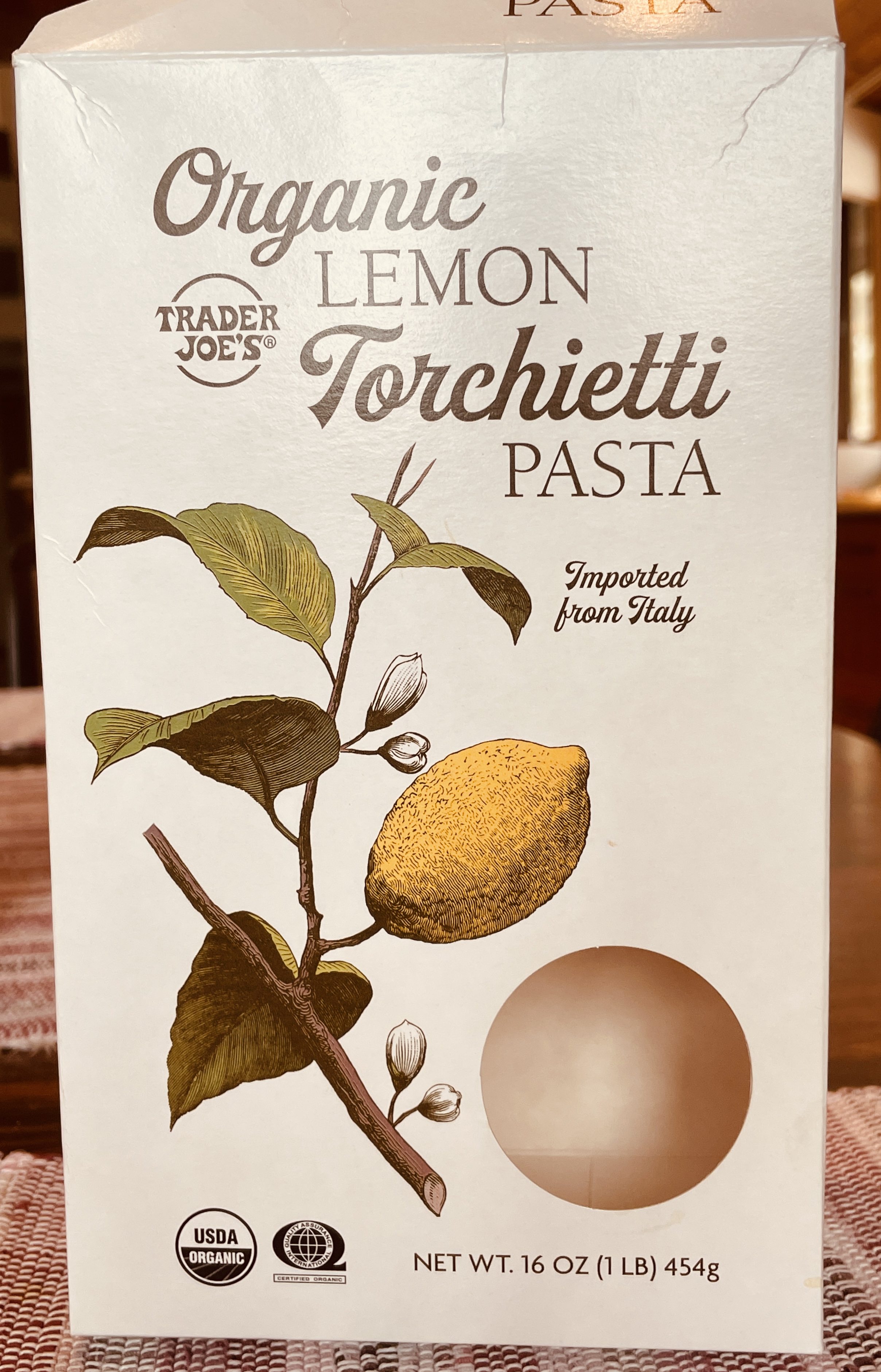
One of my favorite packaged pastas is this one (Torchietti) from Trader Joe’s. Sadly, this product is no longer available from them (or anyone else apparently). We have had 1/2 box leftover for about a year. Today I decided to finish it with a special lunchtime dish.
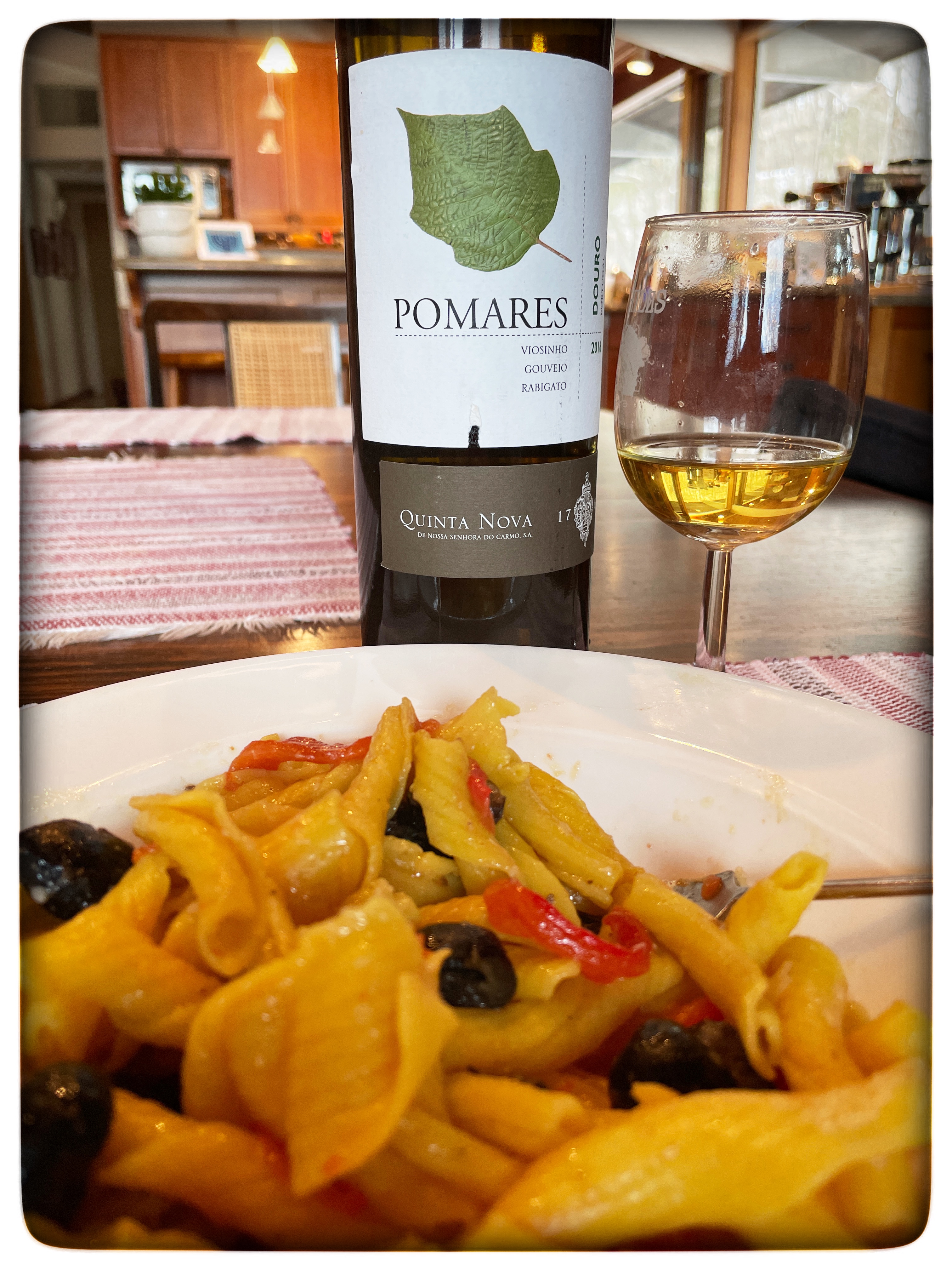
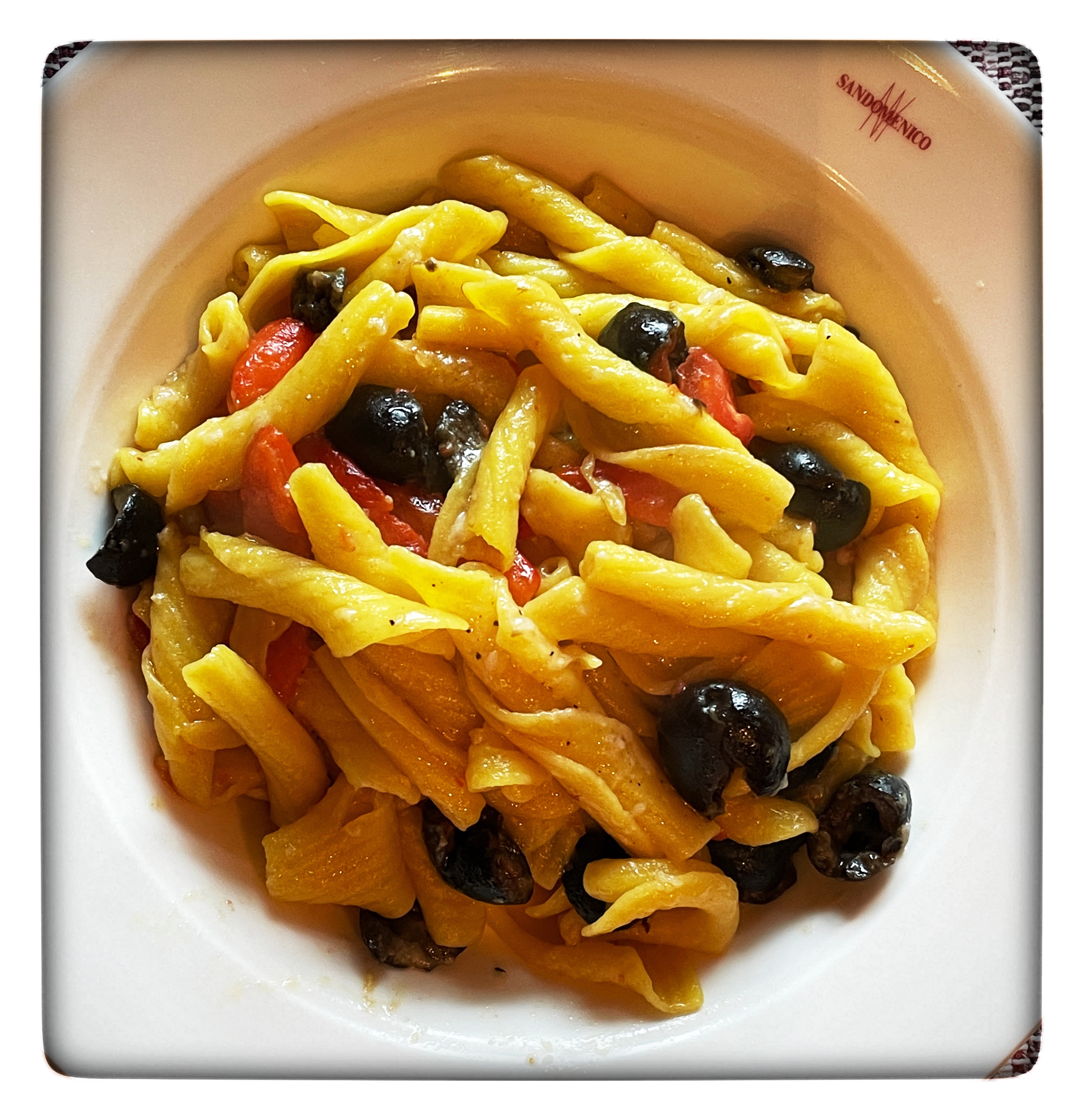
I enjoy making up pasta dishes with a variety of components from around the Mediterranean. While the Torchietti (imported from Italy) was simmering in the pot, I poured 3 Tbs. of Cretan ( Greek) olive oil in my favorite sauteuse. I filleted an Italian salt-packed anchovy and let it dissolve slowly on very low heat. The next step was to add a single skinless, seeded plum tomato along with roasted red pepper slices. By this time the pasta was cooked, so I added it to the pan, along with a little pasta water. For flavor and sharp color contrast, I pitted about 30 Azietone Preta black olives from Portugal and added them to the dish. Back to Italy for a handful of grated Pecorino cheese, and a quick stop in Spain for a few grains of fleur de sel from Ibiza and my dish was ready for the table.
A white wine from the Douro Valley in Portugal was my choice to accompany the pasta. The label read “Pomares”, a brand from Quinta Nova, a winery my son and I had visited 5 years ago. It was a selection suggested by Andre Ramos, the superb wine director at Portugalia in Fall River, MA. I was fascinated to learn that this wine is made from 3 grapes I had never encountered before: Viosinho, Gouveio and Rabigato! It is a medium bodied wine, full of flavor, and well matched to the olives and peppers in the dish.
The lunch was a complete success, and I have another serving in the refrigerator for lunch tomorrow.
Old wines are full of surprises. Tonight’s version was a result of my desire to open a bottle of Aloxe-Corton 1978, a Burgundy of moderate importance, but always interesting. First of all, I had to get the cork out and that was not easy. It was very black from many years in the cellar. I was able to scrape off most of it but then, when I took the corkscrew to the cork, it immediately pushed through the bottom of the neck and into the bottle. Not a good start.
I sniffed it and, and much to my disappointment, it was very old smelling, so I put it aside after decanting it and straining out the cork. When I poured a glass from the decanter, the smell had improved a little, so I was encouraged. I let it sit for quite a while, perhaps 45 minutes or more, while I prepared my dinner — a salad of mixed greens and radicchio, plus olives, walnuts, daikon radish, beets, and pickled onions. By the time I had my next glass or sip of the Burgundy, things had resolved quite a bit and it tasted smooth and gentle, a little bit velvety with a nice maroon color to go with the radicchio. Soon there appeared a slight orange tint from the oxidation one would expect at this stage, but it was not too objectionable. The lesson from this experience is that you can expect an old wine to go through a number of significant changes from when it is first opened until you finally finish or discard it. This can take place over as much as three days or as little as 2 hours.
Earlier in the day I had made three loaves of Olive-Walnut Sourdough bread from 2 different recipes. With the salad, the bread, and D’Affinois cheese, I had a delightful accompaniment to go with the wine.
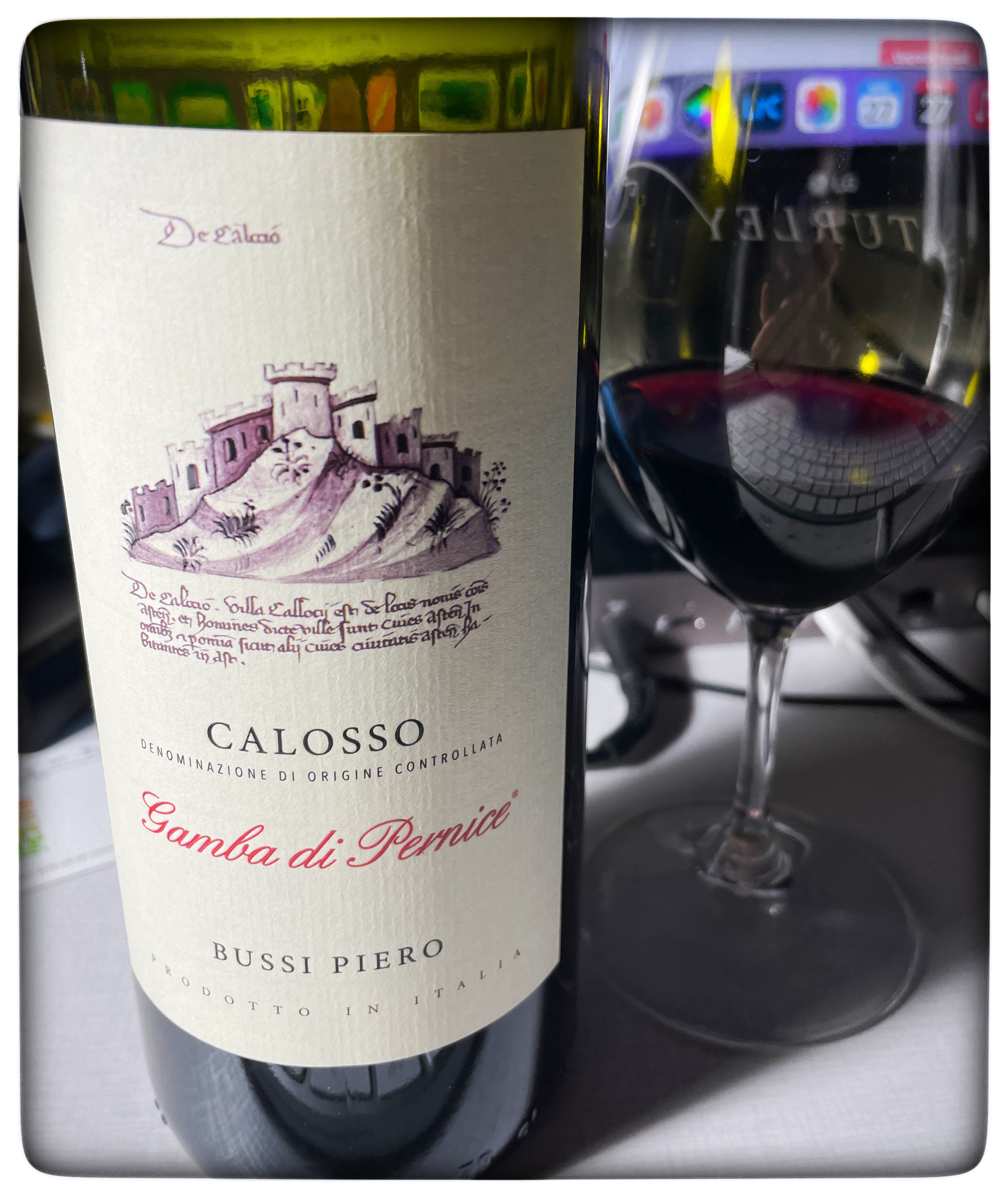
I’m a big fan of obscure grapes. You know, the kind that only grow in two small villages in Italy. This past weekend I came across a new variety for me — Gamba di Pernice, a red grape in the wine, Calosso, from Piemonte.
As a part-time academic, I cultivate my resources carefully. One of my favorites in this line of work is the book, Native Wine Grapes of Italy, by Ian D’Agata. A 620-page tome, it catalogs the incredible diversity of Italy’s native grapes, many of which grow nowhere else in the world. My friend and wine teacher, Jan D’Amore introduced me to this book, and I refer to it often. It told me that Gamba di Pernice means leg of partridge, because the red stalk of the vine is reminiscent of the the bird’s leg.
How did I discover this wine and grape? Two more friends in the wine trade: Dave Gansler, an importer and distributor in New England, and Patrick Dubsky, owner of Winestone, a superb wine retailer in Brookline, MA. Last Saturday, Dave offered a tasting of some of his delightful wines at Patrick’s shop.
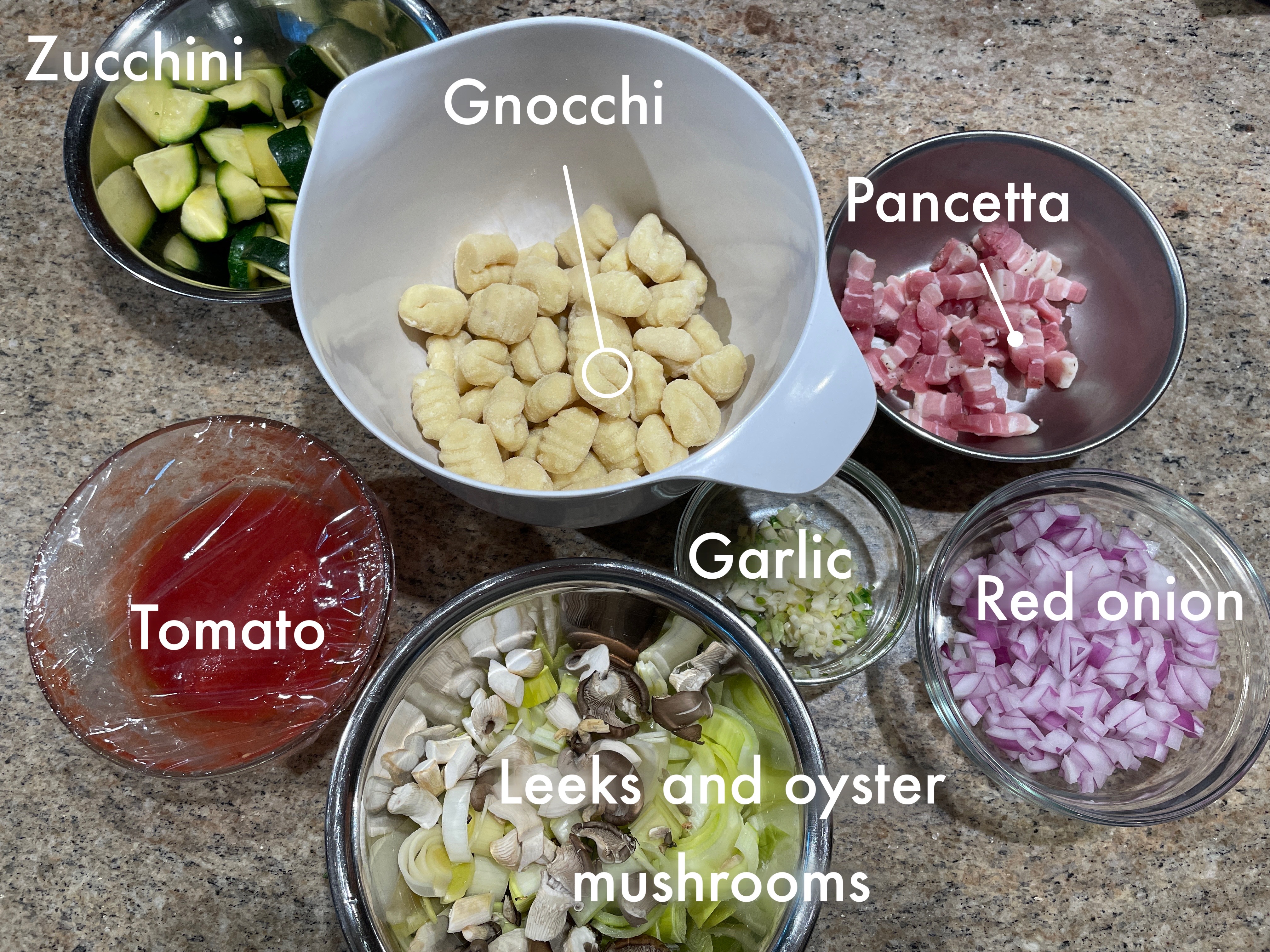
Tonight was my night to make dinner. However, I had a Zoom call with colleagues in the early evening, so my wife agreed to make the dinner I planned, if I would do the prep work. Great arrangement!
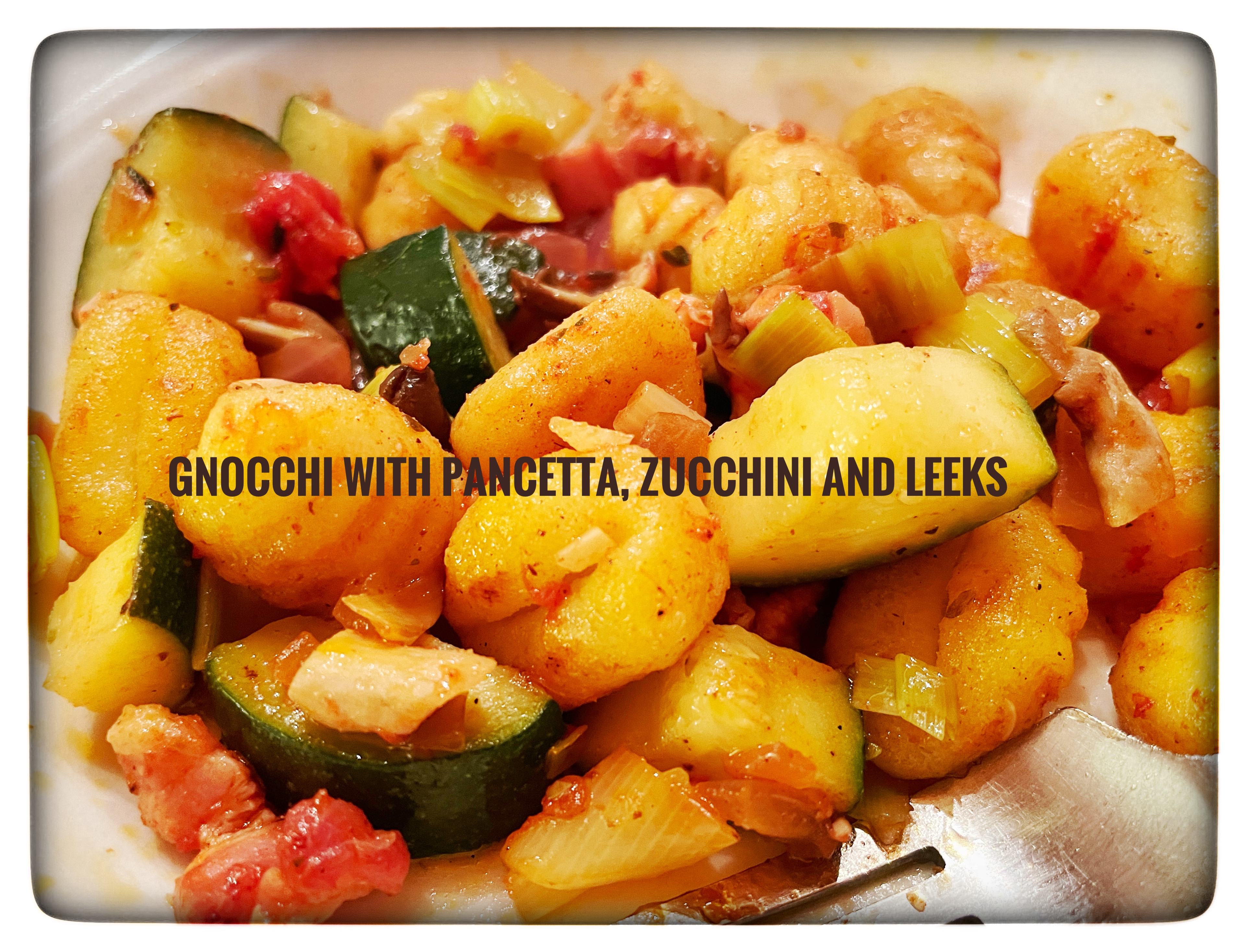
The meal was Gnocchi with Pancetta, Zucchini, and Leeks, accompanied by Calosso wine.
Gnocchi | Pancetta | Red onion | Garlic | Leeks and oyster mushrooms | Tomato | Zucchini
I like this story because it illustrates almost everything about how I learn about wines and the stories about the people and the history that make it exciting.









 Dgourmac's Blog